
Polyrhachis nigra
- Nom sci.
- Polyrhachis nigra
- Sous-genre
- Myrma
- Tribu
- Camponotini
- Sous-famille
- Formicinae
- Auteur
- Mayr, 1862
- Distribution
- Trouvé dans 0 pays
Introduction
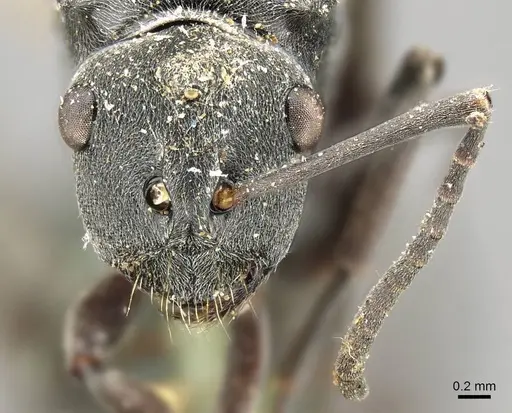
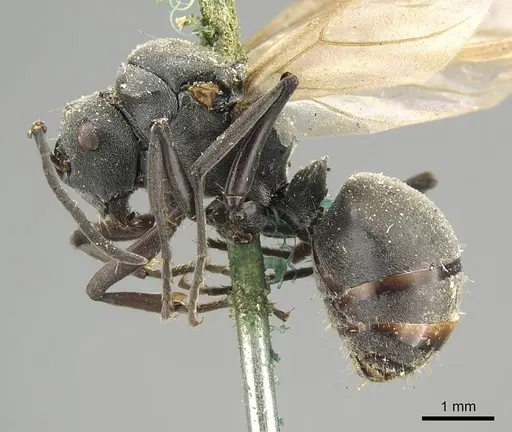
Polyrhachis nigra is a medium-sized ant species native to Sri Lanka and the Moluccas (Indonesia) . Workers are black or dark brown with spines and hooks on the thorax and petiole, characteristic of the Polyrhachis genus . The queen was described by Mayr in 1862 . This species belongs to the subgenus Myrma, which includes arboreal and semi-arboreal nesting species .
Quick Summary
- Difficulty: Medium
- Origin & Habitat: Native to Sri Lanka and the Moluccas (Indonesia), inhabiting tropical forest environments [1][2].
- Colony Type: Unconfirmed, no specific data on queen number for this species.
- Size & Growth:
- Queen: Size data unavailable, inferred from Polyrhachis genus patterns to be around 10-12mm
- Worker: Size data unavailable, inferred from Polyrhachis genus patterns to be around 6-9mm
- Colony: Up to several hundred workers, estimated based on related Polyrhachis species [3]
- Growth: Moderate
- Development: Estimated 6-10 weeks at tropical temperatures [3] (Development time is inferred from genus patterns as no species-specific data exists)
- Antkeeping:
- Temperature: Keep at 24-28°C. These are tropical ants requiring warm, stable temperatures [3].
- Humidity: Keep the nest substrate consistently moist but not waterlogged [3].
- Diapause: No, these are tropical ants that remain active year-round [3].
- Nesting: In nature, Polyrhachis species often nest in rotting wood or arboreal locations. For captivity, use Y-tong or plaster nests with narrow chambers [3].
- Behavior: Polyrhachis nigra workers are active foragers and generally not aggressive but will defend their nest. Like all Formicinae, they can spray formic acid as a defense mechanism. Escape prevention should be moderate due to their size [3].
- Common Issues: dry housing will quickly kill the colony due to humidity needs, temperature drops below 22°C can slow brood development, limited species-specific information requires reliance on genus-level guidance, overfeeding can lead to mold in humid setups
Housing and Nest Setup
Polyrhachis nigra does well in a Y-tong nest or plaster formicarium. Chambers should be sized for medium ants, roughly 8-12mm wide passages work well [3]. Add cork bark or twigs in the outworld to simulate arboreal preferences [3]. Keep the nest area dark or partially covered [3].
Feeding and Diet
These ants are omnivorous. Offer sugar sources like honey water weekly and protein like small insects every 3-5 days [3]. Remove uneaten food after 24-48 hours to prevent mold [3].
Temperature and Seasonal Care
Maintain temperatures between 24-28°C for optimal brood development [3]. Use a heating cable on one side of the nest to create a gradient [3]. Avoid temperatures below 22°C for extended periods [3].
Humidity Management
Keep nest substrate consistently moist but not waterlogged [3]. Check moisture levels every few days and rehydrate when the surface dries [3]. Good ventilation is essential to prevent mold [3].
Behavior and Colony Dynamics
Workers are active foragers on ground and vertical surfaces [3]. They defend their nest and can spray formic acid [3]. Colony growth is moderate, with first workers in 6-10 weeks [3].
Frequently Asked Questions
How long does it take for Polyrhachis nigra to produce first workers?
Expect 6-10 weeks from egg to first worker at optimal temperatures [3].
What temperature is best for Polyrhachis nigra?
Keep them at 24-28°C with a heating gradient [3].
Can I keep Polyrhachis nigra in a test tube?
Yes, for founding colonies. Move to a larger nest when the colony reaches 20-30 workers [3].
What do Polyrhachis nigra eat?
They are omnivorous, offer sugar weekly and protein every 3-5 days [3].
Do Polyrhachis nigra need hibernation?
No, they are tropical ants and remain active year-round [3].
How big do Polyrhachis nigra colonies get?
Up to several hundred workers, based on related species [3].
Are Polyrhachis nigra good for beginners?
They are medium difficulty due to humidity and temperature needs [3].
When should I move Polyrhachis nigra to a formicarium?
When the colony reaches 20-30 workers and the test tube is crowded [3].
Why is my Polyrhachis nigra colony dying?
Common causes include low humidity, temperatures below 22°C, or mold from overfeeding [3].
Report an Issue
The current care sheet is based fully on literature. See inconsistencies, or something that's incorrect? Please , it will be resolved after review from an admin. Contributing to the blogs tab also helps providing information, to make us be able to further improve the caresheets. Thank you for your support!
References

Cette fiche d'élevage est sous licence CC BY-SA 4.0 .
Blogs de la communauté
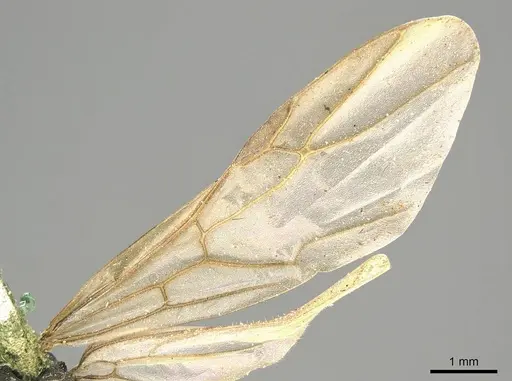
CASENT0915821
Voir sur AntWeb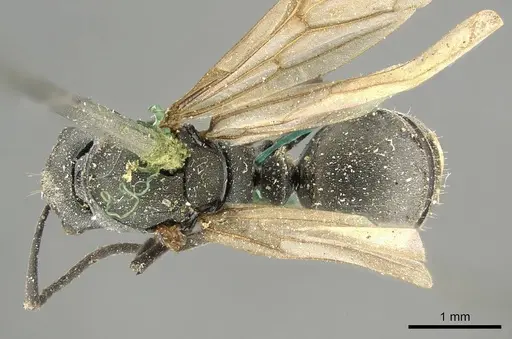
Littérature
Chargement de la carte de répartition...Chargement des produits...