
Polyrhachis constructor
- Nom sci.
- Polyrhachis constructor
- Tribu
- Camponotini
- Sous-famille
- Formicinae
- Auteur
- Smith, 1857
- Distribution
- Trouvé dans 0 pays
Introduction
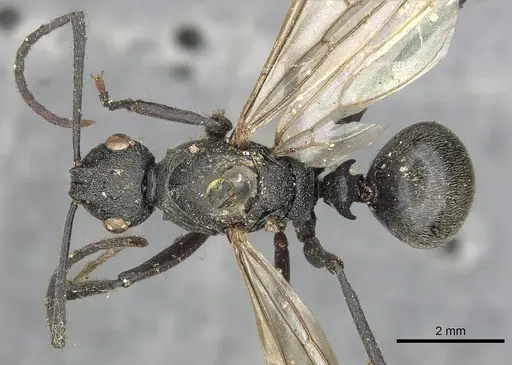
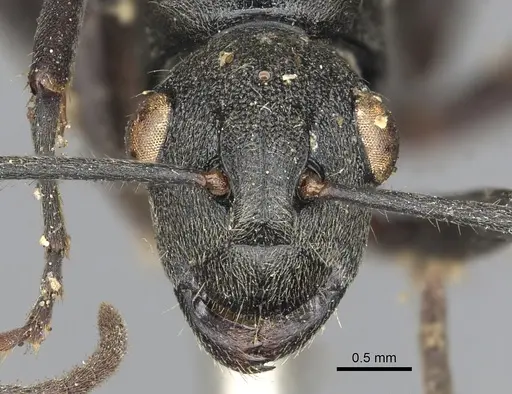
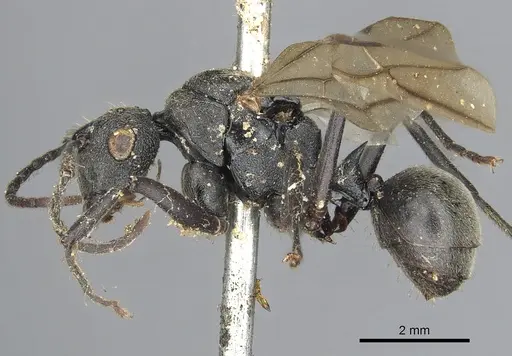
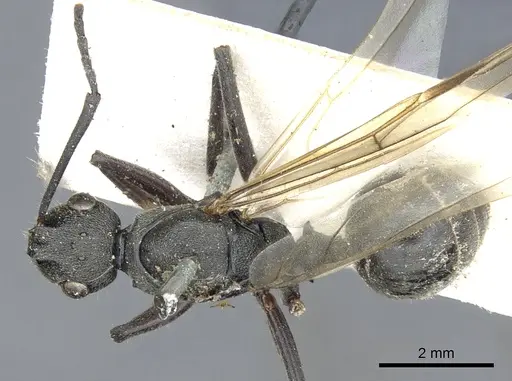
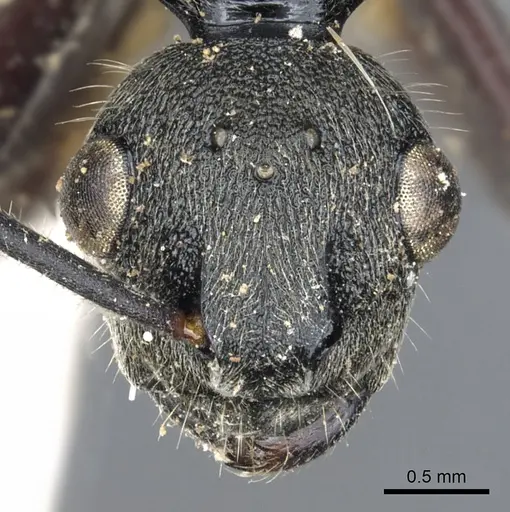
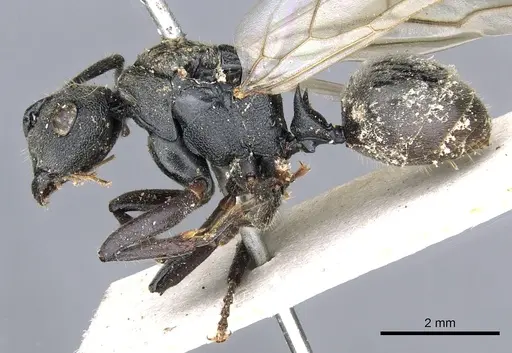
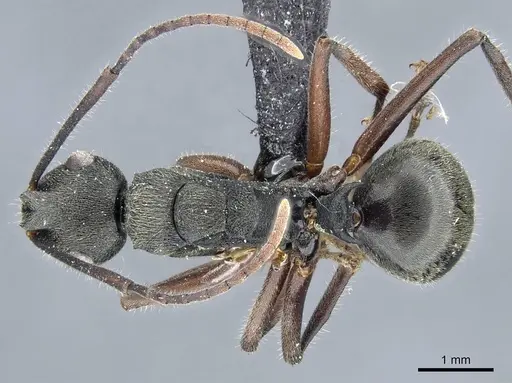
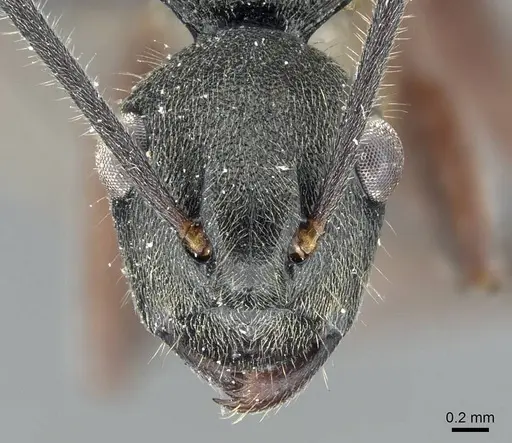
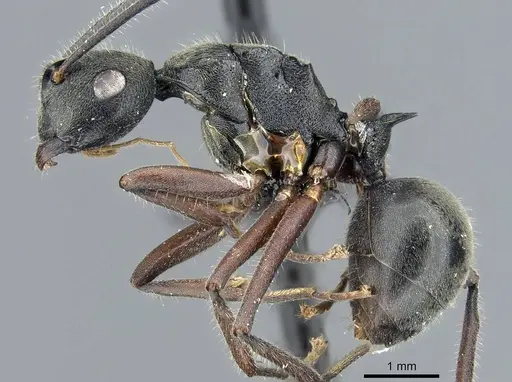
Polyrhachis constructor is a medium-sized arboreal ant native to Sundaland and southern Indochina, including Borneo, Malaysia, Singapore, and Indonesia . Workers measure 7.25-7.55 mm in total length and are entirely black with reddish-brown legs, while queens are larger at 8.85-9.15 mm . The species has dense short hairs on the head, mesosoma, and gaster, with distinctive propodeal and petiolar spines . Unlike ground-nesting ants, it builds carton nests suspended from plant leaves, typically 1.5-2.8 meters above ground .
Quick Summary
- Difficulty: Medium
- Origin & Habitat: Native to Sundaland region, including Borneo, Malaysia, Singapore, and Indonesia, found in tropical forests where they build elevated carton nests on shrubs and trees [1][2][4].
- Colony Type: Based on Polyrhachis genus patterns, likely single-queen (monogyne) colonies.
- Size & Growth:
- Antkeeping:
- Temperature: Keep warm and stable, roughly low-to-mid 20s°C, as they are tropical species.
- Humidity: Keep the nest substrate consistently moist but not waterlogged.
- Diapause: No, tropical species do not require hibernation.
- Nesting: Arboreal nesters in the wild, building carton nests between leaves. In captivity, adapt to test tubes or formicaria made of Y-tong, plaster, or 3D-printed materials with vertical space and climbing structures [1].
- Behavior: Generally calm and non-aggressive, workers lack a sting and use formic acid spray for defense as typical for Formicinae. Escape risk is moderate due to their size, standard barriers work well, but ensure smooth walls as they are arboreal climbers.
- Common Issues: tropical species may struggle in cool rooms without heating, arboreal nature requires vertical space and climbing structures to prevent stress, wild-caught colonies may have parasites or diseases, carton nest material is difficult to replicate, they adapt to test tubes, queen loss during founding is common, ensure stable conditions
Housing and Nest Setup
Polyrhachis constructor is an arboreal species that naturally builds nests suspended from leaves. In captivity, they adapt well to standard test tube setups, though they appreciate some vertical space and climbing opportunities. Once the colony reaches 20-30 workers, use a formicarium made of Y-tong, plaster, or 3D-printed materials with a connected outworld. Add small branches or twigs to simulate their natural arboreal environment. Avoid fully underground setups [1].
Feeding and Diet
Polyrhachis constructor is omnivorous. They accept sugar sources like honey water and protein from small insects such as fruit flies or mealworms. Feed sugar water 2-3 times per week and protein once or twice weekly. Remove uneaten prey after 24 hours to prevent mold [1].
Temperature and Humidity
As a tropical species, keep temperatures warm and stable, roughly low-to-mid 20s°C. Use a heating cable on one side of the nest to create a gradient if needed. Humidity should be maintained with consistently moist substrate but not waterlogged, reflecting their arboreal habitat.
Colony Development
Queens are likely claustral, sealing themselves in to survive on stored fat reserves until workers emerge. The first workers (nanitics) are smaller than mature workers. Development from egg to worker is estimated at 6-10 weeks at optimal temperature, based on related Formicinae patterns. Growth is moderate, with colonies potentially reaching several hundred workers over time.
Behavior and Temperament
Workers are relatively calm and not aggressive, preferring to flee rather than defend. They lack a sting and use formic acid spray if threatened, as typical for Formicinae. Their moderate size (7-8 mm) makes escape prevention manageable with standard barriers, but ensure smooth walls due to their climbing nature[1].
Frequently Asked Questions
Can I keep Polyrhachis constructor in a test tube?
Yes, test tubes work well for this species. They are arboreal ants but adapt to test tube setups without issue. Use a standard test tube with a water reservoir and cotton plug. Once the colony grows beyond 50 workers, connect a small outworld or formicarium [1].
How long does it take for the first workers to emerge?
Expect 6-10 weeks from egg to first worker at optimal temperature, based on related Formicinae patterns. The first workers will be smaller (nanitics) and the colony will grow from there.
What temperature do they need?
Keep them at warm, stable temperatures roughly low-to-mid 20s°C, as they are tropical species.
Are they good for beginners?
They are intermediate difficulty due to tropical temperature requirements and arboreal nature. Not recommended for absolute beginners.
What do they eat?
They are omnivorous. Offer sugar water or honey regularly and protein from small insects once or twice weekly. Remove uneaten food after 24 hours [1].
How big do colonies get?
Colony size is not well documented for this species. Maximum size is unknown.
Do they need hibernation?
No, they do not hibernate. As a tropical species, they need warm temperatures year-round.
When should I move them to a formicarium?
Move them when the test tube becomes crowded or the water reservoir runs low, typically at 30-50 workers. Use a formicarium with climbing opportunities to reflect their arboreal nature [1].
Can I keep multiple queens together?
Based on Polyrhachis genus patterns, colonies are likely single-queen, so multiple queens may fight. Only keep one queen per colony.
Report an Issue
The current care sheet is based fully on literature. See inconsistencies, or something that's incorrect? Please , it will be resolved after review from an admin. Contributing to the blogs tab also helps providing information, to make us be able to further improve the caresheets. Thank you for your support!
References

Cette fiche d'élevage est sous licence CC BY-SA 4.0 .
Blogs de la communauté
Littérature
Chargement de la carte de répartition...Chargement des produits...