
Pogonomyrmex wilsoni
- Nom sci.
- Pogonomyrmex wilsoni
- Tribu
- Pogonomyrmecini
- Sous-famille
- Myrmicinae
- Auteur
- Johnson, 2021
- Distribution
- Trouvé dans 0 pays
Introduction
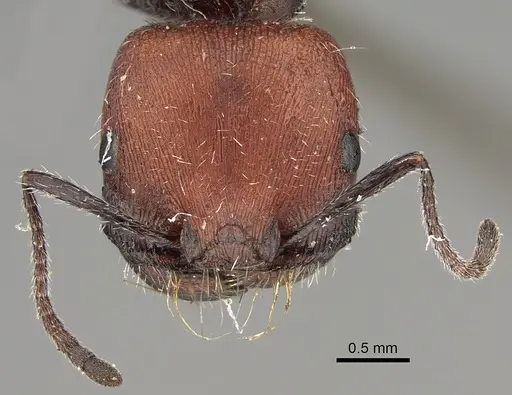
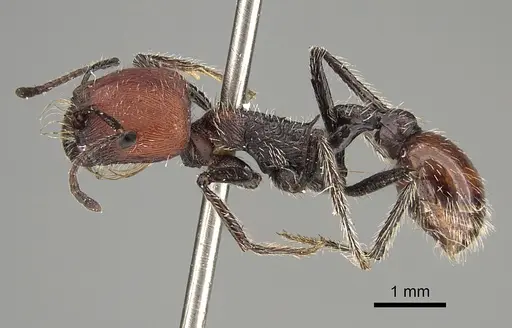
Pogonomyrmex wilsoni is a seed-harvester ant from the dry puna regions of northern Chile. It is only known from a single high-altitude locality around 4115 meters in the Central Andean dry puna ecoregion . The species has small eyes placed far from the mandible base and irregular transverse rugae on the pronotum . As with other Pogonomyrmex, they are seed-harvesters with a potent sting.
Quick Summary
- Difficulty: Medium
- Origin & Habitat: Northern Chile, specifically the Central Andean dry puna ecoregion at approximately 4115 meters elevation [1]. This is a high-altitude, arid environment with extreme temperature fluctuations.
- Colony Type: Colony structure is unconfirmed for this newly described species. Based on genus patterns, expect single-queen (monogyne) colonies.
- Size & Growth:
- Queen: Size data unavailable
- Worker: Size data unavailable
- Colony: Unknown, estimated moderate to large based on genus patterns
- Growth: Moderate, inferred from related species
- Development: Unknown (Development time is not documented for this species.)
- Antkeeping:
- Temperature: Keep around 22-26°C with a slight gradient, as this species comes from high-altitude arid regions.
- Humidity: Keep the nest relatively dry with a small moisture area, mimicking the dry puna habitat.
- Diapause: Likely yes, based on high-altitude origin, provide a winter rest period of 3-4 months at 10-15°C.
- Nesting: Use dry nest setups like Y-tong or plaster, with a deep outworld for seed storage. Provide a humidity gradient with one side slightly moist.
- Behavior: Workers are active daytime foragers that harvest seeds and defend their stores aggressively. They have a potent sting, so handle with care. Escape risk is moderate due to their size, standard barriers work well.
- Common Issues: high-altitude origin means they need a distinct winter diapause, colonies that aren't hibernated may fail to thrive, dry habitat requirements mean overwatering is a common mistake that leads to mold and colony loss, potent sting makes them unsuitable for handling, keep observation nests at a safe distance, newly described species means captive husbandry is not well-documented, be prepared to experiment, seed-harvester diet requires appropriate food, they may reject standard ant foods
Housing and Nest Setup
Pogonomyrmex wilsoni does well in dry nest setups that mimic their natural arid habitat [1]. Use Y-tong or plaster nests with a hydration chamber on one side. Provide a deep outworld area for seed storage and foraging, as these ants are seed harvesters [1]. The nest should have chambers sized for workers, but full body size data is unavailable. Use a test tube setup for founding colonies, transitioning to a larger formicarium once the colony reaches 50+ workers. Escape prevention is straightforward due to their size, standard fluon barriers are effective.
Feeding and Diet
As seed-harvester ants, the primary diet should consist of various seeds, such as grass seeds, millet, or sesame [1]. They will crack seeds open to eat the nutritious interiors. Offer small insects like fruit flies or mealworms for protein occasionally. Sugar water may be accepted but is not a primary food source. Remove uneaten seeds before they mold.
Temperature and Seasonal Care
This high-altitude species from the Chilean Andes requires careful temperature management. Keep the nest at 22-26°C during the active season with a slight gradient [1]. During winter, provide a diapause period of 3-4 months at 10-15°C. Reduce feeding during diapause and keep the nest slightly cooler but not cold.
Behavior and Defense
Pogonomyrmex wilsoni workers are active foragers that search for seeds during daylight hours [1]. They are defensive of their nest and food stores, and have a potent sting that can cause severe pain [1]. Keep observation nests at a safe distance and avoid unnecessary disturbance.
Frequently Asked Questions
How long does it take for Pogonomyrmex wilsoni to produce first workers?
The exact timeline is unknown for this newly described species. No development data is available in the research [1].
What do I feed Pogonomyrmex wilsoni?
Their primary diet should be seeds, as they are seed-harvesters [1]. Supplement with small insects for protein.
Do Pogonomyrmex wilsoni need hibernation?
Likely yes, based on their high-altitude origin [1]. Provide a winter diapause of 3-4 months at 10-15°C.
Is Pogonomyrmex wilsoni good for beginners?
This species is rated as medium difficulty. It is a newly described species with limited captive data and a potent sting, so it may be better for experienced keepers.
How big do Pogonomyrmex wilsoni colonies get?
Colony size is not documented. Based on genus patterns, expect moderate to large colonies of several hundred to a few thousand workers.
Can I keep multiple Pogonomyrmex wilsoni queens together?
Colony structure is unconfirmed. Based on genus patterns, they likely form single-queen colonies, and combining unrelated queens is not recommended.
What humidity level do Pogonomyrmex wilsoni need?
Keep them relatively dry, as they come from an arid habitat [1]. Provide a small moisture area in part of the nest.
When should I move Pogonomyrmex wilsoni to a formicarium?
Move from a test tube setup once the colony reaches 30-50 workers and becomes crowded. Provide a deep outworld for seed storage.
Why is my Pogonomyrmex wilsoni colony declining?
Common causes include overwatering, insufficient hibernation, poor seed quality, or disturbance. Check that the nest is dry enough and temperatures are appropriate.
Report an Issue
The current care sheet is based fully on literature. See inconsistencies, or something that's incorrect? Please , it will be resolved after review from an admin. Contributing to the blogs tab also helps providing information, to make us be able to further improve the caresheets. Thank you for your support!
References

Cette fiche d'élevage est sous licence CC BY-SA 4.0 .
Blogs de la communauté
CASENT0923341
Voir sur AntWeb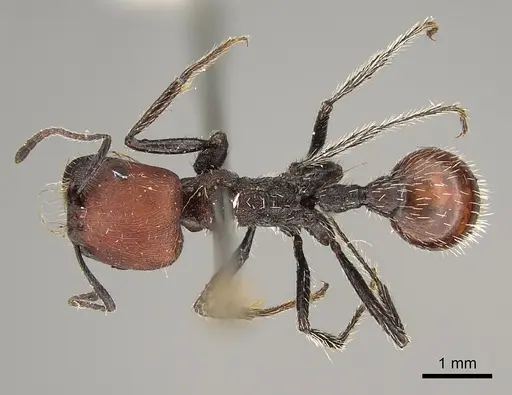
Littérature
Chargement de la carte de répartition...Chargement des produits...