
Pogonomyrmex tenuipubens
- Nom sci.
- Pogonomyrmex tenuipubens
- Tribu
- Pogonomyrmecini
- Sous-famille
- Myrmicinae
- Auteur
- Santschi, 1936
- Distribution
- Trouvé dans 0 pays
Introduction
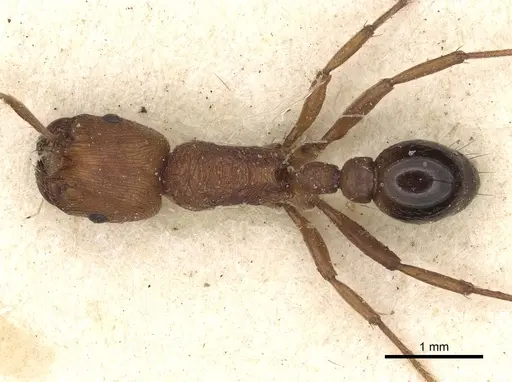
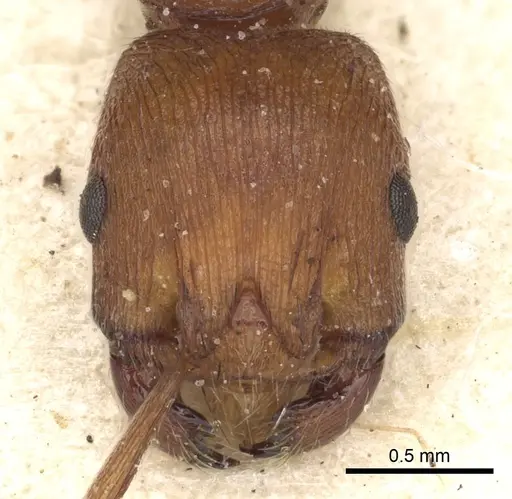
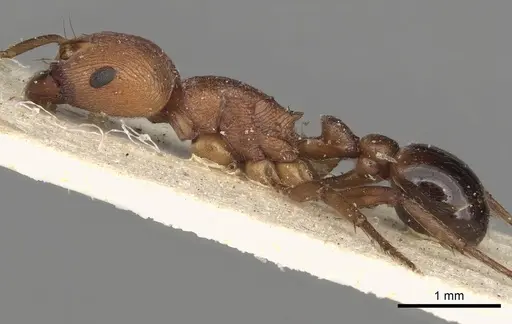
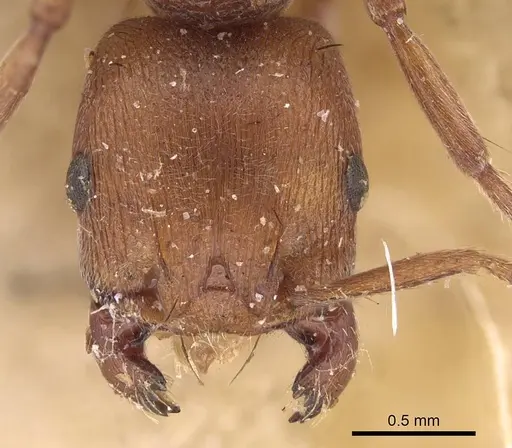
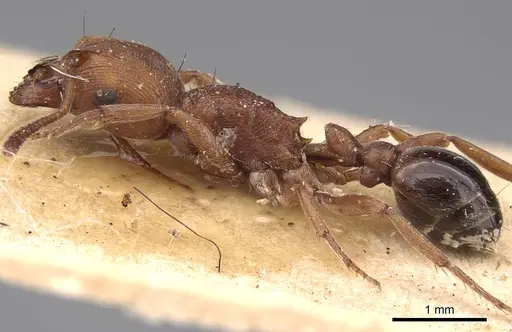
Pogonomyrmex tenuipubens is a seed-harvester ant from the naegelii species group, found only in the Alto Paraná Atlantic Forest ecoregion of Argentina and Paraguay . Workers have fine longitudinal rugae on the head and very short, delicate hairs, giving the species its name meaning 'thin hair' . This species is rare in collections, often found alongside Pogonomyrmex naegelii, and only the worker caste has been described .
Quick Summary
- Difficulty: Medium
- Origin & Habitat: Low elevation Atlantic Forest in Argentina (Misiones) and Paraguay, at around 65 meters elevation [1][2].
- Colony Type: Unconfirmed, only worker caste known. Based on related species in the naegelii group, likely single-queen colonies.
- Size & Growth:
- Queen: Unknown, queen caste not described [1]
- Worker: Size data unavailable, no total length measurements provided [1]
- Colony: Unknown, no colony size data available [1]
- Growth: Unknown, no development data exists [1]
- Development: Unknown, no direct data. Based on similar Pogonomyrmex species, estimated 6-10 weeks at warm temperatures. (Development is temperature-dependent, warmer conditions may speed up growth.)
- Antkeeping:
- Temperature: Keep warm, around 24-28°C. This species is classified as a Hot Climate Specialist (HCS) [2].
- Humidity: Provide a humidity gradient, mostly dry nest chamber with one small moist area, as they are from a subtropical forest [1].
- Diapause: Unknown for this species. Based on geographic range and genus patterns, winter diapause may be required.
- Nesting: Ground-nesting species. Use Y-tong, plaster, or soil nests. Provide a foraging area with sand or soil substrate [1].
- Behavior: Workers are active foragers and moderately aggressive, with a functional sting [1]. Escape risk is moderate due to their size, use barriers to prevent escapes [1].
- Common Issues: lack of founding data makes colony establishment challenging., winter diapause requirements are unconfirmed, risking colony health if not managed., rare species with limited breeding lines, so acquisition may be difficult., diet requires specific seed offerings plus protein, which may be hard to balance.
Species Identification and Range
Pogonomyrmex tenuipubens is a member of the naegelii species group, characterized by its small size and fine body sculpture. The key identifying features are the approximately 16-20 fine, weak longitudinal rugae between the frontal lobes on the head, and the very short, delicate hairs covering the head and mesosoma, these hairs are notably shorter than in related species like P. naegelii and P. abdominalis [1]. The species is known only from the Alto Paraná Atlantic Forest ecoregion in Argentina (Misiones province) and Paraguay, at low elevations around 65 meters [1][2].
Nest Preferences and Housing
In the wild, this species nests in the ground in forested areas. For captive care, use Y-tong, plaster, or soil nests, these provide the dark, enclosed spaces they prefer while allowing you to observe colony activity. Since they're from a forest edge environment, they tolerate moderate humidity better than some desert Pogonomyrmex species. Provide a water tube connected to the nest but keep the actual nest chambers relatively dry. The foraging area should be large enough for workers to carry seeds and have space to process them. Like all Pogonomyrmex, they're accomplished climbers, so use fluon or another barrier to prevent escapes [1].
Feeding and Diet
As seed-harvester ants, Pogonomyrmex tenuipubens collects and stores seeds as their primary food source, they have a psammophore (a basket of hairs under the head for carrying seeds), though it's poorly developed in this species [1]. Offer a variety of small seeds appropriate to their size, such as grass seeds or millet. They also need protein from insect prey like mealworms or fruit flies. Provide a consistent sugar source like honey water, though acceptance varies by colony [1].
Temperature and Seasonal Care
This species is classified as a Hot Climate Specialist (HCS), indicating they prefer warmer conditions [2]. Keep the nest at 24-28°C, with a slight gradient if possible using a heating cable on one side. Regarding winter rest: since no specific data exists, most keepers provide a cool period around 15-18°C for 2-3 months during winter, based on genus patterns. Reduce feeding during this period and allow the colony to slow down naturally.
Behavior and Defense
Pogonomyrmex tenuipubens workers are active foragers that will readily search for seeds and prey in the outworld. Like all Pogonomyrmex species, they have a functional sting and will use it defensively when the colony is threatened [1]. Workers are moderately aggressive and will swarm to defend the nest. They're not particularly large ants but are determined foragers. Provide a deep foraging area with substrate material they can dig through [1].
Frequently Asked Questions
How do I care for Pogonomyrmex tenuipubens since so little is known about them?
You base care on what we know about related species in the Pogonomyrmex genus, particularly P. naegelii which they closely resemble [1]. Keep them warm (24-28°C), provide seeds as a primary food plus protein insects, and ensure they have access to water. The main challenge is that this is a poorly-studied species, expect some trial and error as you learn what your specific colony prefers [1].
What do Pogonomyrmex tenuipubens eat?
Like other Pogonomyrmex seed-harvesters, they collect and store seeds. Offer small seeds like grass seeds or millet [1]. They also need protein from insects like mealworms or fruit flies. A sugar source like honey water is also recommended [1].
What temperature do Pogonomyrmex tenuipubens need?
Keep them warm at 24-28°C. This species is classified as a Hot Climate Specialist, indicating preference for warmer conditions [2]. A heating cable on part of the nest can help maintain temperatures, but avoid overheating [2].
Can I keep multiple Pogonomyrmex tenuipubens queens together?
We don't know the exact colony structure for this species since only workers have been described [1]. Most Pogonomyrmex are single-queen species, so it's safest to start with one queen. If you want to try combining foundresses, do so at the very beginning and watch for aggression.
How long does it take for Pogonomyrmex tenuipubens to produce first workers?
No specific development data exists for this species [1]. Based on similar Pogonomyrmex species, expect 6-10 weeks from egg to worker at optimal temperatures. The first workers (nanitics) will be smaller than mature workers.
Do Pogonomyrmex tenuipubens need hibernation?
Winter diapause is unconfirmed for this specific species, but most Pogonomyrmex from subtropical regions do require a cool period. Provide 2-3 months around 15-18°C during winter, reducing feeding and allowing the colony to slow naturally.
What size nest do I need for Pogonomyrmex tenuipubens?
Since colony size is unknown and this is a rare species, start with a modest setup, a Y-tong or plaster nest with a connected foraging area [1]. They can eventually grow to several hundred workers based on related species, so plan for some expansion space.
Are Pogonomyrmex tenuipubens good for beginners?
Not ideal for beginners. This is a poorly-documented species with almost no specific care information available [1]. You may face challenges with colony establishment since wild-caught colonies are the only source. Related species like P. naegelii or more common Pogonomyrmex are better choices for beginners [1].
Where does Pogonomyrmex tenuipubens come from?
This species is found only in the Alto Paraná Atlantic Forest ecoregion of Argentina (Misiones province) and Paraguay, at low elevations around 65 meters [1][2]. It's a rare species with very few collection records [1].
Report an Issue
The current care sheet is based fully on literature. See inconsistencies, or something that's incorrect? Please , it will be resolved after review from an admin. Contributing to the blogs tab also helps providing information, to make us be able to further improve the caresheets. Thank you for your support!
References

Cette fiche d'élevage est sous licence CC BY-SA 4.0 .
Blogs de la communauté
CASENT0281113
Voir sur AntWeb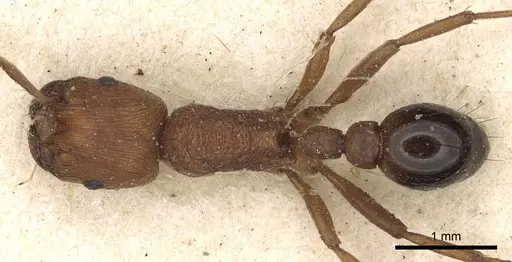
CASENT0914377
Voir sur AntWeb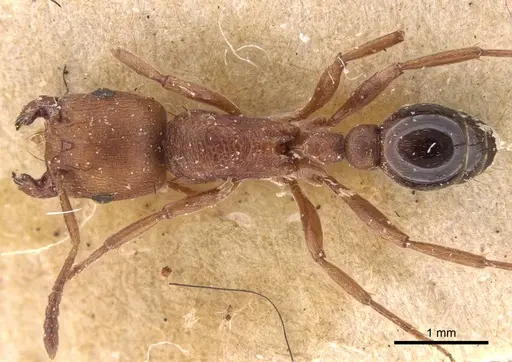
Littérature
Chargement de la carte de répartition...Chargement des produits...