
Podomyrma albertisi
- Nom sci.
- Podomyrma albertisi
- Tribu
- Crematogastrini
- Sous-famille
- Myrmicinae
- Auteur
- Emery, 1887
- Distribution
- Trouvé dans 0 pays
Introduction
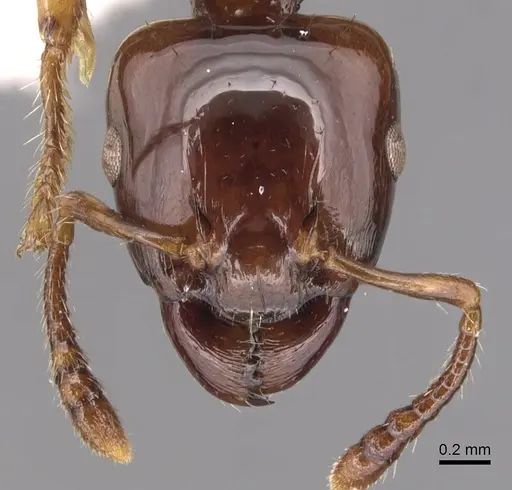
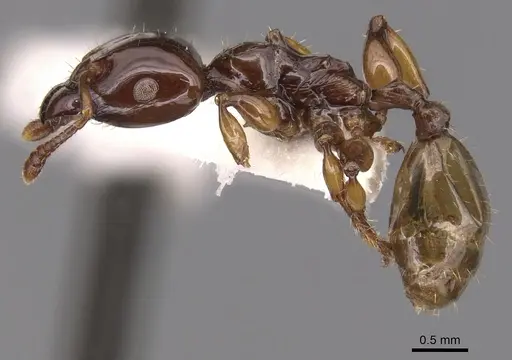
Podomyrma albertisi is a small, shiny brown ant native to New Guinea, specifically the Fly River region . Workers measure 4.33-5mm, making this the smallest known Podomyrma species . They have a smooth, shiny head with striated cheeks, a pale abdomen, and sparse longitudinal wrinkles on the thorax. The pronotum is armed with sharp erect teeth, and the first abdominal segment has a distinct dorsal depression at the base . This species is rarely kept in captivity, and most aspects of its natural history remain unstudied.
Quick Summary
- Difficulty: Hard
- Origin & Habitat: New Guinea (Fly River region), tropical rainforest environment [1]
- Colony Type: Unconfirmed. No data available on colony structure.
- Size & Growth:
- Antkeeping:
- Temperature: No specific data. As a tropical species from New Guinea, keep warm (approximately 24-28°C) and stable. Use a heating cable to create a gentle gradient.
- Humidity: No specific data. Based on tropical rainforest habitat, maintain high humidity. Keep nest substrate consistently moist but not waterlogged. Provide a water source for evaporation.
- Diapause: No, tropical species from New Guinea, unlikely to require hibernation. Keep temperatures stable year-round.
- Nesting: Natural nesting habits are unknown. Based on genus patterns, likely nests in rotting wood or under stones in humid forest floor. Provide a Y-tong (AAC), plaster, or soil nest with high moisture retention.
- Behavior: Behavior is not documented. They have sharp pronotal teeth [1] and likely use a smear defense mechanism (flattened stinger to wipe venom) typical of tribe Crematogastrini. Their small size (4-5mm) makes escape prevention critical, use fine mesh (0.5mm or smaller) on all openings.
- Common Issues: tropical species require stable warm conditions, sudden drops can stress or kill colonies., high humidity needs can lead to mold if ventilation is poor., small size makes escape prevention critical, use fine mesh (0.5mm or smaller) on all openings., biology is poorly known, so care parameters are not optimized, expect experimentation., wild-caught colonies may carry parasites that are difficult to treat.
Housing and Nest Setup
Podomyrma albertisi is a small tropical ant from New Guinea [1]. Natural nesting habits are unknown, but you can keep them in a Y-tong (AAC), plaster, or soil nest that holds moisture well. Keep the nest warm (24-28°C) with a gentle gradient using a heating cable. Because workers are only 4-5mm, ensure all seals are tight and use fine mesh (0.5mm or smaller) on ventilation holes to prevent escapes. Provide a water source in the outworld, such as a test tube with a cotton plug.
Feeding and Diet
Diet is unconfirmed. Offer small live prey such as fruit flies or pinhead crickets, along with sugar water or honey water. Observe whether the colony accepts these foods and adjust accordingly. Remove uneaten prey after 24 hours to prevent mold. Since growth rate and colony size are unknown, start with small portions.
Temperature and Seasonal Care
This tropical species from New Guinea [1] needs stable warmth year-round. No specific temperature range is documented, so aim for 24-28°C and avoid sudden drops. No diapause is required, keep temperatures consistent throughout the year. Do not place the nest near air conditioning vents or drafty windows.
Humidity Management
Maintain high humidity to mimic its tropical rainforest habitat. Keep the nest substrate consistently moist but not waterlogged. A water test tube attached to the nest can provide a humidity gradient. Monitor daily for drying, especially in dry climates, and balance moisture with adequate ventilation to avoid mold.
Frequently Asked Questions
How long does it take for Podomyrma albertisi to produce first workers?
This is unknown for this species. In general, tropical Myrmicinae may develop from egg to worker in 4-8 weeks, but this is speculative. Be patient and avoid disturbing the colony excessively.
Do Podomyrma albertisi ants sting?
As a Myrmicinae ant, they have a stinger. They likely use a smear defense (flattened stinger to wipe venom) typical of tribe Crematogastrini. At 4-5mm, they are too small to effectively penetrate human skin.
Can I keep multiple Podomyrma albertisi queens together?
Colony structure is unconfirmed. Without evidence of polygyny, it is not recommended to combine queen ants as they may fight.
What do Podomyrma albertisi eat?
Diet is unconfirmed. Based on typical ant feeding, try offering small live prey (fruit flies, pinhead crickets) and sugar water. Adjust based on acceptance.
Are Podomyrma albertisi good for beginners?
This species is rated Hard because little is known about its care requirements. It requires stable warm and humid conditions, and its small size makes escape prevention difficult. Not recommended for beginners.
How big do Podomyrma albertisi colonies get?
Colony size is unknown. No data exists on typical colony sizes for this species.
Do Podomyrma albertisi need hibernation?
No, this is a tropical species from New Guinea [1] and does not require hibernation. Keep temperatures warm and stable year-round.
Why are my Podomyrma albertisi dying?
Common causes likely include temperature drops below their comfort range, low humidity causing desiccation, mold from poor ventilation, or escape. Since care parameters are not optimized, careful monitoring of all conditions is essential.
When should I move Podomyrma albertisi to a formicarium?
No specific recommendation exists. Move the colony when it outgrows the test tube or founding chamber. Ensure the new nest matches warm, humid conditions.
How do I prevent Podomyrma albertisi from escaping?
Use fine mesh (0.5mm or smaller) on all ventilation and barrier openings. Check seals and tube connections regularly. Apply fluon or a similar barrier grease to the outworld rim. Their small size (4-5mm) means standard barriers may not suffice.
Report an Issue
The current care sheet is based fully on literature. See inconsistencies, or something that's incorrect? Please , it will be resolved after review from an admin. Contributing to the blogs tab also helps providing information, to make us be able to further improve the caresheets. Thank you for your support!
References

Cette fiche d'élevage est sous licence CC BY-SA 4.0 .
Blogs de la communauté
CASENT0904708
Voir sur AntWeb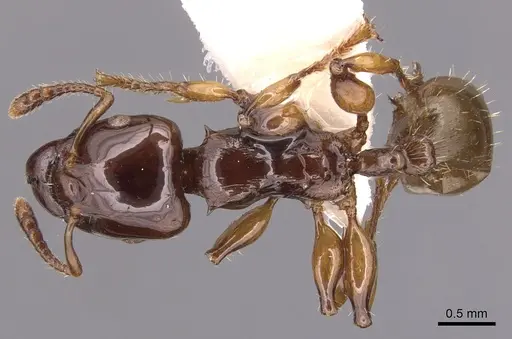
Littérature
Chargement de la carte de répartition...Chargement des produits...