
Pheidole termitobia
- Nom sci.
- Pheidole termitobia
- Tribu
- Attini
- Sous-famille
- Myrmicinae
- Auteur
- Forel, 1901
- Distribution
- Trouvé dans 0 pays
Introduction
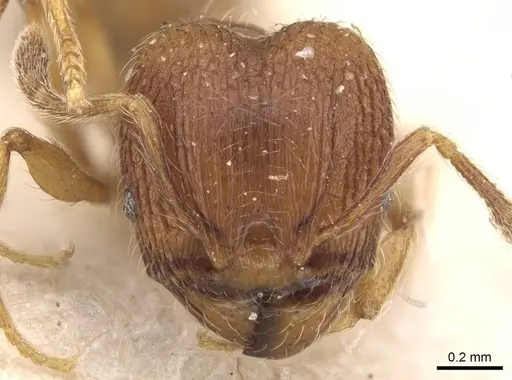
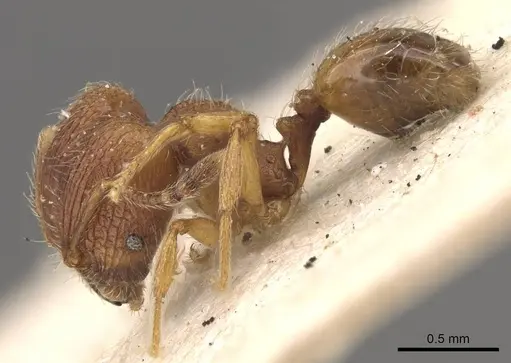
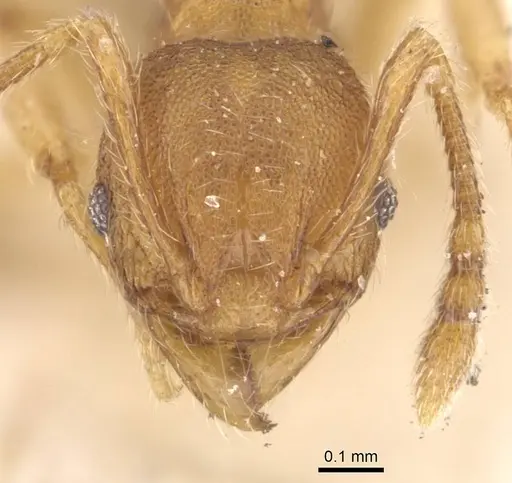
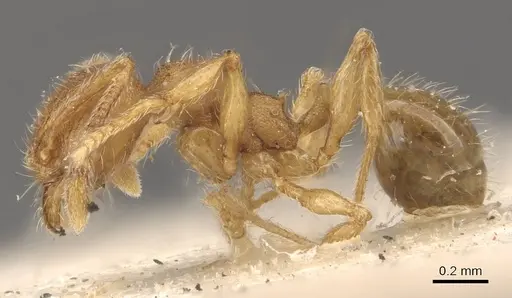
Pheidole termitobia is a tiny Neotropical ant species native to southern Brazil. The species gets its name from its unusual association with termites, as it was originally discovered living among termite colonies. Both castes are a light reddish-yellow color with clear yellow appendages. Majors have distinct head sculpturing patterns, while minors are roughly half that size. This species belongs to the flavens group within Pheidole, characterized by their opaque, foveolate exoskeletons. Despite being described in 1901,this species remains poorly documented in scientific literature and is known only from its type locality in Rio Grande do Sul, Brazil. The most interesting thing about this species is its strict association with termites. The name literally means living with termites, reflecting its discovery in termite nests. Unlike many widespread Pheidole species that nest in soil or wood, this one appears to have a highly restricted distribution and specialized ecological niche.
Quick Summary
- Difficulty: Moderate
- Origin & Habitat: Southern Brazil (São Leopoldo, Rio Grande do Sul) in the Neotropical region. Found only in forest areas, typically associated with termite colonies. [2][1]
- Colony Type: Unknown colony structure. No documented observations of queen number or social organization exist. [1]
- Size & Growth:
- Queen: size data unavailable
- Worker: ~3-4mm for minors, ~5-6mm for majors, inferred from Pheidole genus patterns. [1]
- Colony: Unknown, no colony size data available.
- Growth: Unknown
- Development: Unknown, estimated 4-8 weeks based on typical Pheidole patterns at tropical temperatures. (No direct observations of development. Estimates based on typical Pheidole genus patterns in tropical species.)
- Antkeeping:
- Temperature: Unknown, infer warm Neotropical conditions, suggest 22-26°C as starting point.
- Humidity: Unknown, forest floor species suggests moderate to high humidity needs, keep substrate moist but not waterlogged.
- Diapause: Unknown, Neotropical species may not require strong diapause, but may slow in cooler months.
- Nesting: No nesting data exists. Likely nests in soil or rotting wood like other Pheidole. Recommend test tube setup initially, moving to plaster or naturalistic setup once colony establishes.
- Behavior: No specific behavioral observations documented. As a Pheidole species, expect typical major and minor caste system with majors defending the nest and processing food. Their tiny size means excellent escape prevention is critical, as they can squeeze through standard test tube barriers. Like most Myrmicinae, this species has a functional stinger, though it is too small to pose any risk to humans. Major workers focus on defense with their heads rather than stinging. Likely generalist diet like other Pheidole species.
- Common Issues: escape prevention is critical due to tiny major workers, virtually no documented care information exists so keepers must experiment, association with termites in the wild suggests possible specialized needs, slow growth typical of Pheidole may frustrate beginners, wild-caught colonies may be difficult to locate given rare distribution
Species Background and Identification
Pheidole termitobia was described by Forel in 1901 from specimens collected in São Leopoldo, Rio Grande do Sul, Brazil. The species name literally means living with termites, reflecting its unusual discovery among termite colonies. This remains one of the most poorly known Pheidole species in South America, with virtually no ecological or behavioral studies conducted since its original description. The species is a member of the flavens group, characterized by specific head sculpturing patterns. Based on typical Pheidole patterns, major workers are around 5-6mm long and minor workers are roughly 3-4mm long. Both castes display a light reddish-yellow coloration with clear yellow appendages. [1]
Distribution and Habitat
This species is known only from its type locality in southern Brazil, specifically São Leopoldo in Rio Grande do Sul state. This places it in the southern Atlantic Forest region of Brazil, a biodiversity hotspot with subtropical humid conditions. One research study found Pheidole termitobia only in forest interior samples, not in adjacent cacao plantations, suggesting it prefers shaded, forested environments [2]. The original specimens were collected from within termite colonies, though the exact nature of this association remains undocumented. Unlike many widespread Pheidole species, this one appears to have a very restricted distribution. [1]
Housing and Nesting
No documented observations exist of this species' natural nesting preferences. However, being a Neotropical forest floor species in the flavens group, it likely nests in soil, under stones, or in rotting wood like other Pheidole. For captive care, start with a standard test tube setup, but be warned that their tiny size means escape prevention must be excellent. Standard cotton barriers may not suffice, so consider using fine mesh or Fluon-coated barriers. Once the colony reaches up to 50 workers, you can transition to a small plaster nest or naturalistic setup with soil substrate. Keep the nesting area dark and relatively undisturbed. Given their association with termites in the wild, consider adding some termite-compatible substrate or small wood pieces to the outworld.
Feeding and Diet
No specific dietary studies exist for this species. As a Pheidole member, it likely has a generalist diet similar to other members of the genus, accepting small insects for protein and sugar water for carbohydrates. Their tiny size means prey items must be very small, like fruit flies or pinhead crickets. Given their association with termites in the wild, live termites would be a natural prey choice if available. Feed protein two to three times per week and provide constant access to sugar water. Start with small quantities and observe what the colony accepts. Remove uneaten prey after 24 to 48 hours to prevent mold. [1]
Temperature and Seasonal Care
No specific temperature data exists for this species. Being from southern Brazil, it likely prefers warm conditions but not extreme heat. A starting point of 22-26°C is reasonable, matching typical tropical Pheidole requirements. Use a heating cable on one side of the nest to create a temperature gradient, allowing ants to self-regulate. Monitor colony activity, and adjust heat based on worker clustering. Diapause requirements are unknown. As a subtropical species, it may not need a strict cold period, but offering a cooler phase in winter is safe.
Colony Development and Growth
No documented development timeline exists for this species. Based on typical Pheidole patterns for small tropical species, expect egg to worker development of approximately 4-8 weeks at optimal warm temperatures around 24-26°C. Pheidole colonies typically grow more slowly than some genera like Camponotus, so patience is required. The major and minor caste system means early workers will be nanitics, which are the first workers and typically smaller. Major workers should appear as the colony reaches several dozen workers. Given this species' tiny size, colony maximums may be lower than larger Pheidole species, possibly up to a few hundred workers. Growth will likely be slow but steady with consistent feeding and proper temperature.
Frequently Asked Questions
How long does it take for Pheidole termitobia to produce first workers?
Unknown, no documented development timeline exists. Based on typical Pheidole patterns for small tropical species, expect approximately 4-8 weeks from egg to worker at optimal temperatures around 24-26°C. [1]
What do Pheidole termitobia ants eat?
No species-specific dietary data exists. Based on typical Pheidole behavior, they likely accept small insects for protein and sugar water for carbohydrates. Their association with termites in the wild suggests live termites would be a natural food source. [1]
Can I keep multiple Pheidole termitobia queens together?
Unknown, no documented colony structure exists for this species. Pheidole species vary from single-queen to multi-queen colonies. Without data, combining unrelated queens is not recommended. [1]
What temperature should I keep Pheidole termitobia at?
No specific data exists. Based on their southern Brazil origin, a starting range of 22-26°C is reasonable. Adjust based on colony behavior, as workers should be active but not stressed. [1]
Are Pheidole termitobia good for beginners?
Unknown difficulty, this is one of the least documented ant species in captivity. Their tiny size makes escape prevention critical, but otherwise they may be manageable. However, the complete lack of documented care information means this is an experimental species best suited for experienced keepers willing to document their findings. [1]
How big do Pheidole termitobia colonies get?
Unknown, no colony size data exists. Based on their tiny worker size, maximum colony size may be moderate, likely up to a few hundred workers. [1]
What kind of nest should I use for Pheidole termitobia?
No documented nesting preferences exist. Start with a test tube setup, but ensure escape prevention is excellent due to their tiny size. Once the colony reaches up to 50 workers, transition to a small plaster nest or naturalistic setup. [1]
Does Pheidole termitobia need hibernation?
Unknown, being from subtropical southern Brazil, they likely experience cooler winters but probably not harsh cold. Diapause requirements are unknown, but a slight temperature reduction in winter may be appropriate. [1]
Why is Pheidole termitobia so rarely kept?
This species has an extremely limited known distribution, only from São Leopoldo, Brazil. It was originally discovered living with termites and remains one of the most poorly documented Pheidole species, with virtually no ecological or behavioral studies since its 1901 description. Finding wild colonies would be very difficult. [1]
Report an Issue
The current care sheet is based fully on literature. See inconsistencies, or something that's incorrect? Please , it will be resolved after review from an admin. Contributing to the blogs tab also helps providing information, to make us be able to further improve the caresheets. Thank you for your support!
References

Cette fiche d'élevage est sous licence CC BY-SA 4.0 .
Blogs de la communauté
CASENT0908296
Voir sur AntWeb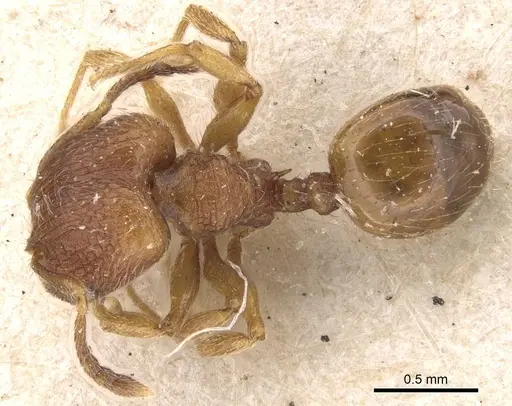
CASENT0908297
Voir sur AntWeb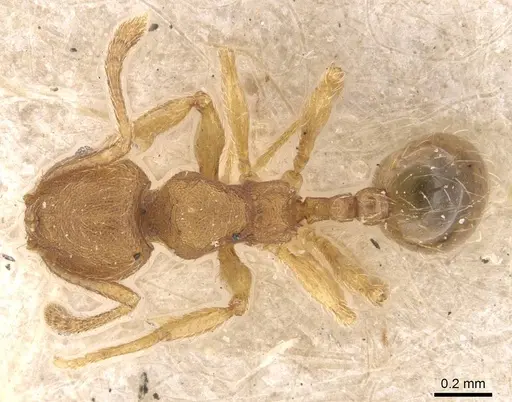
Littérature
Chargement de la carte de répartition...Chargement des produits...