
Pheidole mivory
- Nom sci.
- Pheidole mivory
- Tribu
- Attini
- Sous-famille
- Myrmicinae
- Auteur
- Salata & Fisher, 2020
- Distribution
- Trouvé dans 0 pays
Introduction
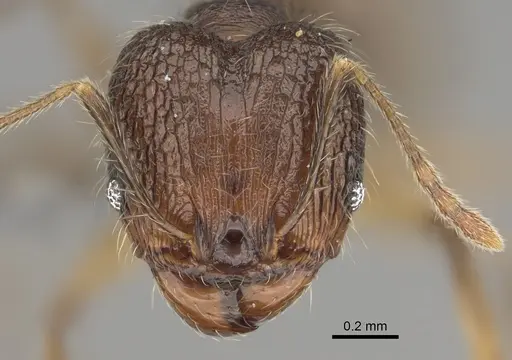
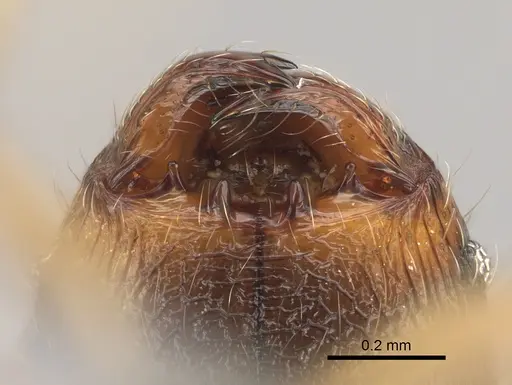
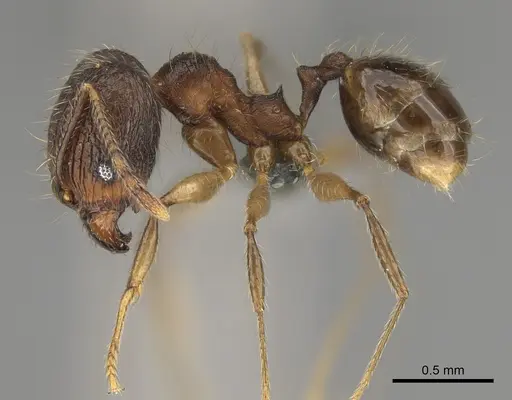
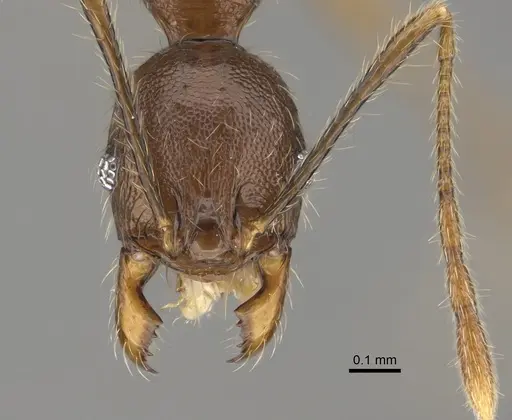
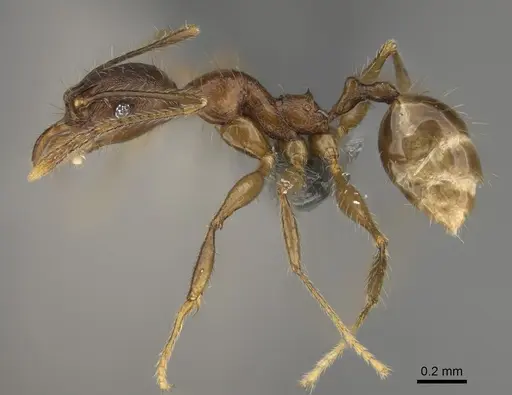
Pheidole mivory is a moderately large ant species from the sikorae group, native to the rainforests of northern Madagascar. Major workers have a brown body with dense rugae on the head, while minor workers are smaller with sparse sculpture. This species was described in 2020 from specimens collected in Parc National de Marojejy at 450 meters elevation . The name 'mivory' means watercourse in Malagasy, referring to the river near the collection site . This species nests in rotten logs within rainforest habitat, typical of many Pheidole in Madagascar. They have a dimorphic worker caste with large majors and small minors, a characteristic of the sikorae species group .
Quick Summary
- Difficulty: Medium
- Origin & Habitat: Northern Madagascar (Antsiranana region), specifically Parc National de Marojejy. Found in rainforest habitat at 450 meters elevation, nesting in rotten logs [1].
- Colony Type: Colony structure is unconfirmed from literature, but based on Pheidole genus patterns, likely monogyne (single queen colonies).
- Size & Growth:
- Queen: Inferred from Pheidole genus: approximately 6-8 mm total length.
- Worker: Inferred from Pheidole genus: major workers approximately 3-4 mm, minor workers 2-3 mm total length.
- Colony: Unknown, no data on colony size.
- Growth: Moderate, inferred from genus patterns.
- Development: 6-8 weeks estimated at optimal temperature, based on typical Pheidole genus patterns. (Development time may vary with temperature, tropical species often develop faster.)
- Antkeeping:
- Temperature: Keep at 24-28°C, based on tropical rainforest habitat [1].
- Humidity: Keep nest substrate consistently moist but not waterlogged, as this species is from rainforest habitat [1].
- Diapause: No, this is a tropical species from Madagascar with no cold season [1].
- Nesting: Naturalistic setup with moist soil/peat substrate works well, mimicking rotten log nesting [1]. Recommended nest types: Y-tong, plaster, or 3D-printed nests with moist chambers.
- Behavior: Based on Pheidole genus patterns, minor workers handle foraging and brood care, while majors defend the colony and process seeds. They are not aggressive but will defend if threatened. Escape risk is moderate due to minor worker size, standard prevention (e.g., fluon on edges) is sufficient.
- Common Issues: high humidity needs can lead to mold if ventilation is poor, balance humidity with adequate airflow., tropical species will not survive cold temperatures, keep away from drafts and air conditioning., newly described species with limited captive breeding data, finding colonies may be difficult., major workers are relatively large compared to minors, ensure nest chambers are appropriately sized.
Nest Preferences and Housing
Pheidole mivory naturally nests in rotten logs within rainforest habitat [1]. In captivity, replicate these humid, dark conditions with a soil/peat substrate mixture that stays moist but not waterlogged. Use Y-tong, plaster, or 3D-printed nests with moisture chambers. Provide dark, humid nest chambers and a water tube to maintain humidity [1].
Feeding and Diet
Diet information is unconfirmed from literature. Based on Pheidole genus patterns, they are generalist feeders and likely accept protein sources like small insects and carbohydrates like sugar water. Offer protein 2-3 times per week and keep sugar water available constantly.
Temperature and Seasonal Care
As a tropical rainforest species, Pheidole mivory needs warm temperatures year-round. Keep the nest area at 24-28°C for optimal brood development [1]. A heating cable on one side of the nest creates a temperature gradient. This species does not need diapause, maintain consistent tropical conditions [1].
Colony Development and Growth
Pheidole mivory was described in 2020,so detailed captive breeding data is limited. Based on typical Pheidole patterns, expect 6-8 weeks from egg to first worker at optimal temperature. Colonies grow moderately, and major workers indicate a well-established colony [1].
Behavior and Defense
This species shows typical Pheidole behavior with distinct worker castes. Minor workers handle foraging and brood care, while majors defend and process seeds. They are not aggressive but will defend if threatened. Major workers can sting, but the sting is mild to humans.
Frequently Asked Questions
How long does it take for Pheidole mivory to produce first workers?
Development time is unconfirmed from literature, but based on typical Pheidole patterns, it may take 6-8 weeks from egg to worker at optimal temperature (24-28°C).
What temperature do Pheidole mivory ants need?
Keep them at 24-28°C, based on their tropical rainforest habitat in Madagascar [1].
Can I keep multiple Pheidole mivory queens together?
Not recommended, as this species is likely monogyne (single queen) based on Pheidole genus patterns. Combining unrelated queens may result in fighting.
What do Pheidole mivory ants eat?
Diet is unconfirmed, but as a Pheidole species, they likely accept a varied diet of small insects and sugars.
Do Pheidole mivory ants need hibernation?
No, this is a tropical species from Madagascar with no cold season [1].
Are Pheidole mivory good for beginners?
This is a moderate-difficulty species due to high humidity and temperature needs. Being newly described, captive stock is rare. Beginners may find it challenging.
How big do Pheidole mivory colonies get?
Colony size is unknown, as no data is available from literature.
What type of nest should I use for Pheidole mivory?
A naturalistic setup with moist soil/peat substrate works best, mimicking their natural rotten log nesting [1]. Recommended nests are Y-tong, plaster, or 3D-printed with moist chambers.
Where is Pheidole mivory found in the wild?
Only in northern Madagascar, specifically Parc National de Marojejy in the Antsiranana region, at 450 meters elevation in rainforest, nesting in rotten logs [1].
Report an Issue
The current care sheet is based fully on literature. See inconsistencies, or something that's incorrect? Please , it will be resolved after review from an admin. Contributing to the blogs tab also helps providing information, to make us be able to further improve the caresheets. Thank you for your support!
References

Cette fiche d'élevage est sous licence CC BY-SA 4.0 .
Blogs de la communauté
CASENT0825256
Voir sur AntWeb
CASENT0923288
Voir sur AntWeb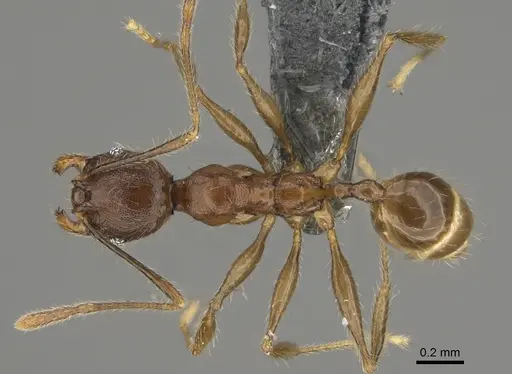
Littérature
Chargement de la carte de répartition...Chargement des produits...