
Pheidole masoandro
- Nom sci.
- Pheidole masoandro
- Tribu
- Attini
- Sous-famille
- Myrmicinae
- Auteur
- Salata & Fisher, 2020
- Distribution
- Trouvé dans 0 pays
Introduction
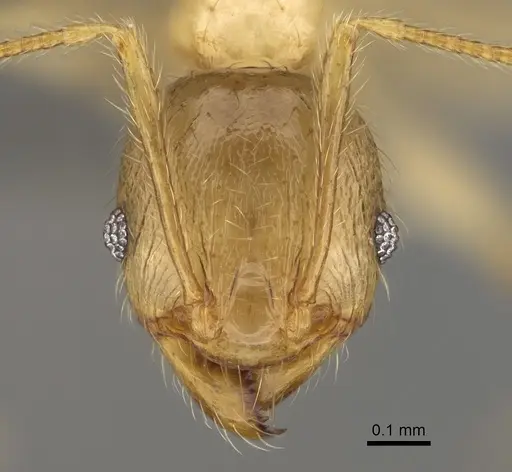
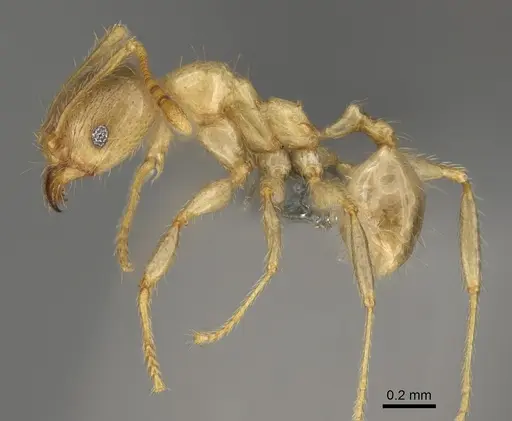
Pheidole masoandro is a small, bright yellow ant from the rainforests of Madagascar, described in 2020 . It belongs to the Pheidole sikorae species group, known for major workers with smooth heads . Size data unavailable for full body length, but it is a moderately large species within Pheidole . The name 'masoandro' means 'sun' in Malagasy, referring to its yellow color . This species lives in the Anosyenne Mountains at 1125 meters elevation, nesting in root mat of rainforest floor . Like all Pheidole, colonies have major and minor workers, with majors defending and minors foraging .
Quick Summary
- Difficulty: Medium
- Origin & Habitat: Endemic to Anosyenne Mountains, southern Madagascar, at 1125m elevation in tropical rainforest, nesting in root mat [1].
- Colony Type: Colony structure unconfirmed. Pheidole species are typically monogyne (single queen), but no data for this species.
- Size & Growth:
- Queen: size data unavailable [1]
- Worker: ~1-2 mm, inferred from Pheidole genus patterns
- Colony: Unknown, no colony size data available [1]
- Growth: Unknown, no development data available
- Development: Unconfirmed, no direct development data. Based on typical Pheidole patterns, expect 6-8 weeks at optimal temperature. (This is a newly described species with no captive breeding data.)
- Antkeeping:
- Temperature: Keep around 22-26°C, based on rainforest habitat at 1125m elevation [1].
- Humidity: Keep nest substrate consistently moist but not waterlogged, based on rainforest habitat [1].
- Diapause: Unknown, no data on overwintering requirements. Madagascar species may not need true hibernation.
- Nesting: In nature, they nest in root mat [1]. In captivity, use test tube setup for founding colonies, later Y-tong or plaster nests with moisture retention.
- Behavior: Pheidole are generally peaceful. Major workers defend with mandibles but are not aggressive toward keepers. Escape risk is moderate due to small size, use barrier precautions.
- Common Issues: newly described species means limited captive care information, expect some trial and error., small colony size makes them vulnerable to stress, avoid disturbing founding queens., high humidity requirements can lead to mold if ventilation is poor., escape prevention needed due to small worker size.
Housing and Nest Setup
For founding colonies, use a test tube setup with water and cotton plug for humidity [1]. Cover with dark sleeve and place in warm, humid area. Once colony reaches 20-30 workers, move to Y-tong or plaster nest with moisture retention. Provide humid environment without saturation, aim for damp substrate, not standing water.
Feeding and Diet
Offer protein like small insects and sugary liquids such as honey water. Feed minor workers every 2-3 days, remove uneaten prey after 24 hours to prevent mold. Keep constant sugar water supply once workers are active.
Temperature and Humidity
Keep colony at 22-26°C, based on rainforest habitat [1]. Room temperature usually works, use heating cable on nest side if needed. Humidity is important: keep nest substrate moist. For test tubes, refill water reservoir before cotton dries [1].
Handling and Temperament
Pheidole masoandro is not aggressive toward keepers. Major workers defend against other ants but rarely bite humans. Workers may panic when disturbed. Use caution when opening nest to avoid stress. Small size means escape risk, ensure setup is secure.
Frequently Asked Questions
How long does it take for Pheidole masoandro to produce first workers?
No captive breeding data. Based on typical Pheidole patterns, expect first workers in 6-8 weeks at optimal temperature.
Can I keep Pheidole masoandro in a test tube?
Yes, test tubes work well for founding colonies. Use standard setup with water reservoir and cotton plug.
What do Pheidole masoandro ants eat?
They likely accept standard Pheidole diet: small insects for protein and sugary liquids for energy.
How big do Pheidole masoandro colonies get?
Colony size is unknown, no wild colony data [1]. Most Pheidole species can reach several hundred to a few thousand workers.
Do Pheidole masoandro need hibernation?
Unknown, no data on overwintering. As a Madagascar rainforest species, they likely do not require true hibernation.
Are Pheidole masoandro good for beginners?
Not ideal for complete beginners due to limited captive care information. If experienced with Pheidole, it should be manageable.
What temperature is best for Pheidole masoandro?
Keep nest temperature around 22-26°C, based on rainforest habitat at 1125m elevation [1].
Why are my Pheidole masoandro dying?
Common causes include stress from disturbance, low humidity, mold, temperature extremes, and inadequate food. Check nest humidity and stability.
When should I move Pheidole masoandro to a formicarium?
Move once colony reaches 20-30 workers and test tube water needs frequent refilling. Use Y-tong or plaster nest for humidity.
Report an Issue
The current care sheet is based fully on literature. See inconsistencies, or something that's incorrect? Please , it will be resolved after review from an admin. Contributing to the blogs tab also helps providing information, to make us be able to further improve the caresheets. Thank you for your support!
References

Cette fiche d'élevage est sous licence CC BY-SA 4.0 .
Blogs de la communauté
CASENT0704282
Voir sur AntWeb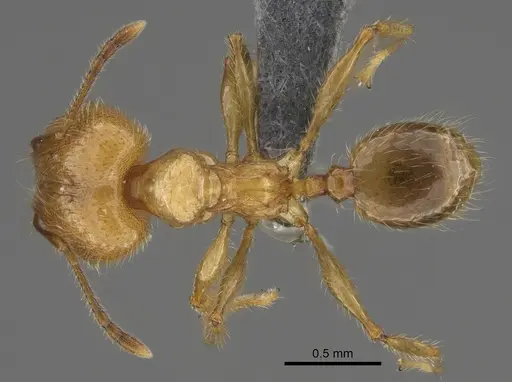
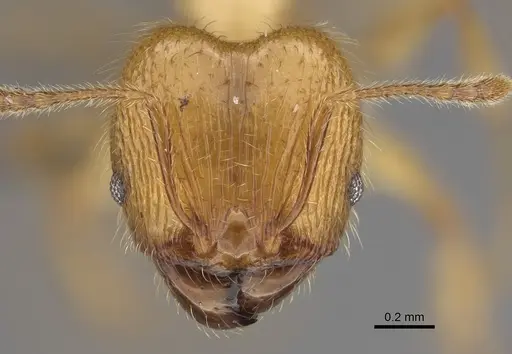
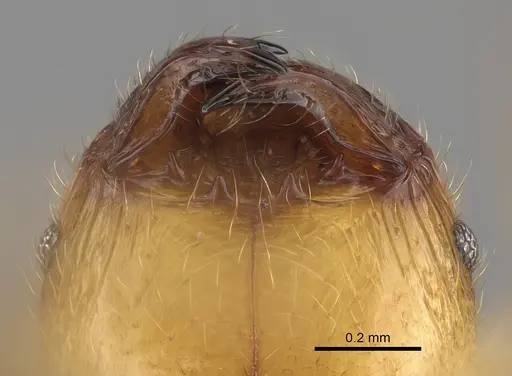
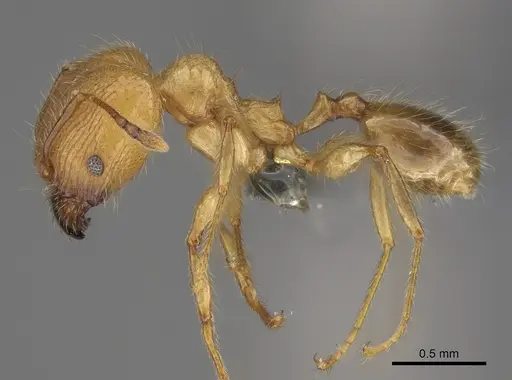
CASENT0923293
Voir sur AntWeb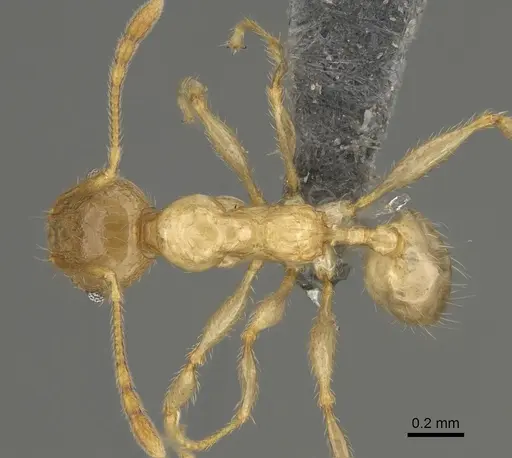
Littérature
Chargement de la carte de répartition...Chargement des produits...