
Pheidole laidlowi
- Nom sci.
- Pheidole laidlowi
- Tribu
- Attini
- Sous-famille
- Myrmicinae
- Auteur
- Mann, 1916
- Distribution
- Trouvé dans 1 pays
Introduction
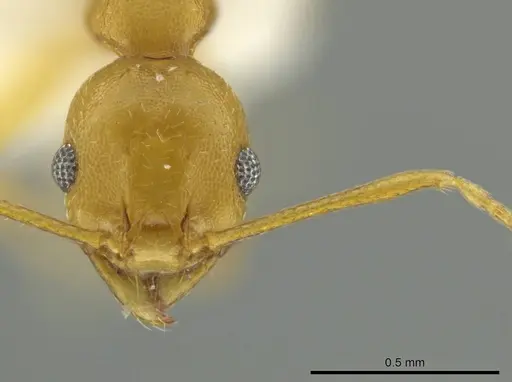
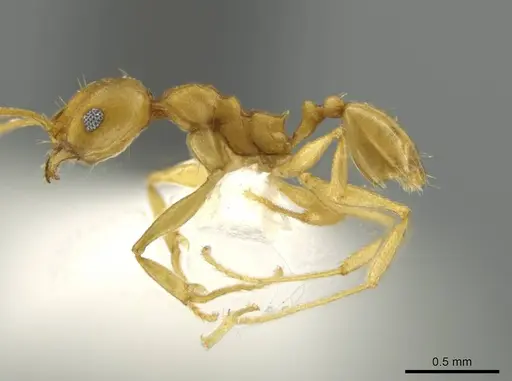
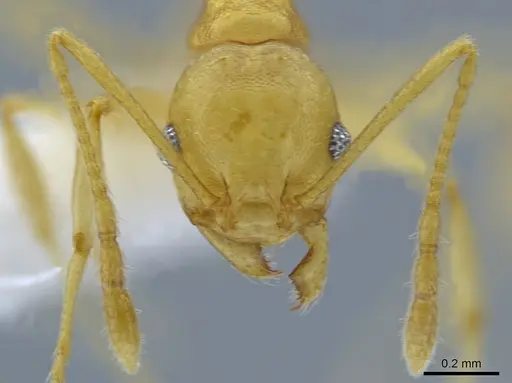
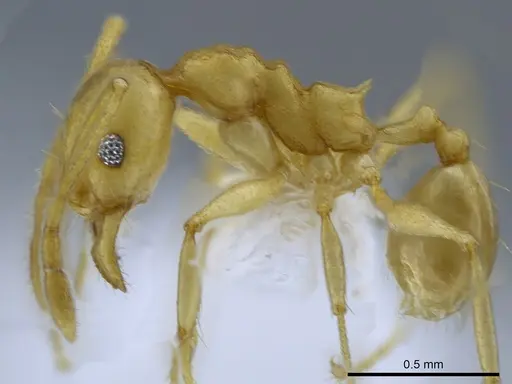
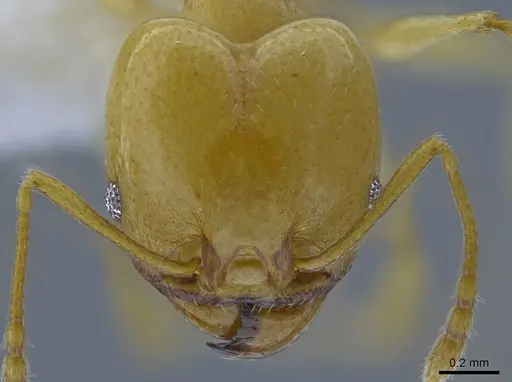
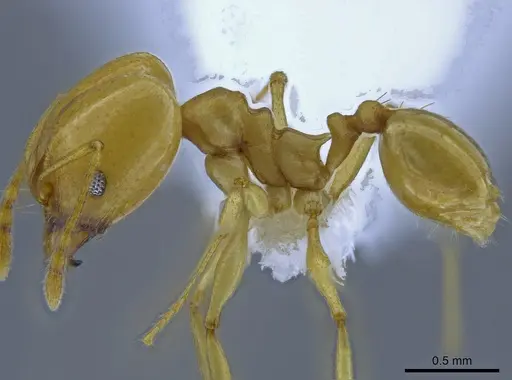
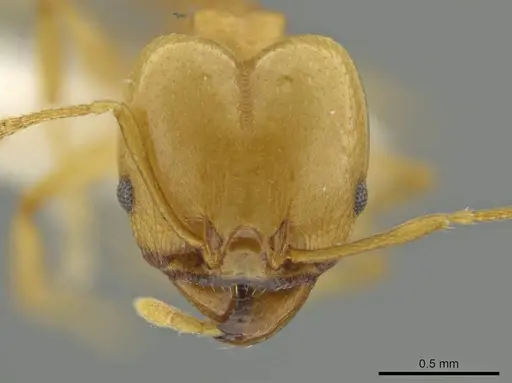
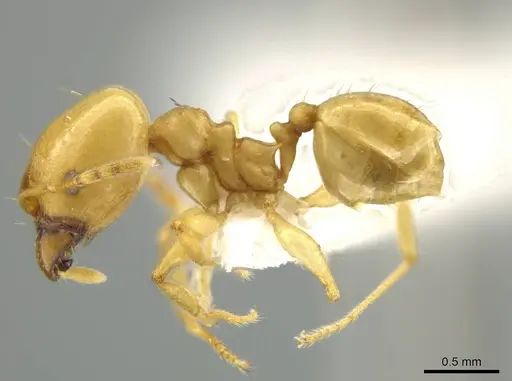
Pheidole laidlowi is a small, yellow ant species native to Amazonian regions of Brazil, Peru, Ecuador, and Colombia . Both major and minor workers are pale yellow and nearly hairless . This species belongs to the diligens group and is adapted to tropical rainforest environments. Pheidole laidlowi shows high flood tolerance and is behaviorally dominant in floodplain forests, foraging at distances up to 1 meter with strong recruitment behavior .
Quick Summary
- Difficulty: Hard
- Origin & Habitat: Amazonian Brazil, Peru, Ecuador, and Colombia. Found in floodplain forests and terra firme habitats [4][2].
- Colony Type: Based on typical Pheidole patterns, likely monogyne (single queen), but unconfirmed due to lack of specific data.
- Size & Growth:
- Queen: size data unavailable
- Worker: size data unavailable
- Colony: Unknown, no colony data available
- Growth: Unknown
- Development: Unknown, no development data exists (Development time is unclear, observe colony progress.)
- Antkeeping:
- Temperature: Temperature needs are unclear, start around 24-28°C and observe, as inferred from tropical habitat [3].
- Humidity: Keep nest substrate consistently moist but not waterlogged, based on high flood tolerance [4].
- Diapause: No, as an Amazonian species, they do not require hibernation.
- Nesting: Mixed nesting in wild, recommend test tube setup initially, then move to soil or plaster nests with moist substrate [4].
- Behavior: Active ground-foragers with strong recruitment. Behaviorally dominant in floodplain areas. Has a functional stinger for defense, as typical for Myrmicinae ants. Escape risk is moderate due to small size.
- Common Issues: incorrect humidity can lead to colony failure, keep substrate moist but not waterlogged, mold growth in stagnant conditions, ensure proper ventilation, founding colonies are fragile, maintain stable temperature and humidity
Species Background and Identification
Pheidole laidlowi was described by Mann in 1916 and elevated to species status by Wilson in 2003 [3]. Major workers have longitudinal carinulae on the head and are nearly hairless, while minors have a narrow occiput [3]. Both castes are pale yellow [3].
Natural History and Ecology
This species is abundant in Amazonian Ecuador and shows high flood tolerance, with greater abundance in floodplain areas [4]. It forages at distances up to 1 meter and has strong recruitment behavior [4]. Major workers comprise over 11% of foragers at baits [4].
Distribution
Pheidole laidlowi is recorded in Amazonian Brazil, Peru, Ecuador, and Colombia [1][2]. It is found in both floodplain and terra firme forests [2].
Housing and Nesting
In the wild, this species uses mixed nesting strategies [4]. For captive care, start with a test tube setup and later move to soil or plaster nests with moist substrate.
Feeding
Pheidole laidlowi has been recorded at food bait stations [5][4]. Offer protein sources like small insects and sugar sources like honey water.
Temperature and Seasonal Care
No specific temperature data is available for this species [3]. As an Amazonian tropical ant, it likely requires warm conditions, but keepers should observe colony behavior to adjust.
Colony Development
The biology of Pheidole laidlowi is completely unstudied, including colony founding and development time [3]. No specific data on development timeline exists.
Frequently Asked Questions
How long does it take for Pheidole laidlowi to produce first workers?
Unknown, no development data exists for this species [3].
Are Pheidole laidlowi good for beginners?
Not recommended for beginners due to unstudied biology, best for experienced keepers who can experiment with care conditions.
What do I feed Pheidole laidlowi?
Based on bait studies, offer small insects as protein and sugar sources like honey water [5][4].
Can I keep multiple queens together?
Not recommended. Pheidole species are typically single-queen colonies, but this is unconfirmed for P. laidlowi.
What temperature do Pheidole laidlowi need?
Temperature requirements are unknown, maintain warm conditions around 24-28°C as inferred from tropical habitat [3].
How big do Pheidole laidlowi colonies get?
Unknown, no colony size data exists.
Do they need hibernation?
No. As an Amazonian tropical species, they do not require hibernation or winter cooling.
Why is there no information about this species?
Pheidole laidlowi is a poorly studied species. AntWiki explicitly states 'Nothing is known about the biology of laidlowi' [3].
Is Pheidole laidlowi aggressive?
Based on their behaviorally dominant status in floodplain forests, they are likely competitive foragers but not unusually aggressive toward keepers [4].
Report an Issue
The current care sheet is based fully on literature. See inconsistencies, or something that's incorrect? Please , it will be resolved after review from an admin. Contributing to the blogs tab also helps providing information, to make us be able to further improve the caresheets. Thank you for your support!
References

Cette fiche d'élevage est sous licence CC BY-SA 4.0 .
Blogs de la communauté
CASENT0645811
Voir sur AntWeb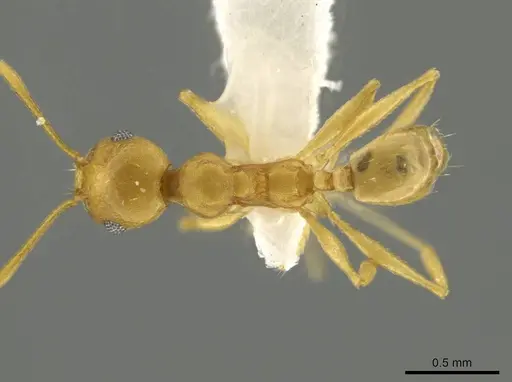
CASENT0650582
Voir sur AntWeb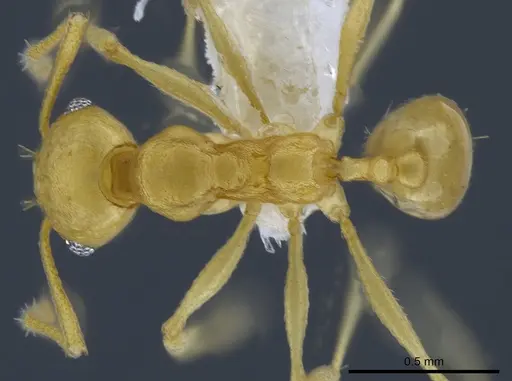
CASENT0650583
Voir sur AntWeb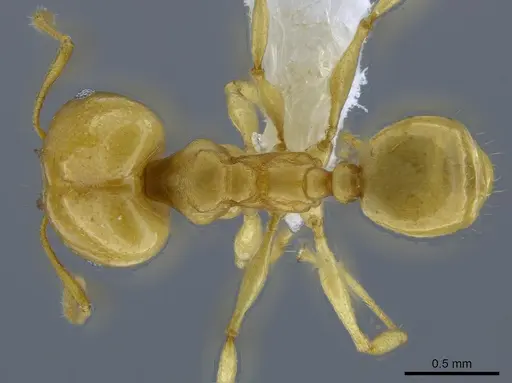
JTLC000016425
Voir sur AntWeb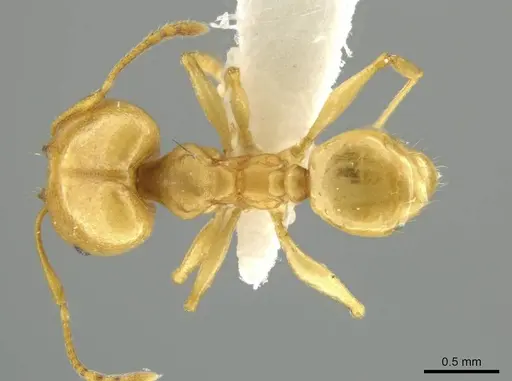
Littérature
Chargement de la carte de répartition...Chargement des produits...