
Paratopula oculata
- Nom sci.
- Paratopula oculata
- Tribu
- Crematogastrini
- Sous-famille
- Myrmicinae
- Auteur
- Smith, 1857
- Distribution
- Trouvé dans 1 pays
Introduction
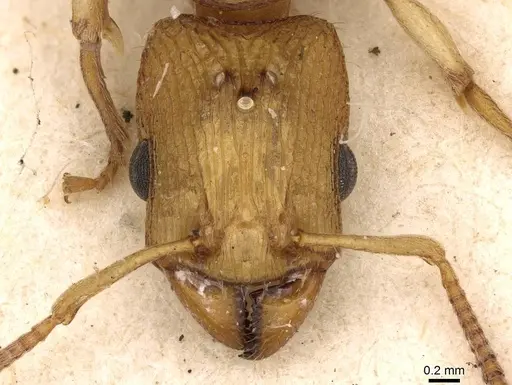
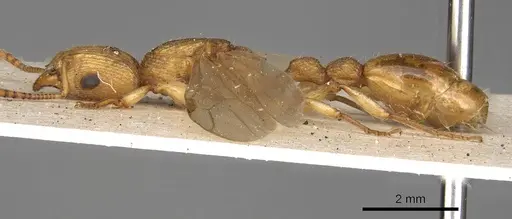
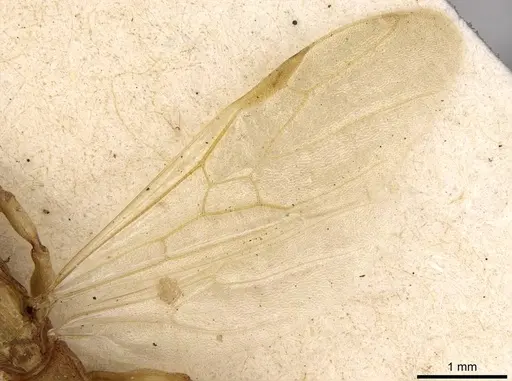
Paratopula oculata is an ant species known only from queens and males, with no workers ever documented . It is found in Borneo, western Malaysia, and Singapore . Size data is unavailable, as no body measurements have been published. This species belongs to the subfamily Myrmicinae and tribe Crematogastrini, which typically have a smear defense mechanism using a modified stinger, but specific behavior for P. oculata is unknown due to the lack of colony observations.
Quick Summary
- Difficulty: Expert
- Origin & Habitat: Borneo, western Malaysia, and Singapore in the Indomalaya region. The natural habitat is essentially unknown, only winged queens and males have been collected, likely from light traps or during brief nuptial flight events [1][2].
- Colony Type: Unknown, only queens and males have ever been observed. No workers have been documented, making it impossible to determine colony structure [1].
- Size & Growth:
- Queen: size data unavailable
- Worker: size data unavailable
- Colony: Unknown
- Growth: Unknown
- Development: Unknown, no colony has ever been established (Workers have never been observed, so the complete development cycle is unconfirmed)
- Antkeeping:
- Temperature: Unknown, but based on tropical distribution, estimated to require warm conditions around 22-25°C
- Humidity: Unknown, but likely requires high humidity given the tropical rainforest origin
- Diapause: Unknown, no data on seasonal behavior
- Nesting: Unknown, no natural nesting observations exist. Arboreal nesting is suspected based on the genus Paratopula, but this is unconfirmed for this specific species [1]
- Behavior: Completely unknown. Based on subfamily Myrmicinae and tribe Crematogastrini, this species likely has a smear defense mechanism using a modified stinger. However, no behavioral observations exist for P. oculata.
- Common Issues: no workers have ever been documented, making captive establishment impossible., the complete lack of biological data means no established care guidelines exist., this species is extremely rare in the wild and may be endangered., no one has ever successfully established a colony, there is no keeper knowledge to draw from., the queen may require specific conditions that are completely unknown.
Why Paratopula oculata Cannot Be Kept
Paratopula oculata cannot be kept in captivity because workers have never been documented. Without workers, we don't know what they eat, how they nest, or any aspect of their biology [1]. This species is only known from queens and males, and no colony has ever been established [2].
Taxonomic History and Confusion
Paratopula oculata has undergone many name changes, from Paratopula oculata to its current name, due to the difficulty in classifying it without worker specimens [4].
What Would Need to Be Discovered
Before any keeping attempt, basic biology must be discovered. The most critical is finding workers and observing colonies in the wild [1].
Frequently Asked Questions
Can I keep Paratopula oculata ants?
No. This species cannot be kept because workers have never been documented. No one knows what these ants eat, how they nest, or how to establish a colony [1].
Where can I find Paratopula oculata for sale?
Paratopula oculata is not available in the ant-keeping hobby due to its extreme rarity [1].
Why are workers unknown for this species?
Workers have never been discovered or described in the scientific literature [1].
What does Paratopula oculata eat?
Unknown. No feeding observations exist for this species [1].
How big do Paratopula oculata colonies get?
Unknown. Colony size has never been documented [1].
Do Paratopula oculata ants sting?
Unknown. Without workers, defensive behavior is unconfirmed, but based on subfamily, they likely can sting [1].
What is the natural habitat of Paratopula oculata?
The natural habitat is essentially unknown. Specimens have been collected in Borneo, western Malaysia, and Singapore, but no specific nesting observations exist [1].
Are Paratopula oculata endangered?
Unknown. The species is rarely collected, but conservation status is unassessed [1].
Can I help research this species?
Professional researchers need to conduct field surveys in Borneo, Malaysia, and Singapore to locate nesting colonies [1].
What similar species can I keep instead?
If you're interested in rare, tropical Myrmicinae ants, consider better-documented species like Diacamma or Strumigenys that have established care protocols.
Report an Issue
The current care sheet is based fully on literature. See inconsistencies, or something that's incorrect? Please , it will be resolved after review from an admin. Contributing to the blogs tab also helps providing information, to make us be able to further improve the caresheets. Thank you for your support!
References

Cette fiche d'élevage est sous licence CC BY-SA 4.0 .
Blogs de la communauté
CASENT0901348
Voir sur AntWeb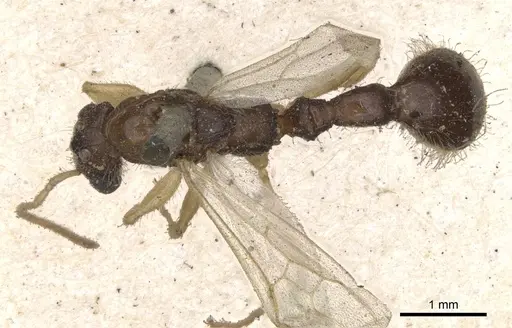
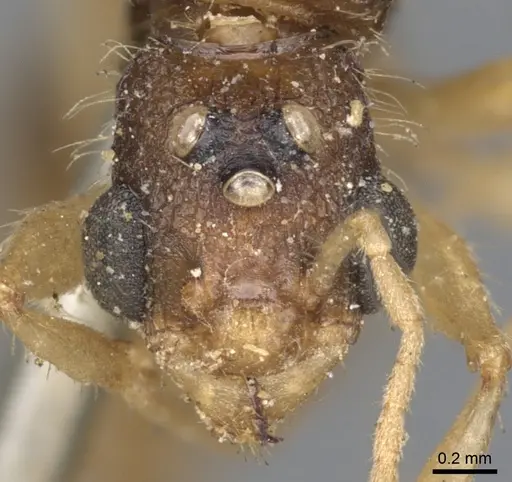
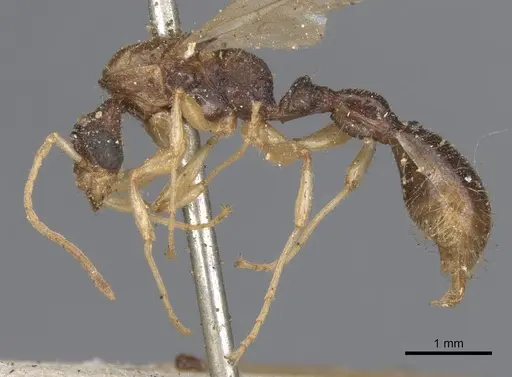
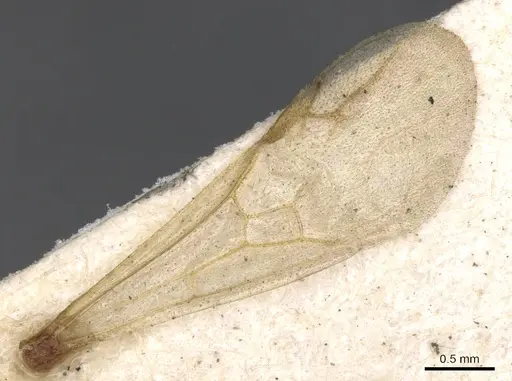
CASENT0914168
Voir sur AntWeb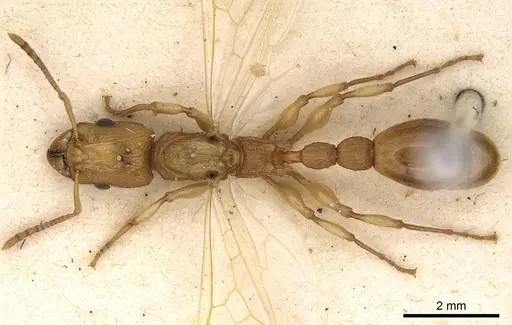
Littérature
Chargement de la carte de répartition...Chargement des produits...