
Opisthopsis linnaei
- Nom sci.
- Opisthopsis linnaei
- Tribu
- Camponotini
- Sous-famille
- Formicinae
- Auteur
- Forel, 1901
- Distribution
- Trouvé dans 0 pays
Introduction
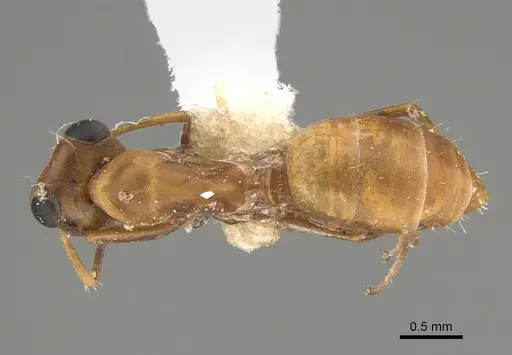
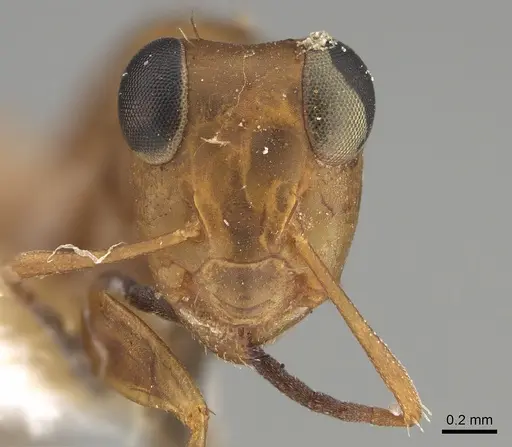
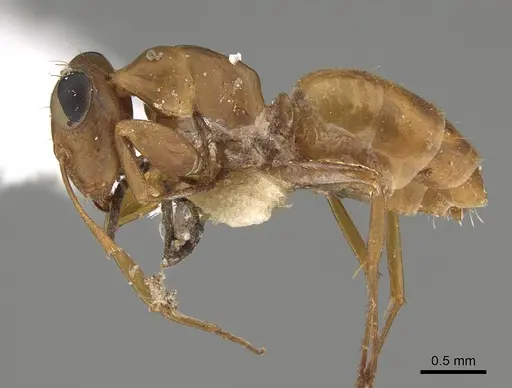
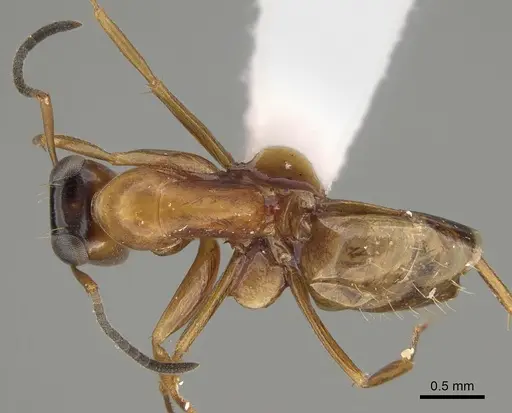
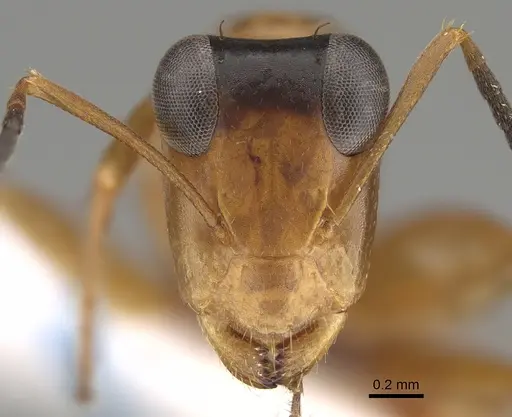
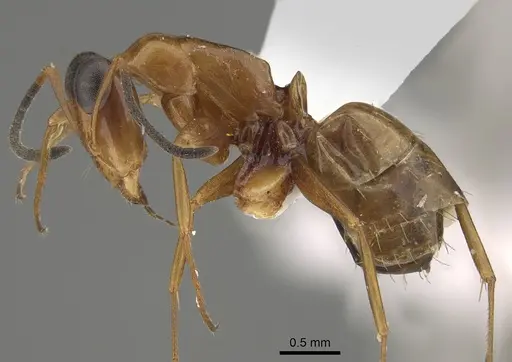
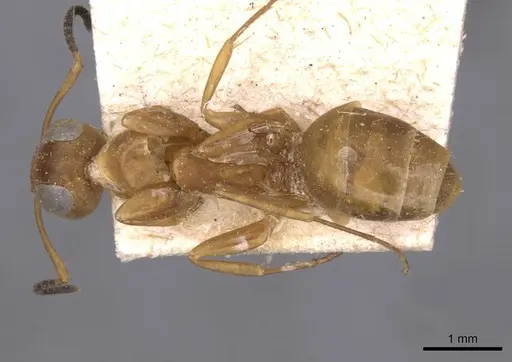
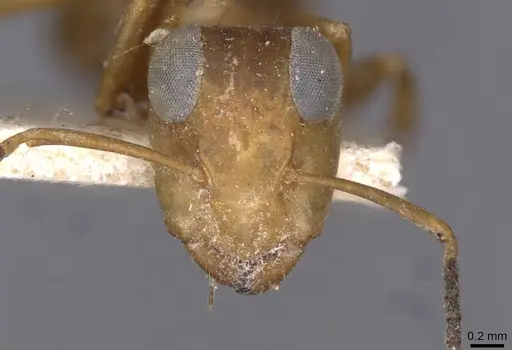
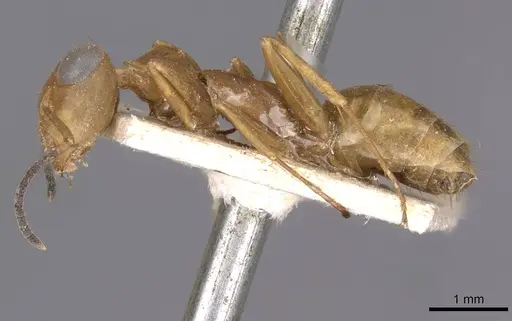
Opisthopsis linnaei is a species of ant native to New Guinea and the Bismarck Archipelago, including New Britain . Workers have a distinctive appearance with large eyes, characteristic of the genus Opisthopsis . Size data for this species is unavailable, as no total length measurements are provided in the research. They inhabit tropical forests and nest in rotting wood or under bark . The most notable feature of Opisthopsis linnaei is its large eyes, which suggest a reliance on visual cues during foraging, a trait common in the genus .
Quick Summary
- Difficulty: Medium
- Origin & Habitat: New Guinea and Bismarck Archipelago (New Britain), tropical rainforest environment [1][2].
- Colony Type: Unconfirmed, no specific data on queen number for this species.
- Size & Growth:
- Queen: Size data unavailable, no total length measurements available for this species.
- Worker: Size data unavailable, no total length measurements available for this species.
- Colony: Unknown, no data on colony size for this species.
- Growth: Moderate, inferred from tropical Formicinae patterns.
- Development: Estimated 6-8 weeks at optimal temperatures, inferred from related species. (Development time is estimated, direct data for this species does not exist.)
- Antkeeping:
- Temperature: Keep warm, around 24-28°C, based on the tropical habitat [1].
- Humidity: Keep humid, around 70-85%, based on tropical rainforest conditions [2].
- Diapause: No, tropical species do not require hibernation.
- Nesting: Y-tong or plaster nests that retain moisture, inferred from genus preferences for rotting wood [2].
- Behavior: Opisthopsis ants are active foragers with good vision. Workers are alert and quick-moving. Based on subfamily characteristics, they lack a functional sting and may spray formic acid when threatened. Escape risk is moderate due to their size and activity level.
- Common Issues: tropical species may struggle in cool, dry environments, keep them warm and humid., colonies may decline if humidity drops too low, monitor substrate moisture regularly., limited availability in the antkeeping hobby means husbandry knowledge is limited., wild-caught colonies may carry parasites or diseases from their native habitat.
Housing and Nest Preferences
Based on the genus Opisthopsis nesting in rotting wood [2], Y-tong or plaster nests that retain moisture are suitable for Opisthopsis linnaei. Provide dark, humid nest chambers to mimic their natural preferences. Outworld space should be moderate for active foragers.
Feeding and Diet
No specific dietary data exists for this species. Like most Formicinae, they are likely omnivorous, but offer sugar water or honey as a constant energy source and protein from small insects every 2-3 days, based on general antkeeping practices.
Temperature and Humidity Requirements
Keep temperatures warm, around 24-28°C, based on the tropical distribution of New Guinea [1]. Humidity should be high, around 70-85%, to reflect tropical rainforest conditions [2]. Use a heating cable on one side of the nest to create a gradient, and mist occasionally to maintain moisture.
Colony Development and Growth
Colony growth is moderate, inferred from tropical Formicinae patterns. The first workers are estimated to emerge 6-8 weeks after queen lays eggs at optimal temperatures, based on related species. No data on mature colony size exists for this species.
Frequently Asked Questions
How long does it take for Opisthopsis linnaei to produce first workers?
Estimated 6-8 weeks at optimal temperatures, inferred from related Formicinae species. Direct data for this species is unavailable.
What do Opisthopsis linnaei ants eat?
No specific data, but they are likely omnivorous. Offer sugar water or honey and protein sources like small insects every 2-3 days.
Do Opisthopsis linnaei ants need hibernation?
No, as a tropical species from New Guinea, they do not require hibernation.
What temperature and humidity do Opisthopsis linnaei need?
Keep them at 24-28°C with humidity around 70-85%, based on their tropical habitat [1][2].
Are Opisthopsis linnaei good for beginners?
This species is rated as Medium difficulty due to specific humidity and temperature needs, and limited availability in the hobby.
How big do Opisthopsis linnaei colonies get?
Colony size is unknown for this species, no data is available.
Can I keep multiple Opisthopsis linnaei queens together?
No data exists on this. Based on typical Formicinae patterns, they likely form single-queen colonies, but it is not recommended to combine unrelated queens.
What type of nest is best for Opisthopsis linnaei?
Y-tong or plaster nests that retain moisture are suitable, based on genus preferences for rotting wood [2].
Why are my Opisthopsis linnaei dying?
Common causes include low humidity (they need 70-85%), temperatures below 24°C, or poor nutrition. Check your setup and offer varied food sources.
Report an Issue
The current care sheet is based fully on literature. See inconsistencies, or something that's incorrect? Please , it will be resolved after review from an admin. Contributing to the blogs tab also helps providing information, to make us be able to further improve the caresheets. Thank you for your support!
References

Cette fiche d'élevage est sous licence CC BY-SA 4.0 .
Blogs de la communauté
Littérature
Chargement de la carte de répartition...Chargement des produits...