
Nylanderia impolita
- Nom sci.
- Nylanderia impolita
- Tribu
- Lasiini
- Sous-famille
- Formicinae
- Auteur
- LaPolla & Fisher, 2011
- Distribution
- Trouvé dans 1 pays
Introduction
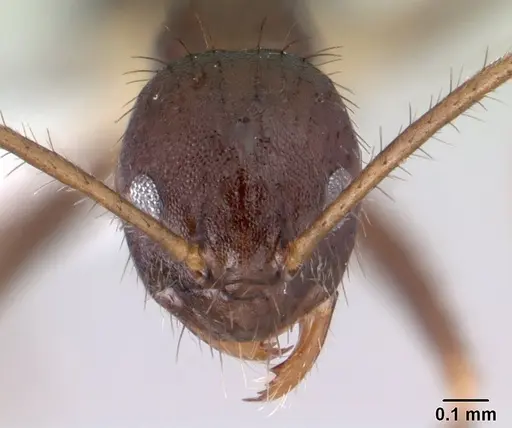
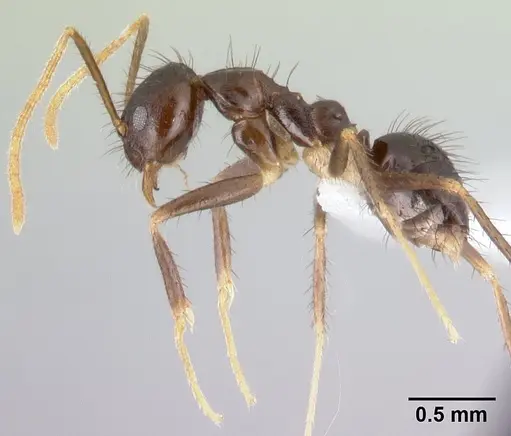
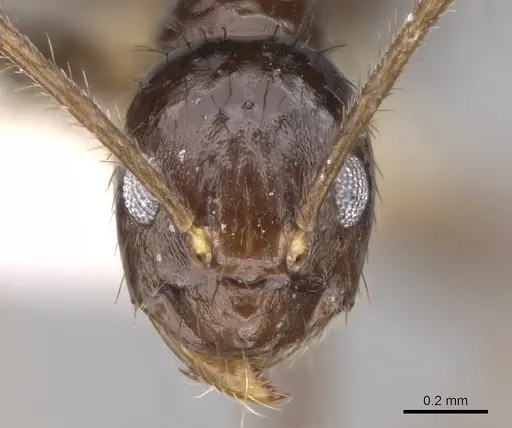
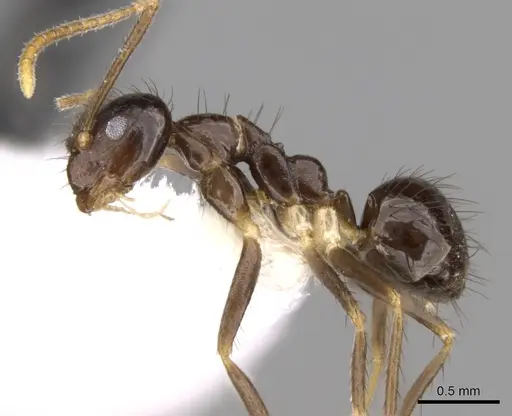
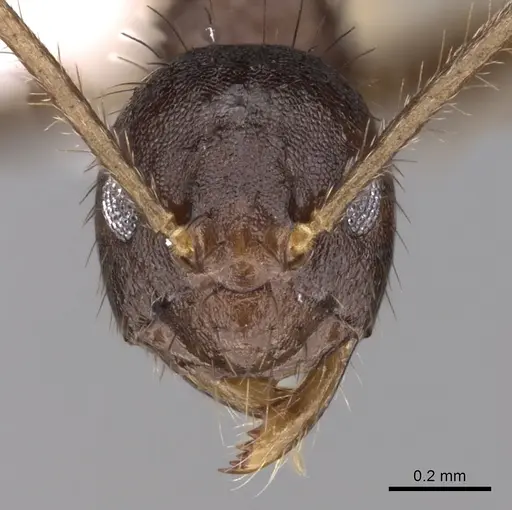
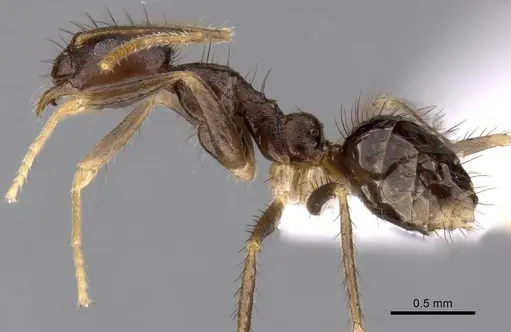
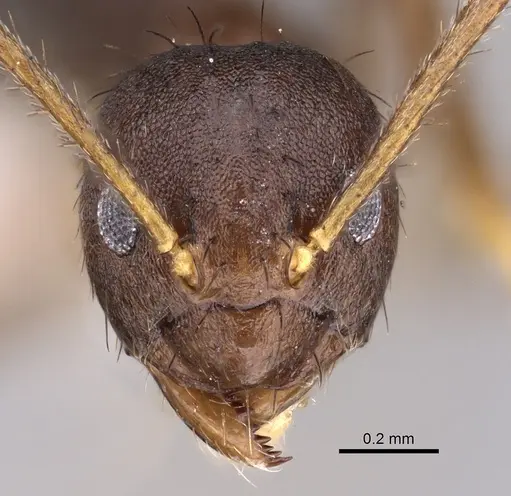
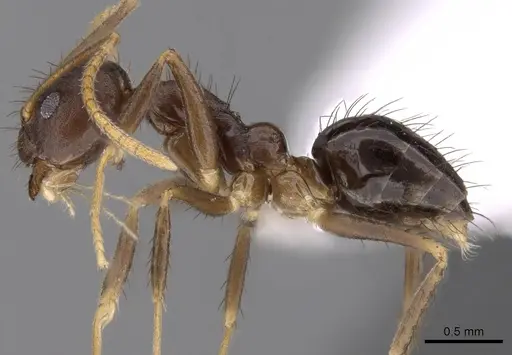
Nylanderia impolita is a small, dark brown ant species native to West Africa. Workers measure 2.6-3.1 mm in total length and have one of the longest scapes of any African Nylanderia species . The most distinctive feature is their rough, textured cuticle (rugulose) on the head and mesosoma, giving them an 'unpolished' appearance - this is how they got their name 'impolita', meaning unpolished in Latin . They are widespread across West Africa, including Gabon, Ghana, Angola, and the Central African Republic, typically found in coastal lowland rainforest . The queen and male castes remain unknown to science, making this a rarely kept and poorly studied species in the antkeeping hobby .
Quick Summary
- Difficulty: Hard
- Origin & Habitat: West Africa, coastal lowland rainforest in Gabon, Ghana, Angola, and Central African Republic. Specimens have been collected from forest margins along rivers [1].
- Colony Type: Unknown, the queen caste has not been described, so colony structure (single-queen or multi-queen) is unconfirmed.
- Size & Growth:
- Queen: Unknown, queen caste has not been described [1]
- Worker: 2.6-3.1 mm [1]
- Colony: Unknown
- Growth: Unknown
- Development: Unknown (Development timeline has not been studied for this species. Based on related Nylanderia species, it may take 4-8 weeks at tropical temperatures, but this is an estimate.)
- Antkeeping:
- Temperature: Based on West African rainforest origin, likely 22-28°C. Start around 24-26°C and observe colony activity [1].
- Humidity: Keep nest substrate consistently moist but not waterlogged, with some drier areas available [1].
- Diapause: Unknown
- Nesting: Nesting preferences are unknown. Based on general Formicinae patterns, Y-tong or plaster nests with moisture may work.
- Behavior: Behavior is not well documented. Based on related species, they are likely generalist foragers that scavenge for sugars and protein. Escape risk is moderate due to small size, use standard barriers. Aggression level is unknown.
- Common Issues: lack of knowledge about queen and male castes makes captive breeding difficult., no established care protocols exist, keepers are pioneering husbandry., escape prevention is critical due to small worker size (2.6-3.1 mm)., wild-caught colonies may have parasites or diseases.
Discovery and Identification
Nylanderia impolita was first described in 2011 by LaPolla, Hawkes, and Fisher as part of a comprehensive monograph on African Nylanderia species [1]. The type specimens were collected in Gabon using a malaise trap placed in coastal lowland rainforest at the forest margin along a river [1]. The species name 'impolita' comes from Latin meaning 'unpolished', a direct reference to their distinctive rough, textured cuticle on the head and mesosoma [1]. This rugulose texture is their key identifying feature and separates them from the similar-looking Nylanderia lepida, which has smooth, shiny cuticle [1]. Workers are overall dark brown with lighter mandibles, antennae, and legs [1].
Distribution and Habitat
This species is widespread throughout West Africa, with confirmed records from Angola, Central African Republic, Gabon, and Ghana [1]. In Gabon, specimens have been collected from multiple locations in Ogooue-Maritime and Woleu-Ntem provinces, as well as the Monts Doudou area [1]. In Ghana, they have been found in several locations including Enchi, Bunso near Tafo, and the Atewa forest area [1]. Their natural habitat is coastal lowland rainforest, typically at forest margins along rivers [1].
Current Knowledge Gaps
Nylanderia impolita remains one of the most poorly known ant species in the hobby. The queen caste has never been described, meaning we do not know her size, color, or morphology [1]. Similarly, the male caste is completely unknown [1]. This also means we have no information about their colony structure, founding behavior, nuptial flight timing, or development timeline. No captive colonies have ever been established, so there are no proven care protocols.
Similar Species: Nylanderia lepida
Nylanderia impolita is most likely to be confused with Nylanderia lepida, a related species found in the same region [1]. The main differences are: Nylanderia lepida is generally smaller (total length 1.2-2.6 mm vs 2.6-3.1 mm for Nylanderia impolita), and most importantly Nylanderia lepida has a very smooth and shining cuticle while Nylanderia impolita has the distinctive rough, rugulose texture [1]. Nylanderia impolita also has a more elongated mesosoma with a lower pronotum, and generally more erect macrosetae on the scapes [1].
Tentative Care Recommendations
Since no established care protocols exist for this species, any recommendations are educated guesses based on related Nylanderia species and their West African rainforest origin. Keep temperatures in the range of 22-28°C, which is typical for tropical ant species [1]. Humidity should be moderate to high, think damp forest floor conditions [1]. Nest options that work well for small rainforest ants include Y-tong (AAC) nests or plaster nests with some moisture. Foraging behavior is likely similar to other Nylanderia, they are generalists that will scavenge for sugars and protein. Offer sugar water or honey as a carbohydrate source, and small protein sources like fruit flies or springtails.
Frequently Asked Questions
How do I keep Nylanderia impolita ants?
There are no established care protocols for this species since it has never been kept in captivity. Based on its West African rainforest origin, try keeping it in a Y-tong or plaster nest at 22-28°C with moderate humidity [1]. Offer sugar water and small protein sources. You will essentially be pioneering the husbandry of this species.
What does Nylanderia impolita look like?
Workers are small at 2.6-3.1 mm, dark brown overall with lighter mandibles, antennae, and legs. The most distinctive feature is the rough, wrinkled (rugulose) texture on their head and mesosoma. They have one of the longest scapes of any African Nylanderia [1].
Where is Nylanderia impolita found?
This species is widespread across West Africa, confirmed in Angola, Central African Republic, Gabon, and Ghana. They live in coastal lowland rainforest, typically at forest margins along rivers [1].
How big do Nylanderia impolita colonies get?
Unknown, no colony size data has been documented. The queen caste has never been described, so we have no information about typical colony sizes [1].
How long does it take for Nylanderia impolita eggs to become workers?
Unknown, the development timeline has never been studied. Based on related Nylanderia species, it likely takes 4-8 weeks at tropical temperatures, but this is just an estimate.
Can I keep multiple Nylanderia impolita queens together?
Unknown, the colony structure (single-queen vs multi-queen) has not been documented. The queen caste itself has never been described, so we have no information about their social structure [1].
Is Nylanderia impolita good for beginners?
No, this species is not recommended for beginners or even experienced keepers. It has never been kept in captivity, the queen is unknown to science, and no established care protocols exist. Keeping this species is essentially contributing to scientific discovery.
What do Nylanderia impolita ants eat?
Unknown, no feeding observations have been documented. Based on related species, they are likely generalist foragers that accept sugars (honeydew, nectar) and protein (small insects). Offer sugar water or honey and small live or dead arthropods.
Does Nylanderia impolita need hibernation?
Unknown, as a West African species from tropical rainforest, they likely do not require true hibernation. They may have reduced activity during cooler or drier seasons, but this has not been studied.
Where can I get a Nylanderia impolita queen?
This species is extremely rare in the antkeeping hobby. Queens have never been described, so they are not available from commercial suppliers. Any colony would need to be wild-caught in West Africa, which presents significant practical and legal challenges [1].
Why is Nylanderia impolita so rare in antkeeping?
This species was only described in 2011 and the queen caste remains unknown to science. They have never been kept in captivity, so no husbandry protocols exist. Their West African distribution also makes them difficult to obtain. They represent a frontier species for antkeeping, almost nothing is known about them [1].
Report an Issue
The current care sheet is based fully on literature. See inconsistencies, or something that's incorrect? Please , it will be resolved after review from an admin. Contributing to the blogs tab also helps providing information, to make us be able to further improve the caresheets. Thank you for your support!
References

Cette fiche d'élevage est sous licence CC BY-SA 4.0 .
Blogs de la communauté
CASENT0179589
Voir sur AntWeb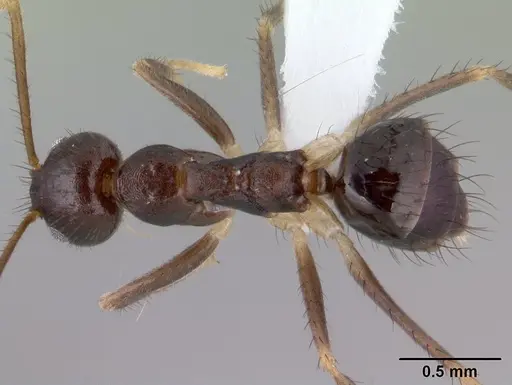
CASENT0281155
Voir sur AntWeb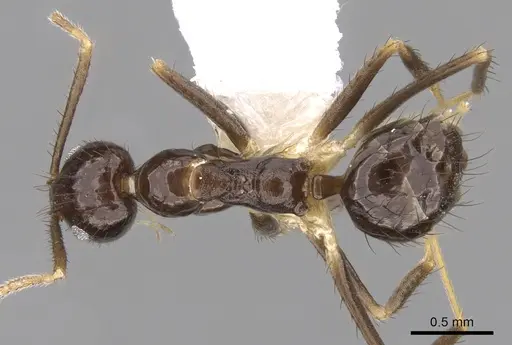
CASENT0317039
Voir sur AntWeb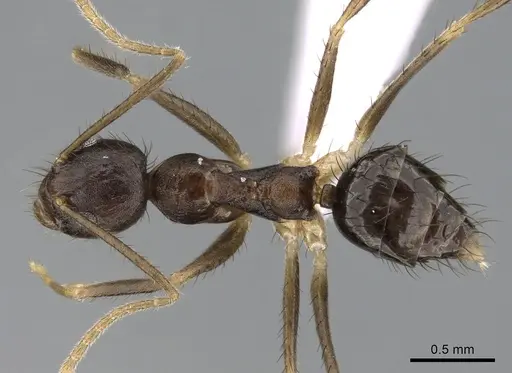
CASENT0405304
Voir sur AntWeb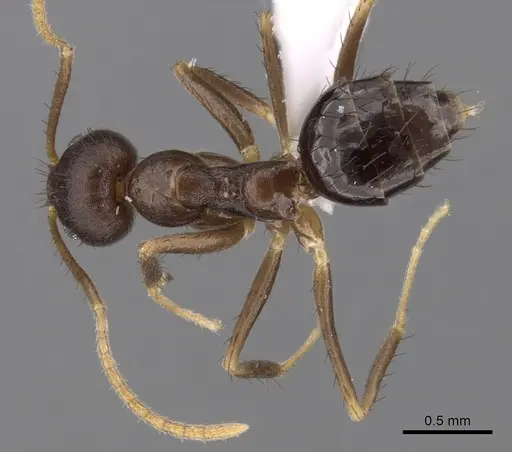
Littérature
Chargement de la carte de répartition...Chargement des produits...