
Myrmicaria fodiens
- Nom sci.
- Myrmicaria fodiens
- Tribu
- Solenopsidini
- Sous-famille
- Myrmicinae
- Auteur
- Jerdon, 1851
- Distribution
- Trouvé dans 0 pays
Introduction
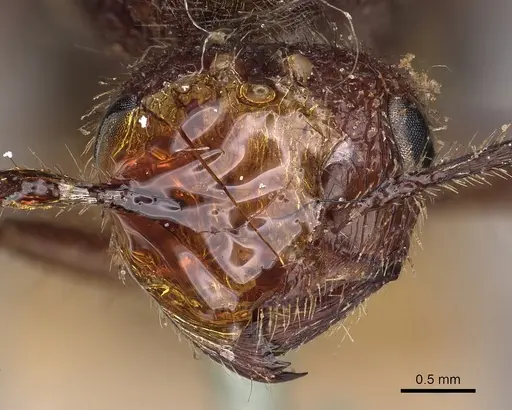
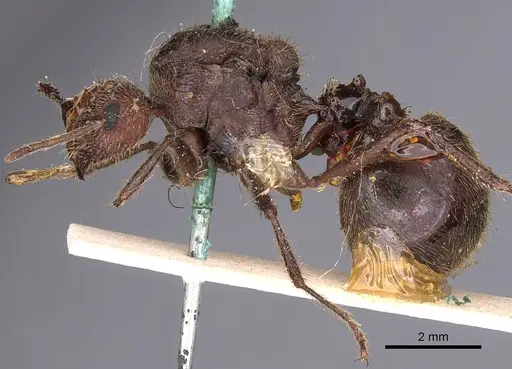
Myrmicaria fodiens is a medium-sized ant species native to India and Sri Lanka in the Indomalaya region. Workers have a distinctive appearance with a rounded, triangular striated head, large eyes positioned posteriorly, and a thorax featuring small spines at the front and larger horizontal spines at the rear. Their coloring is striking: head, thorax, legs, and abdominal pedicles are maroon while the abdomen is a shiny brown. Queens are similar but larger with three ocelli, blunter jaws without teeth, and a more developed abdomen. These ants are ground-nesting, typically found in soil or under stones in tropical and subtropical environments .
Quick Summary
- Difficulty: Medium
- Origin & Habitat: India and Sri Lanka in the Indomalaya region. They inhabit tropical and subtropical areas, typically nesting in soil or under stones [1][2].
- Colony Type: Unconfirmed, colony structure is not extensively documented for this specific species.
- Size & Growth:
- Queen: Larger than workers, exact measurements not documented in available literature [2]
- Worker: Approximately 6-12mm, inferred from original description (4-12th of an inch) and typical Myrmicaria genus sizes [2]
- Colony: Unknown for this specific species
- Growth: Moderate, inferred from similar tropical Myrmicaria species
- Development: Estimated 6-8 weeks at tropical temperatures (25-28°C) based on genus patterns (Development time is estimated from related species, specific data for M. fodiens is not available)
- Antkeeping:
- Temperature: Keep at 24-28°C (tropical room temperature or slightly heated). They are a tropical species so they need warmth year-round. A heating cable on one side of the nest can create a gradient if room temperature is below 24°C.
- Humidity: Moderate to high humidity (60-80%). Keep the nest substrate consistently moist but not waterlogged. These are ground-nesting ants from humid tropical regions, so some moisture in the nest is important.
- Diapause: No, as a tropical species from India and Sri Lanka, they do not require hibernation. Keep them warm year-round.
- Nesting: Ground-nesting species. In captivity, they do well in test tubes (for founding colonies), Y-tong (AAC) nests, or plaster/naturalistic setups with soil substrate. They prefer tight chambers and passages scaled to their medium size.
- Behavior: Myrmicaria ants are known to be moderately aggressive and defensive of their nests. Workers are active foragers that search for food both on the ground and may climb slightly. They have a functional stinger and can deliver a sting if handled roughly. Escape risk is moderate, they are not tiny but can climb smooth surfaces, so standard barrier methods work well. They are day-active and maintain visible foraging patterns.
- Common Issues: Tropical warmth requirements mean colonies can struggle in cool rooms without heating., Moderate humidity needs mean dry nests can cause brood failure., Aggressive temperament means they may attack and sting when the nest is disturbed., Colony growth is moderate, keepers need patience during the founding phase., Wild-caught colonies may contain parasites that can affect captive success.
Housing and Nest Setup
Myrmicaria fodiens does well in standard ant keeping setups. For founding colonies, a simple test tube setup works well, fill the tube about 1/3 with water, push a cotton ball to create a water reservoir, then add the queen. The chamber should be dark (cover the tube with a cloth or paper) until workers emerge. Once the colony reaches 20-30 workers, you can move them to a formicarium. Y-tong (AAC) nests work very well for this species, or you can use a plaster nest with a soil chamber. The key is providing chambers that are appropriately sized, not too large and open, but tight enough that the ants feel secure. A small outworld for foraging completes the setup. [2]
Feeding and Diet
Myrmicaria fodiens is an omnivorous species that accepts a variety of foods. In captivity, they readily eat sugar sources like honey water or sugar water (offer a few drops every few days). For protein, offer small insects like fruit flies, small crickets, mealworms, or other appropriately sized prey. They are ground-nesting foragers, so place food on the outworld floor or on a small feeding platform. Feed them protein every 2-3 days and keep sugar water available constantly. Remove any uneaten prey after 24-48 hours to prevent mold. Fresh water should always be available. [2]
Temperature and Heating
As a tropical species from India and Sri Lanka, Myrmicaria fodiens needs warmth to thrive. Keep the nest area at 24-28°C year-round. If your room temperature is below this range, use a heating cable or heating mat placed on top of the nest (not underneath, as this can dry out the nest too quickly). Create a temperature gradient so the ants can choose their preferred spot. Avoid temperature drops below 20°C, as this can slow or stop brood development and may stress the colony. Unlike temperate species, they do not need a winter cooling period. [1]
Humidity and Water
These ants need moderate to high humidity. Keep the nest substrate consistently moist, the soil or test tube cotton should feel damp but not be sitting in water. For test tube setups, the water reservoir should be sized appropriately (not too large that it floods, not too small that it dries quickly). In formicariums, check the substrate every few days and add water if the surface is drying. Mist the nest occasionally if humidity drops, but avoid creating excessive condensation. They also need constant access to fresh water, a small water tube or cotton ball with water in the outworld works well. [2]
Behavior and Handling
Myrmicaria fodiens workers are active foragers and will readily explore their outworld in search of food. They are moderately aggressive and will defend their nest vigorously if threatened. The workers have a functional stinger and can deliver a sting if you handle them roughly or disturb the nest too aggressively. When working with this species, move slowly and avoid poking your fingers into the nest. They are not particularly prone to biting, but the sting is their primary defense. In terms of escape risk, they are medium-sized ants that can climb smooth surfaces, so use standard barrier methods (fluon on rim, petroleum jelly on edges), they are not as prone to escaping as tiny species, but barriers are still recommended. [2]
Colony Development and Growth
A newly mated queen will seal herself into a chamber and lay eggs. She will not leave to forage during this time, she lives entirely on her stored fat reserves (this is claustral founding). After 4-6 weeks at warm temperatures, the first workers (nanitics) will emerge. These first workers are typically smaller than normal workers but will begin foraging to feed the colony. From there, growth is moderate, expect the colony to reach 50 workers within a few months with good feeding. The queen is long-lived and can produce workers for many years. Patience is key during the founding phase, avoid disturbing the nest too often as this can cause the queen to eat her brood or abandon the nest. [2]
Frequently Asked Questions
How long does it take for Myrmicaria fodiens to have first workers?
At optimal temperatures (24-28°C), expect first workers (nanitics) to emerge in about 6-8 weeks after the queen is sealed in. This is based on typical Myrmicaria development patterns, specific timing for M. fodiens is not documented.
What do Myrmicaria fodiens eat?
They are omnivorous. Offer sugar water or honey constantly, and protein (small insects like fruit flies, mealworms, small crickets) every 2-3 days. They will also eat other small arthropods they can catch.
Can I keep multiple Myrmicaria fodiens queens together?
Colony type is unconfirmed for this species. Combining unrelated queens is not recommended as they may fight. Only keep one queen per colony unless you observe successful pleometrosis.
Do Myrmicaria fodiens need hibernation?
No, they are a tropical species from India and Sri Lanka and do not require hibernation. Keep them warm year-round at 24-28°C.
What is the best nest type for Myrmicaria fodiens?
They do well in Y-tong (AAC) nests, plaster nests with soil chambers, or test tubes for founding colonies. They prefer tight, appropriately-sized chambers rather than large open spaces.
How big do Myrmicaria fodiens colonies get?
Exact colony size is not documented for this species. Based on related Myrmicaria species, they may reach several hundred workers over several years.
Are Myrmicaria fodiens good for beginners?
They are rated as medium difficulty. They require tropical warmth and humidity, which can be challenging for beginners. However, they are not as demanding as some other tropical species. If you can maintain warm, humid conditions year-round, they can be a rewarding species to keep.
When should I move Myrmicaria fodiens to a formicarium?
Move them once the colony reaches 20-30 workers and the test tube is becoming cramped. Make sure the formicarium has appropriately sized chambers and a proper outworld before transferring.
Why is my Myrmicaria fodiens colony not growing?
Common causes include: temperatures below 24°C (slows development), too dry conditions (causes brood death), poor feeding (needs regular protein and constant sugar), or disturbance during founding (queen may eat brood). Check all three and adjust accordingly.
Report an Issue
The current care sheet is based fully on literature. See inconsistencies, or something that's incorrect? Please , it will be resolved after review from an admin. Contributing to the blogs tab also helps providing information, to make us be able to further improve the caresheets. Thank you for your support!
References

Cette fiche d'élevage est sous licence CC BY-SA 4.0 .
Blogs de la communauté
CASENT0900497
Voir sur AntWeb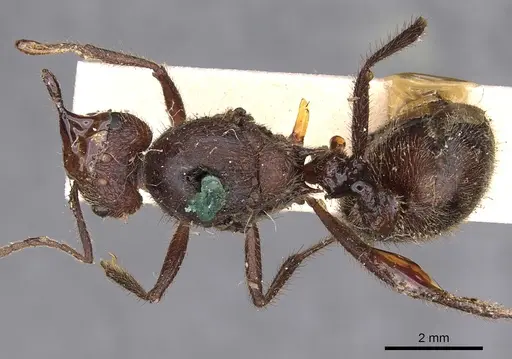
Littérature
Chargement de la carte de répartition...Chargement des produits...