
Myrmica forcipata
- Nom sci.
- Myrmica forcipata
- Tribu
- Myrmicini
- Sous-famille
- Myrmicinae
- Auteur
- Karavaiev, 1931
- Distribution
- Trouvé dans 0 pays
Introduction
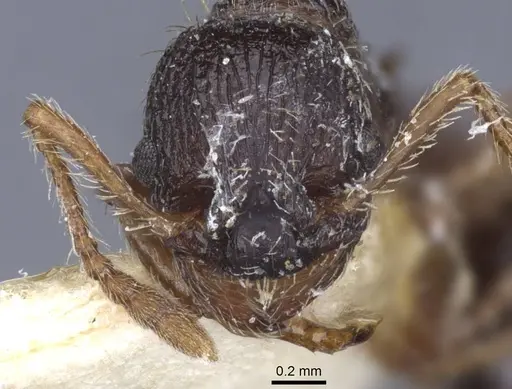
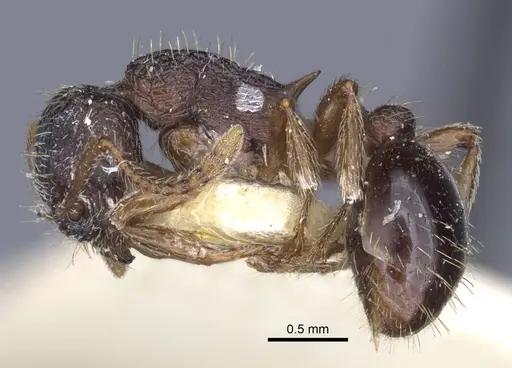
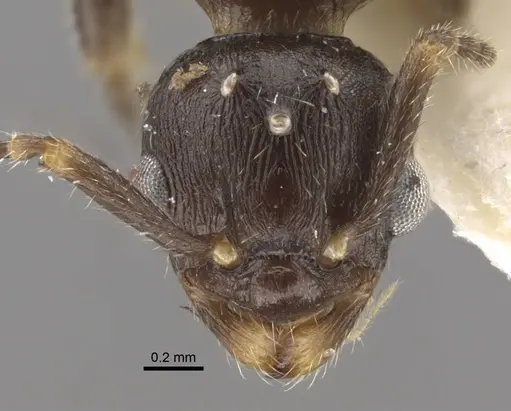
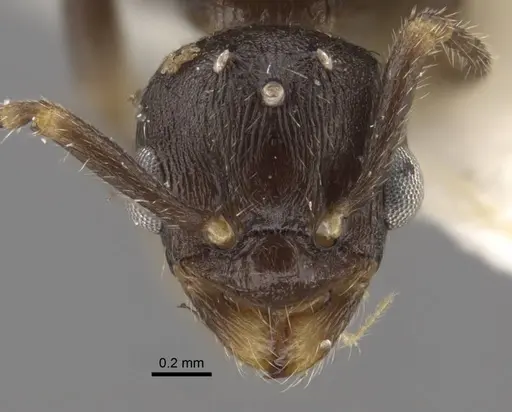
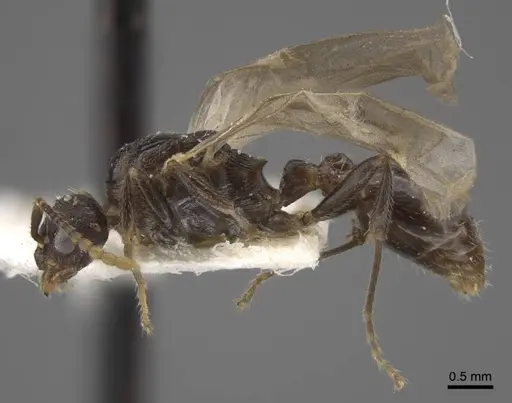
Myrmica forcipata is a small to medium-sized Myrmica ant from northern Asia, found across South and East Siberia, Mongolia, and recently recorded in northern China (Hebei and Ningxia provinces) . Workers have a distinctive appearance with blunt, thick, inwardly curved propodeal spines and a sharply angled petiolar node . The mesosoma and waist are yellowish brown to pale reddish brown, while the head and gaster are dark brown . This species belongs to the forcipata group within the lobicornis-complex and closely resembles Myrmica angulinodis, but can be distinguished by its distinct vertical lobe at the scape bend . Unlike its similar-looking relative, M. forcipata is strongly hygrophilous, preferring wet grassy habitats near rivers and meadows rather than forest habitats .
Quick Summary
- Difficulty: Medium
- Origin & Habitat: Native to northern Asia: South and East Siberia, Mongolia, and northern China. Found at elevations around 1000m in Mongolia. Strongly prefers wet habitats, grassy meadows near rivers, herb-rich wet meadows, shrubland and riparian woodland. Occasionally found in drier meadow-steppe areas. Nests are built in grass clumps, moss tussocks, directly in soil, or under rotten wood [4][3].
- Colony Type: Likely monogyne (single queen) based on typical Myrmica patterns, but unconfirmed. Colonies are not documented as supercolonial. Ergatoid (wingless replacement queen) presence is not documented for this species.
- Size & Growth:
- Queen: Size data unavailable. Inferred from Myrmica genus: queens are slightly larger than workers, around 5-7 mm.
- Worker: Size data unavailable. Inferred from Myrmica genus: workers are typically around 4-6 mm.
- Colony: Likely up to several hundred workers, inferred from typical Myrmica colony sizes.
- Growth: Moderate, typical for Myrmica genus
- Development: Estimated 6-10 weeks based on related Myrmica species development at optimal temperatures. (Development time inferred from genus-level data, specific timing for M. forcipata has not been directly studied.)
- Antkeeping:
- Temperature: Keep around 20-24°C. This species comes from northern Mongolia at altitude, so they prefer cooler conditions than tropical ants. Room temperature (around 20-22°C) is likely ideal. Avoid overheating above 26°C [4].
- Humidity: High humidity is essential, this is a strongly hygrophilous species. Keep the nest substrate consistently moist but not waterlogged. Provide a water source. Think damp meadow conditions, not dry soil [4][3].
- Diapause: Yes, as a northern species from Mongolia, they require a winter hibernation period. Provide 3-4 months of cold temperatures (5-10°C) during winter [4].
- Nesting: Y-tong (AAC) nests or plaster nests work well. Keep nest material consistently moist. These ants naturally nest in grass clumps, moss, soil, and rotting wood, so a naturalistic setup with moist substrate mimics their natural preferences [4].
- Behavior: Workers are moderately active and typically non-aggressive toward keepers. Like most Myrmica species, they have a functional stinger but rarely use it on humans due to their small size. They are foragers and will scavenge for protein and sugar. Escape risk is moderate, use standard test tube or formicarium barriers. They are known to be hosts for the endangered Maculinea teleius butterfly in Mongolia [5][6].
- Common Issues: high humidity requirements mean mold can develop if ventilation is poor, hibernation is essential for this northern species, skipping it will weaken or kill the colony, slow colony growth can frustrate beginners who expect fast development, test tube setups must have proper water reservoirs to maintain moisture without flooding, wild-caught colonies may carry parasites, consider quarantining before adding to a formicarium
Nest Preferences and Housing
Myrmica forcipata is a hygrophilous species that naturally nests in moist substrates like grass clumps, moss tussocks, soil, and under rotting wood near rivers and wet meadows [4]. In captivity, Y-tong (AAC) nests or plaster nests work well because they hold moisture well. Keep the nest material consistently damp, these ants quickly decline in dry conditions. A test tube setup can work for founding colonies, but monitor water levels closely as they need constant moisture. For established colonies, a formicarium with a water reservoir or regular misting maintains the humidity they need. Avoid dry setups entirely, this species is not tolerant of drought conditions.
Feeding and Diet
Like other Myrmica species, Myrmica forcipata is omnivorous and will accept both protein and sugar sources. Offer protein foods like small insects (fruit flies, small mealworms, crickets), and provide sugar water, honey, or diluted syrup regularly. In their natural habitat in Mongolia, they forage in meadows and likely consume honeydew from aphids and small invertebrates. Feed protein 2-3 times per week and keep sugar water available at all times. Remove uneaten prey after 24-48 hours to prevent mold.
Temperature and Seasonal Care
This species comes from northern Mongolia at approximately 1000m elevation, so they prefer cooler temperatures than many common ant pets. Keep the nest around 20-24°C, room temperature is often ideal. Avoid temperatures above 26°C as this species is not adapted to hot conditions [4]. During winter, they require a proper hibernation period of 3-4 months at 5-10°C. This is essential for colony health and queen reproduction. Place them in a cool basement, garage, or refrigerator (not freezer) during winter dormancy. Gradual cooling and warming is important, don't suddenly expose them to cold temperatures [4].
Behavior and Temperament
Myrmica forcipata workers are moderately sized and typically calm in captivity. They are not particularly aggressive and rarely sting handlers. Like all Myrmica species, they have a stinger but due to their small size, stings are usually negligible to humans. Workers are active foragers and will readily explore their outworld for food. They are not known escape artists, but standard barrier precautions (Fluon, vaseline, water barriers) should still be used. This species is notable for being a host for the Maculinea teleius butterfly in Mongolia, the caterpillars are brood parasites that are adopted into the ant colony [5][6].
Colony Founding
Founding behavior is unconfirmed for Myrmica forcipata. Based on typical Myrmica patterns, queens are presumed to be claustral (sealing themselves in a chamber and raising the first brood without foraging), but this has not been directly observed for this species. After mating, the queen likely digs a small chamber and lays eggs without leaving to forage. Keep the founding queen in a dark, quiet location with stable humidity. Do not disturb her during founding, as checking too often may cause stress and brood eating. Once the first workers emerge, you can begin offering tiny amounts of food.
Growth and Development
Colony growth is moderate, typical for Myrmica species. The first workers (nanitics) are usually smaller than future generations. After workers emerge, the colony grows steadily as the queen continues laying eggs. Full colony development takes time, expect several months before you have more than a dozen workers. Mature colonies likely reach several hundred workers. The colony produces sexuals (new queens and males) in summer months, as evidenced by sexual brood found in nests from July to August in the wild [4]. Patience is key with this species.
Frequently Asked Questions
How long does it take for Myrmica forcipata to produce first workers?
Expect 6-10 weeks from egg to first worker at optimal temperatures (around 20-24°C). This is estimated based on related Myrmica species, as specific development timing for M. forcipata has not been directly studied.
Do Myrmica forcipata ants need hibernation?
Yes, this is essential. As a northern species from Mongolia, they require 3-4 months of cold temperatures (5-10°C) during winter. Skipping hibernation will weaken the colony and prevent the queen from producing sexuals.
What humidity level do Myrmica forcipata need?
High humidity is critical, keep the nest substrate consistently moist but not waterlogged. This is a strongly hygrophilous species that naturally lives in wet meadows near rivers. Dry conditions will kill them [4].
Can I keep multiple Myrmica forcipata queens together?
Not recommended. While colony structure is not fully documented, Myrmica species are typically monogyne (single queen). Combining unrelated queens has not been studied for this species and would likely result in fighting.
What do Myrmica forcipata eat?
They are omnivorous. Offer protein (small insects like fruit flies, tiny mealworms) 2-3 times per week and keep sugar water, honey, or diluted syrup available at all times.
Are Myrmica forcipata good for beginners?
They are moderate difficulty. The main challenges are their high humidity requirements and the need for proper hibernation. If you can maintain moist conditions and provide winter cooling, they are manageable for beginners.
Do Myrmica forcipata ants sting?
They have a stinger but rarely use it on humans due to their small size. Stings are usually negligible. They are not considered dangerous or particularly aggressive.
What temperature should I keep Myrmica forcipata at?
Keep them around 20-24°C. Room temperature is often ideal. Avoid temperatures above 26°C, this northern species prefers cooler conditions than tropical ants [4].
When do Myrmica forcipata have nuptial flights?
Nuptial flights occur in mid-August. Mating swarms have been observed on hilltops around 1040m elevation on August 12th and 15th in Mongolia [4].
How big do Myrmica forcipata colonies get?
Colony size is not specifically documented, but based on typical Myrmica species, mature colonies likely reach several hundred workers.
What makes Myrmica forcipata different from other Myrmica?
They are strongly hygrophilous, they prefer wet habitats near rivers rather than forests. They have distinctive blunt, thick, inwardly curved propodeal spines and a sharply angled petiolar node. They are also a known host for the Maculinea teleius butterfly [5][6][4].
Report an Issue
The current care sheet is based fully on literature. See inconsistencies, or something that's incorrect? Please , it will be resolved after review from an admin. Contributing to the blogs tab also helps providing information, to make us be able to further improve the caresheets. Thank you for your support!
References

Cette fiche d'élevage est sous licence CC BY-SA 4.0 .
Blogs de la communauté
CASENT0916894
Voir sur AntWeb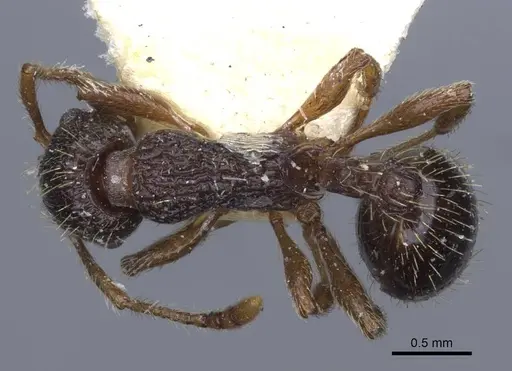
CASENT0917519
Voir sur AntWeb
Littérature
Chargement de la carte de répartition...Chargement des produits...