
Myrmica adrijae
- Nom sci.
- Myrmica adrijae
- Tribu
- Myrmicini
- Sous-famille
- Myrmicinae
- Auteur
- Bharti, 2012
- Distribution
- Trouvé dans 0 pays
Introduction
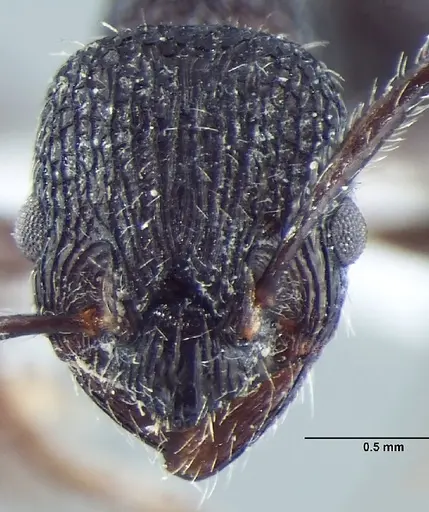
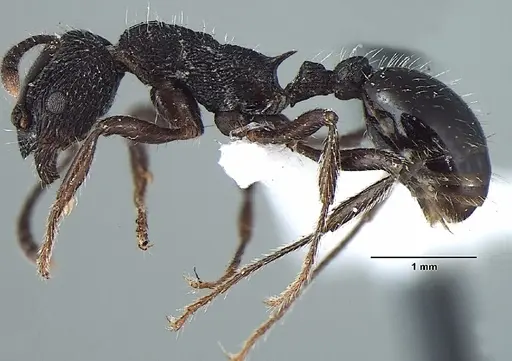
Myrmica adrijae is a small Himalayan ant species endemic to Himachal Pradesh, India. Workers have a dark blackish-brown body with brown mandibles, antennae, and legs . This species belongs to the smythiesii species group and was discovered nesting under a stone on a mountain slope at 2479m elevation in a patchy Cedrus forest with grass cover . The nest was small with only 6 workers, and the recorded temperature at the nest site was 20°C . What makes M. adrijae distinctive is its unique reticulate sculpture on the head and alitrunk, which separates it from other species in the smythiesii group that typically have longitudinal striations . This is a high-altitude mountain species known only from the worker caste.
Quick Summary
- Difficulty: Medium
- Origin & Habitat: Endemic to the Himalayas in Himachal Pradesh, India. Found at 2479m elevation in a patchy Cedrus forest with grass cover on a mountain slope [1][2]. Nests under stones in cool, mountainous terrain.
- Colony Type: Colony structure is unconfirmed, only worker caste has been described. The colony type (single-queen or multi-queen) is unknown.
- Size & Growth:
- Queen: Unknown, queen caste has not been described [1]
- Worker: Size data unavailable, the context provides head length (1.24-1.35mm) and alitrunk length (1.67-1.82mm) but not total body length. Based on typical Myrmica workers, likely 4-6mm total length.
- Colony: Unknown, the type nest contained only 6 workers but this represents a small sample [2]
- Growth: Moderate, inferred from typical Myrmica development patterns
- Development: 6-10 weeks estimated based on related Myrmica species at optimal temperature (Development timeline is not directly studied for this species. Estimates based on genus-level data for similar high-altitude Himalayan Myrmica.)
- Antkeeping:
- Temperature: Keep nest area at 20-22°C. The recorded nest temperature in the wild was 20°C, indicating this species prefers cool conditions [2]. Avoid overheating, this mountain species does not tolerate high temperatures.
- Humidity: Moderate to high humidity. In nature they inhabit damp mountain slopes with grass cover. Keep the nest substrate consistently moist but not waterlogged, with some drier areas available.
- Diapause: Yes, as a high-altitude Himalayan species (2479m), this ant requires a winter dormancy period. Provide hibernation at 5-10°C for 3-4 months during winter.
- Nesting: Nests naturally under stones in mountainous terrain. In captivity, a test tube setup or Y-tong nest works well. Provide a moisture source and keep them in a cool location away from direct heat.
- Behavior: Workers are small but active foragers. Based on typical Myrmica behavior, they are generalist feeders that will collect honeydew, small insects, and scavenge. They have a functional stinger but due to their tiny size, stings are rarely felt by humans. Escape prevention is important due to their small size, use fine mesh barriers. They are not aggressive but will defend their nest if threatened.
- Common Issues: high altitude origin means they need hibernation, colonies that don't cool down may fail to thrive, small size makes escape prevention critical, they can squeeze through tiny gaps, only worker caste known, finding a queen for captive breeding may be difficult, cool temperature requirement makes them unsuitable for warm rooms, limited data means colony development in captivity is not well documented
Natural History and Distribution
Myrmica adrijae is endemic to the Himalayan region of Himachal Pradesh, India, making it a truly specialized Asian mountain ant [3]. The species was discovered at an elevation of 2479 meters above sea level in a patchy Cedrus (deodar) forest with grass cover [1]. The type colony was found nesting under a stone on a mountain slope, which is typical behavior for many Myrmica species in mountainous terrain [2]. Only the worker caste has been described, and the queen, male, and colony structure remain undocumented in scientific literature [1]. The GPS coordinates of the type locality are 32.1890°N-77.1170°E, and the nest temperature was recorded at 20°C, providing valuable insight into this species' thermal preferences [2].
Identification and Distinguishing Features
Workers of Myrmica adrijae are small ants with a blackish-brown body and brown mandibles, antennae, and legs [1]. This species belongs to the smythiesii species group and can be identified by several key features: the frontal carinae merge with rugae surrounding the antennal sockets, the frons is wide with frontal lobes that are not extended, and the scape is smoothly curved at the base without any lobe or carina [1]. The most distinctive feature is the reticulate sculpture on the head dorsum and sides, combined with irregular reticulate sculpture on the promesonotum with transverse rugae, this combination separates M. adrijae from other smythiesii group species which typically have longitudinal striations [1].
Temperature and Seasonal Care
The recorded nest temperature of 20°C in the wild provides an excellent baseline for captive care [2]. This is a cool-adapted species from high altitude, and unlike many common ant species, they do not tolerate warm conditions well. Keep the nest area at 20-22°C, avoiding temperatures above 25°C. During summer, ensure they are kept in a cool room away from direct sunlight and heat sources. Because this species originates from 2479m elevation in the Himalayas, they require a winter dormancy period. Provide hibernation at 5-10°C for approximately 3-4 months, simulating the natural winter conditions they would experience in their mountain habitat. Failure to provide adequate hibernation may result in colony decline or failure to produce reproductive castes.
Housing and Nesting
In the wild, Myrmica adrijae nests under stones on mountain slopes in cool, damp conditions [2]. For captive care, a test tube setup works well for founding colonies and small groups. The test tube should have a water reservoir at one end with cotton separating the water from the ants, keeping the substrate consistently moist but not flooded. For established colonies, a Y-tong nest or plaster nest provides better space while maintaining appropriate humidity. Regardless of nest type, ensure excellent escape prevention, due to their very small size, they can escape through gaps that would hold larger ants. Use fine mesh barriers and check all connections regularly. Place the nest in a cool location away from direct sunlight, heating vents, or air conditioning drafts.
Feeding and Diet
Like other Myrmica species, M. adrijae is a generalist feeder that will accept both sugar sources and protein. Offer sugar water, honey, or diluted honey water as a constant energy source. For protein, provide small live or frozen insects such as fruit flies, small mealworms, or cricket pieces. Since workers are tiny, prey items should be appropriately sized. Feed protein 2-3 times per week, removing any uneaten food after 24 hours. Fresh water should always be available. Observe your colony's feeding preferences and adjust accordingly.
Colony Development and Expectations
Since only the worker caste has been described and the queen is unknown, establishing a captive breeding program for Myrmica adrijae presents challenges [1]. The type colony contained only 6 workers, suggesting this species may form smaller colonies than many common Myrmica, or this simply represented a small sample [2]. Expect slow colony growth initially, Myrmica species typically take several months to produce their first workers from founding, and growth remains moderate even after establishment. Based on related species, expect 6-10 weeks from egg to worker at optimal temperature. Monitor your colony closely for signs of stress such as workers dying outside the nest, unusual inactivity, or rejection of food. Due to limited captive data, be prepared to adjust care conditions based on your colony's response.
Frequently Asked Questions
How long does it take for Myrmica adrijae to develop from egg to worker?
The exact development timeline has not been studied for this species. Based on related Myrmica species, expect approximately 6-10 weeks from egg to first worker at optimal temperature (around 20°C). Growth is typically moderate, with nanitics (first workers) being smaller than mature workers.
What temperature should I keep Myrmica adrijae at?
Keep the nest area at 20-22°C. The recorded nest temperature in the wild was 20°C, indicating this high-altitude species prefers cool conditions [2]. Avoid temperatures above 25°C, this species does not tolerate heat well.
Do Myrmica adrijae ants need hibernation?
Yes, hibernation is essential. As a species from 2479m elevation in the Himalayas, they are adapted to cold winters. Provide 3-4 months of dormancy at 5-10°C during winter. Without this winter rest, colonies may fail to thrive or produce reproductive castes.
How big do Myrmica adrijae colonies get?
Colony size is not well documented. The type nest contained only 6 workers, but this was likely a small sample. Based on related Myrmica species, mature colonies probably reach several hundred workers. More data is needed to confirm maximum colony size.
Can I keep multiple Myrmica adrijae queens together?
The colony structure of this species is unconfirmed. Only worker caste has been described, and queen number is unknown. Based on typical Myrmica patterns, they likely form single-queen colonies, but this requires confirmation. Combining unrelated queens is not recommended without evidence they can coexist.
What do Myrmica adrijae ants eat?
Like other Myrmica species, they are generalist feeders. Offer sugar water or honey as a constant energy source, and protein such as small insects (fruit flies, small mealworms, cricket pieces) 2-3 times per week. Prey should be appropriately sized for their tiny workers.
Are Myrmica adrijae ants aggressive or do they sting?
They are not particularly aggressive but will defend their nest if threatened. They possess a stinger, but due to their very small size, stings are rarely felt by humans. They are considered safe to handle with normal precautions.
Why are my Myrmica adrijae dying?
Common causes include: temperatures too warm (they need 20-22°C, not room temperature), inadequate hibernation, improper humidity (too dry or waterlogged), escape through tiny gaps due to their small size, or stress from limited data availability. Review each parameter and adjust accordingly. This species has limited captive history, so some trial and error may be needed.
What nest type is best for Myrmica adrijae?
A test tube setup works well for small colonies. For established colonies, a Y-tong nest or plaster nest provides better space while maintaining humidity. Ensure excellent escape prevention due to their tiny size. Keep the nest in a cool location away from heat sources.
Is Myrmica adrijae suitable for beginners?
This species is rated as medium difficulty. While not the most challenging ant, the cool temperature requirement and need for hibernation make it less straightforward than common species. Additionally, limited captive data means less established husbandry knowledge. Experienced antkeepers will have better success with this species.
Report an Issue
The current care sheet is based fully on literature. See inconsistencies, or something that's incorrect? Please , it will be resolved after review from an admin. Contributing to the blogs tab also helps providing information, to make us be able to further improve the caresheets. Thank you for your support!
References

Cette fiche d'élevage est sous licence CC BY-SA 4.0 .
Blogs de la communauté
ANTWEB1008036
Voir sur AntWeb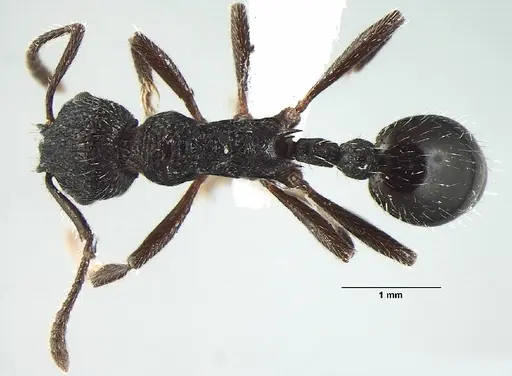
Littérature
Chargement de la carte de répartition...Chargement des produits...