
Myopias amblyops
- Nom sci.
- Myopias amblyops
- Tribu
- Ponerini
- Sous-famille
- Ponerinae
- Auteur
- Roger, 1861
- Distribution
- Trouvé dans 0 pays
Introduction
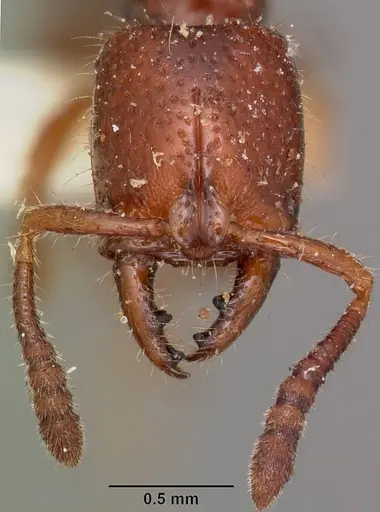
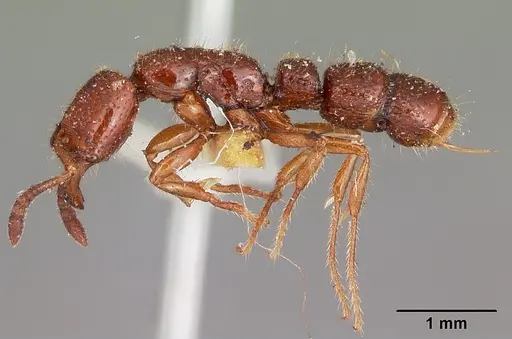
Myopias amblyops is a small ponerine ant native to Sri Lanka and Myanmar . Workers measure 4-4.5 mm and have a distinctive reddish-brown coloration with reddish scapes and legs . The body is shiny and hairy, with strong puncturation all over . The head is square with small eyes placed near its front edge, and the antennae have 12 segments . This species is the type species of the genus Myopias, originally described from Sri Lanka by Roger in 1861 . In the wild, they inhabit lowland wet forests in Sri Lanka and have been found on the forest floor . Like other Ponerinae, they have a functional sting and are likely predatory hunters.
Quick Summary
- Difficulty: Medium
- Origin & Habitat: Native to Sri Lanka and Myanmar in the Indomalaya region [1]. In the wild, they live in lowland wet forests and are found in forest floor samples [5][6].
- Colony Type: Colony structure is unconfirmed. As a Ponerinae species, they likely form single-queen colonies, but this has not been directly studied.
- Size & Growth:
- Queen: Queen size is unconfirmed, no documented measurements [2]
- Worker: 4-4.5 mm [2]
- Colony: Unknown, no colony size data available. Estimated from typical Ponerinae patterns, likely reaches several hundred workers.
- Growth: Unknown, no development data available. Estimated moderate growth rate based on related species.
- Development: Unconfirmed, no direct measurements. Based on related Ponerinae species, estimate 6-10 weeks at optimal temperature. (Development timeline is unconfirmed for this species. Estimates based on genus-level patterns.)
- Antkeeping:
- Temperature: Keep at 24-26°C [2][1]. As a tropical wet forest species from Sri Lanka, they need warm and stable conditions. A heating cable on one side of the nest can create a gentle gradient if room temperature is insufficient.
- Humidity: High humidity is essential, they come from lowland wet forests in Sri Lanka [5][6]. Keep the nest substrate consistently moist but not waterlogged. Provide a water reservoir in the outworld.
- Diapause: Unknown, no data on overwintering requirements. Sri Lanka has a tropical climate with year-round warmth, so they likely do not require hibernation. Maintain stable temperatures year-round.
- Nesting: No specific nesting data exists. As a forest floor species, they likely prefer moist, dark spaces. A Y-tong (AAC) nest or plaster nest works well for Ponerinae, both retain humidity while providing dark chambers. Avoid dry, airy setups.
- Behavior: Behavior is not well documented in scientific literature. Ponerine ants are typically predatory and use their sting for hunting and defense. They likely hunt small invertebrates. Their small size (4-4.5 mm) means escape prevention should be moderate, they can still squeeze through small gaps. Handle with care as their sting may cause mild irritation.
- Common Issues: no documented colony size makes growth expectations uncertain, keepers should be patient, high humidity requirements can lead to mold if ventilation is poor, predatory diet may be difficult to meet with appropriate live prey, limited availability in the antkeeping hobby, rarely available, no established captive breeding lines means wild-caught colonies may struggle in captivity
Housing and Nest Setup
Myopias amblyops requires a humid, dark nest environment that mimics their natural lowland wet forest habitat [5][6]. Y-tong (AAC) nests or plaster nests work well because they retain moisture while providing the darkness these ants prefer. The nest chambers should be appropriately sized for 4-4.5 mm workers, not too large, but spacious enough for colony expansion. Include a water reservoir in the outworld to maintain humidity. Avoid dry setups like acrylic nests unless you can maintain high humidity through other means. The outworld should have a small foraging area where you can offer prey items.
Feeding and Diet
As a Ponerinae ant, Myopias amblyops is likely predatory and will need live small invertebrates. Based on related Ponerinae species, they probably accept small prey like fruit flies, pinhead crickets, small mealworms, and other tiny arthropods. The diet should be primarily protein-based with occasional sugar sources. Some Ponerinae will accept honey or sugar water, but this varies by species. Offer small live prey items in the outworld and remove any uneaten prey after 24-48 hours to prevent mold. Feed every 2-3 days depending on colony size, removing prey once consumed.
Temperature and Humidity
Keep the nest at 24-26°C, mimicking the warm tropical conditions of Sri Lanka [2][1]. A heating cable placed on top of the nest (never underneath, as this can dry out the nest) can help maintain stable temperatures if your room is cooler. High humidity is critical, aim for 70-80% relative humidity in the nest area. The substrate should feel consistently moist but never waterlogged. Mist the nest occasionally if it starts drying out, but rely on water reservoirs for steady humidity. Sudden drops in temperature or humidity can stress the colony.
Colony Development Expectations
Since no specific development data exists for this species, expectations should be based on typical Ponerinae patterns. Expect slow to moderate growth, Ponerinae colonies typically develop more slowly than many common ant species. The first workers (nanitics) may take 6-10 weeks to develop, but this is an estimate. Colony size will likely remain moderate, probably under a few hundred workers. Be patient with founding colonies, they need time to establish. Do not disturb the queen during the founding phase. If you obtain a wild-caught colony, give it time to acclimate to captive conditions.
Frequently Asked Questions
How long does it take for Myopias amblyops to produce first workers?
The egg-to-worker timeline is unconfirmed for this species. Based on related Ponerinae species, expect 6-10 weeks at optimal temperature (24-26°C). Be patient, founding colonies take time to establish.
What do Myopias amblyops ants eat?
As a Ponerinae ant, they are likely predatory. Offer small live prey like fruit flies, small mealworms, and tiny crickets. Some may accept sugar water or honey as an occasional supplement.
Do Myopias amblyops ants sting?
Yes, they belong to the subfamily Ponerinae, which has a functional sting. The sting is probably mild for humans given their small size, but handle with care.
Can I keep Myopias amblyops in a test tube?
A test tube can work for a founding queen, but you will need to move them to a proper nest (Y-tong or plaster) once the colony grows. Test tubes dry out quickly, and this species needs high humidity.
What temperature do Myopias amblyops need?
Keep them at 24-26°C. As a tropical wet forest species from Sri Lanka, they need warm, stable conditions year-round [2].
Do Myopias amblyops need hibernation?
Probably not. Sri Lanka has a tropical climate with year-round warmth. Maintain stable temperatures throughout the year rather than attempting to hibernate them.
How big do Myopias amblyops colonies get?
Colony size is unconfirmed for this species. Based on typical Ponerinae patterns, they likely reach several hundred workers at maximum, not supercolonial.
Are Myopias amblyops good for beginners?
This species is rated as Medium difficulty. They have specific humidity requirements and likely need a predatory diet, which makes them more challenging than common species. They are also rarely available in the hobby.
When should I move Myopias amblyops to a formicarium?
Keep them in a test tube or small container for the founding phase. Once the colony reaches about 15-20 workers and the test tube's water reservoir is depleted, move them to a Y-tong or plaster nest with proper humidity control.
Where is Myopias amblyops native to?
They are native to Sri Lanka and Myanmar in the Indomalaya region [1]. They live in lowland wet forests in Sri Lanka [5][6].
Report an Issue
The current care sheet is based fully on literature. See inconsistencies, or something that's incorrect? Please , it will be resolved after review from an admin. Contributing to the blogs tab also helps providing information, to make us be able to further improve the caresheets. Thank you for your support!
References

Cette fiche d'élevage est sous licence CC BY-SA 4.0 .
Blogs de la communauté
CASENT0104584
Voir sur AntWeb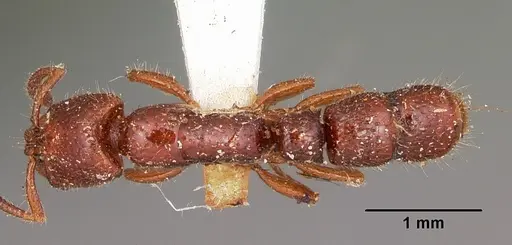
Littérature
Chargement de la carte de répartition...Chargement des produits...