
Monomorium riyadhe
- Nom sci.
- Monomorium riyadhe
- Tribu
- Solenopsidini
- Sous-famille
- Myrmicinae
- Auteur
- Collingwood & Agosti, 1996
- Distribution
- Trouvé dans 0 pays
Introduction
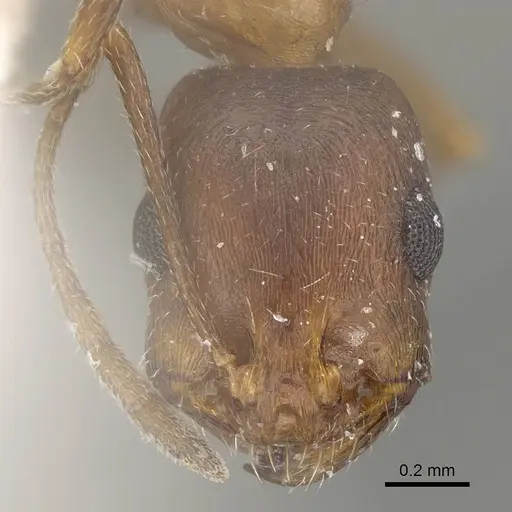
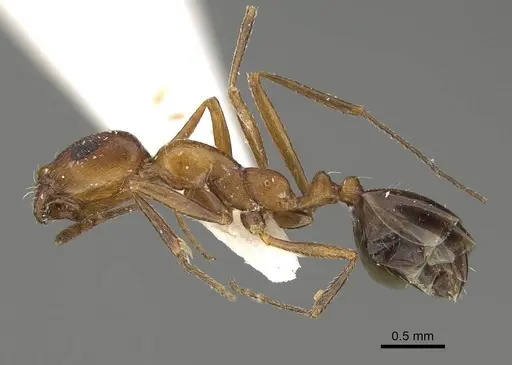
Monomorium riyadhe is a small ant species endemic to Saudi Arabia, first described in 1996. Workers measure approximately 3.8mm in total length, making them a moderately small species within the Myrmicinae subfamily . The species is easily identified by its distinctive coloring: a dark gaster that contrasts sharply with a reddish mesosoma, combined with a completely finely striated head and a steeply angled metanotal groove . This ant belongs to the Salomonis species group, which contains several similar-looking desert-dwelling species across the Middle East and Africa . As a species endemic to the Arabian Peninsula, M. riyadhe inhabits an arid to semi-arid environment. The specific biology and colony structure of this species remain unstudied in scientific literature, so much of what we know comes from inference based on related Monomorium species and the general desert habitat. These ants are likely adapted to warm, dry conditions with seasonal activity patterns tied to the region's extreme temperatures. Like other members of the Myrmicinae subfamily in the Solenopsidini tribe, workers possess a sting for defense .
Quick Summary
- Difficulty: Medium
- Origin & Habitat: Endemic to Saudi Arabia, specifically found in the Riyadh region. This species inhabits arid to semi-arid desert environments typical of the Arabian Peninsula [3][1].
- Colony Type: Unconfirmed, colony structure has not been documented in scientific literature. Most Monomorium species in the Salomonis group are monogyne (single-queen colonies), but this has not been verified for M. riyadhe specifically.
- Size & Growth:
- Queen: Size data unavailable, queen size has not been documented in scientific literature.
- Worker: Approximately 3.8mm total length [1].
- Colony: Unknown, colony size has not been studied.
- Growth: Unknown, growth rate has not been documented.
- Development: Unconfirmed, no direct measurements exist for this species. (Development timeline is unconfirmed for this species.)
- Antkeeping:
- Temperature: Temperature requirements are unconfirmed for this species. Based on the Arabian Peninsula origin, a reasonable starting point is 24-28°C.
- Humidity: Humidity requirements are unconfirmed. Based on the arid origin, lower humidity is likely appropriate, keep nest substrate moderately dry.
- Diapause: Unknown, diapause requirements have not been studied.
- Nesting: Natural nesting habitat is unconfirmed, but related Monomorium species in desert regions typically nest in soil under stones or in shallow underground chambers. In captivity, a Y-tong (AAC) nest or plaster formicarium with moderate dryness works well.
- Behavior: Behavior has not been specifically documented for this species. Based on genus patterns, Monomorium riyadhe is likely moderately active with typical myrmicine foraging behavior. Workers are small (3.8mm) so escape prevention should be considered. Like other Solenopsidini ants, they possess a sting for defense, though with their small size any sting would likely be negligible to humans.
- Common Issues: lack of documented biology means care is based on inference from related species, results may vary, specific humidity and temperature requirements are unconfirmed and must be learned through observation, colony founding behavior is unknown, whether queens are claustral or semi-claustral has not been documented, growth rate is unconfirmed so keepers may not know if their colony is developing normally, winter care requirements are unknown, unclear if hibernation is necessary
Appearance and Identification
Monomorium riyadhe workers are small ants measuring approximately 3.8mm in total length. The most distinctive feature is the sharp color contrast between the body parts: the gaster (back section) is dark, while the mesosoma (middle section) is reddish. The head is completely and finely striated, meaning it has fine parallel lines running across its surface. The metanotal groove (the groove between the mesonotum and propodeum) is steeply angled, which is a key identifying feature within the Salomonis species group. The eyes are relatively large, with approximately 16 ommatidia in the longest row. The head in full-face view appears almost rectangular with straight sides, and the eyes break the outline of the head sides [1]. This combination of features helps distinguish M. riyadhe from other similar-looking Monomorium species in the region.
Distribution and Habitat
Monomorium riyadhe is endemic to Saudi Arabia, meaning it is found nowhere else in the world. The type locality is the Riyadh Agricultural Station, where the holotype worker was collected on March 26,1983 [2]. This places the species firmly in the central region of the Arabian Peninsula. The natural habitat consists of arid to semi-arid desert environments typical of inland Saudi Arabia. Unlike some Monomorium species that prefer moist microhabitats, this species is likely adapted to dry conditions with high temperatures during the summer months and milder winters. The specific nesting microhabitat (whether under stones, in soil, or in rotting wood) has not been documented, but desert Monomorium species typically nest in protected locations under rocks or in shallow soil chambers that provide some temperature regulation.
Known Biology and Care Inference
The complete biology of Monomorium riyadhe has not been studied in scientific literature. The AntWiki explicitly states that nothing is known about the biology of this species [2]. This means care requirements must be inferred from several sources: the species' origin in the Arabian Peninsula suggests adaptation to warm, dry conditions, membership in the Salomonis species group indicates it likely shares characteristics with other desert-dwelling Monomorium, general Monomorium genus knowledge provides baseline expectations. Based on this inference, these ants likely prefer temperatures in the mid-to-high 20s°C, lower humidity than many tropical species, and probably accept standard ant foods including sugar sources and small protein items. The colony structure (monogyne vs polygyne), founding behavior (claustral vs semi-claustral), and maximum colony size remain unknown and will need to be learned through successful captive breeding.
Feeding and Diet
Specific feeding preferences for M. riyadhe have not been documented. However, based on typical Monomorium genus behavior and the desert habitat origin, these ants likely have an omnivorous diet similar to other Salomonis group species. They probably consume sugary liquids (honey water, sugar water) and small protein sources (dead insects, small arthropods). In captivity, offer a standard ant diet: constant access to sugar water or honey, and protein (mealworms, fruit flies, small crickets) several times per week. Start with sugar water to test acceptance, then add protein sources. Uneaten food should be removed within 24-48 hours to prevent mold. Since the natural diet is unknown, be prepared to experiment with different food types to determine preferences.
Temperature and Heating
As a species from the Arabian Peninsula, Monomorium riyadhe is likely adapted to warm conditions. While specific temperature requirements are unconfirmed, a reasonable starting point is 24-28°C. This can be achieved through room temperature in warmer homes, or via a heating cable or heating mat placed on one side of the nest to create a temperature gradient. The gradient allows workers to self-regulate by moving between warmer and cooler areas. Avoid temperatures below 20°C for extended periods, as this species is not adapted to cool climates. During winter, a slight reduction to room temperature (around 18-22°C) may be appropriate, with a potential short hibernation period if the colony shows signs of slowing down. Monitor colony behavior, if workers become sluggish and cluster together, they may be too cool, if they avoid the heated areas, the temperature may be too high.
Nesting and Setup
The natural nesting habits of M. riyadhe have not been documented, so we must make educated guesses based on related species and habitat. Desert Monomorium species typically nest in soil under stones or in shallow underground chambers that provide some protection from extreme temperatures. In captivity, Y-tong (AAC) nests are excellent for small to medium colonies and allow easy observation. Plaster nests can also work but should be kept relatively dry. Given the likely preference for drier conditions, avoid setups that maintain consistently high humidity. Provide a water tube or moisture chamber but do not saturate the nest material. The outworld (foraging area) should be standard size with escape prevention measures, while not among the smallest ants, workers are small enough to potentially escape through small gaps.
Frequently Asked Questions
How long does it take for Monomorium riyadhe to produce first workers?
The egg-to-worker development time is unconfirmed for this species. Based on typical Monomorium development patterns in warm conditions (25-28°C), expect approximately 6-8 weeks from egg to first worker. However, this is an estimate based on related species, actual development time may vary and could be faster or slower.
What do Monomorium riyadhe ants eat?
Specific diet preferences are unconfirmed, but based on genus patterns, they likely accept sugary liquids (honey water, sugar water) and small protein sources (mealworms, fruit flies, small insects). Start with sugar water to test acceptance, then add protein prey. Remove uneaten food within 24-48 hours.
What temperature should I keep Monomorium riyadhe at?
Temperature requirements are unconfirmed for this species. Based on their Arabian Peninsula origin, start around 24-28°C. Use a heating cable on one side of the nest to create a gradient, allowing workers to self-regulate. Avoid temperatures below 20°C for extended periods.
Are Monomorium riyadhe ants good for beginners?
This species is not ideal for complete beginners because its complete biology is undocumented, meaning keepers must learn through observation and inference from related species. However, antkeepers with some experience who enjoy species that require careful observation and experimentation may find this an interesting challenge. The difficulty is rated Medium due to the lack of documented care information.
How big do Monomorium riyadhe colonies get?
Maximum colony size is unknown and has not been documented in scientific literature. Based on related species in the Salomonis group, colonies likely reach several hundred workers. Growth rate is also unconfirmed, so be patient and monitor colony development over time.
Do Monomorium riyadhe ants need hibernation?
Diapause requirements are unconfirmed. Saudi Arabia has mild winters, so a short winter rest period (4-6 weeks at 15-18°C) may be beneficial but is not confirmed as necessary. Observe your colony, if they naturally slow down during winter months, a brief cool period can be provided.
What type of nest should I use for Monomorium riyadhe?
Natural nesting habitat is unconfirmed, but desert Monomorium species typically nest in dry to moderately moist soil under stones. In captivity, a Y-tong (AAC) nest works well. Keep the nest relatively dry, avoid overly humid setups. Plaster nests are also suitable if kept on the drier side.
Report an Issue
The current care sheet is based fully on literature. See inconsistencies, or something that's incorrect? Please , it will be resolved after review from an admin. Contributing to the blogs tab also helps providing information, to make us be able to further improve the caresheets. Thank you for your support!
References

Cette fiche d'élevage est sous licence CC BY-SA 4.0 .
Blogs de la communauté
CASENT0922342
Voir sur AntWeb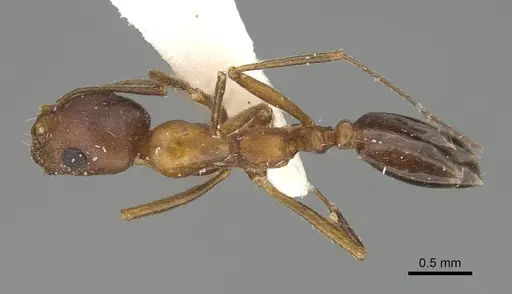
Littérature
Chargement de la carte de répartition...Chargement des produits...