
Metapone sauteri
- Nom sci.
- Metapone sauteri
- Tribu
- Crematogastrini
- Sous-famille
- Myrmicinae
- Auteur
- Forel, 1912
- Distribution
- Trouvé dans 0 pays
Introduction
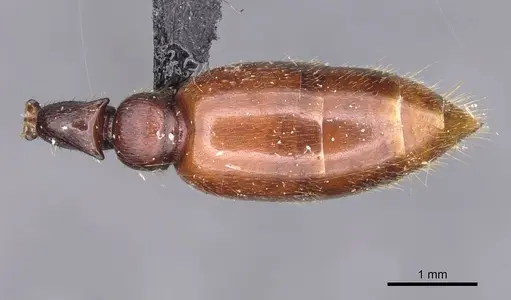
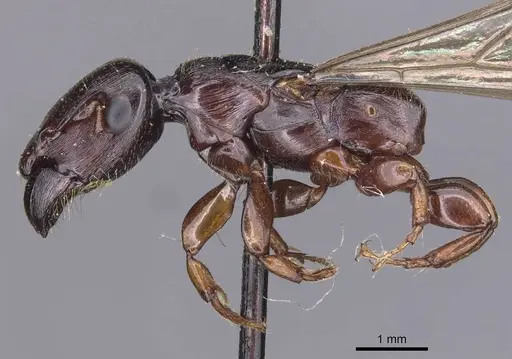
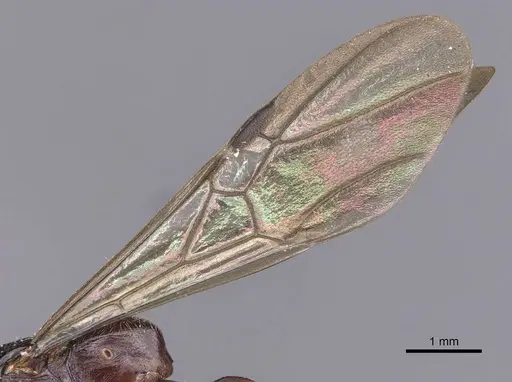
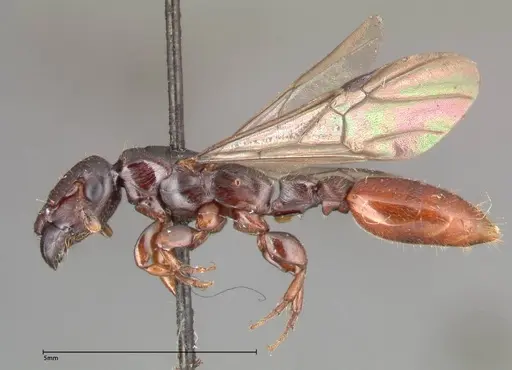
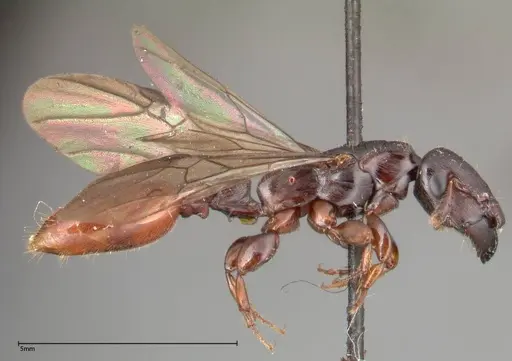
Metapone sauteri is one of the rarest and least-known ants in the world, known only from a single queen specimen collected in Taiwan over a century ago. The queen measures 10.5-11.1mm, making it a relatively large myrmicine ant. The head and mesosoma are blackish-brown while the gaster (abdomen) is reddish-brown. The genus Metapone is termitophilous, meaning these ants have a close association with termites in nature. This species has never been kept in captivity and no workers have ever been described - it exists only in museum collections. This makes it entirely unsuitable for antkeeping and no care guidance can be reliably provided.
Quick Summary
- Difficulty: Expert
- Origin & Habitat: Taiwan and southern China, subtropical island environment with warm temperatures and moderate to high humidity year-round [1][2]
- Colony Type: Unknown, only a single queen specimen has ever been collected, no workers or colonies have been documented [3]
- Size & Growth:
- Queen: 10.5-11.1mm [4]
- Worker: Unknown, workers have never been described
- Colony: Unknown, no colonies have ever been observed
- Growth: Unknown
- Development: Unknown, no colony development has ever been documented (This species is known from a single museum specimen only. No living colonies have ever been studied.)
- Antkeeping:
- Temperature: Unknown, no living specimens have ever been studied.
- Humidity: Unknown, no data exists on humidity requirements.
- Diapause: Unknown, no observations of seasonal behavior exist
- Nesting: Unknown, no natural nesting observations exist. The genus is termitophilous, suggesting possible association with termite nests.
- Behavior: Completely unknown. No living specimens have ever been observed, so no behavioral data exists for this species. The genus Metapone is known to be termitophilous (living in association with termites), but the specific behavior of M. sauteri is unrecorded.
- Common Issues: this species is essentially unavailable, only a single museum specimen exists worldwide, no workers have ever been described, making identification of any colony impossible, no captive husbandry information exists, keeping this species would be entirely experimental with no reference points, the termitophilous lifestyle may make captive keeping extremely difficult if they require termite associations
Why This Species Is Not Suitable for Antkeeping
Metapone sauteri represents one of the most poorly known ant species in the world. The entire scientific knowledge of this species rests on a single queen collected by H. Sauter in Taiwan sometime before 1912. No workers, no males, and no living colonies have ever been documented. This is not a case of rare or difficult to keep, this is a species that exists only as a museum specimen. There is simply no biological or behavioral data available to guide captive care. Even the most experienced antkeepers cannot keep a species about which nothing is known. The genus Metapone as a whole is termitophilous, meaning these ants live in close association with termite colonies. This lifestyle makes them extremely difficult to keep even if specimens were available, as they may depend on termites for food, shelter, or other ecological requirements that cannot be replicated in captivity. [3][4][1]
The Genus Metapone
Metapone is a small, obscure genus of myrmicine ants known primarily from Southeast Asia and surrounding regions. The genus is characterized by its termitophilous lifestyle, these ants live in association with termite colonies, though the exact nature of the relationship is not well understood. Species in this genus are rarely encountered because of their cryptic habits and possible dependence on termite hosts. The genus was first described by Forel in 1912,and until recently only a handful of species were known, mostly from single specimens. Recent taxonomic work has described additional species, but all remain known only from occasional queen or male specimens found in termite nests or collected by entomologists. The genus belongs to the tribe Crematogastrini within Myrmicinae. [3][1]
What We Know About Metapone sauteri
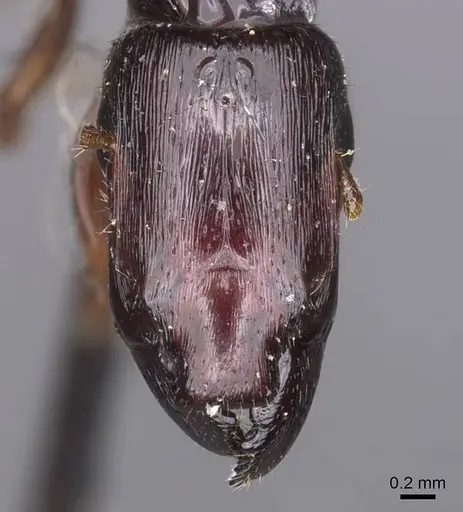
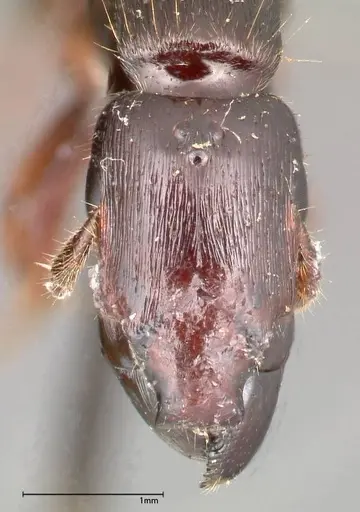
The holotype queen of Metapone sauteri measures 10.5-11.1mm in length, making it a relatively large ant. The queen has a distinctive appearance with a rectangular head that is at least 1.5 times longer than wide, a concave posterior head margin, and shiny mandibles with 5-6 teeth. The body is blackish-brown with a reddish-brown gaster. The subpetiolar process (a projection on the petiole) is distinctive, it is lamellate and translucent, about twice as long as deep, with an acute tooth-like angle. The queen was collected from Sokutsu in the Banshoryo District of Taiwan, likely sometime in the early 1900s. The exact location is no longer determinable. No additional specimens have been collected despite numerous entomological expeditions to Taiwan over the past century. [4][3]
Similar Species and Alternatives
If you are interested in keeping unusual Myrmicinae ants from Asia, several better-documented species exist. Consider related genera in the Crematogastrini tribe, or explore other Asian Myrmicinae that have established captive populations. Species in the genus Crematogaster (acrobat ants) are widely kept and have documented care requirements. Other Myrmicinae like Pheidole, Tetramorium, and Monomorium have well-established husbandry protocols. For truly unusual ants, consider species that have been recently discovered in the hobby but at least have some documented biology. The key is choosing species where colony founders, workers, and behavioral data exist, this is essential for successful antkeeping. Metapone sauteri should be left to professional taxonomists studying rare ant morphology, not as a target for captive husbandry.
Frequently Asked Questions
Can I keep Metapone sauteri ants?
No. This species is not available for antkeeping and cannot be kept. Only a single queen specimen has ever been collected, and no workers or colonies have ever been documented. There is no biological information available to guide captive care.
Where can I get Metapone sauteri?
This species is not available in the antkeeping hobby. It is known only from a single museum specimen in Switzerland (MHNG). No living colonies exist in captivity or have ever been documented.
What do Metapone sauteri ants eat?
Unknown. No feeding observations have ever been recorded for this species. The genus Metapone is termitophilous, suggesting they may have specialized diets related to termite associations, but this is unconfirmed for M. sauteri specifically.
How do I care for Metapone sauteri?
No care guidance can be provided. This is one of the least-known ant species in the world, with no living specimens ever studied. Even basic requirements like temperature, humidity, and nesting preferences are completely unknown.
Are Metapone sauteri queens claustral?
Unknown. Founding behavior has never been observed for this species. Without workers or colonies to study, there is no way to determine whether queens seal themselves in to raise their first brood or must forage during founding.
What is the colony size of Metapone sauteri?
Unknown. No colonies have ever been observed or documented. The maximum colony size, growth rate, and colony structure are completely unrecorded.
Do Metapone sauteri ants sting?
Unknown. No behavioral observations exist for this species. The genus belongs to Myrmicinae, which includes many stinging ants, but no data exists for this specific species.
What is the worker size of Metapone sauteri?
Unknown. Workers have never been described. The species is known only from a single queen specimen, so worker morphology, size, and coloration are completely unknown.
Are Metapone sauteri good for beginners?
No. This species is completely unsuitable for any antkeeper, including experts. There is no biological data, no established care protocols, and no living specimens available. Even if specimens were obtained, there would be no way to provide appropriate care.
Do Metapone sauteri need hibernation?
Unknown. No observations of seasonal behavior exist for this species. Based on the subtropical climate of Taiwan, they likely experience mild seasonal variation but specific diapause requirements are unrecorded.
What is the temperature requirement for Metapone sauteri?
Unknown. No living specimens have ever been studied.
Can I find Metapone sauteri in the wild?
Extremely unlikely. Only a single specimen has been collected in over a century of entomological study in Taiwan. The species may be extinct, extremely rare, or simply not encountered using standard collection methods.
Report an Issue
The current care sheet is based fully on literature. See inconsistencies, or something that's incorrect? Please , it will be resolved after review from an admin. Contributing to the blogs tab also helps providing information, to make us be able to further improve the caresheets. Thank you for your support!
References

Cette fiche d'élevage est sous licence CC BY-SA 4.0 .
Blogs de la communauté
CASENT0907445
Voir sur AntWeb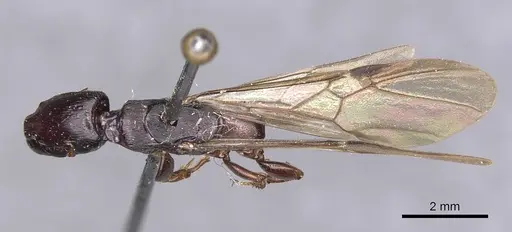
FOCOL0372
Voir sur AntWeb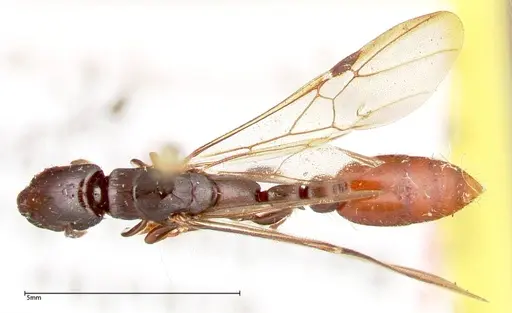
Littérature
Chargement de la carte de répartition...Chargement des produits...