
Messor timidus
- Nom sci.
- Messor timidus
- Tribu
- Stenammini
- Sous-famille
- Myrmicinae
- Auteur
- Espadaler, 1997
- Distribution
- Trouvé dans 0 pays
Introduction
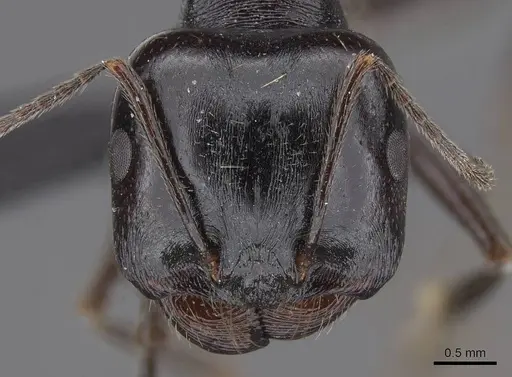
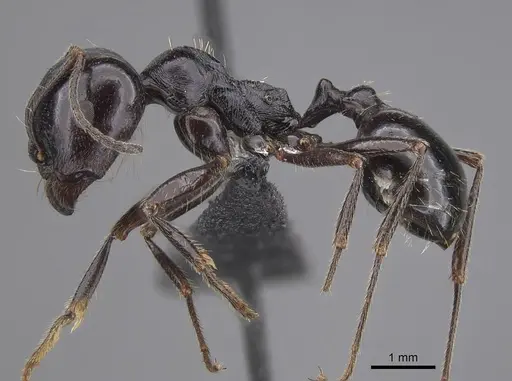
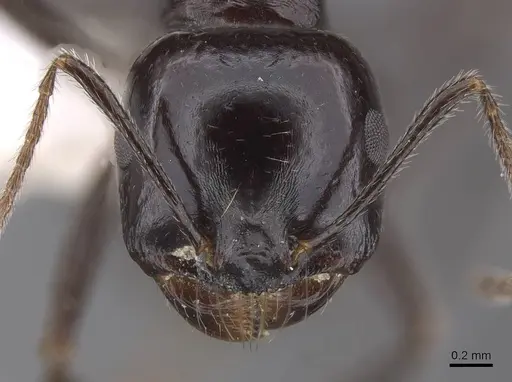
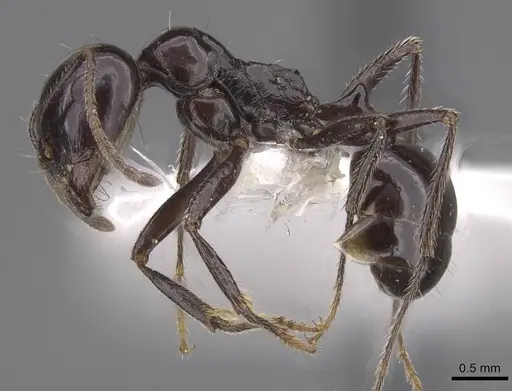
Messor timidus is a small to medium-sized harvester ant endemic to the arid regions of southeastern Spain, particularly around Almería. Workers measure 4.1-10.4mm and are polymorphic, meaning they come in different sizes - minor workers are smaller while major workers have larger heads for seed processing. The species is entirely black with a smooth, shiny head and a distinctive psammophore (a brush of hairs on the underside of the head used for carrying soil particles). The gaster (rear body part) is notably hairy, and the propodeum (the section behind the waist) is angular in minor workers or has a blunt denticle in major workers. This species was only described in 1997 and is closely related to Messor bouvieri, from which it is distinguished by its hairier gaster and more angular propodeum . What makes M. timidus special is its extreme specialization as a seed predator in one of Europe's harshest environments - the Tabernas Desert in Almería. These ants collect seeds directly from plants before they disperse (pre-dispersal seed predation), something most ants don't do. They can carry seeds weighing nearly 96mg - impressive for an ant that maxes out around 10mm. They're also known for their mutual avoidance behavior, where neighboring colonies actively stay away from each other to reduce competition .
Quick Summary
- Difficulty: Medium
- Origin & Habitat: Endemic to the Mediterranean region of southeastern Spain, specifically the Almería province. Found in arid desert and semi-desert habitats, particularly the Tabernas Desert region. Type locality is Sartenilla, Almería [1][2][4].
- Colony Type: Single-queen colonies (monogyne) based on typical Messor genus patterns. Colony size reaches up to 12,000 workers [3].
- Size & Growth:
- Queen: ~9-12mm, inferred from related Messor species
- Worker: 4.1-10.4mm, polymorphic with major and minor workers [3]
- Colony: Up to 12,000 workers [3]
- Growth: Moderate
- Development: ~8-12 weeks, estimated from typical Messor development (Development time is estimated from related harvester ant species. Polymorphic worker castes mean larger workers take longer to develop.)
- Antkeeping:
- Temperature: Keep nest area at 24-28°C. These ants are adapted to extreme heat, they forage when soil temperatures are between 12-42°C and become active when surface temps drop below 40°C [3]. A heating cable on one side of the nest creates a gradient they can choose from.
- Humidity: Keep relatively dry, these are desert ants from arid Almería. Provide a water tube for drinking but avoid damp substrate. The nest should have dry areas with minimal moisture.
- Diapause: Yes, provide a winter rest period of 8-12 weeks at 10-15°C. This matches their Mediterranean seasonal cycle [3].
- Nesting: Use a dry nest setup, Y-tong (AAC), plaster, or 3D-printed nests work well. They prefer compact chambers. Avoid moist substrates. A naturalistic setup with dry sand mimics their natural desert habitat.
- Behavior: These ants are docile and not aggressive toward keepers. They form well-organized foraging trails to collect seeds. Major workers process seeds using their large mandibles. They show mutual avoidance with neighboring colonies, meaning less intra-colony aggression. Escape risk is moderate, use standard barriers but they're not particularly good climbers. They are primarily granivorous but also collect dead arthropods [3].
- Common Issues: seed storage mold, dry conditions help prevent fungal growth in seed caches, overfeeding, excess protein or sugar can harm colonies, stick to seeds as primary food, escape through small gaps, use barrier tape or fluon on edges despite moderate size, winter mortality, colonies that aren't properly cooled during diapause may weaken or die, stress from humidity, too much moisture causes stress and fungal problems in this desert species
Nest Preferences and Housing
Messor timidus comes from arid, desert-like conditions in Almería, Spain. This means they need a dry nest environment, moisture causes stress and fungal problems. Y-tong nests work well because they stay dry and allow you to observe colony activity. Plaster nests are also suitable if you keep them on the dry side. Avoid test tube setups that stay constantly wet. The nest should have chambers sized appropriately for their polymorphic workers, larger chambers accommodate major workers that process seeds. Place the nest in a warm area of your ant setup, around 24-28°C. Because they're desert ants, they don't need high humidity, but always provide a separate water tube for drinking. Outworld setup should include a sand area where they can sort and process seeds, this mimics their natural foraging behavior. [3]
Feeding and Diet
As harvester ants, Messor timidus specializes in collecting and eating seeds, this is their primary food source. In the wild, they collect seeds from various desert plants including Helianthemum species, Launaea, Stipa tenacissima (esparto grass), and many others. They even do pre-dispersal seed predation, meaning they take seeds directly from the plant before they fall [3]. For captive care, offer a variety of seeds, grass seeds, poppy seeds, dandelion seeds, and commercial ant seed mixes work well. They can carry seeds weighing up to 95.9mg in the wild, so seed size isn't usually a problem [3]. They also accept small amounts of protein like dead insects (they collected dead arthropods in studies), but seeds should make up the bulk of their diet. Major workers use their large mandibles to crack open seeds and process them for the colony. Provide seeds constantly and remove any that mold.
Temperature and Seasonal Care
These ants are adapted to extreme temperature conditions. In the wild, they forage when soil temperatures range from 12°C to 42°C, they become active once surface temperatures drop below 40°C [3]. This means they're quite tolerant of heat, but avoid extreme temperatures in captivity. Keep the nest at a comfortable 24-28°C. A heating cable on one side of the nest creates a temperature gradient so ants can choose their preferred spot. During summer, room temperature is often sufficient. In winter, they need a diapause (winter rest) period of 8-12 weeks at 10-15°C. This matches their natural Mediterranean seasonal cycle. The research shows colony activity is highest in late April through May (100% activity), then drops sharply in June to just 13% [3]. This suggests they become less active during the hottest summer months, you might notice reduced activity in July-August even without formal hibernation.
Behavior and Colony Dynamics
Messor timidus is a docile species that forms organized foraging trails, you won't see them aggressively swarming or attacking. They show interesting mutual avoidance behavior with neighboring colonies of the same species, which reduces competition for food resources [3]. The colony is polymorphic, meaning you have different worker sizes: minor workers do most of the foraging and caring for brood, while major workers (with their larger heads) specialize in seed processing and defense. Major workers have a blunt denticle on their propodeum pointing upward, this is a subtle defense feature [1][2]. Workers are entirely black with a shiny head and notably hairy abdomen (gaster). The psammophore on the underside of the head is a specialized structure for carrying soil particles, common in desert-dwelling harvester ants. Colonies can grow to around 12,000 workers, making them a substantial but not massive species [3].
Frequently Asked Questions
Can I keep Messor timidus in a test tube?
Test tubes work for founding colonies but aren't ideal long-term. These desert ants prefer dry conditions, and test tubes tend to retain moisture. Move them to a Y-tong or plaster nest once the colony reaches 20-30 workers. The dry nest environment is crucial for their health.
How long until Messor timidus has first workers?
Expect first workers (nanitics) around 8-12 weeks after the queen lays eggs, based on typical Messor development. This is an estimate since this species hasn't been specifically studied in captivity. The exact timing depends on temperature, warmer conditions speed development.
What do Messor timidus eat?
Seeds are their primary food, offer grass seeds, poppy seeds, dandelion seeds, or commercial ant seed mixes. They also accept small dead insects occasionally. Major workers process seeds by cracking them open. Always provide seeds and a water source. Remove any moldy seeds promptly.
Do Messor timidus ants sting?
Messor ants have stingers but rarely use them. This species is docile and not aggressive toward keepers. The sting is primarily for defense and is too mild to worry about. Major workers have a small propodeal denticle but it's more of a visual feature than an effective weapon.
Are Messor timidus good for beginners?
They are medium difficulty, not the easiest but not challenging. Their main requirements are dry housing, seed-based diet, and winter diapause. They're more specialized than generalist ants like Lasius, but their needs are straightforward once you understand them.
Do Messor timidus need hibernation?
Yes, provide a winter rest period of 8-12 weeks at 10-15°C during winter months. This matches their natural Mediterranean cycle. Without proper diapause, colonies may become stressed or have reduced lifespan. The research shows they naturally reduce activity in summer, so they're adapted to seasonal changes.
How big do Messor timidus colonies get?
Colonies can reach up to 12,000 workers [3]. This is substantial but not huge compared to some Messor species that can have 50,000+. Growth is moderate, expect a few hundred workers in the first year, with growth accelerating in subsequent years with proper care.
Can I keep multiple Messor timidus queens together?
Not recommended. This species is monogyne (single queen) based on typical Messor patterns. Multiple unrelated queens will likely fight. If you catch a founding queen, house her alone until she establishes her colony.
When should I move Messor timidus to a formicarium?
Move them once they reach 20-30 workers and you see them struggling for space in the founding setup. A Y-tong or plaster nest works well. Make sure the new nest has a temperature gradient and dry conditions. They prefer compact chambers over large open spaces.
Why are my Messor timidus dying?
Common causes include: too much humidity (causes fungal problems), insufficient seeds (they need constant seed availability), improper diapause (they need winter rest), or stress from disturbance. Check that the nest is dry, seeds are available, and temperatures are stable. Wild-caught colonies may also carry parasites.
Report an Issue
The current care sheet is based fully on literature. See inconsistencies, or something that's incorrect? Please , it will be resolved after review from an admin. Contributing to the blogs tab also helps providing information, to make us be able to further improve the caresheets. Thank you for your support!
References

Cette fiche d'élevage est sous licence CC BY-SA 4.0 .
Blogs de la communauté
CASENT0915456
Voir sur AntWeb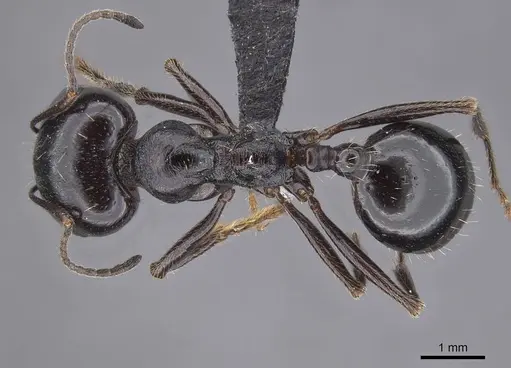
CASENT0915457
Voir sur AntWeb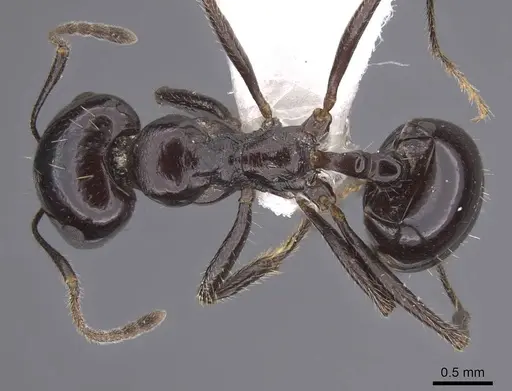
Littérature
Chargement de la carte de répartition...Chargement des produits...