
Mesoponera manni
- Nom sci.
- Mesoponera manni
- Tribu
- Ponerini
- Sous-famille
- Ponerinae
- Auteur
- Viehmeyer, 1924
- Distribution
- Trouvé dans 0 pays
Introduction
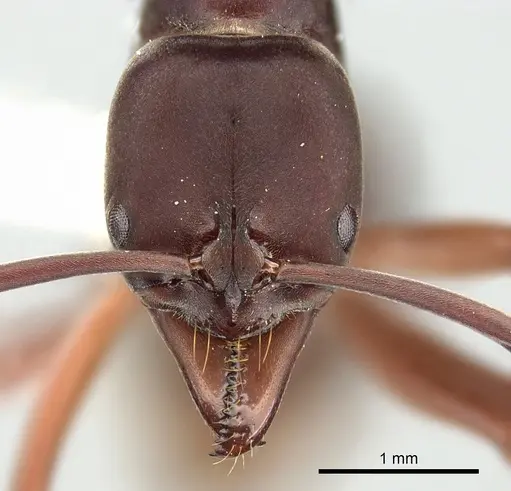
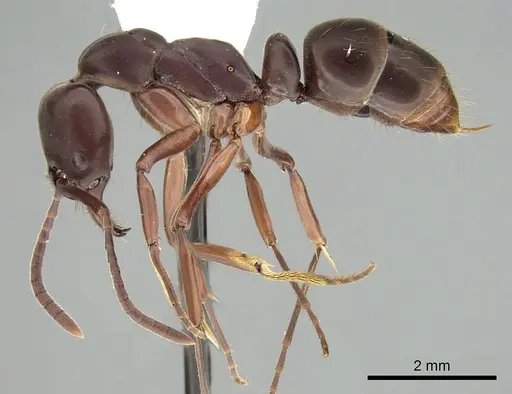
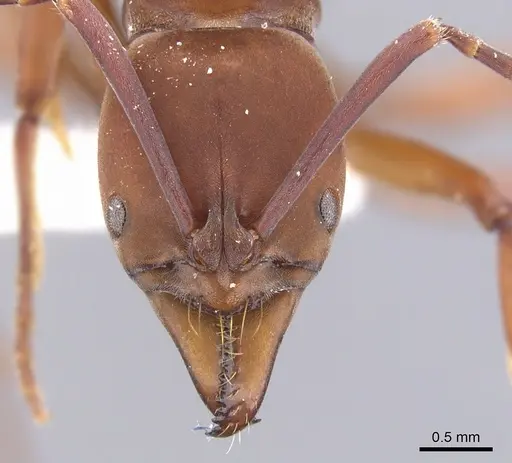
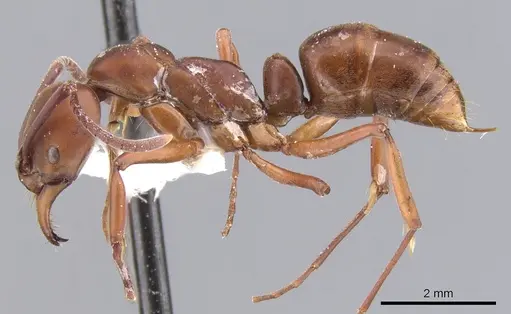
Mesoponera manni is a medium-sized ponerine ant native to the Australasian and Indomalayan regions, found across New Guinea, the Solomon Islands, and parts of India. Workers have a distinctive light to medium reddish-brown body color, setting them apart from related species like M. papuana which are typically blackish brown. They have notably smaller eyes compared to close relatives. This species nests in rotting logs in lowland rainforest and under rocks in midmountain rainforest environments. As a ponerine ant, they possess a functional stinger and are predatory in nature, making them interesting but more challenging for antkeepers compared to common pet ants.
Quick Summary
- Difficulty: Medium
- Origin & Habitat: Native to New Guinea, Solomon Islands, and India (Maharashtra state). Found in lowland rainforest nesting in rotting logs and under rocks in midmountain rainforest areas [1].
- Colony Type: Colony structure has not been directly studied.
- Size & Growth:
- Queen: Size data unavailable, inferred from related Ponerinae species to be approximately 8-10mm
- Worker: Approximately 6-8mm, inferred from genus
- Colony: Likely up to several hundred workers based on genus patterns
- Growth: Moderate, Ponerine ants typically develop more slowly than myrmicines
- Development: Estimated 8-12 weeks at optimal temperature based on typical Ponerinae development (Ponerine brood development is generally slower than many common pet ants. Expect 2-3 months from egg to first worker.)
- Antkeeping:
- Temperature: Keep around 24-28°C, they are a tropical species from rainforest environments. A gentle gradient allowing warmer and cooler areas is recommended.
- Humidity: Keep substrate consistently moist but not waterlogged, these rainforest ants need damp conditions. Allow the nest to dry slightly between waterings while providing a moisture gradient.
- Diapause: Unlikely, being a tropical species from lowland New Guinea, they probably do not require a diapause period.
- Nesting: Provide a naturalistic setup with moist substrate. They naturally nest in rotting wood and under stones, so a Y-tong or plaster nest with damp chambers works well. They prefer tight, enclosed spaces.
- Behavior: Mesoponera manni is a predatory ponerine ant with a functional stinger. They are active foragers that hunt small invertebrates. Workers are moderately aggressive when defending the nest but not particularly territorial. They have good escape prevention needs due to their moderate size, standard barriers work well but ensure enclosures are secure. They are primarily nocturnal or crepuscular in activity patterns.
- Common Issues: Predatory nature means they require live prey, cannot survive on just sugar water, High humidity requirements can lead to mold problems if ventilation is poor, Slower development than common ants may cause keepers to lose patience, Tropical species may struggle in cooler climates without heating, Stinger can cause irritation, handle with care
Housing and Nest Setup
Mesoponera manni requires a humid, naturalistic setup that mimics their rainforest origin. They naturally nest in rotting wood and under stones in humid forest environments. For captivity, a Y-tong or plaster nest with consistently moist chambers works well. The nest should have tight, enclosed chambers rather than open spaces. An outworld for foraging is essential since they are active predators. Use a water reservoir or moisture system to maintain substrate dampness. Ensure excellent escape prevention, while not extremely small, they are agile and will exploit any gaps. A test tube setup can work for founding colonies if kept humid, but transfer to a proper nest once the colony reaches 10-15 workers. [1]
Feeding and Diet
As a ponerine ant, M. manni is predatory and requires live prey to thrive. Offer small live insects such as fruit flies, small crickets, mealworms, and other appropriately sized arthropods. They will likely accept protein-rich foods like small caterpillars, waxworms, and other insects. Sugar sources may be accepted occasionally, you can offer honey or sugar water as a supplement, but do not rely on these as primary nutrition. Feed every 2-3 days, adjusting based on colony size and consumption. Remove uneaten prey after 24 hours to prevent mold. A varied diet helps ensure healthy brood development. [1]
Temperature and Humidity
Maintain temperatures between 24-28°C for optimal colony health and brood development. Being a tropical lowland species from New Guinea, they do not tolerate cool conditions well. Use a heating cable or mat on one side of the nest to create a temperature gradient, allowing the colony to self-regulate. Humidity should remain high, keep the nest substrate consistently moist but not waterlogged. Mist the outworld occasionally and maintain water reservoirs in the nest. Poor humidity leads to brood death and colony decline. Adequate ventilation is necessary to prevent mold while maintaining humidity. [1]
Behavior and Temperament
Mesoponera manni is an active, predatory ant with a functional stinger. Workers are moderately aggressive and will sting if threatened or when defending the nest. The sting causes mild irritation similar to other ponerine ants. They are primarily nocturnal or crepuscular, showing peak activity during evening and night hours. Workers forage individually rather than in raiding parties. They are not particularly territorial beyond the immediate nest area. Colonies establish firm nest sites and do not readily relocate. The stinger means you should handle with care, avoid disturbing the nest unnecessarily. [1]
Colony Development
Ponerine ants like M. manni typically develop more slowly than common pet ants such as Lasius or Camponotus. Expect 8-12 weeks from egg to first worker at optimal temperature. The founding queen will likely need to hunt during the founding period, so she should have access to small prey items. Nanitics (first workers) are often smaller than normal workers. Growth rate is moderate, colonies may take 6-12 months to reach 50 workers under good conditions. Patience is key with this species. Do not overfeed during founding as it can attract pests and cause mold issues. [1]
Frequently Asked Questions
How long does it take for Mesoponera manni to produce first workers?
Expect 8-12 weeks from egg to first worker at optimal temperature (24-28°C). Ponerine ants develop more slowly than many common ant species.
What do Mesoponera manni ants eat?
They are predatory ants that require live prey. Feed small live insects like fruit flies, small crickets, and mealworms. They may accept honey or sugar water as a supplement but cannot survive on sugar alone.
Do Mesoponera manni ants sting?
Yes, they have a functional stinger and will sting if threatened. The sting causes mild irritation similar to other ponerine ants. Handle with care and avoid disturbing the nest.
Are Mesoponera manni good for beginners?
They are rated as medium difficulty. They require more specific care than beginner species like Lasius, specifically high humidity, live prey feeding, and warm temperatures. Not recommended as a first ant but manageable for intermediate keepers.
What humidity do Mesoponera manni need?
Keep humidity high, the nest substrate should feel consistently moist but not waterlogged. Use water reservoirs and mist regularly. Allow slight drying between waterings to prevent mold while maintaining a moisture gradient.
Do Mesoponera manni need hibernation?
No, they are tropical ants from lowland New Guinea and do not require a diapause or hibernation period. Keep them warm year-round.
How big do Mesoponera manni colonies get?
Colony size is not well documented, but based on related Ponerinae species, they likely reach up to several hundred workers. Growth is moderate and takes patience.
What temperature is best for Mesoponera manni?
Keep them at 24-28°C. They are tropical rainforest ants that do not tolerate cool conditions. Use a heating gradient if possible.
Can I keep multiple Mesoponera manni queens together?
Colony structure is not well studied for this species. Based on typical Ponerinae patterns, they likely form single-queen colonies. Combining unrelated queens is not recommended without specific documentation.
When should I move Mesoponera manni to a formicarium?
You can keep them in a test tube setup for founding, but transfer to a proper nest (Y-tong or plaster) once the colony reaches 10-15 workers. They need space for foraging and brood chambers.
Report an Issue
The current care sheet is based fully on literature. See inconsistencies, or something that's incorrect? Please , it will be resolved after review from an admin. Contributing to the blogs tab also helps providing information, to make us be able to further improve the caresheets. Thank you for your support!
References

Cette fiche d'élevage est sous licence CC BY-SA 4.0 .
Blogs de la communauté
CASENT0249170
Voir sur AntWeb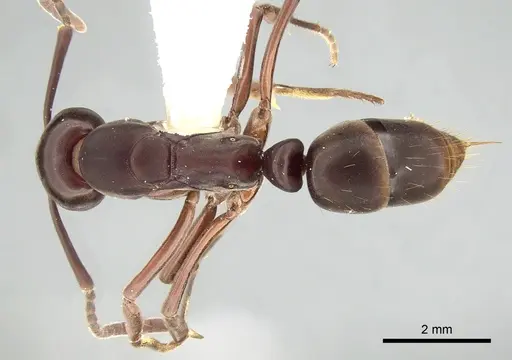
CASENT0902486
Voir sur AntWeb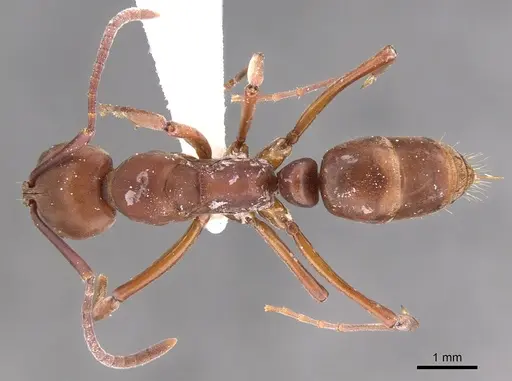
Littérature
Chargement de la carte de répartition...Chargement des produits...