
Leptogenys serrata
- Nom sci.
- Leptogenys serrata
- Tribu
- Ponerini
- Sous-famille
- Ponerinae
- Auteur
- Lattke, 2011
- Distribution
- Trouvé dans 0 pays
Introduction
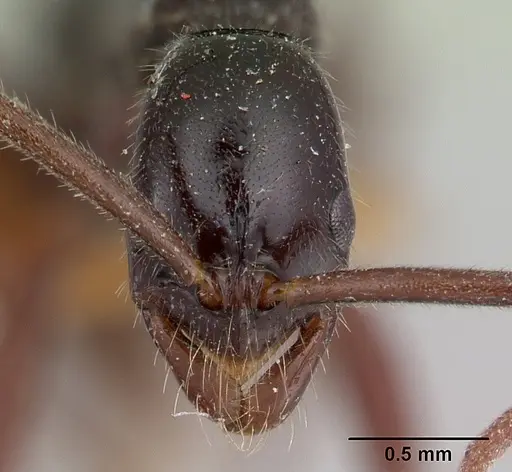
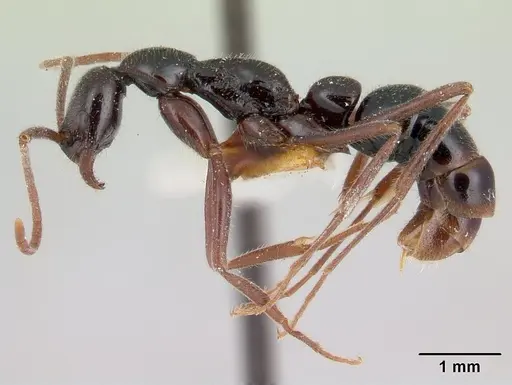
Leptogenys serrata is a predatory ant from the Ponerinae subfamily, found exclusively in Panama and Colombia. Workers have a black to dark brown body with ferruginous antennae, mandibles, and legs, and possess serrated mandibles. Exact body size data is unavailable. This species inhabits leaf litter in tropical forests . It is a member of the famelica species group and can be distinguished from similar Central American species by its broader-than-long mesonotum and propodeal spiracle positioning .
Quick Summary
- Difficulty: Medium
- Origin & Habitat: Tropical forests in Panama and Colombia, found in leaf litter [1][2][3]
- Colony Type: Unknown, queens and males have never been documented [3]
- Size & Growth:
- Queen: Unknown, queen caste has not been described [3]
- Worker: Size data unavailable, no total length measurements provided
- Colony: Unknown, no colony data exists [3]
- Growth: Unknown
- Development: Unknown, no developmental data exists for this species (Based on related Leptogenys species, development may take 2-3 months at tropical temperatures, but this is inferred.)
- Antkeeping:
- Temperature: Keep warm, roughly 24-28°C, based on tropical forest origin. A gentle gradient allowing self-regulation is recommended. [1][2]
- Humidity: Keep nest substrate consistently moist but not waterlogged, reflecting their leaf litter habitat. [3]
- Diapause: No, as a tropical species, they do not require hibernation. Maintain stable warm conditions year-round.
- Nesting: Provide a humid nest setup such as a Y-tong (AAC) or plaster nest with moisture retention. A naturalistic setup with damp soil and leaf litter also works well. [3]
- Behavior: Leptogenys serrata is a predatory ant with serrated mandibles for hunting small invertebrates. They are active foragers in leaf litter. Workers can sting if threatened, as is typical for Ponerine ants. Escape prevention should be moderate due to their size. [3]
- Common Issues: lack of documented biology makes captive care challenging, much is inferred from related species, queen and male castes unknown means colony founding cannot be reliably supported, predatory diet requirements may be difficult to meet with appropriate live prey, high humidity needs create mold risk if ventilation is inadequate, very limited availability in the antkeeping hobby due to lack of documented colonies
Species Identification and Distinction
Leptogenys serrata is a member of the famelica species group within the genus Leptogenys. The species was formally described by Lattke in 2011 from specimens collected in Panama's Canal Zone. The name 'serrata' refers to the distinctive serrated masticatory margin of the mandible, which is a key identification feature. Workers can be distinguished from the similar L. pinna by comparing the elongate mesonotum and petiole of L. pinna, as well as the more posterolateral facing propodeal spiracle. Leptogenys pittieri is similar in build but has a single pre-apical tooth on the mandibular masticatory margin and a much more subquadrate petiolar node in lateral view. Some specimens from Colombia and Brazil have been labeled as Leptogenys cf. serrata, as they share similar petiole shape but differ in propodeal spiracle positioning and eye size [3].
Natural History and Habitat
This species is known only from the tropical forests of Panama and Colombia, specifically documented in the Canal Zone region of Panama and Cundinamarca in Colombia. A single specimen was recorded as being found in leaf litter, which is typical for many Leptogenys species that are cryptic ground-dwelling predators. The tropical rainforest environment provides consistent warmth, high humidity, and abundant small invertebrate prey. The lack of queen and male specimens suggests either specialized nesting habits that make queens difficult to locate, or that this species has not been extensively studied in the wild [1][2][3].
Predatory Feeding Biology
As a member of the Ponerinae subfamily, Leptogenys serrata is a predatory ant species. The genus Leptogenys is known for hunting various small invertebrates, and the species' serrated mandibles are an adaptation for capturing and subduing prey. In captivity, you should offer small live prey such as fruit flies, pinhead crickets, small mealworms, and other appropriately sized invertebrates. Ponerine ants like Leptogenys are primarily protein-focused predators, though they may occasionally accept honey or sugar water. Feed them protein prey 2-3 times per week, removing any uneaten prey after 24-48 hours to prevent mold issues [3].
Housing and Nest Setup
Given their leaf litter habitat in tropical forests, Leptogenys serrata requires high humidity and a moist nest environment. A Y-tong (AAC) nest or a plaster nest with moisture chambers works well for maintaining the humidity levels they need. Alternatively, a naturalistic setup with damp soil and leaf litter in a terrarium can closely mimic their natural environment. The nest should have chambers sized appropriately for a medium-sized Ponerine ant, with passages the workers can comfortably traverse. Provide a water tube or moisture source to maintain humidity. Ensure excellent ventilation to prevent mold while still retaining moisture. The outworld should allow for hunting opportunities, a small arena where you can introduce prey items [3].
Temperature and Seasonal Care
As a tropical species from Panama and Colombia, Leptogenys serrata requires warm conditions year-round. Maintain temperatures around 24-28°C, which reflects their natural habitat in lowland tropical forests. Temperature gradients are beneficial, allowing workers to move between warmer and cooler areas of the nest to self-regulate. Unlike temperate ant species, they do not require a diapause period. Keep them away from air conditioning vents, drafts, and any area that might experience temperature drops. A heating cable on one side of the nest can help maintain warmth, but always provide unheated areas so ants can escape if they overheat. Stable temperatures are more important than exact precision, avoid frequent fluctuations [1][2].
Current State of Knowledge
Leptogenys serrata remains one of the lesser-known ant species in the scientific literature. The original description was published by Lattke in 2011 based on three worker specimens from Panama's Barro Colorado Island. Critically, neither queens nor males have ever been documented, leaving significant gaps in our understanding of this species' biology. This means we do not know the exact colony structure, how colonies are founded, how many workers a mature colony reaches, or the complete development timeline. Some specimens from Colombia and Brazil have been tentatively identified as Leptogenys cf. serrata, suggesting there may be some regional variation or potentially undescribed related species. For antkeepers, this means much of the care information must be inferred from related Leptogenys species and general Ponerine biology rather than species-specific data [3].
Frequently Asked Questions
How do I start a Leptogenys serrata colony?
This is currently not feasible, queens have never been documented for this species, so no established method for colony founding exists. The species is known only from worker specimens, and wild queen capture is not possible without knowing where to find them. This species is not currently available in the antkeeping hobby due to these knowledge gaps [3].
What do Leptogenys serrata ants eat?
As a Ponerine ant, they are predatory and should be fed small live invertebrates. Based on related species, offer fruit flies, small crickets, mealworms, and other appropriately sized protein sources. They may accept sugar water or honey occasionally, but protein-rich prey should form the bulk of their diet [3].
Are Leptogenys serrata ants aggressive?
Ponerine ants are generally more defensive than many common ant genera. They possess a functional sting and may use it if threatened. However, they are not typically aggressive toward humans unless directly handled or their nest is disturbed. In captivity, they are more likely to flee than to attack [3].
What temperature do Leptogenys serrata need?
Keep them warm at 24-28°C year-round. As a tropical species from Panama and Colombia, they do not tolerate cool temperatures and do not require hibernation. A temperature gradient allowing self-regulation is ideal [1][2].
Do Leptogenys serrata need hibernation?
No, as a tropical species, they do not require diapause or hibernation. Maintain warm, stable conditions throughout the year to mimic their natural tropical forest habitat.
How big do Leptogenys serrata colonies get?
Unknown, no colony size data exists for this species. Based on related Leptogenys species, colonies may reach several hundred workers, but this is purely speculative given the lack of documented colonies [3].
Is Leptogenys serrata suitable for beginners?
No, this species is not recommended for beginners. The primary reason is that almost no biological data exists for this species: queens are unknown, colony structure is unconfirmed, and all care requirements must be inferred from related species. Additionally, they have specific high-humidity and predatory feeding requirements that make them more challenging than established species [3].
Where does Leptogenys serrata live in the wild?
They are found only in Panama and Colombia, in tropical forest habitats. Specimens have been collected from leaf litter in the Canal Zone (Panama) and Cundinamarca region (Colombia) [1][2][3].
Can I keep multiple Leptogenys serrata queens together?
Unknown, queen biology has never been documented for this species, so we cannot confirm whether they are single-queen (monogyne) or multi-queen (polygyne) colonies. Without this fundamental information, combining queens is not recommended [3].
How long does it take for Leptogenys serrata to develop from egg to worker?
Unknown, no developmental data exists for this specific species. Related Leptogenys species in tropical conditions typically develop from egg to worker in 6-12 weeks, but this is a rough estimate rather than confirmed data for L. serrata.
Report an Issue
The current care sheet is based fully on literature. See inconsistencies, or something that's incorrect? Please , it will be resolved after review from an admin. Contributing to the blogs tab also helps providing information, to make us be able to further improve the caresheets. Thank you for your support!
References

Cette fiche d'élevage est sous licence CC BY-SA 4.0 .
Blogs de la communauté
CASENT0178805
Voir sur AntWeb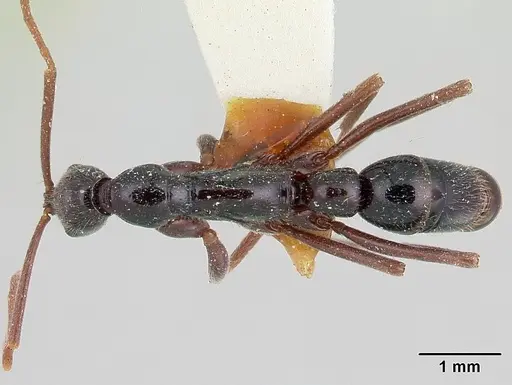
Littérature
Chargement de la carte de répartition...Chargement des produits...