
Leptogenys loarelae
- Nom sci.
- Leptogenys loarelae
- Tribu
- Ponerini
- Sous-famille
- Ponerinae
- Auteur
- Ramage, 2019
- Distribution
- Trouvé dans 0 pays
Introduction
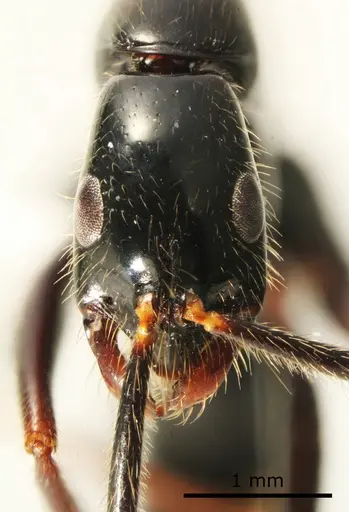
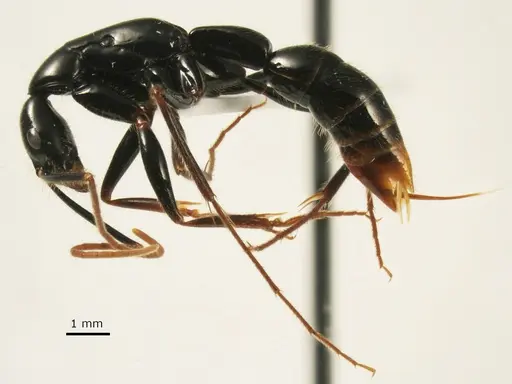
Leptogenys loarelae is a large ant species endemic to the humid forests of New Caledonia. Workers measure approximately 11.5mm in total length, making them one of the larger species in the genus Leptogenys. They have a distinctive appearance with an elongate body, a notably elongated third antennal segment (more than twice the length of the pedicel), and elongated triangular mandibles. The integument is smooth and shining, appearing mostly black with a characteristic blueish reflection. This species is only known from a single worker specimen collected in 2011 and formally described in 2019,making it one of the rarest and least-studied ants in the world. As a member of the Ponerinae subfamily, they possess a functional stinger for defense.
Quick Summary
- Difficulty: Expert
- Origin & Habitat: Endemic to New Caledonia, specifically found in mixed mountain forest at 897m elevation on the Plateau de Dogny trail in Province Sud. The habitat is characterized as humid forest containing endemic Austrotaxus spicata (Taxaceae) trees. [1][2]
- Colony Type: Unknown, this species is only known from a single worker specimen. No colony data exists.
- Size & Growth:
- Queen: Unknown, no queen has been described. [1]
- Worker: 11.5mm total length [1]
- Colony: Unknown, no colony data exists for this species.
- Growth: Unknown, no development data exists for this species.
- Development: Unknown, no direct data exists for this species. (No development data exists for this species.)
- Antkeeping:
- Temperature: Based on the humid forest habitat at 897m elevation in New Caledonia, aim for warm conditions around 22-26°C. Avoid temperatures below 20°C or above 30°C.
- Humidity: High humidity is essential, they come from humid forest habitat. Keep nest substrate consistently moist but not waterlogged. Target 70-85% humidity in the nest area.
- Diapause: Unknown, no seasonal data exists. New Caledonia has mild winters, so a true diapause may not be required.
- Nesting: Natural nesting occurs in soil in forest habitats. In captivity, a naturalistic setup with moist soil or a Y-tong/plaster nest works well. They prefer dark, humid nest chambers. Avoid dry or overly ventilated setups.
- Behavior: Leptogenys loarelae is a predatory ant species, as indicated by their elongate mandibles and membership in the Ponerinae subfamily. They likely hunt spiders and other small arthropods. Workers are likely fast-moving and may be defensive when protecting their nest. As a Ponerinae species, they possess a functional stinger capable of delivering painful venom. Escape prevention is important given their size, standard barriers work well. Their large eyes suggest they may be visually oriented foragers. [1][2]
- Common Issues: this species has never been kept in captivity, no established care protocols exist., virtually no biological data means all care recommendations are educated guesses., extremely rare in the hobby, likely unavailable from suppliers., humidity requirements are critical, dry conditions will quickly kill colonies., predatory diet requirements may be challenging to meet consistently., no queen has ever been described, captive breeding would be unprecedented.
Species Discovery and Rarity
Leptogenys loarelae represents one of the most recently described and least-studied ant species in the world. It was only formally described in 2019 from a single worker specimen collected in 2011 by researcher V. Perrichot. The type locality is the Plateau de Dogny trail in southern New Caledonia at 897 meters elevation. This species has never been found again since that initial discovery, making it exceptionally rare in both the wild and in any potential captive collections. The specific epithet 'loarelae' honors Thibault Ramage's daughter Loarel. For antkeepers, this means that L. loarelae is essentially unavailable in the hobby and represents an extreme expert-level species that would require exceptional circumstances to obtain. [1]
Identification and Distinguishing Features
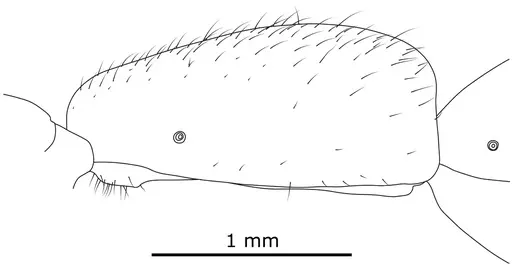
This species can be identified by several unique characteristics that set it apart from other New Caledonian Leptogenys. The most striking feature is the third antennal segment, which is markedly elongate, more than twice the length of the pedicel. The mandibles are elongate and triangular in shape. The petiole is extremely elongated, nearly three times longer than it is broad when viewed from above. The overall body is smooth and shining with very fine, sparse punctation. Color is predominantly black with a distinctive blueish reflection, though the mandibles, antennae, tarsi, and abdominal tip are reddish-brown. Workers reach approximately 11.5mm in total length, making this a relatively large species in the genus. [1]
Natural Habitat and Environmental Conditions
Leptogenys loarelae was collected from mixed mountain forest at 897m elevation in New Caledonia's Province Sud. The habitat is characterized as humid forest containing the endemic conifer Austrotaxus spicata, a rare tree species found only in New Caledonia. The collection occurred on November 16,2011,during hand-collection on the ground. This elevation and forest type suggests the species prefers cool, humid conditions with stable temperatures. New Caledonia's climate is tropical but moderated by elevation, the mountains experience cooler temperatures than the coast. For captive care, this translates to needing a humid, forest-type setup with temperatures that are warm but not hot, and consistent moisture in the substrate. [1][2]
Diet and Feeding
As a member of the Ponerinae subfamily, Leptogenys loarelae is almost certainly predatory. The genus name literally means 'slender jaw' and these ants are known for hunting behavior, primarily targeting spiders and other arthropods. In captivity, you would need to provide a diet based on live small prey such as fruit flies, small crickets, mealworms, and other appropriately-sized insects. Unlike some ants that readily accept sugar sources, Leptogenys are primarily protein-focused predators. Some species in the genus may accept honey or sugar water occasionally, but protein should form the bulk of their diet. Feed small prey items 2-3 times per week, adjusting based on colony size and consumption. Remove uneaten prey after 24-48 hours to prevent mold.
Recommended Housing Setup
Given the limited natural history data, housing recommendations must be based on the species' apparent preferences and what works for related Leptogenys species. A naturalistic setup with moist soil substrate works best, this allows for the humidity control they need while mimicking their forest floor habitat. A Y-tong or plaster nest with good moisture retention is also suitable. The nest should be dark and humid. Provide a water tube for drinking and maintain substrate moisture by checking regularly, the soil should feel damp but not soggy. The outworld can be simple with minimal decoration, focusing on providing a hunting area for prey items. Escape prevention is important though not as critical as with tiny ants, standard fluon barriers on smooth surfaces will suffice for these larger ants.
Expert-Level Challenges
Prospective keepers must understand that Leptogenys loarelae represents an extreme challenge even for experienced antkeepers. This species has never been kept in captivity, there are no established care protocols, no documented captive colonies, and no one to consult with for troubleshooting. Every aspect of their care would be experimental. Additionally, the species is exceptionally rare in the wild and almost certainly unavailable from any ant supplier or collector. The lack of any biological data (founding behavior, colony structure, development timeline, queen description) means keepers would be pioneering all aspects of captive husbandry. For these reasons, L. loarelae is best considered a 'theoretical' species for discussion and study rather than a realistic captive project. Those interested in Leptogenys may have better success seeking related species that are more commonly available and better understood. [1]
Frequently Asked Questions
Can I keep Leptogenys loarelae as a pet ant?
No, this species is essentially unavailable to antkeepers. It is only known from a single worker collected in 2011 and described in 2019. No colonies exist in captivity, and the species has never been found in the wild since the original discovery. Even if you could obtain one, there would be no established care protocols. [1]
How big do Leptogenys loarelae workers get?
Workers are approximately 11.5mm in total length, making this a relatively large species in the Leptogenys genus. The queen has never been described, so queen size is unknown. [1]
What do Leptogenys loarelae ants eat?
Based on genus patterns, they are predatory ants that hunt spiders and other arthropods. In captivity, they would need a diet of live small insects such as fruit flies, small crickets, and mealworms. They are primarily protein-focused predators rather than sugar-seekers.
Where is Leptogenys loarelae found in the wild?
This species is endemic to New Caledonia, specifically found at 897m elevation on the Plateau de Dogny trail in Province Sud. The habitat is humid mixed mountain forest containing the endemic conifer Austrotaxus spicata. [1]
What temperature and humidity do Leptogenys loarelae need?
Based on their humid forest habitat at 897m elevation, aim for temperatures around 22-26°C and high humidity (70-85%). Keep the nest substrate consistently moist but not waterlogged. Avoid temperatures below 20°C or above 30°C.
How long does it take for Leptogenys loarelae to develop from egg to worker?
This is completely unknown, no development data exists for this species.
Is Leptogenys loarelae a good species for beginners?
No. This is an expert-level species that has never been kept in captivity. There are no established care protocols, the species is extremely rare, and virtually no biological data exists. Even experienced antkeepers would face unprecedented challenges with this species. [1]
Do Leptogenys loarelae colonies have multiple queens?
Unknown. The colony structure of this species has never been documented.
Does Leptogenys loarelae need hibernation?
Unknown, no seasonal data exists. New Caledonia has mild winters, so a true diapause may not be required.
Report an Issue
The current care sheet is based fully on literature. See inconsistencies, or something that's incorrect? Please , it will be resolved after review from an admin. Contributing to the blogs tab also helps providing information, to make us be able to further improve the caresheets. Thank you for your support!
References

Cette fiche d'élevage est sous licence CC BY-SA 4.0 .
Blogs de la communauté
ANTWEB1041392
Voir sur AntWeb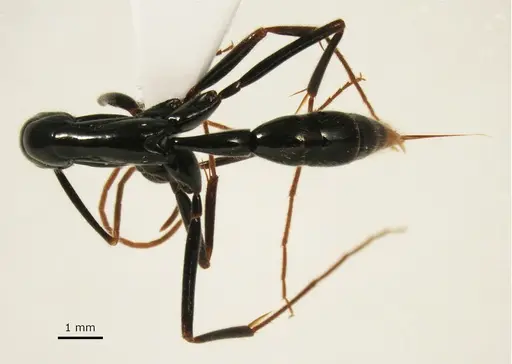
Littérature
Chargement de la carte de répartition...Chargement des produits...