
Leptogenys iridipennis
- Nom sci.
- Leptogenys iridipennis
- Tribu
- Ponerini
- Sous-famille
- Ponerinae
- Auteur
- Smith, 1858
- Distribution
- Trouvé dans 0 pays
Introduction
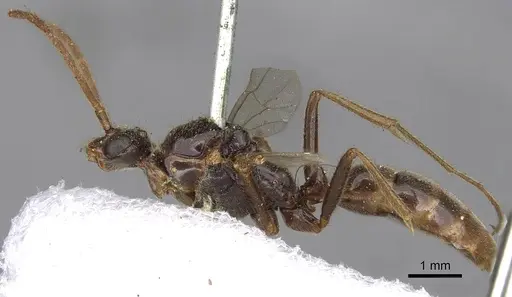
Leptogenys iridipennis is a predatory ant species endemic to India, specifically recorded in Sikkim and West Bengal . Males measure approximately 7.4 mm , but queen and worker sizes are undescribed in scientific literature. The species was originally described as Ponera iridipennis by Frederick Smith in 1858 . As a member of the Ponerinae subfamily, these ants use a sting for prey capture and defense. This species is known for its hunting behavior, typical of Leptogenys ants, which are active predators in tropical and subtropical regions.
Quick Summary
- Difficulty: Medium
- Origin & Habitat: Endemic to India, found in Sikkim and West Bengal [1].
- Colony Type: Colony structure is unconfirmed. Based on typical Leptogenys patterns, likely single-queen colonies.
- Size & Growth:
- Queen: Size data unavailable, no total length measurements in literature.
- Worker: Size data unavailable, no total length measurements in literature.
- Colony: Unknown for this species.
- Growth: Moderate, inferred from Ponerinae patterns.
- Development: Estimated 6-10 weeks based on related Ponerinae species. (Development time is estimated from genus-level data since species-specific research is unavailable.)
- Antkeeping:
- Temperature: Keep at 24-28°C, inferred from tropical habitat.
- Humidity: Keep nest substrate consistently moist but not waterlogged, inferred from humid native habitat.
- Diapause: Likely minimal diapause, inferred from tropical origin.
- Nesting: Prefer dark, humid nests in Y-tong, plaster, or naturalistic setups.
- Behavior: Active predators with a sting, workers are fast-moving and agile.
- Common Issues: limited documentation means care requirements may need adjustment based on colony behavior., predatory diet requires live prey regularly., escape prevention is critical due to small size and agility., humidity control is essential to prevent colony decline.
Housing and Nest Setup
Leptogenys iridipennis does well in Y-tong (AAC), plaster, or naturalistic formicarium setups. They prefer dark, humid nest chambers that stay consistently moist. Provide a water tube connected to the nest to maintain humidity through a cotton wick. A test tube setup works for founding colonies, use a dark cover to simulate their preferred dark conditions. Foraging area should be simple with minimal decorations since they are focused predators. Use fine mesh on all openings as workers can escape through small gaps [4].
Feeding and Diet
As active predators, Leptogenys iridipennis requires live prey. Offer small insects like fruit flies, pinhead crickets, small mealworms, and other appropriately sized arthropods. Based on typical genus behavior, they may also accept small amounts of sugar water or honey as an energy source, but protein from live prey is essential for colony growth. Feed every 2-3 days, adjusting based on consumption rate. Remove uneaten prey to prevent mold.
Temperature and Seasonal Care
Maintain temperatures between 24-28°C for optimal colony development. Being from northeastern India, they prefer warm, humid conditions year-round. Room temperature within this range works well in most homes. If your space is cooler, use a heating cable on one side of the nest to create a gentle gradient, place heating on top of the nest to avoid drying. They likely do not require true hibernation but may show reduced activity during cooler winter months.
Behavior and Colony Dynamics
Leptogenys iridipennis is an active, fast-moving predator. Workers hunt cooperatively and can take down prey larger than individual workers. They have a well-developed sting used to subdue prey and for defense. Colonies are moderately aggressive when defending against threats but rarely bother keepers. Workers are not particularly large but are agile and alert, always use secure escape prevention. The colony will grow gradually over months to years, with the queen remaining the sole egg-layer in typical monogyne colonies.
Frequently Asked Questions
How long does it take for Leptogenys iridipennis to produce first workers?
Based on related Ponerinae species, expect 6-10 weeks from egg to worker at optimal temperature (24-28°C). This is an estimate since this specific species has not been studied.
What do Leptogenys iridipennis ants eat?
They are predators that require live small insects like fruit flies, pinhead crickets, and small arthropods. They likely accept some sugar sources but protein from live prey is essential.
Can I keep Leptogenys iridipennis in a test tube?
Yes, test tubes work well for founding colonies. Cover with a dark sleeve to provide the dark conditions they prefer. Ensure proper humidity with a water tube [4].
Are Leptogenys iridipennis good for beginners?
This species is rated Medium difficulty. While not the most challenging, the limited documented care information and predatory diet requirements make some experience helpful.
How big do Leptogenys iridipennis colonies get?
Colony size is not documented for this specific species. Based on genus patterns, expect several hundred workers at maturity over 1-2 years.
Do Leptogenys iridipennis need hibernation?
Likely no true hibernation, being from tropical northeastern India, they probably experience reduced activity in cooler months rather than a full diapause period.
When should I move Leptogenys iridipennis to a formicarium?
Move from test tube to a proper nest once the colony reaches a reasonable size and the test tube shows signs of degrading. Ensure the new setup maintains high humidity.
Why are my Leptogenys iridipennis dying?
Common causes include: low humidity (keep substrate consistently moist), too cold (maintain 24-28°C), insufficient prey (they need regular live food), or escape/stress. Review each parameter and adjust accordingly.
Can I keep multiple Leptogenys iridipennis queens together?
Colony structure is not documented for this species. Based on typical Leptogenys patterns, single-queen colonies are most common. Combining unrelated queens is not recommended without specific evidence.
Report an Issue
The current care sheet is based fully on literature. See inconsistencies, or something that's incorrect? Please , it will be resolved after review from an admin. Contributing to the blogs tab also helps providing information, to make us be able to further improve the caresheets. Thank you for your support!
References

Cette fiche d'élevage est sous licence CC BY-SA 4.0 .
Blogs de la communauté
CASENT0902607
Voir sur AntWeb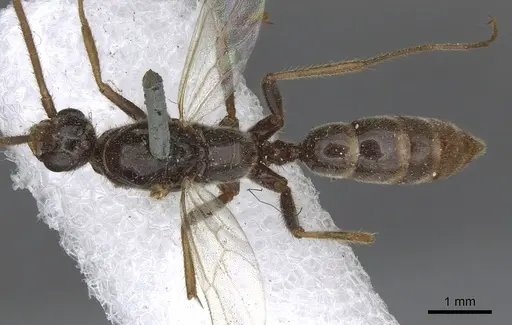
Littérature
Chargement de la carte de répartition...Chargement des produits...