
Leptanilla indica
- Nom sci.
- Leptanilla indica
- Tribu
- Leptanillini
- Sous-famille
- Leptanillinae
- Auteur
- Kugler, 1987
- Distribution
- Trouvé dans 0 pays
Introduction
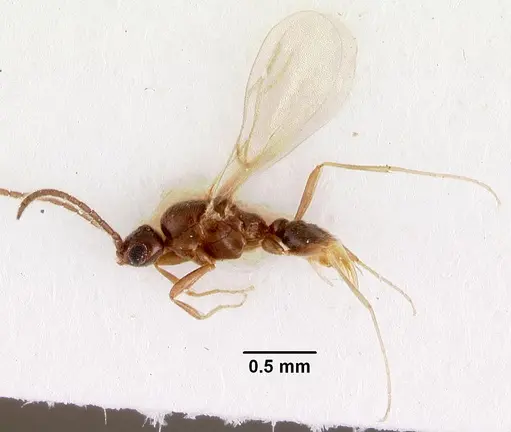
Leptanilla indica is an extremely rare ant species known only from five male specimens collected in Kerala, India in 1979. Males measure approximately 1.6-1.7mm, making them among the smallest ants in the world. The species was originally described as Yavnella indica before being transferred to the genus Leptanilla in 2024 based on phylogenetic analysis. Nothing is known about workers, queens, colony structure, or behavior - this is one of the most poorly documented ant species in existence. The genus Leptanilla contains tiny, hypogaeic (underground-dwelling) ants that are rarely encountered due to their subterranean lifestyle. This species is endemic to India, specifically recorded from Kerala state .
Quick Summary
- Difficulty: Expert
- Origin & Habitat: Kerala, India, tropical region. The single collection was from the Calicut University area in September 1979. No natural habitat observations exist [2].
- Colony Type: Unconfirmed, no colony has ever been documented. Only males are known from the type series.
- Size & Growth:
- Queen: Unknown, no queens have been documented [3]
- Worker: Unknown, workers have never been described. Males are approximately 1.6-1.7mm [3]
- Colony: Unknown, colony size has not been documented
- Growth: Unknown, no development data exists
- Development: Unknown, no brood development has ever been studied (This species is known only from males, no workers, brood, or colony development has ever been documented)
- Antkeeping:
- Temperature: Unclear, no species-specific data exists. Based on Kerala's tropical climate, a warm setup around 24-26°C may be appropriate, but this is unverified.
- Humidity: Unclear, no species-specific data exists. As a tropical species from Kerala, higher humidity is likely beneficial, but requirements are unconfirmed.
- Diapause: Unknown, no seasonal data exists. Tropical origin suggests minimal or no diapause, but this is unconfirmed.
- Nesting: Unconfirmed, no species-specific nesting data. Like other Leptanilla species, likely nests in soil or rotting wood underground.
- Behavior: Undocumented, no behavioral observations exist. Based on genus patterns for Leptanilla species, likely hypogaeic (spends most time underground), very shy, and probably predatory on micro-arthropods. Escape prevention is critical due to their extremely small size, they can squeeze through gaps invisible to the naked eye.
- Common Issues: no documented care information exists, all advice is genus-level inference, extreme size makes escape likely without fine mesh barriers, cannot verify dietary needs, may refuse standard ant foods, colony may fail without identifiable cause due to unknown requirements, no information on founding behavior or queen requirements
Why This Species Is So Difficult
Leptanilla indica represents one of the most challenging ants to keep because we know almost nothing about it. The entire scientific knowledge consists of five male specimens collected in 1979, no workers, no queens, no brood, no colony observations, nothing. This is not a case of incomplete data, this is a species that has never been studied in any biological context. Every piece of advice in this caresheet is either genus-level inference or a direct admission of what we do not know. Even basic questions like what they eat or how they found colonies cannot be answered from any research. You are essentially pioneering all husbandry methods from scratch. This species is recommended only for expert antkeepers who have extensive experience with other Leptanilla or similarly obscure species, and who are prepared for the very real possibility that the colony may fail without clear reason.
What We Know From the Males
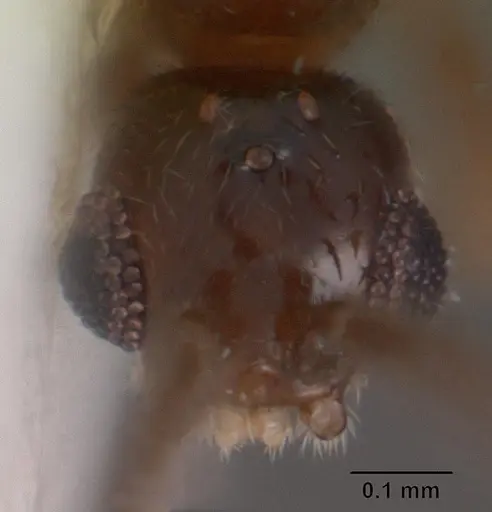
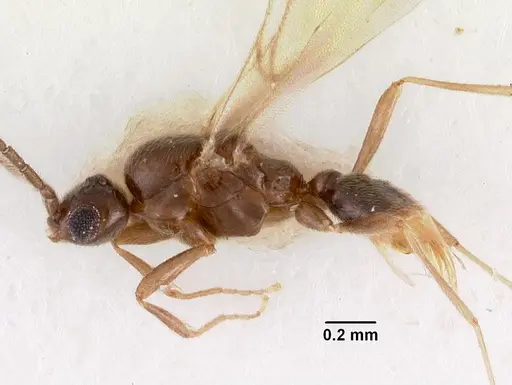
The five known males of Leptanilla indica measure approximately 1.6-1.7mm in length. They were collected on September 8,1979,in the Calicut University area of Kerala, India. The males are similar to those of Leptanilla argamani in color and general body form, but differ in subtle morphological features: the frons is oblique rather than vertical, the ocelli are on a smaller bulge, the funicular segments are shorter, and the fore femur is slightly curved and thicker in the middle. The genitalia show distinct differences from related species. This morphological data tells us nothing about colony structure, behavior, or care requirements, it only confirms they are a valid, distinct species in the Leptanilla genus [3].
Inferring Care From the Genus
Since we have no species-specific data, we must work from genus-level patterns. Leptanilla species are among the smallest ants in the world, typically measuring just 1-2mm for workers. They are hypogaeic, meaning they live almost entirely underground in soil or rotting wood, rarely coming to the surface. This lifestyle means they prefer darkness, high humidity, and stable temperatures. They are believed to be predatory on micro-arthropods like springtails, mites, and other tiny invertebrates. Based on this, you should provide a moist, dark environment with tiny live prey. However, this is all inference, this particular species may have completely different requirements that we simply cannot predict. [3]
Housing Recommendations
Given their likely underground lifestyle and extreme small size, housing presents unique challenges. Use a naturalistic setup with moist soil or a Y-tong or plaster nest with chambers scaled to their tiny size. Escape prevention must be exceptional, these ants can squeeze through gaps that are virtually invisible. Use fine mesh on any openings. Provide a dark, quiet location. A test tube setup may work for founding colonies if the cotton is packed tightly, but their unknown needs make this speculative. Consider adding a small section of rotting wood or leaf litter as enrichment.
Feeding and Diet
Diet is entirely speculative. Based on genus patterns, Leptanilla indica likely preys on micro-arthropods, tiny springtails, soil mites, and similar invertebrates that live in the substrate. They are probably too small to eat standard ant foods like mealworms or fruit flies. Offer very small live prey: live springtails, psyllid bugs, or newly hatched pinhead crickets. Sugar sources are unlikely to be accepted. Start with springtails as a primary food and observe carefully. Remove any uneaten prey after 24-48 hours to prevent mold. [3]
Realistic Expectations
You should not expect to see your ants often, if ever. Hypogaeic species spend most of their time underground and only occasionally venture out. Colony growth will likely be very slow. Do not be surprised if the colony appears to do nothing for months. There is no documented success with keeping this species in captivity, so you are truly pioneering its husbandry. Be prepared for failure. Consider keeping more well-documented species alongside this one to build experience.
Frequently Asked Questions
Can I keep Leptanilla indica as a beginner?
No. This species is not suitable for beginners. We have zero documented information about its care, no one has ever successfully kept this species in captivity. Every aspect of husbandry is unverified genus-level inference. Only expert antkeepers with experience with obscure or difficult species should attempt this.
How long does it take for Leptanilla indica to produce workers?
Unknown, no brood development has ever been documented for this species. Workers have never been described scientifically. Any timeline would be pure speculation.
What do Leptanilla indica ants eat?
Speculatively: tiny live micro-arthropods like springtails and soil mites. This is based on genus patterns, not species-specific research. They are likely too small to eat standard ant foods. Acceptance is completely unverified.
Do Leptanilla indica ants sting?
Unknown, no one has ever documented their behavior. Given their extreme tiny size, any sting would likely be imperceptible to humans.
Can I keep multiple Leptanilla indica queens together?
Unknown, no queen has ever been documented, let alone multi-queen behavior. The colony structure is completely unstudied.
What temperature should I keep Leptanilla indica at?
Unclear, no species-specific data exists. As a starting point, around 24-26°C based on their tropical origin in Kerala, India. This is unverified and may need adjustment.
Do Leptanilla indica need hibernation?
Unknown, no seasonal data exists. As a tropical species from Kerala, they likely do not require diapause, but this is unconfirmed.
Why are my Leptanilla indica dying?
Unknown, we have no documented causes of mortality or common problems. With so little known about their requirements, colony failure could occur for many unknown reasons.
When should I move Leptanilla indica to a formicarium?
Unknown, no documented transition method exists. Given their likely hypogaeic lifestyle, they may prefer to remain in a naturalistic setup with soil substrate rather than moving to a formicarium.
Are Leptanilla indica good for ant farms?
No. They are too small to observe easily, likely remain underground, and have no documented captive history. They are not a display species.
How big do Leptanilla indica colonies get?
Unknown, colony size has never been documented.
Where can I get Leptanilla indica?
This species is virtually unavailable in the antkeeping hobby. It has never been cultured in captivity, and the few known specimens are in museum collections. There are no known suppliers.
Report an Issue
The current care sheet is based fully on literature. See inconsistencies, or something that's incorrect? Please , it will be resolved after review from an admin. Contributing to the blogs tab also helps providing information, to make us be able to further improve the caresheets. Thank you for your support!
References

Cette fiche d'élevage est sous licence CC BY-SA 4.0 .
Blogs de la communauté
CASENT0102374
Voir sur AntWeb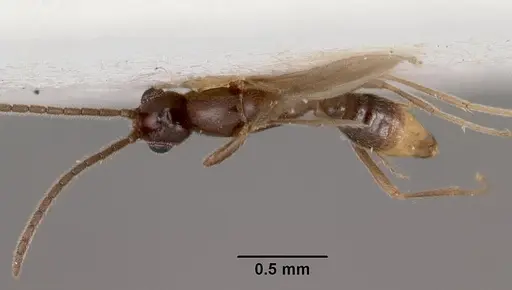
Littérature
Chargement de la carte de répartition...Chargement des produits...