
Leptanilla bifurcata
- Nom sci.
- Leptanilla bifurcata
- Tribu
- Leptanillini
- Sous-famille
- Leptanillinae
- Auteur
- Kugler, 1987
- Distribution
- Trouvé dans 0 pays
Introduction
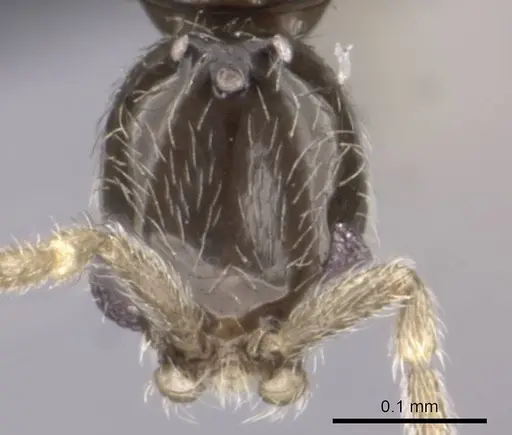
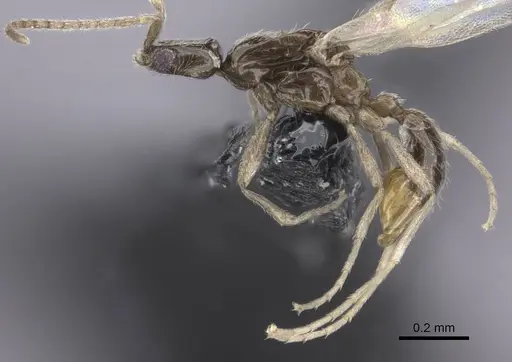
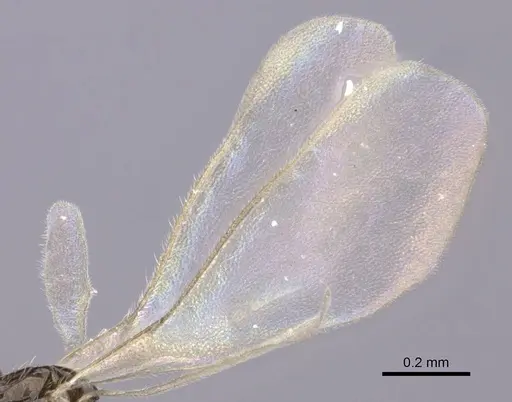
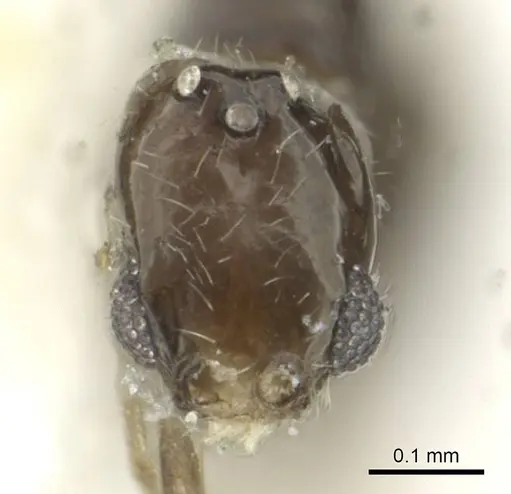
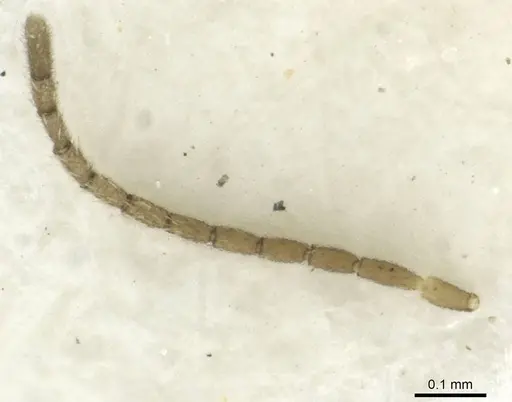
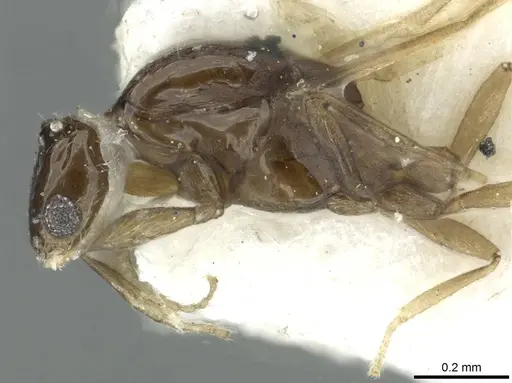
Leptanilla bifurcata is an extremely rare ant species known only from male specimens collected in Israel. Males measure 1.4-1.5mm in total length, with a dark brownish-black body, brown legs and mandibles, and distinctive yellow genitalia. The species is easily recognized by its bifurcated gonostylus (reproductive appendage) which splits into two long arms, one band-like and one horn-like . This species has never been documented in captivity, and no workers or queens have ever been observed. All specimens have been collected using light traps in the Jordan Valley, Judean Foothills, and Judean Hills regions of Israel . The entire biology of this species remains completely unknown, we do not know what their nests look like, what they eat, how colonies are structured, or anything about their behavior. This makes them entirely unsuitable for antkeeping and purely a species of scientific interest.
Quick Summary
- Difficulty: Expert
- Origin & Habitat: Endemic to Israel, specifically the Jordan Valley, southern Golan (region 7), Judean Foothills (region 10), and Judean Hills (region 11) [2]. Natural habitat details are completely unknown, specimens have only been collected at light traps, not from colonies [1].
- Colony Type: Unconfirmed, only males have been collected, no colonies, workers, or queens have ever been documented [1]. The colony structure is entirely unknown.
- Size & Growth:
- Queen: Unknown, queens have never been collected or described [1]
- Worker: Unknown, workers have never been collected or described [1]
- Colony: Unknown, no colonies have ever been documented [1]
- Growth: Unknown
- Development: Unknown, no colony development has ever been observed [1] (This species exists only in scientific collections as male specimens. No living colony information exists.)
- Antkeeping:
- Behavior: Completely unknown. Even basic behavior like foraging style, aggression, or escape risk has not been documented [1].
- Common Issues: this species is not available in the antkeeping hobby, only known from scientific specimens collected in Israel, no living colonies exist in captivity, all information is from dead male specimens, complete lack of biological data makes captive care impossible, queens and workers have never been described, so identification of any colony would be impossible, importing this species would likely be illegal without proper permits as it is an endemic species
Why This Species Cannot Be Kept
Leptanilla bifurcata represents one of the most poorly documented ant species in existence. The entire scientific knowledge of this species comes from male specimens collected in light traps in Israel between 1984 and 1985 [1]. No worker ants, no queen ants, and no actual colonies have ever been documented. This means absolutely no biological or husbandry information exists. We do not know what these ants eat, how they build nests, what temperature they prefer, how their colonies are structured, or anything else that would be needed to keep them alive. Even if you somehow obtained specimens, there would be no way to verify they are this species since queens and workers have never been described. This species exists purely as a scientific curiosity and should not be targeted by antkeepers [1].
What We Know About Wild Populations
Leptanilla bifurcata is endemic to Israel, meaning it is found nowhere else on Earth [2]. Specimens have been collected from the Jordan Valley and southern Golan (region 7), Judean Foothills (region 10), and Judean Hills (region 11) [2]. All specimens were caught in light traps, devices that attract flying insects at night, rather than from nest excavations. This suggests the males were dispersing from their colonies to mate, but the actual colonies were never located. The species was described in 1987 by J. Kugler, and despite subsequent ant surveys in Israel, no additional specimens or colony discoveries have been reported [3][4].
Related Species and Genus Information
The genus Leptanilla belongs to the subfamily Leptanillinae, a group of tiny ants that are rarely encountered. Like other Leptanilla species, L. bifurcata likely has hypogaeic (underground) habits, but this is pure speculation based on genus patterns. The genus is known from various warm regions around the world, but most species are poorly studied. The related Leptanilla minuscula has been studied more, but still has very limited biological data [1]. If you are interested in keeping Leptanilla species, you would need to find species that have actually been documented in captivity, which L. bifurcata certainly is not.
Frequently Asked Questions
Can I keep Leptanilla bifurcata ants?
No. This species is not available in the antkeeping hobby and has never been kept in captivity. Only male specimens exist in scientific collections, no workers or queens have ever been described, and no biological information exists to guide captive care.
Where does Leptanilla bifurcata live?
This species is endemic to Israel, specifically the Jordan Valley, Judean Foothills, and Judean Hills regions. It is not found anywhere else in the world.
What do Leptanilla bifurcata ants look like?
Only males have been described. They are tiny at 1.4-1.5mm with a dark brownish-black body, brown legs and mandibles, and distinctive yellow genitalia. The most recognizable feature is their bifurcated gonostylus (reproductive appendage) that splits into two long arms, one band-like and one horn-like.
Why is there no care information for Leptanilla bifurcata?
Because only male specimens collected in light traps have ever been documented. No workers, no queens, and no actual colonies have ever been found or described. Without this basic biological information, it is impossible to develop husbandry guidelines.
Are there similar ants that can be kept instead?
Leptanilla species are rarely kept due to their tiny size and underground habits. If you are interested in small ants, consider better-documented species like Temnothorax, Leptothorax, or Strumigenys species which have established care protocols in the hobby.
How big do Leptanilla bifurcata colonies get?
Unknown, no colonies have ever been documented. Even the maximum colony size is completely unknown.
What do Leptanilla bifurcata eat?
Unknown, no feeding observations have ever been made. Even the related species are poorly studied in this regard.
Do Leptanilla bifurcata ants sting?
Unknown, no sting observations exist. Given their tiny size (1.4-1.5mm for males), any sting would likely be imperceptible to humans even if present.
When do Leptanilla bifurcata nuptial flights occur?
Unknown, nuptial flight timing has not been documented. The only specimens collected were males found in light traps in June, September, and October, but collection dates do not necessarily indicate flight timing.
Is Leptanilla bifurcata endangered?
The conservation status has not been assessed. However, being endemic to a limited region in Israel with no documented colonies, any habitat disturbance could potentially threaten the species.
Can I find Leptanilla bifurcata in the wild?
Extremely unlikely. The species has only been collected a few times in specific locations in Israel, and even professional entomologists have not located actual colonies. The males collected were likely dispersing from colonies that were never found.
Why was this species described?
The species was formally described in 1987 by J. Kugler based on male specimens collected in light traps. The distinctive bifurcated gonostylus (reproductive appendage) distinguished it from other known Leptanilla species, warranting formal scientific description.
Report an Issue
The current care sheet is based fully on literature. See inconsistencies, or something that's incorrect? Please , it will be resolved after review from an admin. Contributing to the blogs tab also helps providing information, to make us be able to further improve the caresheets. Thank you for your support!
References

Cette fiche d'élevage est sous licence CC BY-SA 4.0 .
Blogs de la communauté
CASENT0235259
Voir sur AntWeb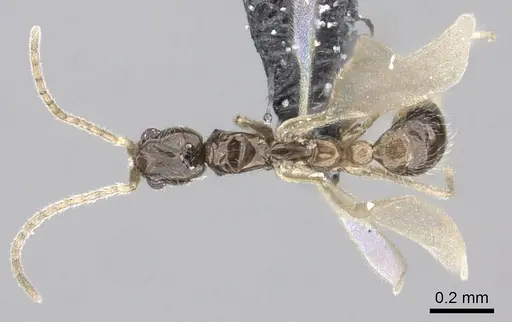
CASENT0911446
Voir sur AntWeb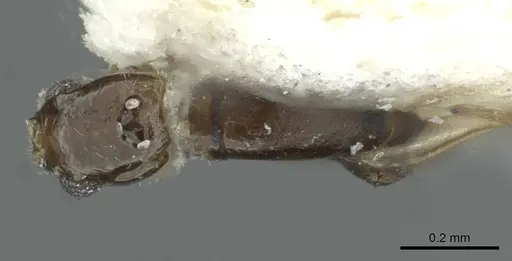
Littérature
Chargement de la carte de répartition...Chargement des produits...