
Lasius schaeferi
- Nom sci.
- Lasius schaeferi
- Tribu
- Lasiini
- Sous-famille
- Formicinae
- Auteur
- Seifert, 1992
- Distribution
- Trouvé dans 0 pays
Introduction
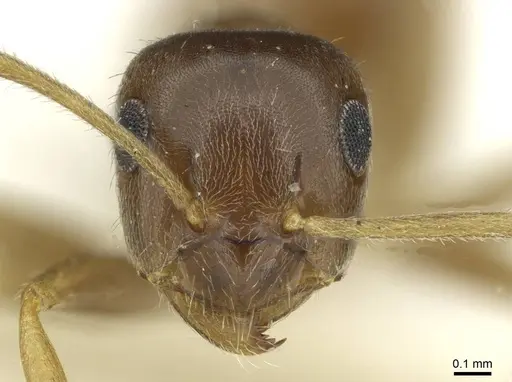
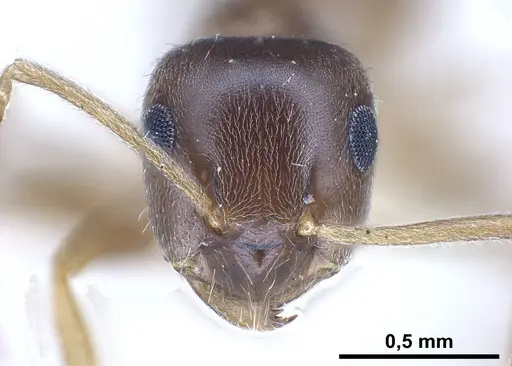
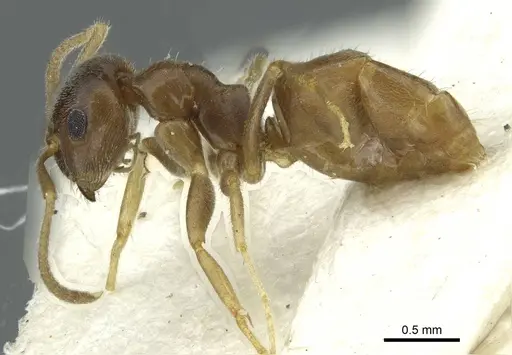
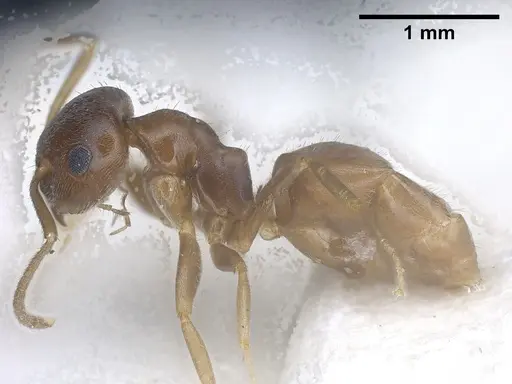
Lasius schaeferi is a small ant from the Formicinae subfamily, native to high-altitude Tibet and western China. Workers have a pale yellowish-brown head and mesosoma, with a yellow to yellowish-brown gaster . They are distinguished from similar Himalayan Lasius by having many erect hairs on the hind tibia . This species belongs to the Lasius obscuratus species complex and lives at around 3900 m elevation in one of the harshest climates of any Lasius worldwide: a short 3.5-month growing season, nightly frosts until May, and daily temperature swings over 40°C .
Quick Summary
- Difficulty: Expert, due to extreme cold adaptation and no captive records
- Origin & Habitat: Tibet and western China at approximately 33.60°N,96.58°E,3900 m elevation. The type locality has a vegetation period of only 3.5 months, night frosts until May, and daily temperature ranges exceeding 40°C in summer [1].
- Colony Type: Likely monogyne (single queen) based on typical Lasius patterns, though not directly documented.
- Size & Growth:
- Queen: Size data unavailable, only head measurements known. Inferred from related Lasius, possibly around 8-9 mm total length [3].
- Worker: Size data unavailable. Based on related Lasius species, workers are small, roughly 3-4 mm [3].
- Colony: Unknown, likely moderate, possibly several hundred to a few thousand workers, but not documented.
- Growth: Unknown, likely slow due to extreme cold and short active season.
- Development: Unconfirmed. Based on cold-climate Lasius, estimate 8-12 weeks at optimal temperature, but may be longer given the extreme habitat [1]. (Direct development data does not exist. The short 3.5-month growing season suggests colonies may produce only one or two broods per year.)
- Antkeeping:
- Temperature: Keep cool. The natural habitat has extreme temperature swings. Provide a temperature gradient with a cool zone around 15-20°C, avoid sustained heat above 25°C. Overheating is a serious risk. In winter, provide hibernation at 5-10°C for 3-4 months [1].
- Humidity: Moderate humidity. Keep the nest substrate lightly moist but allow portions to dry between waterings. Avoid waterlogging, which could promote mold.
- Diapause: Yes, essential. The species experiences months of freezing conditions. Provide a cold winter period of 3-4 months at 5-10°C [1].
- Nesting: Likely nests in soil under stones. Use a naturalistic setup with a soil chamber or a Y-tong/plaster nest. Keep the nest cool and stable.
- Behavior: Typical Lasius: docile, not aggressive. Workers forage for nectar, honeydew, and small insects. Escape risk is moderate, standard barrier methods (Fluon, talc) work for ants of this size.
- Common Issues: no captive records exist, all care is inferred from habitat data and genus patterns, overheating is a critical risk, keep the nest cool, ideally below 25°C, hibernation failure likely prevents colony development, provide 3-4 months of cold dormancy, colony growth is expected to be very slow due to the short active season, unknown dietary preferences, may not accept common feeder insects, experimentation needed
Origin and Natural Habitat
Lasius schaeferi is known only from a single collection site in Tibet at approximately 33.60°N,96.58°E, at 3900 m elevation [1][2]. This site has the harshest climate of any Lasius species worldwide: the growing season is only 3.5 months, night frosts occur until late May, and summer daily temperature swings exceed 40°C [1]. The type specimens were collected during Ernst Schäfer's 1934-1936 expedition, at station 131 on August 4,1935 [1]. This extreme cold adaptation means the species is unlikely to thrive in typical warm ant-keeping setups.
Identification and Distinguishing Features
Workers are small, with a pale yellowish-brown head and mesosoma, and a yellow to yellowish-brown gaster [1]. The key identification feature is the numerous erect hairs on the hind tibia: on average 12.7,compared to only 2.8 in the similar Lasius obscuratus [2]. These hairs also occur on the distal half of the extensor profile, separating it from related species Lasius lawarai and Lasius wittmeri [2]. Lasius schaeferi is part of the Lasius obscuratus species complex [3]. Queens are larger, with similar pale coloration.
Temperature and Seasonal Care
This is the most critical aspect. The species is adapted to extreme cold and should be kept cool year-round. Provide a nest area at roughly 15-20°C, with a clear gradient that lets workers choose. Overheating is a serious risk, if workers cluster away from the warm side, the nest may be too hot. In winter, a hibernation period of 3-4 months at 5-10°C is essential, mimicking the long freezing season in Tibet [1]. Do not keep this species warm like tropical ants.
Feeding and Nutrition
Like other Lasius species, Lasius schaeferi likely feeds on nectar, honeydew, and small insects. Offer a constant supply of sugar water or honey, and provide protein from small insects like fruit flies, small mealworms, or crickets once or twice a week. Adjust frequency based on colony size, remove uneaten food to prevent mold. The short growing season in the wild suggests they may store food, but this is unconfirmed. Fresh water should always be available.
Nesting Preferences
In the wild, these ants likely nest in soil under stones, using the thermal mass of rocks to moderate temperature. For captive care, a naturalistic setup with a soil chamber or a Y-tong/plaster nest works well. The nest must stay cool. Avoid nests that become warm (e.g., near heat sources). Chambers should be sized for small workers (roughly 3-4 mm).
Colony Establishment and Growth
Lasius schaeferi has never been kept in captivity. Queens likely found colonies claustrally, as is typical for Lasius. Colony growth is expected to be slow given the extreme climate and likely long development times. The short 3.5-month active season suggests only one or two broods per year. Patience is essential, establishing a captive colony would be pioneering work. [1]
Frequently Asked Questions
Can I keep Lasius schaeferi as a pet ant?
This species has never been documented in the ant keeping hobby. It would be extremely challenging due to its extreme cold adaptation and the complete lack of captive data. Only experienced keepers willing to experiment with pioneering conditions should attempt this species.
What temperature does Lasius schaeferi need?
Keep them cool, around 15-20°C in the nest area, and avoid any sustained heat above 25°C. This species is adapted to extreme cold at 3900 m in Tibet. Overheating is a serious risk. A winter hibernation at 5-10°C for 3-4 months is essential [1].
How long does it take for Lasius schaeferi to develop from egg to worker?
This has never been documented. Based on related cold-climate Lasius species and the short growing season in the native habitat, development likely takes 8-12 weeks at optimal temperature, possibly longer. The extreme conditions suggest slow development [1].
Is Lasius schaeferi good for beginners?
No. This species is not recommended for beginners. It requires cold temperatures, proper hibernation, and has no captive records. Keepers would need to experiment to learn basic care.
Does Lasius schaeferi need hibernation?
Yes, a winter dormancy is almost certainly required. Their native habitat has months of freezing conditions. Provide 3-4 months at 5-10°C during winter [1].
What do Lasius schaeferi ants eat?
Like other Lasius, they likely accept sugar sources (honey, sugar water) and protein from small insects. Their diet probably consists of nectar, honeydew, and small arthropods. Provide sugar water constantly and offer small insects 1-2 times per week.
How big do Lasius schaeferi colonies get?
Colony size has not been documented. Based on typical Lasius species, colonies may reach several hundred to a few thousand workers at maturity, but the extreme climate may limit size.
Can I keep multiple Lasius schaeferi queens together?
This has not been studied. Based on typical Lasius patterns, single-queen colonies are most likely. Combining unrelated queens is not recommended.
Where is Lasius schaeferi found in the wild?
Only in a very restricted area of Tibet and western China, at approximately 33.60°N,96.58°E, at about 3900 m elevation. This is one of the most geographically restricted Lasius species known [1][2].
Report an Issue
The current care sheet is based fully on literature. See inconsistencies, or something that's incorrect? Please , it will be resolved after review from an admin. Contributing to the blogs tab also helps providing information, to make us be able to further improve the caresheets. Thank you for your support!
References

Cette fiche d'élevage est sous licence CC BY-SA 4.0 .
Blogs de la communauté
CASENT0912296
Voir sur AntWeb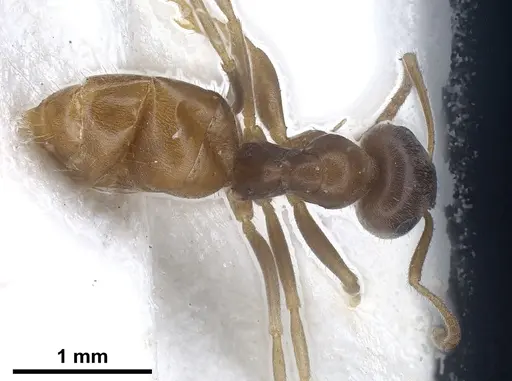
Littérature
Chargement de la carte de répartition...Chargement des produits...