
Iridomyrmex neocaledonica
- Nom sci.
- Iridomyrmex neocaledonica
- Tribu
- Leptomyrmecini
- Sous-famille
- Dolichoderinae
- Auteur
- Heterick & Shattuck, 2011
- Distribution
- Trouvé dans 1 pays
Introduction
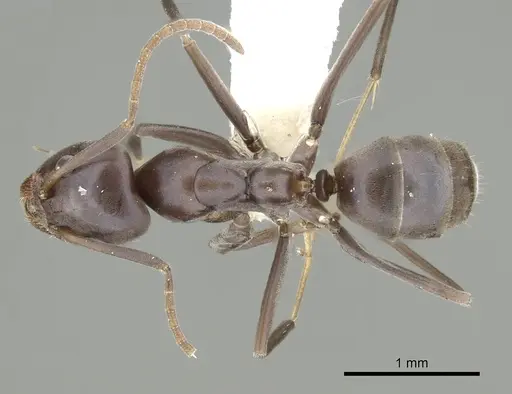
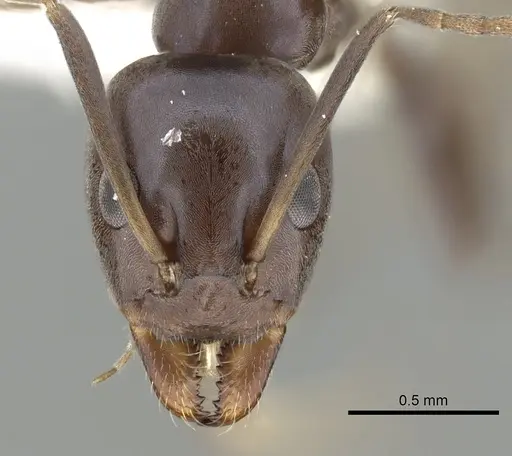
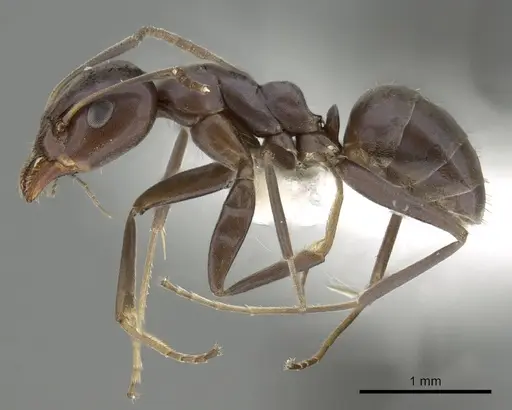
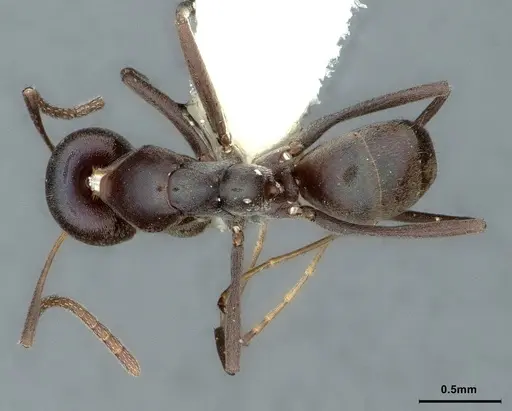
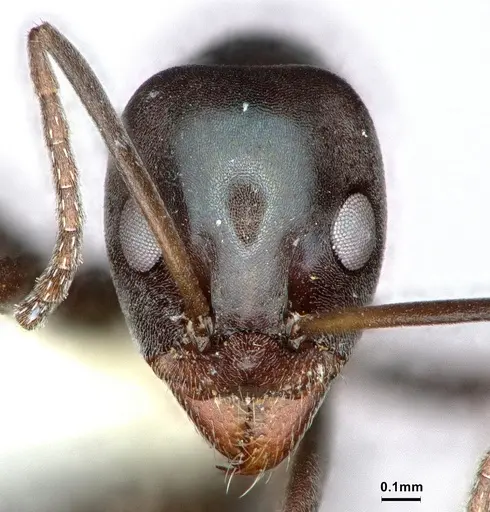
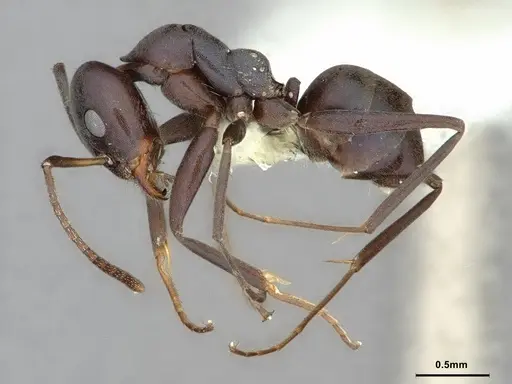
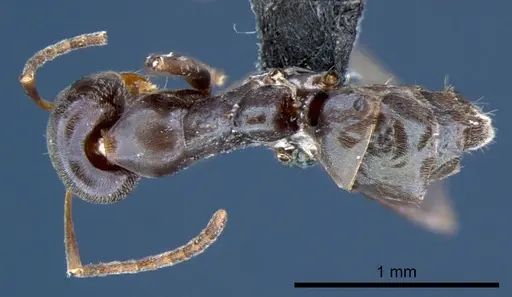
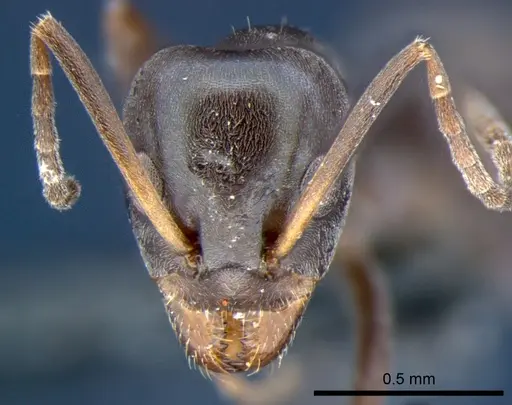
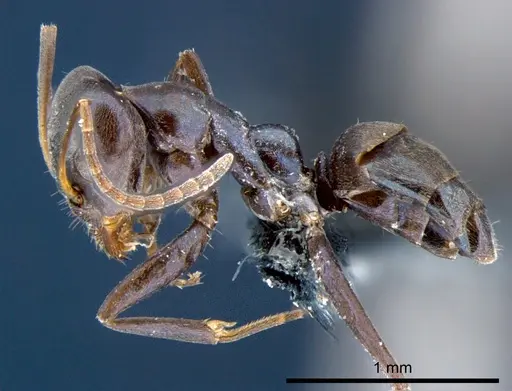
Iridomyrmex neocaledonica is a medium-sized brown ant native to New Caledonia, an island in the Australasian region. Workers are approximately 3-4mm in total length, inferred from the Iridomyrmex genus . The species is distinguished by its notably long antennal scape, which extends beyond the posterior margin of the head by about three times its greatest width, and the lack of a row of setae on the posterior margin of the head . This ant was formally described in 2011 by Heterick and Shattuck as part of a major revision of the genus Iridomyrmex . This species is notable for being collected at considerable elevations on New Caledonia, up to 1200 meters above sea level, in rainforest environments where it has been found in moss on trees and rocks . This high-elevation habitat suggests it may prefer cooler and more humid conditions than many other Iridomyrmex species, which are typically found in warmer, more arid regions. The species remains poorly studied, with only a handful of specimens available for research.
Quick Summary
- Difficulty: Unknown
- Origin & Habitat: New Caledonia (Australasian Region). Found in rainforest habitats at elevations up to 1200m, collected from moss on trees and rocks [1][3].
- Colony Type: Unconfirmed. The colony structure of this specific species has not been documented.
- Size & Growth:
- Queen: Undocumented, no queen measurements available
- Worker: approximately 3-4mm, inferred from Iridomyrmex genus [1]
- Colony: Undocumented, no colony size data available
- Growth: Unknown
- Development: Unknown for this species (Development timeline has not been directly studied.)
- Antkeeping:
- Temperature: Unknown for this specific species. Based on its high-elevation rainforest habitat in New Caledonia, it likely prefers cooler conditions than typical tropical ants. Start around 20-24°C and observe colony activity.
- Humidity: Likely requires higher humidity given its rainforest moss habitat. Keep nest substrate consistently moist but not waterlogged. Provide a humidity gradient so ants can choose their preferred zone.
- Diapause: Unknown. New Caledonia has a mild climate year-round, so a true hibernation may not be necessary.
- Nesting: In nature, found in moss on trees and rocks at high elevation [1]. In captivity, a naturalistic setup with moist substrate or a Y-tong/plaster nest with good humidity retention would likely work well.
- Behavior: Behavior has not been specifically documented for this species. Most Iridomyrmex ants are fast-moving foragers that actively search for food. They lack a functional sting and instead use defensive chemical secretions from the tip of the abdomen (smear defense typical of Dolichoderinae). Escape prevention should be moderate, workers are small but standard barriers should suffice.
- Common Issues: limited data means care requirements are largely estimated from habitat and genus patterns, high-elevation origin suggests specific temperature needs that differ from common pet species, wild-caught colonies may be difficult to establish due to limited specimen availability, rainforest humidity needs may conflict with standard dry room conditions
Species Identification and Distinction
Iridomyrmex neocaledonica is a distinctive species within the genus Iridomyrmex, though it closely resembles several other species including Iridomyrmex splendens, Iridomyrmex meridianus, and Iridomyrmex mjobergi [1]. The most reliable distinguishing features are its notably longer antennal scape, which extends beyond the posterior margin of the head by approximately three times its greatest width, and the absence of a row of setae on the posterior margin of the head [1]. The workers have a uniform brown coloration, ranging from pale to dark brown, and the erect setae on the body are depigmented and pale [1]. These identification features are important for keepers to correctly identify their colonies.
Natural Habitat and Distribution
This species is endemic to New Caledonia, a French overseas territory in the South Pacific Ocean, located in the Australasian region [3]. The handful of specimens available have been collected at considerable elevation, up to 1200 meters above sea level [1]. The type specimens were collected from rainforest environments in moss growing on trees and rocks, indicating this is a moisture-loving species that inhabits cool, shaded microclimates [1]. This high-elevation rainforest habitat is quite different from many other Iridomyrmex species, which are often found in more open, arid, or disturbed habitats.
Defense Mechanism
Like all ants in the subfamily Dolichoderinae, Iridomyrmex neocaledonica lacks a functional sting. Instead, it defends itself by secreting defensive chemical compounds from a slit-like opening at the tip of the abdomen. This is known as smear defense. These chemicals can deter predators and other ants.
Housing and Nest Setup
Based on the species' natural habitat in moss at high elevation, a setup that maintains humidity is essential. A naturalistic terrarium-style setup with live moss, moist substrate, and pieces of wood or rock for cover would closely mimic their natural environment. Alternatively, a Y-tong nest or plaster nest with a water reservoir can work well, provided humidity is maintained. The nest should have narrow chambers appropriate for their small size. Since they are found in moss in nature, they may benefit from having some live moss or other moisture-retaining elements in their enclosure. Ensure adequate ventilation to prevent mold while maintaining humidity.
Feeding and Diet
The specific diet of Iridomyrmex neocaledonica has not been documented. Most Iridomyrmex species are omnivorous, feeding on honeydew, nectar, and small insects. In captivity, offer a varied diet including sugar water or honey as an energy source, and protein sources such as small insects. Given their small size, prey items should be appropriately sized. Fresh water should always be available.
Temperature and Seasonal Care
This is likely the most critical aspect of keeping this species successfully. Their high-elevation rainforest origin suggests they prefer cooler temperatures than typical tropical ants kept in captivity. Aim for temperatures in the range of 20-24°C, avoiding temperatures above 28°C. During winter months in temperate regions, room temperature may be sufficient, but avoid placing the colony near heating elements that could cause overheating. A slight drop in temperature during winter months may be beneficial given New Caledonia's mild seasonal variation, but a true hibernation is likely not required.
Challenges and Considerations
Iridomyrmex neocaledonica represents a challenging species to keep due to the limited scientific data available. Unlike many commonly kept ant species, there are no established care protocols or documented experiences from the antkeeping community. This means keepers must be prepared to experiment and adjust care based on colony response. The high-elevation origin suggests specific temperature and humidity requirements that differ from common pet species. Additionally, obtaining this species may be difficult since it is not commonly traded and only a handful of specimens have ever been collected. This species is best suited for experienced antkeepers who enjoy experimenting with novel species.
Frequently Asked Questions
How do I care for Iridomyrmex neocaledonica ants?
Care is not well-established since this is a rarely kept species. Based on its high-elevation rainforest habitat in New Caledonia, provide cooler temperatures (20-24°C), higher humidity, and moist substrate. This is an experimental species best suited for experienced antkeepers.
What do Iridomyrmex neocaledonica ants eat?
Their specific diet is undocumented, but most Iridomyrmex species are omnivorous. Offer sugar water or honey for energy, and small insects like fruit flies or small mealworms for protein.
What temperature do Iridomyrmex neocaledonica ants need?
Based on their high-elevation habitat, they likely prefer cooler conditions than typical tropical ants. Aim for 20-24°C and avoid temperatures above 28°C.
How big do Iridomyrmex neocaledonica colonies get?
Colony size is undocumented for this species. Based on worker size of approximately 3-4mm, expect a small to medium-sized colony, but maximum size is unknown.
Where is Iridomyrmex neocaledonica found?
This species is endemic to New Caledonia, an island in the South Pacific. It has been collected at elevations up to 1200m in rainforest habitats, specifically in moss on trees and rocks.
Is Iridomyrmex neocaledonica a good beginner species?
No. This species is not recommended for beginners due to limited care data, specific humidity and temperature requirements, and difficulty in obtaining specimens. It is an experimental species for experienced antkeepers.
How long does it take for Iridomyrmex neocaledonica to develop from egg to worker?
The development timeline is unconfirmed for this species. No specific data is available.
Do Iridomyrmex neocaledonica ants need hibernation?
True hibernation is likely not required given New Caledonia's mild climate. However, a slight cool period during winter months may be beneficial.
Can I keep multiple Iridomyrmex neocaledonica queens together?
The colony structure of this species is unconfirmed. Many Iridomyrmex species form single-queen colonies, but this has not been documented for I. neocaledonica. Combining unrelated queens is not recommended without evidence they will tolerate each other.
Report an Issue
The current care sheet is based fully on literature. See inconsistencies, or something that's incorrect? Please , it will be resolved after review from an admin. Contributing to the blogs tab also helps providing information, to make us be able to further improve the caresheets. Thank you for your support!
References

Cette fiche d'élevage est sous licence CC BY-SA 4.0 .
Blogs de la communauté
Littérature
Chargement de la carte de répartition...Chargement des produits...