
Hypoponera gibbinota
- Nom sci.
- Hypoponera gibbinota
- Tribu
- Ponerini
- Sous-famille
- Ponerinae
- Auteur
- Forel, 1912
- Distribution
- Trouvé dans 0 pays
Introduction
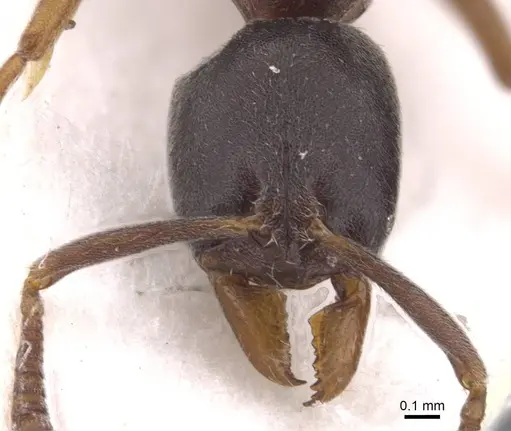
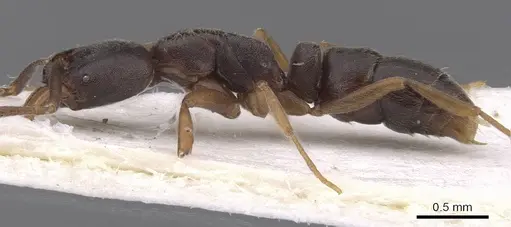
Hypoponera gibbinota is a small ponerine ant native to Great Britain, one of the rarest ant species in the UK. Workers are tiny at 2.5-3mm, with the characteristic Hypoponera appearance - a smooth, rounded mesosoma and relatively featureless body. The species was originally described as a variety of Ponera opaciceps in 1912 and was raised to full species status in 2003. It was long confused with the related Hypoponera abeillei, a blind Mediterranean species, with UK populations only correctly identified in recent years . This is a cryptic, hypogaeic (subterranean) ant that nests in hidden microhabitats and is rarely encountered by casual observers.
Quick Summary
- Difficulty: Medium
- Origin & Habitat: Great Britain (United Kingdom), a Palaearctic species endemic to the UK. It inhabits damp, shaded microhabitats such as rotting wood, soil under stones, and similar protected locations typical of woodland edges and mature habitats [2].
- Colony Type: Colony structure is unconfirmed. Queens are ergatoid (worker-like) in morphology, which is common in this genus.
- Size & Growth:
- Queen: Approximately 3-4mm, estimated from genus patterns
- Worker: 2.5-3mm [2]
- Colony: Likely small colonies, exact size data unavailable
- Growth: Moderate, inferred from related Ponerinae
- Development: Estimated 6-10 weeks at optimal temperature based on genus-level data for similar Ponerinae (Development time is not directly studied for this species, estimates based on related Hypoponera species)
- Antkeeping:
- Temperature: Keep around 18-22°C. This species is adapted to temperate British conditions and does not require warmth. Room temperature (around 20°C) is typically suitable.
- Humidity: Requires moderate to high humidity, aim for 60-80%. Keep the nest substrate consistently moist but not waterlogged. These ants naturally inhabit damp microhabitats.
- Diapause: Yes, as a British species, colonies require a winter rest period. Keep at 5-10°C for 2-3 months during winter.
- Nesting: Provide a moist, dark nesting environment. Y-tong (AAC) nests or test tubes with cotton plugs work well. Include damp soil or plaster that holds moisture. Avoid bright lighting, these are cryptic ants that avoid light.
- Behavior: Hypoponera gibbinota is a shy, non-aggressive species. Workers are slow-moving and cryptic, spending most of their time underground. They are predatory, hunting small soil arthropods. Escape risk is moderate, their small size means they can slip through small gaps, so use standard barrier methods. They possess a sting but rarely use it, posing minimal danger to keepers.
- Common Issues: colonies are slow to establish and may appear inactive, this is normal for cryptic species, overheating or dry conditions quickly lead to colony loss, small colony size makes them vulnerable to stress, avoid disturbing the nest frequently, they are rarely available in the antkeeping hobby due to their rarity and restricted range, this species may be protected in the UK, never collect from the wild
Natural History and Identification
Hypoponera gibbinota is one of Britain's rarest ant species, found only in certain areas of southern England. It was historically confused with Hypoponera abeillei (a blind Mediterranean species) until taxonomic revisions clarified it as a distinct species [1]. Workers are small, smooth, and relatively featureless, the genus name 'Hypoponera' means 'under Ponerina', reflecting their position within the ponerine subfamily. These ants are hypogaeic, meaning they live mostly underground in dark, humid microhabitats. They are predators of small soil arthropods, hunting through the substrate rather than foraging openly on the surface. Like other Ponerinae, they possess a functional sting but are non-aggressive and rarely use it.
Housing and Nest Setup
Keep Hypoponera gibbinota in a humid, dark environment. A Y-tong (AAC) nest with moist plaster or a test tube setup with a water reservoir works well. The nest chamber should remain consistently damp but not sitting in water. Avoid bright lighting, these ants are photophobic and will retreat from light. A simple outworld for foraging is sufficient, keep it basic to reduce stress. Because they are small and cryptic, you may not see much activity, this is normal. The nest material should hold moisture well, as dry conditions quickly harm these ants. [2]
Feeding and Diet
Hypoponera gibbinota is predatory, feeding on small soil arthropods like springtails, mites, and tiny insects. Offer small live prey such as fruit flies, pinhead crickets, or commercially available springtails. They are unlikely to accept sugar water or honey, Ponerinae ants are typically protein-focused predators. Feed small prey items every few days, removing any uneaten remains to prevent mold. A well-established colony may accept other small protein sources, but live prey is ideal.
Temperature and Seasonal Care
As a British species, Hypoponera gibbinota is adapted to cool, temperate conditions. Keep the nest at room temperature (18-22°C), no heating is required and overheating is dangerous. During winter, provide a diapause period of 2-3 months at 5-10°C, similar to how they would experience cold winters in their natural habitat. This rest period is important for colony health and may trigger reproductive behavior in spring. Do not cool suddenly, allow a gradual temperature transition over a week or two.
Colony Development and Growth
Colonies grow slowly compared to many common ant species. A founding queen will seal herself in a small chamber and raise her first workers (nanitics) alone, surviving on stored fat reserves, this is typical claustral founding behavior for many ants. The first workers are smaller than mature workers and may take several months to appear. Expect the colony to remain small for the first year or two. Patience is essential with this species. Mature colonies may reach a few hundred workers but never become large like Lasius or Camponotus colonies.
Frequently Asked Questions
How long does it take for Hypoponera gibbinota to produce first workers?
Expect 6-10 weeks from egg to first worker at room temperature, though this is estimated from genus-level data since the species has not been directly studied. Founding can be slow, some keepers report waiting several months for nanitics to emerge.
Can I keep Hypoponera gibbinota in a test tube?
Yes, a test tube setup with a water reservoir works well for this species. Keep the cotton plug damp but not soaking wet, and wrap the tube in dark material to block light. These are cryptic ants that prefer darkness.
What do Hypoponera gibbinota eat?
They are predatory ants that eat small live prey. Offer springtails, fruit flies, tiny crickets, or other small insects. They are unlikely to accept sugar sources, protein is their primary food.
Do Hypoponera gibbinota need hibernation?
Yes, as a British species they require a winter rest period. Keep them at 5-10°C for 2-3 months during winter. This diapause period is important for colony health.
Are Hypoponera gibbinota good for beginners?
This species is not ideal for beginners. They are slow-growing, require specific humidity and temperature conditions, and are rarely available. They are better suited for experienced antkeepers interested in keeping rare British species.
How big do Hypoponera gibbinota colonies get?
Colonies remain relatively small, likely up to a few hundred workers at maturity based on genus patterns. They are not large colony builders like many common ant species.
Why is my Hypoponera gibbinota colony so inactive?
This is normal behavior. Hypoponera species are cryptic, hypogaeic ants that spend most of their time underground. They are not active foragers like Lasius or Formica, expect minimal visible activity.
Where can I get Hypoponera gibbinota?
This species is very rare in the antkeeping hobby due to its restricted range and protected status in the UK. It is unlikely to be commercially available. Do not collect from the wild as it may be a protected species.
Report an Issue
The current care sheet is based fully on literature. See inconsistencies, or something that's incorrect? Please , it will be resolved after review from an admin. Contributing to the blogs tab also helps providing information, to make us be able to further improve the caresheets. Thank you for your support!
References

Cette fiche d'élevage est sous licence CC BY-SA 4.0 .
Blogs de la communauté
CASENT0907332
Voir sur AntWeb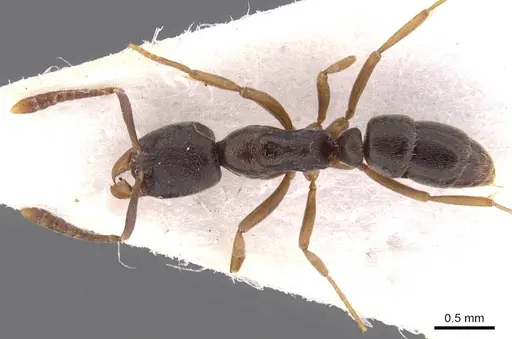
Littérature
Chargement de la carte de répartition...Chargement des produits...