
Hylomyrma peetersi
- Nom sci.
- Hylomyrma peetersi
- Tribu
- Pogonomyrmecini
- Sous-famille
- Myrmicinae
- Auteur
- Ulysséa, 2021
- Distribution
- Trouvé dans 1 pays
Introduction
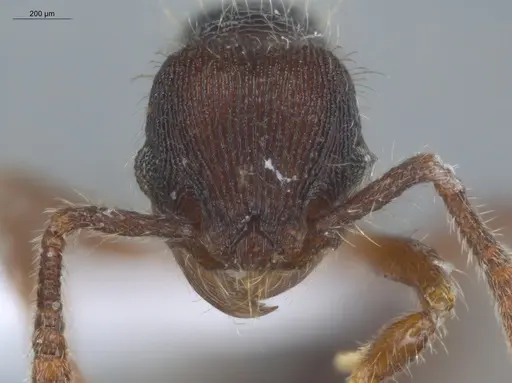
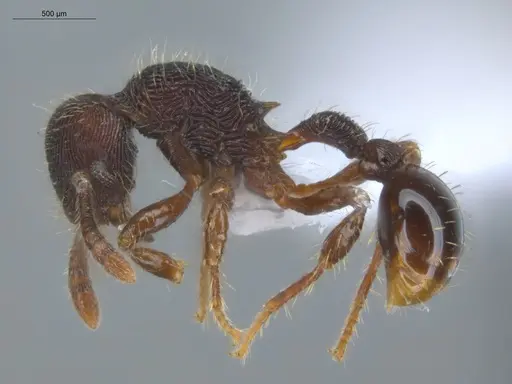
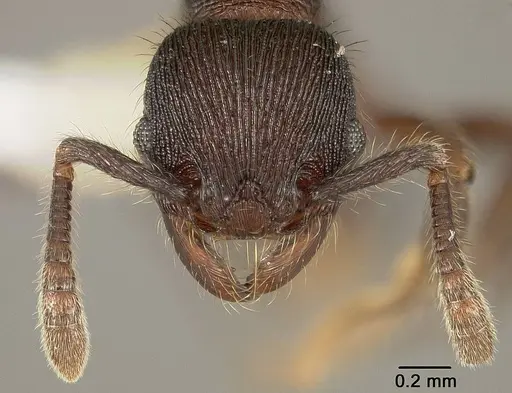
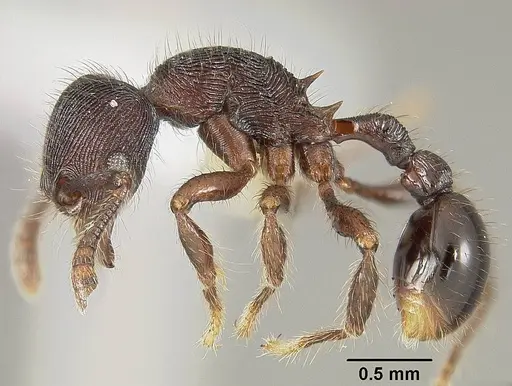
Hylomyrma peetersi is a small Myrmicinae ant native to the Guyanas-Venezuela border region in northern South America. Workers measure 4.4-4.7mm total length with a shiny body covered in distinctive longitudinal striations on the head and mesosoma. The species was only described in 2021 and is named after the late ant researcher Christian Peeters. These ants live in the leaf-litter of primary and cloud forests at elevations between 732 and 1200 meters, making them a highland tropical species. They are distinguished from related species by their strongly convex petiole with a subtriangular projection on the underside and striation patterns restricted to the base of the first gastral segment.
Quick Summary
- Difficulty: Hard, this is a newly described species rarely available in the antkeeping hobby with no established captive care protocols
- Origin & Habitat: Guyana and Venezuela, specifically the Mt. Ayanganna area near the Guyana-Venezuela border. They inhabit leaf-litter of primary and cloud forests at 732-1200m elevation [1][2].
- Colony Type: Unconfirmed. Colony structure has not been documented in scientific literature.
- Size & Growth:
- Queen: Size data unavailable, queens have not been described in scientific literature
- Worker: 4.41-4.71mm total length [1]
- Colony: Colony size data unavailable
- Growth: Growth rate is unconfirmed
- Development: Development timeline unconfirmed for this species (No captive breeding data exists. Estimates based on related species may be inaccurate.)
- Antkeeping:
- Temperature: Keep around 22-26°C. The highland cloud forest origin suggests they prefer cooler, more stable conditions than lowland tropical ants.
- Humidity: High humidity required, these are leaf-litter ants from humid forest floors. Keep nest substrate consistently moist but not waterlogged.
- Diapause: Diapause requirements unconfirmed. Their tropical highland origin suggests minimal to no true diapause, but this has not been studied.
- Nesting: Naturalistic setup with leaf-litter material or a Y-tong/plaster nest with small chambers. They prefer tight, humid spaces scaled to their small size.
- Behavior: Behavior is not well documented. As leaf-litter ants they are likely secretive and spend most of their time in confined spaces. Their small size suggests they may be less aggressive than larger Myrmicinae. Escape prevention is important due to their tiny 4-5mm size, they can slip through standard test tube barriers.
- Common Issues: limited availability, this is a newly described species rarely available in the antkeeping hobby, escape prevention is critical due to their very small worker size, high humidity requirements can lead to mold issues if ventilation is poor, no documented captive care means keepers must experiment with conditions, colony development data is completely unavailable, be prepared for uncertainty
Natural History and Distribution
Hylomyrma peetersi is a recently described species (2021) known only from the Mt. Ayanganna area in Guyana with records extending into Venezuela. They inhabit primary and cloud forest leaf-litter at elevations between 732 and 1300 meters. This highland tropical environment is characterized by high humidity, frequent mist, and moderate temperatures that are cooler than lowland Amazonian regions. The type specimens were collected in October 2002 through forest litter sampling, indicating they are cryptic leaf-litter dwellers that are rarely seen on the surface. The species name honors Dr. Christian Peeters (1956-2020), a Belgian myrmecologist who contributed significantly to understanding Hylomyrma and ant social structure [1][2].
Housing and Nest Preferences
Based on their leaf-litter habitat, these ants do best in naturalistic setups that mimic the forest floor. A Y-tong or plaster nest with small, tight chambers works well. The chambers should be appropriately scaled to their tiny 4-5mm worker size, avoid large, open spaces. Include some leaf-litter material or other debris in the outworld to provide foraging opportunities. Test tube setups can work for founding colonies but may need modification to maintain humidity. Ensure excellent escape prevention, their small size allows them to slip through standard barriers. Use fine mesh and tight-fitting lids.
Temperature and Humidity Requirements
As highland cloud forest ants, Hylomyrma peetersi prefers cooler and more stable conditions than typical tropical ants. Aim for temperatures in the 22-26°C range, avoiding both overheating and cold. The cloud forest origin at 732-1300m elevation suggests they are adapted to cooler, humid conditions. Keep the nest substrate consistently moist but not waterlogged, these are forest floor ants that experience constant humidity. Provide a humidity gradient so ants can choose their preferred zone. Avoid dry conditions entirely. Good ventilation is important to prevent mold while maintaining humidity.
Feeding and Diet
The specific diet of Hylomyrma peetersi has not been documented in scientific literature. Based on related leaf-litter Myrmicinae, they likely forage for small arthropods, honeydew, and plant matter. Offer small protein sources like fruit flies, small mealworms, and micro-crickets. Sugar water or honey can be offered occasionally, though many leaf-litter ants prefer protein. Feed small amounts 2-3 times per week and remove uneaten food to prevent mold. Since this species is newly described and rarely kept, be prepared to experiment with food acceptance.
Colony Development and Growth
As a newly described species, there is no captive breeding data available for Hylomyrma peetersi. Colony development timeline, colony size maximum, and growth rates are all unconfirmed. The only known measurements are worker size (4.41-4.71mm total length) from the type specimens. Be patient and observe your colony's actual development rather than relying on estimates. Avoid disturbing the queen during the founding stage. [1]
Frequently Asked Questions
How long does it take for Hylomyrma peetersi to produce first workers?
Exact timing is unknown as this species has not been bred in captivity yet. No development data exists for this species.
What do Hylomyrma peetersi ants eat?
Their specific diet is unconfirmed. Based on related leaf-litter ants, they likely accept small live prey like fruit flies and micro-arthropods, along with sugar sources. Offer a varied diet including small protein sources and occasional sugar water. Remove uneaten food promptly.
Are Hylomyrma peetersi ants good for beginners?
This species is not recommended for beginners. It was only described in 2021,is rarely available in the hobby, and has no established captive care protocols. Additionally, their small size and high humidity requirements make them challenging. Consider starting with more established species before attempting Hylomyrma.
Do Hylomyrma peetersi ants sting?
As Myrmicinae, they have a stinger but it is likely too small to penetrate human skin effectively.
What temperature should I keep Hylomyrma peetersi at?
Keep them at 22-26°C. The highland cloud forest origin suggests they prefer cooler conditions than typical tropical ants. Avoid temperatures above 28°C or below 20°C. A stable temperature is important.
How big do Hylomyrma peetersi colonies get?
Colony size is not documented in scientific literature. No data exists on maximum colony size for this species.
Can I keep multiple Hylomyrma peetersi queens together?
Colony structure is unconfirmed for this species. No data exists on whether they are single-queen or multi-queen. Combining unrelated queens is not recommended.
Do Hylomyrma peetersi need hibernation?
Diapause requirements are unconfirmed. Their tropical highland origin suggests minimal to no true hibernation, but this has not been studied.
Why are my Hylomyrma peetersi escaping?
Their very small 4-5mm size means they can slip through standard barriers. Use fine mesh (at least 0.5mm or smaller), tight-fitting lids, and apply fluon or other barrier gels to all openings. Check all connections and seams regularly.
Where can I get Hylomyrma peetersi ants?
This is a newly described species (2021) and is extremely rare in the antkeeping hobby. It is unlikely to be available from commercial suppliers. If available at all, it would only be from specialized dealers or through connections with researchers working in Guyana or Venezuela.
Report an Issue
The current care sheet is based fully on literature. See inconsistencies, or something that's incorrect? Please , it will be resolved after review from an admin. Contributing to the blogs tab also helps providing information, to make us be able to further improve the caresheets. Thank you for your support!
References

Cette fiche d'élevage est sous licence CC BY-SA 4.0 .
Blogs de la communauté
ECOFOG-MI15-0108-28
Voir sur AntWeb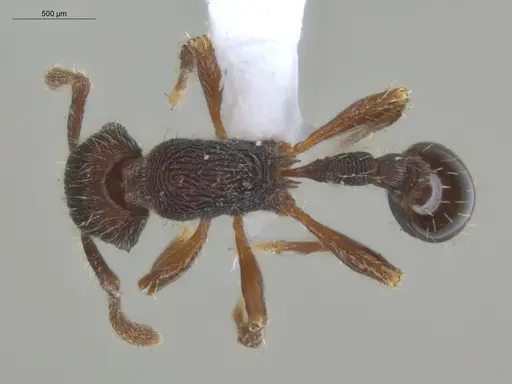
USNMENT00413177
Voir sur AntWeb
Littérature
Chargement de la carte de répartition...Chargement des produits...