
Harpegnathos alperti
- Nom sci.
- Harpegnathos alperti
- Tribu
- Ponerini
- Sous-famille
- Ponerinae
- Auteur
- General, 2016
- Distribution
- Trouvé dans 1 pays
Introduction
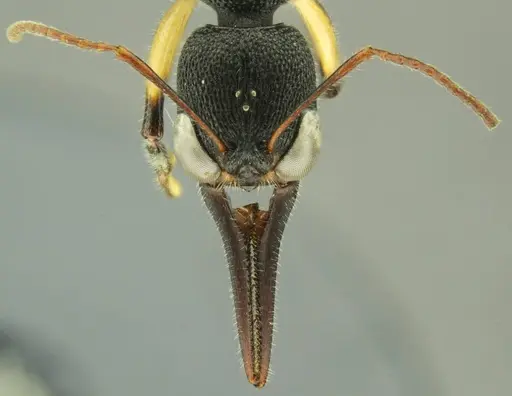
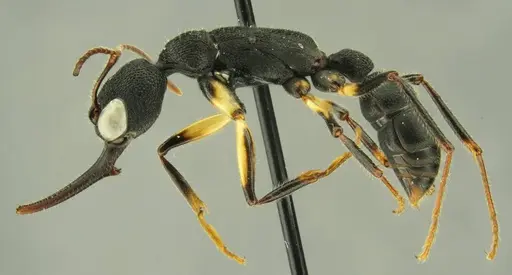
Harpegnathos alperti is a large predatory ant species discovered in 2016,found only on Luzon Island in the Philippines. Workers measure approximately 19.5mm in total length, making them one of the larger ant species in the region. They have a jet-black body with chocolate-brown mandibles and antennae, and yellowish legs. Their most striking features are their extremely large, oval eyes that occupy the anterior lateral margin of the head, and a functional sting. This species was named after Dr. Gary D. Alpert, who helped redirect the discoverer's research from spiders to ants. It lives sympatrically with Harpegnathos honestoi on Mount Isarog, with both species collected from sites less than 5km apart at around 500-550m elevation . As a Ponerinae ant, H. alperti belongs to a group known for their potent stings and predatory lifestyles. Nothing has been documented about their specific biology, colony structure, or captive care requirements, so keepers must rely on what is known about the genus as a whole.
Quick Summary
- Difficulty: Expert
- Origin & Habitat: Endemic to Luzon Island, Philippines. Known only from the Panicuason Village area of Naga City in Camarines Sur, at 500-550m elevation on Mount Isarog [1].
- Colony Type: Unknown. No colony structure data exists for this species.
- Size & Growth:
- Queen: Undescribed, no queen caste has been documented for this species [1].
- Worker: Approximately 19.5mm total length [1].
- Colony: Unknown, no colony size data exists for this species.
- Growth: Unknown, no development data exists for this species.
- Development: Unknown, no development data exists for this species. (No direct development data exists for H. alperti.)
- Antkeeping:
- Temperature: Likely requires warm tropical conditions. No specific temperature data exists for this species.
- Humidity: Likely requires high humidity given the tropical forest habitat of Luzon. No specific humidity data exists.
- Diapause: Unlikely. As a tropical species from the Philippines, a true hibernation is probably not required.
- Nesting: No specific nesting data exists for this species. In the wild, Harpegnathos typically nest in soil, under stones, or in rotting wood in forested areas.
- Behavior: No specific behavior data exists for H. alperti. They have excellent vision thanks to their large eyes and ocelli, and possess a functional sting. Workers are large and fast-moving.
- Common Issues: no biological data exists, everything about their care is inferred from genus patterns, so keepers are essentially experimenting, their large size and potent sting make them a species for experienced keepers only, tropical humidity requirements can be tricky to maintain consistently without causing mold, nothing is known about their specific diet, keepers must experiment with appropriate prey items, colony founding method is unconfirmed for this species
Discovery and Taxonomy
Harpegnathos alperti was formally described in 2016 by David Emmanuel M. General, making it one of the more recently discovered ant species available to keepers. The species is known only from Luzon Island in the Philippines, specifically from the Mount Isarog region in Camarines Sur province. The holotype worker was collected in March 2003 at an elevation of 500-550 meters in Panicuason Village near Naga City [1].
The species name honors Dr. Gary D. Alpert, who was the mentor and colleague of the describer. Interestingly, Dr. Alpert's visit to Naga City and Mount Isarog firmly redirected the author's research interest from spiders to ants, a serendipitous redirect that led to the discovery of this species. H. alperti is superficially similar to Harpegnathos venator chapmani, but has distinctive sculpturing. It lives alongside Harpegnathos honestoi in the same mountainous region [1].
Identification and Morphology
This is a large ant species, with workers measuring approximately 19.5mm in total length. The most distinctive feature is the extremely large, oval eyes that occupy the anterior lateral margin of the head. Ocelli (simple eyes) are present, indicating good visual capability. The mandibles are powerful and designed for capturing prey [1].
The body is jet black, with chocolate-brown mandibles and antennae, and yellowish chocolate-brown legs. The mesosoma is long and cylindrical, and the petiole (the narrow waist segment) is longer than it is tall. A functional sting is present at the tip of the gaster (abdomen). The body surface is coarsely punctate (covered in small pits) with irregular striations on the thorax. Sparse short hairs are present on the body [1].
Housing and Nest Setup
Since no specific nesting data exists for H. alperti, keepers should follow general Harpegnathos husbandry practices. These are large, active ants that need space to move and hunt. A naturalistic setup with a deep soil layer works well, they may dig chambers for themselves if given the opportunity. Alternatively, a Y-tong nest with moist plaster or soil provides good humidity control while allowing observation.
Ensure the setup has multiple chambers so they can move between areas. Use a water test tube for drinking water, Ponerinae ants frequently drink and need constant access to fresh water.
Feeding and Nutrition
No specific dietary data exists for H. alperti. As a Ponerinae ant, they are likely predatory and require live prey. Offer small live insects appropriate to their size, crickets, mealworms, roaches, and other arthropods. Their large size means they can take down relatively substantial prey.
Remove uneaten prey after 24-48 hours to prevent mold. Some Harpegnathos species will accept sugar water or honey as a supplementary energy source, but protein from prey should be the primary diet.
Temperature and Humidity Requirements
H. alperti comes from a tropical region in the Philippines, so warm temperatures are essential. Aim for 24-28°C in the nest area, with a slight gradient so the ants can choose their preferred temperature. Room temperature may be sufficient if your home is naturally warm, otherwise use a heating cable on one side of the nest.
High humidity is likely important given the tropical forest habitat of Mt. Isarog. Keep the nest substrate consistently moist but not waterlogged, the substrate should feel damp but not have standing water. A water tube provides drinking water and helps maintain humidity. Good ventilation is also important to prevent mold while maintaining these humidity levels.
Safety and Handling
Harpegnathos alperti has a functional sting and should be considered potentially dangerous. While no one has been stung by this specific species, Ponerinae stings are typically painful and can cause significant discomfort. The large size of these ants suggests a correspondingly potent sting.
When working with the colony, use caution. Open the nest carefully and have escape prevention in place. Never handle them directly, especially the queen. Keep the formicarium away from areas where accidental escapes could result in stings to humans or pets.
Frequently Asked Questions
How long does it take for Harpegnathos alperti to go from egg to worker?
This has not been documented. The development timeline is unknown for this species.
What do Harpegnathos alperti eat?
No specific dietary data exists. They are likely predatory and need live prey. Offer small insects like fruit flies, pinhead crickets, and mealworms. They may accept sugar water or honey as an energy supplement, but protein from prey should form the bulk of their diet.
Do Harpegnathos alperti ants sting?
Yes, they have a functional sting. The sting is likely potent given their large size and Ponerinae classification. Handle with caution and avoid direct contact.
Are Harpegnathos alperti good for beginners?
No. This is an expert-level species. Nothing is known about their specific biology, they require tropical conditions with high humidity, they have a potent sting, and colony founding may be challenging. They are only suitable for experienced antkeepers willing to experiment with husbandry.
How big do Harpegnathos alperti colonies get?
Colony size is unknown, no wild colony data exists for this species.
Do Harpegnathos alperti need hibernation?
Unlikely. As a tropical species from the Philippines, they probably do not require a true hibernation period. They may show reduced activity during cooler or drier periods, but a hibernation setup is probably not necessary.
Can I keep multiple Harpegnathos alperti queens together?
This has not been documented. Harpegnathos is typically monogyne (single queen), but this specific species has no documented colony structure.
What temperature should I keep Harpegnathos alperti at?
Aim for 24-28°C based on their tropical Philippine distribution. Provide a gradient so they can choose their preferred temperature. A temperature around 26°C is a good starting point.
Is Harpegnathos alperti a difficult species to keep?
Yes, this is an expert-level species. The main challenge is that nothing is known about their specific biology, keepers are essentially experimenting with husbandry based on genus assumptions. Their sting, humidity needs, and unknown founding method all require experience to manage successfully.
Where is Harpegnathos alperti found in the wild?
Only known from Luzon Island, Philippines. Specifically from the Mount Isarog region in Camarines Sur province, at 500-550m elevation near Naga City.
Report an Issue
The current care sheet is based fully on literature. See inconsistencies, or something that's incorrect? Please , it will be resolved after review from an admin. Contributing to the blogs tab also helps providing information, to make us be able to further improve the caresheets. Thank you for your support!
References

Cette fiche d'élevage est sous licence CC BY-SA 4.0 .
Blogs de la communauté
ANTWEB1008901
Voir sur AntWeb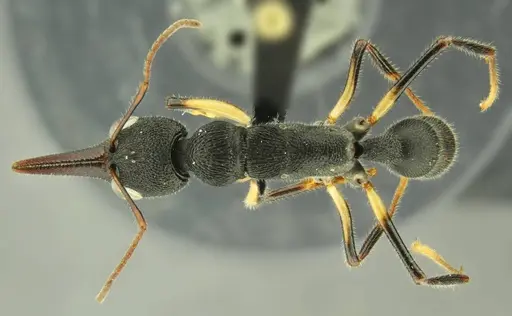
Littérature
Chargement de la carte de répartition...Chargement des produits...