
Echinopla wardi
- Nom sci.
- Echinopla wardi
- Tribu
- Camponotini
- Sous-famille
- Formicinae
- Auteur
- Zettel & Laciny, 2015
- Distribution
- Trouvé dans 0 pays
Introduction
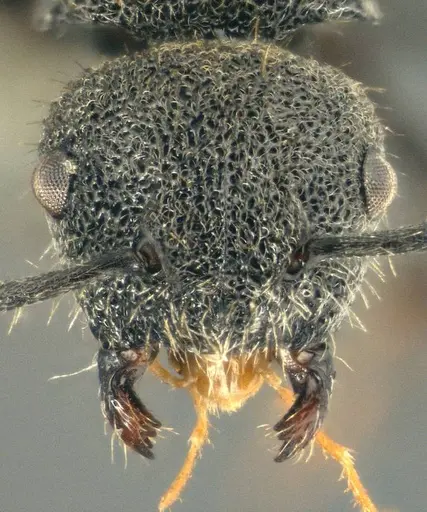
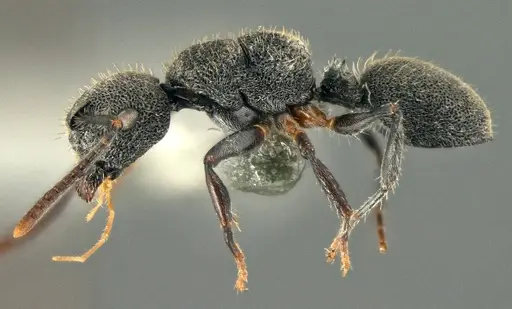
Echinopla wardi is a small, striking ant species native to West Malaysia, found in second-growth rainforests in Johor and Pahang provinces. Workers measure 3.8-4.3mm in total length and have a distinctive appearance: predominantly black body covered in dense whitish pilosity that gives them a greyish sheen. The surface is covered in closely set pores, and the mesosoma has sharp tubercles along its dorsal margins. The petiole is wide and dentate with sharp teeth. This species belongs to the Echinopla serrata species group and was only described in 2015, making it one of the more recently discovered ant species in the hobby.
Quick Summary
- Difficulty: Unknown, no established husbandry data available
- Origin & Habitat: West Malaysia (Johor, Pahang) in second-growth rainforest, collected from low vegetation at 50-600m elevation [1][2]
- Colony Type: Unconfirmed, colony structure has not been documented in scientific literature
- Size & Growth:
- Antkeeping:
- Temperature: Likely 24-28°C based on tropical rainforest origin, start in this range and observe colony activity
- Humidity: Likely 70-85% based on rainforest origin, keep substrate consistently moist but not waterlogged
- Diapause: Unlikely, tropical species from low elevation Malaysia probably does not require hibernation
- Nesting: In nature they have been collected from low vegetation, suggesting they may nest in plant material, hollow stems, or under bark. A naturalistic setup with moist substrate and tight-fitting escape prevention is recommended. Test tubes may work if humidity is maintained
- Behavior: Behavior is poorly documented. As a Formicinae species, they likely have moderate activity levels and may spray formic acid as defense. Their small size means escape prevention is important, use fine mesh and tight-fitting lids. They are likely less aggressive than larger Formicinae. No stinging behavior is expected as Formicinae workers lack functional stingers.
- Common Issues: no established husbandry data exists, this is a species with virtually no captive breeding records, tropical humidity requirements may be difficult to maintain consistently in captivity, escape prevention is critical due to small size, they can squeeze through standard test tube cotton if gaps exist, limited availability, wild-caught colonies are the only source since no captive breeding programs exist, slow growth is typical for small Formicinae, beginners may lose patience with slow development
Discovery and Taxonomy
Echinopla wardi was described in 2015 by Herbert Zettel and Alice Laciny in a paper published in Deutsche entomologische Zeitschrift. The holotype was collected in November 1988 by Philip S. Ward from low vegetation in second-growth rainforest in Johor, Malaysia, at approximately 50 meters elevation. A paratype was later collected from Pahang province at 600 meters elevation in the Endau Rompin National Park. This species belongs to the Echinopla serrata species group, characterized by their pore-covered body surface and sharp tubercles on the mesosoma. The genus Echinopla contains about 30 known species distributed throughout the Indo-Malayan region. [1][2]
Identification and Appearance
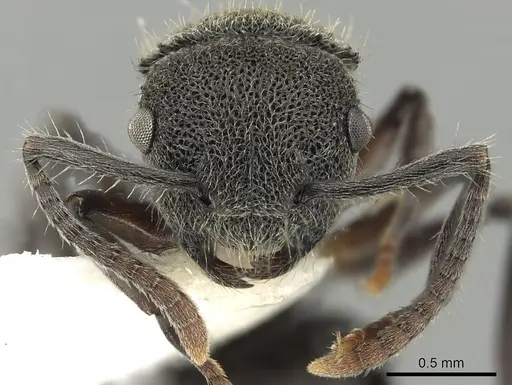
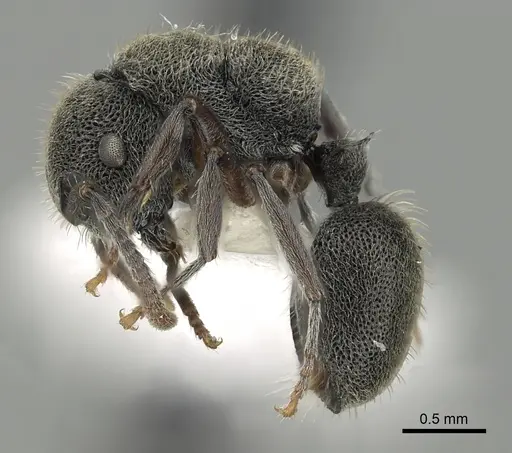
Echinopla wardi workers are small but distinctive, measuring 3.8-4.3mm in total length. The most striking feature is their dense whitish pilosity that makes the otherwise black body appear grey. The head is wider than long, and the compound eyes are relatively small and moderately protruding. The mesosoma is stout with sharp tubercles along the dorsal margins, and there is a distinctive deep incision in front of the propodeum. The petiole is wide with a sharp dorsal crest bearing four teeth medially and a strongly developed lateral tooth with additional sharp teeth below it. The gaster is notably longer than wide, and the first tergite has large pores with shiny interspaces between them. Legs are primarily black with brown coxae and reddish tarsi at the tips. [1][2]
Natural Habitat and Distribution
This species is currently known only from West Malaysia, specifically the states of Johor and Pahang. The type locality in Johor is lowland rainforest at about 50 meters elevation, while the paratype came from higher elevation in the Endau Rompin National Park. Both collection sites were in second-growth rainforest, and specimens were collected from low vegetation rather than from the ground. This suggests Echinopla wardi may be arboreal or semi-arboreal, potentially nesting in plant material, hollow stems, or under bark rather than in soil. The limited distribution data means this species may have a very restricted range in the wild. [1][2]
Housing and Care Recommendations
Since no established husbandry data exists for this species, care recommendations must be inferred from what is known about their natural history and from related Formicinae species. Based on their tropical rainforest origin from lowland Malaysia, they likely require warm temperatures and high humidity. The collection from low vegetation suggests they may prefer vertical nesting spaces or plant-based materials, so a naturalistic setup with cork, wood, or plant material may be appropriate. Given their small size, excellent escape prevention is essential, use fine mesh barriers and check for any gaps in housing. They likely accept standard ant foods including sugar sources and small protein prey, but specific dietary preferences are unknown.
Challenges for Antkeepers
Echinopla wardi presents significant challenges for antkeepers. First, this is an extremely rare species in the hobby with no established captive breeding populations, any colonies available will be wild-caught, which carries risks of parasites, disease, and stress from collection. Second, the complete lack of documented husbandry means keepers are essentially pioneering captive care for this species, requiring experimentation and careful observation. Third, the limited distribution data suggests wild populations may be small and localized, making sustainable collection difficult. For these reasons, Echinopla wardi is not recommended for beginners and should only be attempted by experienced antkeepers willing to document their findings and potentially lose colonies during the learning process.
Frequently Asked Questions
How long does it take for Echinopla wardi to produce first workers?
The egg-to-worker timeline is unconfirmed for this species. No specific development data exists for Echinopla wardi.
What do Echinopla wardi ants eat?
Diet is unconfirmed for this species. As a Formicinae ant, they likely accept sugar sources and small protein prey. Start with standard ant foods and observe what the colony accepts.
Can I keep Echinopla wardi in a test tube?
Test tubes can work if humidity is maintained and escape prevention is excellent. However, given their likely preference for plant-based nesting sites and high humidity needs, a naturalistic setup or Y-tong nest with moisture retention may be more appropriate.
Do Echinopla wardi need hibernation?
Hibernation is unlikely required. This is a tropical species from lowland Malaysia where temperatures remain warm year-round. Maintaining consistent warmth is likely more appropriate than cooling for winter.
How big do Echinopla wardi colonies get?
Maximum colony size is unknown. No colony size data exists for this species.
Is Echinopla wardi good for beginners?
No. This species is not recommended for beginners due to the complete lack of established husbandry data, rarity in the hobby, and the experimental nature of keeping them.
Can I keep multiple Echinopla wardi queens together?
Colony structure is unconfirmed for this species. The number of queens per colony has not been documented. Until more is known, keeping a single queen is the safest approach.
What temperature should I keep Echinopla wardi at?
Based on their tropical rainforest origin, aim for 24-28°C. Start around 26°C and observe colony behavior, if workers cluster near heat sources, increase slightly, if they avoid heated areas, reduce temperature.
Where can I get Echinopla wardi ants?
This is an extremely rare species in the antkeeping hobby. Any available colonies would likely be wild-caught from Malaysia, which presents ethical and legal concerns. Captive breeding programs do not currently exist for this species.
Report an Issue
The current care sheet is based fully on literature. See inconsistencies, or something that's incorrect? Please , it will be resolved after review from an admin. Contributing to the blogs tab also helps providing information, to make us be able to further improve the caresheets. Thank you for your support!
References

Cette fiche d'élevage est sous licence CC BY-SA 4.0 .
Blogs de la communauté
CASENT0280337
Voir sur AntWeb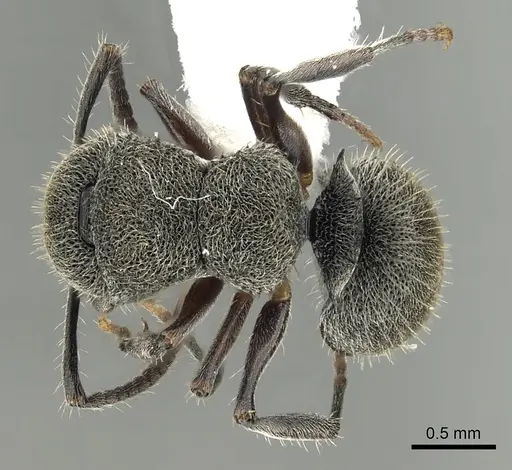
CASENT0914952
Voir sur AntWeb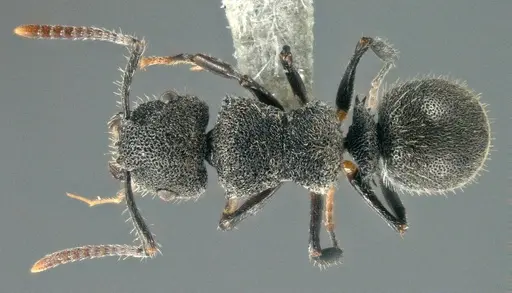
Littérature
Chargement de la carte de répartition...Chargement des produits...