
Dorylus staudingeri
- Nom sci.
- Dorylus staudingeri
- Sous-famille
- Dorylinae
- Auteur
- Emery, 1895
- Distribution
- Trouvé dans 0 pays
Introduction
Dorylus staudingeri is a large army ant species native to Central and East Africa, found in the Congo basin and surrounding regions. Males reach approximately 27mm in total length, with a light brown-yellow body and dark head . This species belongs to the Dorylinae subfamily, commonly known as army ants, which are famous for their spectacular group hunting raids and nomadic colony movements. The genus Dorylus contains some of the most ecologically impactful ants in Africa. Unlike many ants, army ants like Dorylus staudingeri do not build permanent nests - instead, they form temporary bivouacs as they constantly move through their territory, hunting and foraging in coordinated swarms.
Quick Summary
- Difficulty: Expert
- Origin & Habitat: Democratic Republic of Congo, Congo, and Kenya in the Afrotropical region. This species inhabits tropical forest environments in Central Africa [1][2][3].
- Colony Type: Colony structure is not documented for this specific species. Based on Dorylus genus patterns, colonies likely contain a single queen with potential ergatoid (wingless) replacement reproductives. Colonies can reach extremely large sizes in some Dorylus species.
- Size & Growth:
- Queen: Size data unavailable for this species, Dorylus queens are typically large, but specific measurements for D. staudingeri are not documented
- Worker: Size data unavailable for this species, Dorylus workers vary considerably across castes, but no specific measurements exist for D. staudingeri
- Colony: Likely very large based on genus patterns, Dorylus colonies commonly contain hundreds of thousands to millions of workers
- Growth: Fast, army ant colonies grow rapidly once established
- Development: Unknown for this species. Dorylus development is typically rapid, with brood development completing in weeks rather than months (Development timeline unconfirmed for D. staudingeri specifically)
- Antkeeping:
- Temperature: Based on its Central African tropical distribution, this species requires warm conditions around 24-28°C. A heating cable on one side of the enclosure creates an appropriate gradient.
- Humidity: Requires high humidity typical of tropical forest floor dwellers. Keep nest substrate consistently moist but not waterlogged.
- Diapause: No, as a tropical species, Dorylus staudingeri does not enter true hibernation. However, colony activity may slow during drier seasons in their range.
- Nesting: Army ants do not build permanent nests in captivity. They form bivouacs, temporary clusters held together by their own bodies. In captivity, this means providing a dark, enclosed space where the colony can form a cohesive mass. Test tubes and traditional formicaria are NOT suitable, these ants need space to move and form raiding columns.
- Behavior: Dorylus staudingeri is a predatory army ant that hunts in massive coordinated raids. Workers are aggressive and will swarm to overwhelm prey. This species has a potent bite and should be handled with extreme caution. Escape prevention is critical, army ants can form long raiding columns that exploit any gap. They are highly active and constantly on the move, making them one of the most challenging ant species to keep. Their nomadic lifestyle means they do not stay in one location, which must be accommodated in captive setups.
- Common Issues: massive colony size makes them extremely difficult to house long-term, nomadic lifestyle requires specialized setups that most antkeepers cannot provide, aggressive predation means they will attack and consume any arthropods in their enclosure, escape prevention is nearly impossible with established raiding columns, they require constant feeding with large quantities of prey items
Understanding Army Ant Biology
Dorylus staudingeri belongs to a genus of ants that has fundamentally different biology from most ant species. Army ants do not construct permanent nests in the ground or in wood. Instead, they form temporary bivouacs, living nests made entirely of their own bodies, with workers linking together to create a protective cluster. Every few weeks, the entire colony packs up and moves to a new location, following prey populations and avoiding flooding. This nomadic lifestyle is driven by their voracious appetite: a single colony can consume tens of thousands of prey items per day. In the wild, Dorylus colonies can contain millions of workers, making them one of the largest social insect colonies on Earth. This biology makes them extraordinarily challenging to keep in captivity, as standard ant-keeping equipment and techniques simply do not work. [3]
Housing Requirements
Housing Dorylus staudingeri requires a fundamentally different approach than typical ants. Standard test tube setups and formicaria are completely unsuitable. These ants need large, open spaces to form raiding columns and bivouac clusters. The ideal setup would be a large naturalistic enclosure with multiple feeding chambers, dark retreats for bivouac formation, and a constant supply of prey. The enclosure must have absolutely no gaps, army ants will exploit any opening, and a column can extend meters long given the opportunity. Most antkeepers who successfully keep Dorylus species use custom-built setups with multiple connected chambers, automated feeding systems, and escape-proof barriers. This is not a species for beginners or even intermediate antkeepers.
Feeding and Nutrition
Dorylus staudingeri is a strict predator that hunts invertebrates through coordinated mass raids. In the wild, their diet consists primarily of other insects, spiders, and arthropods encountered during raids. They do not collect honeydew or scavenge like many ants, they are active hunters. In captivity, you must provide a constant supply of live prey. This means maintaining cultures of feeder insects (crickets, mealworms, roaches, fruit flies) and offering them in large quantities daily. A single established colony may require hundreds of prey items per week. Some colonies will accept freshly killed prey, but most require active movement to trigger hunting behavior. Sugar sources are generally not accepted, army ants get their carbohydrates from the bodies of their prey.
Temperature and Humidity
As a tropical species from Central Africa, Dorylus staudingeri requires warm and humid conditions. Target temperatures should be in the range of 24-28°C, which can be maintained using a heating cable on one side of the enclosure to create a gradient. Room temperature is likely insufficient unless you live in a warm climate. Humidity should be high, think tropical rainforest floor. The substrate should remain consistently moist but never waterlogged. Provide a water dish for drinking, but ensure it cannot become a drowning hazard for the small workers. Poor temperature or humidity will cause the colony to become sluggish and may lead to colony decline.
Safety and Handling
Dorylus staudingeri and other army ants have powerful mandibles and will bite aggressively when threatened. While they do not have a sting like many ants, their bite can be painful and they attack in swarms. Never handle these ants with bare hands once the colony is established. If you need to move them, use tools and work quickly but carefully. The escape risk with army ants cannot be overstated, they will form long raiding columns that can squeeze through impossibly small gaps and explore every corner of a room. Before opening any enclosure containing this species, ensure all escape routes are sealed and you have adequate time to complete your work without rushing.
Frequently Asked Questions
Can I keep Dorylus staudingeri in a test tube?
No. Test tubes and standard formicaria are completely unsuitable for Dorylus staudingeri. Army ants form bivouacs and need open space to move in raiding columns. You would need a large custom-built enclosure with multiple chambers to house this species even semi-successfully.
Is Dorylus staudingeri good for beginners?
No. This is an expert-level species that requires specialized knowledge, custom equipment, and significant resources. Army ants have completely different biology than typical ants and cannot be kept using standard ant-keeping methods. Do not start with this species.
How long does it take for first workers to appear?
The development timeline for Dorylus staudingeri has not been specifically documented. Based on genus patterns, development is relatively rapid compared to many ants, but exact timelines are unknown. Established colonies grow very large very quickly once founding is complete.
What do Dorylus staudingeri eat?
They are strict predators that hunt invertebrates through coordinated raids. They do not eat sugar or honeydew. In captivity, you must provide constant live prey, crickets, mealworms, roaches, fruit flies, and other small invertebrates in large quantities.
How big do colonies get?
Dorylus colonies can reach extraordinary sizes, hundreds of thousands to millions of workers in established colonies. This species is not suitable for long-term home keeping simply due to the sheer volume of space and food required.
Do they need hibernation?
No. As a tropical African species, Dorylus staudingeri does not require hibernation. Keep them warm year-round at 24-28°C.
Can I keep multiple queens together?
Dorylus genus typically has single-queen colonies. The colony structure for D. staudingeri specifically is not documented, but combining unrelated queens is not recommended and would likely result in fighting.
Why are my Dorylus staudingeri dying?
Without more specific information about your setup, common causes include: inadequate space for raiding, insufficient prey (they need constant hunting), incorrect temperature/humidity, stress from enclosure too small, or escape and colonization of unintended areas. Army ants have very specific needs that are difficult to meet in captivity.
When should I move them to a formicarium?
Never, standard formicaria are completely unsuitable for army ants. If you must keep them, you would need a custom-built naturalistic setup with multiple chambers, dark retreats, and space for column formation. This is not a species for conventional ant-keeping.
Are Dorylus staudingeri dangerous to humans?
They are not deadly, but their bites are painful and they attack in large numbers when threatened. The main danger is their ability to rapidly colonize unintended areas if they escape. A massive raid column in a home is extremely difficult to control.
Report an Issue
The current care sheet is based fully on literature. See inconsistencies, or something that's incorrect? Please , it will be resolved after review from an admin. Contributing to the blogs tab also helps providing information, to make us be able to further improve the caresheets. Thank you for your support!
References

Cette fiche d'élevage est sous licence CC BY-SA 4.0 .
Blogs de la communauté
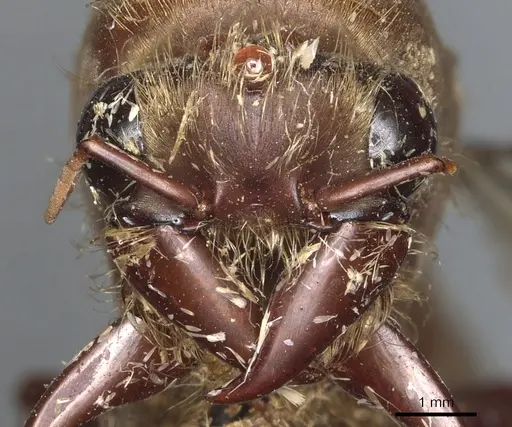
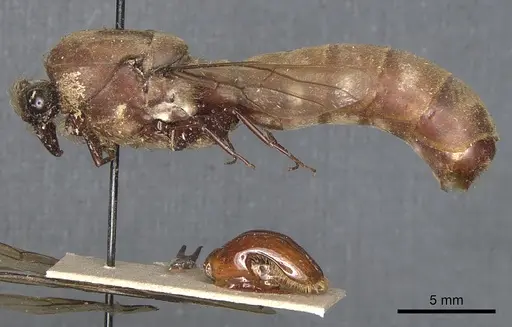
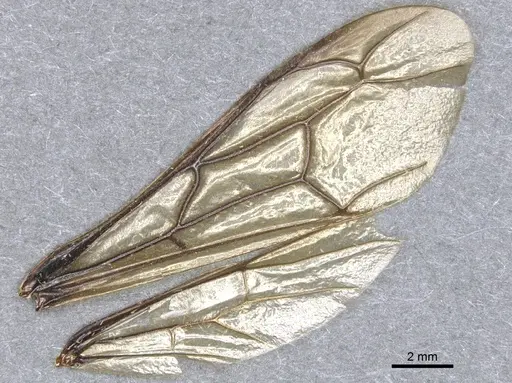
CASENT0903708
Voir sur AntWeb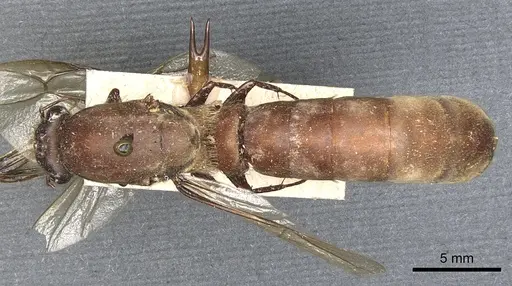
Littérature
Chargement de la carte de répartition...Chargement des produits...