
Dorylus gaudens
- Nom sci.
- Dorylus gaudens
- Sous-famille
- Dorylinae
- Auteur
- Santschi, 1919
- Distribution
- Trouvé dans 0 pays
Introduction
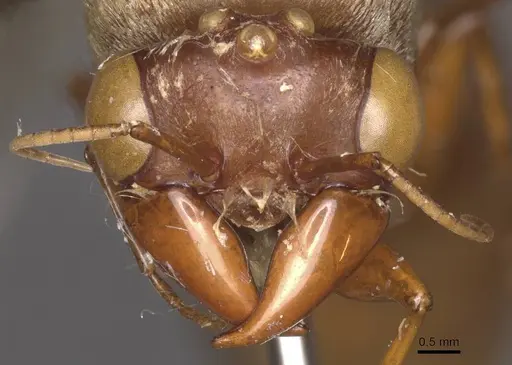
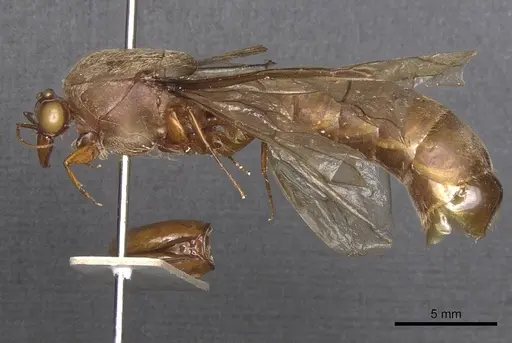
Dorylus gaudens is an army ant species endemic to the Democratic Republic of Congo, specifically recorded from the Ituri region . Like all Dorylus species, these are nomadic predatory ants that form massive colonies capable of sweeping across forest floors in search of prey. Workers are typically reddish-brown to dark brown, with the characteristic army ant morphology including powerful mandibles adapted for capturing and dismembering prey. Queen ants are among the largest in the ant world. This species represents the incredible diversity of Africa's tropical ant fauna, though specific biological details for Dorylus gaudens remain poorly documented in scientific literature.
Quick Summary
- Difficulty: Expert
- Origin & Habitat: Democratic Republic of Congo, Ituri region, tropical forest habitat [1]
- Colony Type: Colony structure is unconfirmed for this species. Most Dorylus species form single-queen colonies with massive worker populations typical of army ants.
- Size & Growth:
- Queen: Size data unavailable, queens likely large (50+ mm) based on typical Dorylus genus patterns, but no specific measurements for this species
- Worker: Size data unavailable, workers likely 3-8 mm based on typical Dorylus genus patterns, but no specific measurements for this species
- Colony: Likely contains hundreds of thousands to millions of workers based on typical Dorylus colonies, unconfirmed for this specific species
- Growth: Moderate, estimated based on typical army ant patterns
- Development: Unknown, no species-specific data available (Development likely follows typical army ant patterns of several months, but this is unconfirmed for Dorylus gaudens)
- Antkeeping:
- Temperature: Keep at 24-28°C, this is an estimate based on typical Dorylus requirements and tropical forest habitat
- Humidity: High humidity (70-85%), maintain consistently damp substrate to mimic tropical forest understory conditions
- Diapause: No, being a tropical species, they do not require hibernation. May reduce activity during drier seasons.
- Nesting: Army ants do not maintain permanent nests, they form temporary bivouacs in hollow logs, under stones, or in rotten wood. In captivity, they require large spaces and cannot be kept in standard formicariums. This species is NOT suitable for typical ant keeping.
- Behavior: Extremely aggressive predatory behavior typical of army ants, they hunt in massive swarms and can overwhelm prey many times their individual size. Workers are blind or nearly so, relying on chemical trails and vibrations to coordinate. Escape risk is significant given their small size and active foraging behavior. This species should be considered dangerous due to their swarming behavior and potent bites, multiple workers can deliver painful bites en masse. NOT recommended for indoor keeping due to their nomadic nature and colony size.
- Common Issues: Massive colony size makes captive housing extremely difficult, colonies can reach hundreds of thousands to millions of individuals, Nomadic lifestyle means they constantly move, cannot be kept in standard formicariums, Requires constant access to large quantities of live prey, feeding millions of workers is impractical, Highly aggressive swarming behavior poses bite risk to keepers, Blind workers disperse easily through tiny gaps, escape prevention is nearly impossible with such large colonies
Species Overview and Natural History
Dorylus gaudens is an army ant species endemic to the Ituri region of the Democratic Republic of Congo [1]. The Ituri Forest is one of Africa's most biodiverse tropical regions, and Dorylus gaudens represents one of the many specialized ant species found in this area. Army ants (Dorylus) are among the most ecologically important predators in African forests, forming massive colonies that can contain hundreds of thousands to millions of workers. These ants are famous for their nomadic lifestyle, they do not maintain permanent nests but instead form temporary bivouacs that they abandon every few weeks as they exhaust local prey populations and move to new hunting grounds. The genus Dorylus contains approximately 60 species all restricted to Africa and parts of Asia, with the greatest diversity found in central African rainforests.
Housing and Colony Maintenance
This species is NOT suitable for typical ant keeping and should only be considered by expert researchers with specific institutional goals. Army ants require entirely different husbandry approaches than sedentary ant species. Captive colonies would require large, escape-proof enclosures with multiple connected chambers to accommodate their nomadic behavior. The enclosure would need to simulate their natural bivouac sites, dark, humid spaces in hollow logs or underground cavities. Maintaining a colony would require providing enormous quantities of live prey regularly, as army ant colonies consume thousands of prey items daily. Most antkeepers should not attempt to keep this species, it represents a fundamentally different challenge than keeping typical ants.
Feeding Requirements
Army ants are obligate predators that rely entirely on live prey for nutrition. Unlike many ants that can survive on sugar sources, Dorylus species require constant access to arthropod prey. Their massive colonies mean feeding requirements are enormous, a mature colony may consume tens of thousands of insects daily. Prey items range from small arthropods to much larger invertebrates and occasionally small vertebrates stunned or killed by the swarm. In captivity, providing adequate nutrition for a colony of this size would be prohibitively difficult and expensive. The swarming hunting behavior also means prey is overwhelmed and consumed collectively rather than being stored.
Ecological Role and Behavior
Dorylus army ants play a crucial ecological role in African forests as top predators. Their swarming behavior allows them to overwhelm prey much larger than any individual worker, including insects, spiders, and occasionally small vertebrates. The colonies move through the forest in characteristic raid columns or swarm fronts, flushing prey from hiding places. This predation pressure significantly affects invertebrate populations and shapes forest community structure. The massive colonies also serve as a food source for other species, birds and other predators often follow army ant swarms to catch insects fleeing the ants. The workers are blind or nearly so, relying entirely on chemical pheromone trails and vibrations to coordinate their massive swarms.
Frequently Asked Questions
Can I keep Dorylus gaudens as a pet ant?
No. This species is not suitable for typical ant keeping. Army ants require massive enclosures, constant access to live prey in enormous quantities, and specialized care that exceeds what hobbyist antkeepers can provide. The colonies reach hundreds of thousands to millions of individuals and maintain a nomadic lifestyle that cannot be replicated in captivity.
How big do Dorylus gaudens colonies get?
While specific data for Dorylus gaudens is unavailable, typical Dorylus colonies contain between 500,000 to over 20 million workers. The massive colony size is one reason these ants are not suitable for captive keeping.
Do Dorylus gaudens ants bite?
Yes. Army ants have potent bites and can deliver painful multi-biters en masse when threatened. The swarming behavior means dozens or hundreds of workers may attack simultaneously if the colony is disturbed. Their bites can cause significant discomfort and should be avoided.
What do Dorylus gaudens eat?
They are obligate predators that eat live arthropod prey. Unlike many ant species, they cannot survive on sugar water or honey. Their diet consists entirely of insects, spiders, and other invertebrates they capture during swarming raids.
Where is Dorylus gaudens found?
This species is endemic to the Ituri region in the Democratic Republic of Congo [1]. It is found in the tropical rainforests of central Africa, which provide the warm, humid conditions and abundant prey these ants require.
How long do Dorylus gaudens workers live?
Specific lifespan data for Dorylus gaudens is unavailable. In typical army ants, workers live approximately 6-12 months, while queens can live for many years, sometimes 15-20 years or more.
Do Dorylus gaudens need hibernation?
No. Being a tropical species from central Africa, they do not require hibernation. However, they may reduce activity during drier or cooler periods in their natural habitat.
Can I catch a Dorylus gaudens queen to start a colony?
Catching a queen would be extremely difficult given the species' remote African distribution and the nomadic nature of army ant colonies. Additionally, importing or keeping this species would likely require permits and is not practical for hobbyist antkeepers.
Are Dorylus gaudens dangerous to humans?
They can be dangerous in self-defense. While they do not actively hunt humans, disturbing a colony will result in mass defensive bites. The swarming behavior means many workers can bite simultaneously, causing significant pain and potential allergic reactions in sensitive individuals.
Why can't Dorylus gaudens be kept in a formicarium?
Army ants do not build permanent nests or tunnels like typical ants. They form temporary bivouacs and constantly migrate. Their massive colony size and nomadic lifestyle make standard formicarium housing impossible. Additionally, they require hunting space for their swarming raids, which cannot be provided in conventional ant enclosures.
Report an Issue
The current care sheet is based fully on literature. See inconsistencies, or something that's incorrect? Please , it will be resolved after review from an admin. Contributing to the blogs tab also helps providing information, to make us be able to further improve the caresheets. Thank you for your support!
References

Cette fiche d'élevage est sous licence CC BY-SA 4.0 .
Blogs de la communauté
RMCAENT000017703
Voir sur AntWeb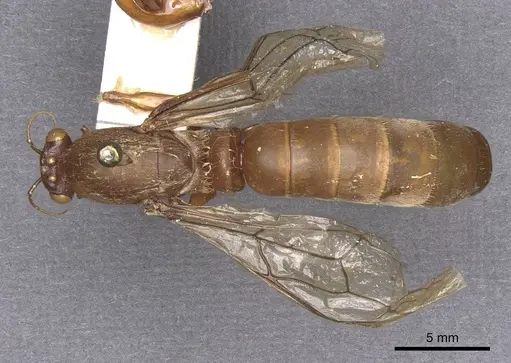
Littérature
Chargement de la carte de répartition...Chargement des produits...