
Dilobocondyla rugosa
- Nom sci.
- Dilobocondyla rugosa
- Tribu
- Crematogastrini
- Sous-famille
- Myrmicinae
- Auteur
- Zettel & Bruckner, 2013
- Distribution
- Trouvé dans 0 pays
Introduction
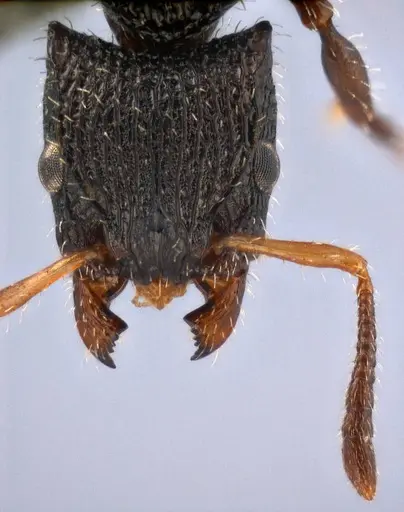
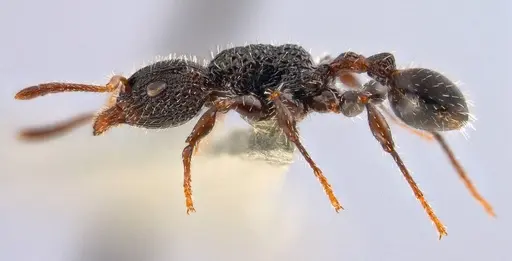
Dilobocondyla rugosa is a small ant species native to the Philippines, found only on Luzon Island. Workers measure 3.98-4.34 mm in total length and feature a distinctive black body with contrasting yellow markings - the scape (first antennal segment), leg tips, and base of the gaster all display bright yellow coloration. The species gets its name 'rugosa' (meaning rough or wrinkled) from its particularly coarse, heavily sculpted body surface. The head has a concave posterior margin, and the petiole is notably slender. This species is known only from the worker caste, with queens and males still undescribed. The type locality is in southern Luzon at low elevation around 100 meters [AntWiki].
Quick Summary
- Difficulty: Expert
- Origin & Habitat: Philippines (Luzon Island), specifically the Camarines Sur province in southern Luzon. The type locality is at approximately 100 meters elevation, indicating a lowland tropical habitat [2][3].
- Colony Type: Unknown, only the worker caste has been described. Colony structure and queen number have not been documented.
- Size & Growth:
- Antkeeping:
- Temperature: Unconfirmed, based on tropical lowland origin, 24-28°C is a reasonable starting point.
- Humidity: Unconfirmed, Philippines lowland habitat suggests moderate to high humidity needs. Keep substrate consistently moist but not waterlogged.
- Diapause: Unknown, tropical species may not require formal hibernation.
- Nesting: Natural nesting behavior unconfirmed. Based on the coarse sculpture and lowland Philippines habitat, they likely nest in soil or rotting wood. In captivity, a Y-tong or plaster nest with moisture provision would be appropriate.
- Behavior: Behavior is unstudied. Based on genus placement in Myrmicinae and tropical distribution, they are likely generalist foragers accepting both protein and sugar sources. Escape risk is moderate given their ~4mm size, standard barrier methods should suffice. As with most Myrmicinae, they have a stinger but its effectiveness on human skin is likely minimal given their small size.
- Common Issues: lack of biological data makes captive care entirely experimental, queen and colony founding behavior unconfirmed, you may not be able to establish this species from wild-caught queens, development timeline unknown, slow growth may frustrate keepers expecting rapid colony establishment, only known from limited specimens, suggesting either rarity or limited distribution, no established care protocols exist for this species
Species Identification and Appearance
Dilobocondyla rugosa is a distinctive small ant measuring 3.98-4.34 mm in total length. The most striking feature is the bicolored pattern: the body is primarily black, but the scape (first antennal segment), distal tarsomeres (leg tips), and the base of the gaster (first abdominal segment) are bright yellow. The head has a concave posterior margin, and the frontal carinae (raised ridges near the antennae) are strong and reach the posterior corners of the head. The sculpture is coarse and rough, particularly on the mesosoma, where the surface is smooth and strongly shiny between the elevated rugae. The petiole is very slender. This species was formally described in 2013 by Zettel and Bruckner and is known only from the worker caste [1][2].
Distribution and Habitat
This species has an extremely limited distribution known only from southern Luzon Island in the Philippines, specifically from the Camarines Sur province in the Lupi area. The type locality at Sooc is at approximately 100 meters above sea level, indicating a lowland tropical environment. This restricted distribution suggests either genuine rarity or limited sampling effort in the region. The Philippines hosts numerous endemic ant species, and Dilobocondyla genus has several described species from Philippine islands, but D. rugosa remains the most geographically restricted [1][2].
Current State of Knowledge
Dilobocondyla rugosa represents a significant knowledge gap in ant biology. The species was described in 2013 from just five worker specimens collected in 2004. Since then, no additional biological information has been published. We do not know: the queen morphology, colony structure (monogyne vs polygyne), founding behavior (claustral vs semi-claustral), development timeline, diet preferences, or any aspects of their natural history. This makes keeping this species entirely experimental, there are no established care protocols, and keepers must be prepared for a steep learning curve with uncertain outcomes. The lack of known queens also means establishing this species from wild-caught queens may not be possible at this time [1][2].
Care Recommendations
Since no established care protocol exists, keepers interested in this species should approach with experimental methodology. Based on the genus placement in Myrmicinae and the tropical lowland origin, a starting point of 24-28°C with 60-80% humidity seems reasonable. A moist Y-tong or plaster nest would provide the humidity control needed for tropical species. For feeding, offer standard ant colony foods (sugar water/honey, protein sources like mealworms or crickets) and observe acceptance. Document everything, your observations could contribute significantly to what is known about this species. Be prepared for slow progress and potential setbacks, as there are no reference points for expected development times or optimal conditions. The ~4mm worker size suggests moderate escape prevention is needed, standard barriers should work, but fine mesh is advisable. [1][2]
Related Species and Context
The genus Dilobocondyla belongs to the tribe Crematogastrini within Myrmicinae. Several species have been described from the Philippines, including D. carinata (which shares the bicolored gaster but differs in sculpture) and D. selebensis from Sulawesi. The genus is not well-studied in captivity, and most species remain obscure in the antkeeping hobby. D. rugosa can be distinguished from similar species by its coarse sculpture, the concave hind margin of the head, and the combination of black body with yellow scape and gaster base. The species name 'rugosa' refers to the particularly rough, wrinkled sculpture that gives it a distinctive texture compared to relatives [1][2][3].
Frequently Asked Questions
Can I keep Dilobocondyla rugosa in captivity?
This has not been attempted or documented in the antkeeping hobby. The species is known only from workers, and no queens have been described, so establishing a colony may not be possible. If a colony becomes available, care would be entirely experimental with no established protocols.
What does Dilobocondyla rugosa eat?
Diet is unconfirmed, no feeding observations have been documented. Based on related Myrmicinae, they likely accept both sugar sources (honey, sugar water) and protein (insects). Keepers would need to experiment to determine preferences.
How big do Dilobocondyla rugosa colonies get?
Colony size is unknown. No data exists on maximum colony size or growth rate. Related species in Myrmicinae typically reach several hundred workers, but this is entirely speculative for D. rugosa.
What temperature do Dilobocondyla rugosa ants need?
Temperature requirements are unconfirmed. Based on their origin as a tropical lowland species from the Philippines, 24-28°C is a reasonable starting point. Observe colony activity and adjust accordingly, workers clustering near heat suggests higher temperature needs, while lethargy may indicate overheating.
Do Dilobocondyla rugosa ants sting?
Stinging behavior has not been documented. Most Myrmicinae have stingers, but they are often too small to penetrate human skin effectively. Given the ~4mm worker size, any sting would likely be mild if present at all.
Where is Dilobocondyla rugosa found in the wild?
Only known from southern Luzon Island in the Philippines, specifically the Camarines Sur province at approximately 100 meters elevation. This is one of the most restricted ant species distributions known.
How long does it take for Dilobocondyla rugosa to develop from egg to worker?
Development timeline is completely unknown, no brood development has ever been documented for this species.
Is Dilobocondyla rugosa a good species for beginners?
No. This species is not recommended for any keeper level due to complete lack of biological data. There are no established care protocols, no known queens to establish colonies from, and keeping would be entirely experimental with high failure probability. Beginners should start with better-documented species.
Does Dilobocondyla rugosa need hibernation or diapause?
Diapause requirements are unknown. As a tropical species from the Philippines, formal hibernation is unlikely needed. However, reduced activity during cooler months may occur. Keepers should maintain stable temperatures year-round.
Can I keep multiple Dilobocondyla rugosa queens together?
Colony structure is completely unconfirmed. We do not know if this species is monogyne (single queen), polygyne (multiple queens), or anything about their founding behavior. Combining unrelated queens is not recommended without any data on how they interact.
Report an Issue
The current care sheet is based fully on literature. See inconsistencies, or something that's incorrect? Please , it will be resolved after review from an admin. Contributing to the blogs tab also helps providing information, to make us be able to further improve the caresheets. Thank you for your support!
References

Cette fiche d'élevage est sous licence CC BY-SA 4.0 .
Blogs de la communauté
ANTWEB1008117
Voir sur AntWeb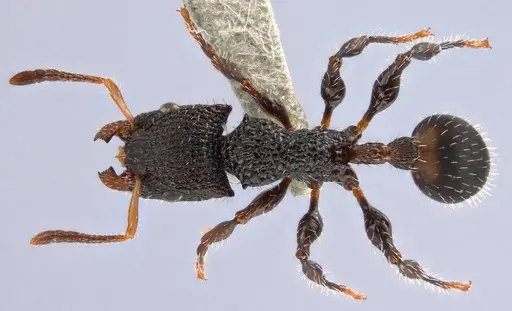
Littérature
Chargement de la carte de répartition...Chargement des produits...