
Crematogaster flaviventris
- Nom sci.
- Crematogaster flaviventris
- Tribu
- Crematogastrini
- Sous-famille
- Myrmicinae
- Auteur
- Santschi, 1910
- Distribution
- Trouvé dans 1 pays
Introduction
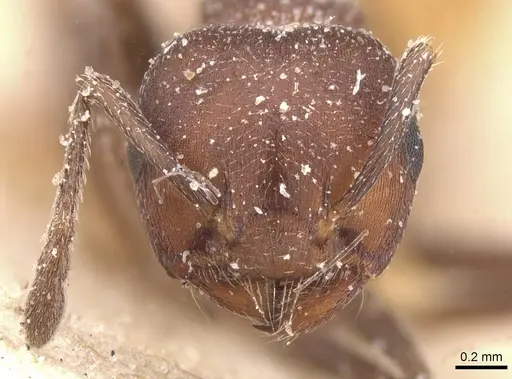
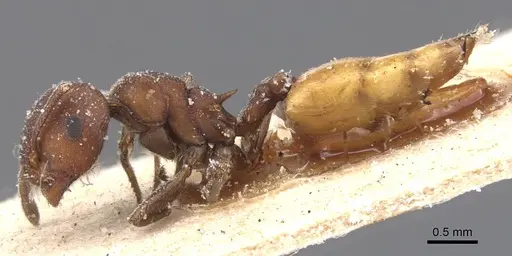
Crematogaster flaviventris is a small ant species known for its striking bicolored appearance. Workers have a dark brown to reddish-brown head and mesosoma, contrasting with a distinctive golden yellow gaster. A key identifying feature is their sharp, downward-curving propodeal spines on the rear of the mesosoma. This species belongs to the Crematogaster castanea complex and is distributed across central and eastern Africa, including the Democratic Republic of Congo, Rwanda, Angola, Zambia, and southern Sudan, with questionable records in Yemen . What makes this species interesting is their genus-level behavior - Crematogaster ants have a heart-shaped gaster that they can raise and curl over their body when threatened, making them appear larger to predators. They are also known for their ability to quickly traverse surfaces and navigate complex terrain.
Quick Summary
- Difficulty: Medium
- Origin & Habitat: Native to central and eastern Africa, including Democratic Republic of Congo, Rwanda, Angola, Zambia, and southern Sudan. Found in tropical rainforest and savanna habitats [1][3].
- Colony Type: Colony structure is not documented for this specific species. Based on typical Crematogaster patterns, likely single-queen colonies.
- Size & Growth:
- Queen: ~6-7mm, inferred from genus patterns
- Worker: ~3-4mm, inferred from genus patterns
- Colony: Likely reaches several hundred workers based on typical Crematogaster patterns
- Growth: Moderate
- Development: ~6-8 weeks at optimal temperature, inferred from genus patterns (Specific development data for C. flaviventris is unavailable)
- Antkeeping:
- Temperature: Keep at 22-28°C. As a tropical African species, they prefer warm conditions. A heating cable on one side of the nest creates a suitable gradient.
- Humidity: Moderate to high humidity (60-80%). Keep the nest substrate consistently moist but not waterlogged. Mist occasionally and provide a water source.
- Diapause: No, as a tropical species, they do not require hibernation. Keep them warm year-round.
- Nesting: In nature, they likely nest in rotting wood, under bark, or in soil crevices. In captivity, a Y-tong (AAC) nest, plaster nest, or naturalistic setup with moist substrate works well. They prefer tight, enclosed spaces.
- Behavior: Crematogaster flaviventris is an active forager with moderate aggression. Workers are quick-moving and will defend their colony if threatened. They have the characteristic acrobat ant behavior of raising their heart-shaped gaster when disturbed. They are not particularly large, so escape risk is moderate, standard barriers should suffice. They are arboreal and surface-active, so provide foraging space in the outworld.
- Common Issues: tropical species requires consistent warmth, cold temperatures can slow or stop brood development, small colony size means they are vulnerable to stress, avoid disturbing founding colonies, escape prevention is important, use standard barriers, wild-caught colonies may carry parasites that can decimate captive populations, overfeeding can lead to mold problems, remove uneaten food promptly
Housing and Nest Setup
Crematogaster flaviventris does well in a variety of captive setups. A Y-tong (AAC) nest works well, these ants prefer enclosed, dark spaces and will readily occupy narrow chambers. Alternatively, a plaster nest with moisture reservoirs maintains the humidity they need. For a naturalistic approach, use a mix of soil and sand with pieces of rotting wood or bark for them to nest in. The key is providing tight-fitting chambers that match their small size. In the outworld, give them enough space to forage, a container at least 10x10cm works for starting colonies. They are active climbers, so ensure the outworld has smooth walls or use fluon barriers to prevent escapes.
Feeding and Diet
Like most Crematogaster species, C. flaviventris is omnivorous with a preference for sweet liquids. Offer sugar water or honey water regularly, they will readily consume these and it provides essential energy for active workers. For protein, offer small insects like fruit flies, small mealworms, or cricket pieces. They are not large predators, so prey should be appropriately sized. Feed small amounts every 2-3 days and remove any uneaten food within 24 hours to prevent mold.
Temperature and Humidity
Being a tropical African species, C. flaviventris needs warmth to thrive. Maintain temperatures between 22-28°C, with 24-26°C being ideal for brood development. Temperatures below 20°C can slow their metabolism and stop brood development entirely. Use a heating cable or heating mat on one side of the nest to create a gentle temperature gradient, allowing ants to self-regulate by moving between warmer and cooler areas. For humidity, aim for 60-80% relative humidity. Keep the nest substrate moist but not soaking wet, the substrate should feel damp to the touch.
Behavior and Defense
Crematogaster ants have a distinctive defense mechanism, when threatened, workers raise their heart-shaped gaster over their body, making them appear larger and more threatening. They may also release chemicals from their glands. They are quick-moving and will investigate disturbances in their territory. Workers forage individually rather than in large raiding parties, searching for honeydew from aphids and small insects.
Colony Development
A newly mated queen will seal herself in a small chamber and lay her first eggs. After several weeks at optimal temperature, the first workers will emerge. These initial workers are typically smaller than normal workers but will immediately begin foraging to feed the growing colony. Colony growth is moderate, expect several dozen workers by the end of the first year under good conditions. Maximum colony size is not well-documented but likely reaches several hundred workers based on related species. The queen can live for many years.
Frequently Asked Questions
How long does it take for Crematogaster flaviventris to produce first workers?
At optimal temperatures (24-26°C), expect first workers to emerge in approximately 6-8 weeks after the queen lays eggs. This is based on typical Crematogaster development patterns, as specific data for this species is not available.
What do Crematogaster flaviventris ants eat?
They are omnivorous with a sweet tooth. Offer sugar water or honey water as a regular food source. For protein, provide small insects like fruit flies, pinhead crickets, or small mealworms. Remove uneaten food within 24 hours to prevent mold.
Do Crematogaster flaviventris ants sting?
Crematogaster ants have a stinger but it is small and not particularly potent against humans. Their primary defense is raising their gaster and releasing chemicals. They are not considered dangerous to keepers.
What temperature do Crematogaster flaviventris need?
Keep them warm at 22-28°C, with 24-26°C being ideal. As a tropical African species, they do not tolerate cold well. Use a heating cable or mat if your room temperature falls below 22°C.
Can I keep multiple Crematogaster flaviventris queens together?
Most Crematogaster species are monogyne (single queen). Combining unrelated queens is not recommended as they will likely fight. If you capture a founding queen, house her alone until she establishes a colony.
How big do Crematogaster flaviventris colonies get?
Colony size is not well-documented for this specific species, but based on related Crematogaster species, colonies likely reach several hundred workers over several years.
Do Crematogaster flaviventris need hibernation?
No. As a tropical African species, they do not require diapause or hibernation. Keep them warm year-round at consistent temperatures.
What type of nest is best for Crematogaster flaviventris?
A Y-tong (AAC) acrylic nest or plaster nest with moisture chambers works well. They prefer tight, dark chambers scaled to their small size. Ensure the nest can hold moisture without becoming waterlogged.
Are Crematogaster flaviventris good for beginners?
They are rated as medium difficulty. They require warm temperatures and consistent care, but are not as demanding as some species. Their small size and moderate escape risk require attention, but they are generally forgiving of minor mistakes.
Why is my Crematogaster flaviventris colony dying?
Common causes include: temperatures below 20°C (they're tropical), low humidity causing desiccation, mold from overfeeding, or stress from excessive disturbance. Check your temperature and humidity levels first. Wild-caught colonies may also carry parasites.
Report an Issue
The current care sheet is based fully on literature. See inconsistencies, or something that's incorrect? Please , it will be resolved after review from an admin. Contributing to the blogs tab also helps providing information, to make us be able to further improve the caresheets. Thank you for your support!
References

Cette fiche d'élevage est sous licence CC BY-SA 4.0 .
Blogs de la communauté
CASENT0193696
Voir sur AntWeb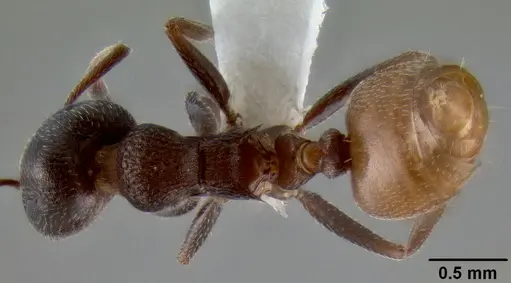
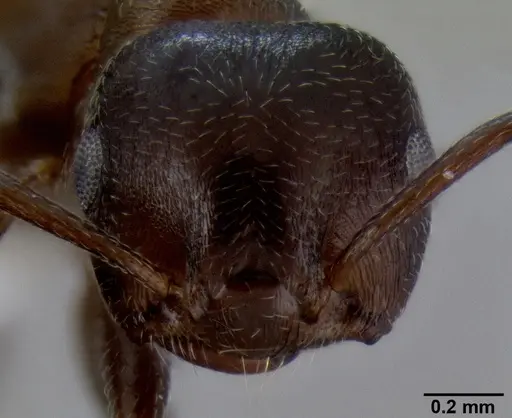
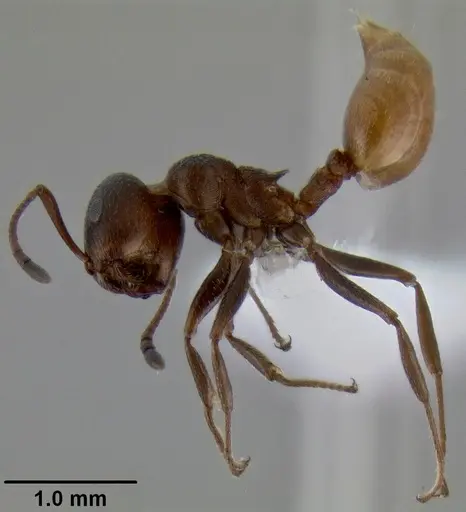
CASENT0912651
Voir sur AntWeb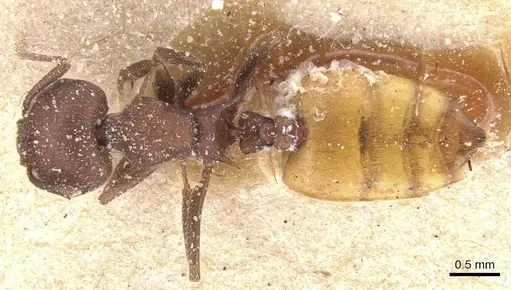
Littérature
Chargement de la carte de répartition...Chargement des produits...