
Crematogaster alafara
- Nom sci.
- Crematogaster alafara
- Tribu
- Crematogastrini
- Sous-famille
- Myrmicinae
- Auteur
- Blaimer, 2013
- Distribution
- Trouvé dans 1 pays
Introduction
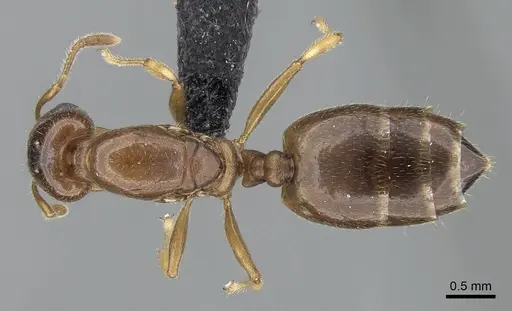
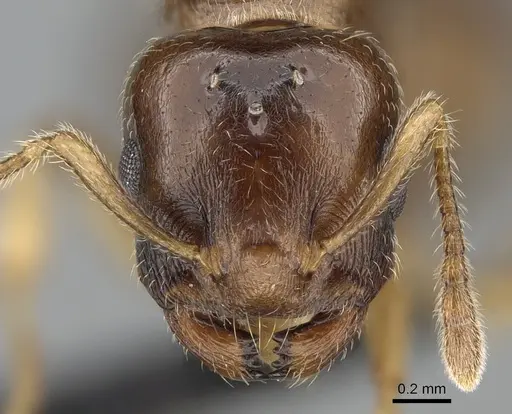
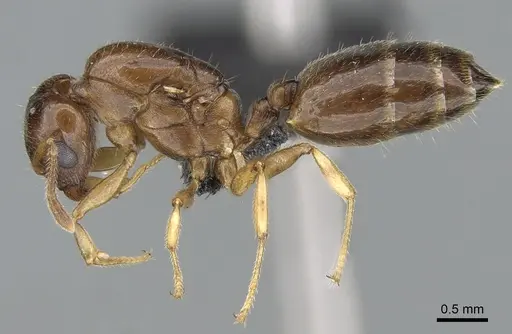
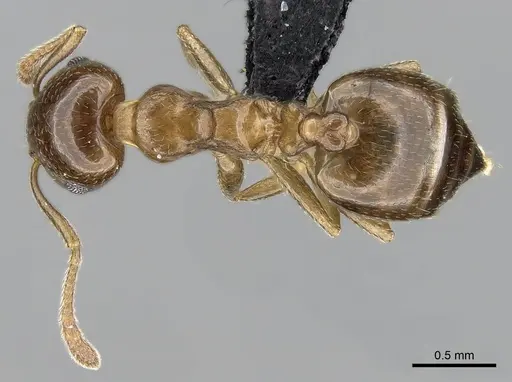
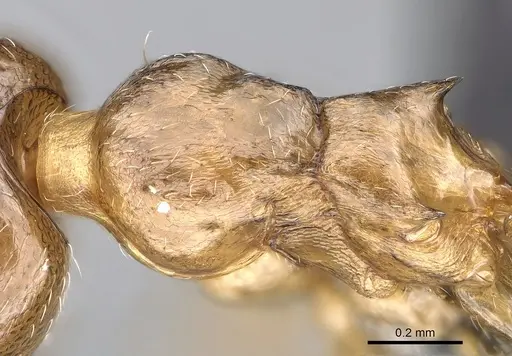
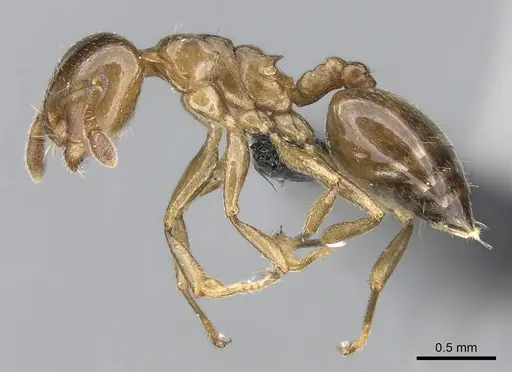
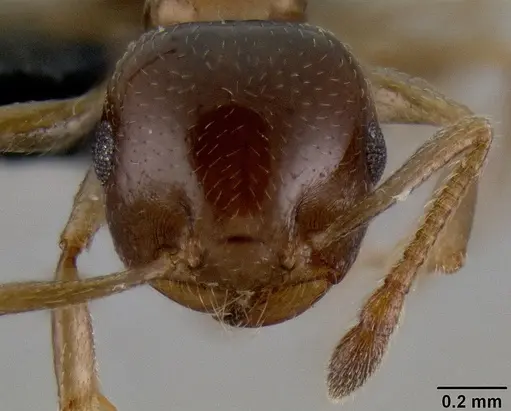
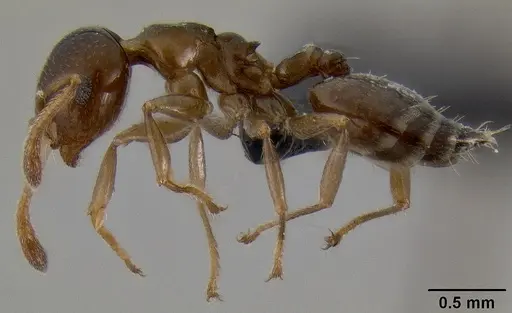
Crematogaster alafara is a small arboreal ant species endemic to the rainforests of Madagascar. Workers are tiny, measuring approximately 0.8 mm in total length, with distinctive short propodeal spines and a propodeum that is clearly separated from the promesonotum when viewed from the side. Their coloration ranges from yellow-brown to brown. This species inhabits elevations between 600-1350m across central, northern, and western Madagascar, where they nest in dead twigs at lower elevations and rotten logs at higher altitudes . This species belongs to the Crematogaster degeeri-species-assemblage and can be distinguished from similar species by its lack of sharp lateral margins on the pronotum and its relatively longer propodeal spines. It co-occurs with Crematogaster sewellii, Crematogaster dentata, and Crematogaster mafybe in its range. Almost nothing is known about this species' biology in the wild - no males have ever been collected, and colony structure, founding behavior, and detailed care requirements remain unstudied .
Quick Summary
- Difficulty: Expert
- Origin & Habitat: Madagascar rainforests at 600-1350m elevation, central/northern/western regions [1][2]
- Colony Type: Unconfirmed, colony structure has not been documented in scientific literature
- Size & Growth:
- Queen: Size data unavailable, queen measurements are given as head width (1.01 mm) and mesosoma length (1.68 mm) rather than total body length [1]
- Worker: Size data unavailable, worker measurements are given as head width (0.72-0.88 mm) and mesosoma length (0.79-0.91 mm) rather than total body length [1]
- Colony: Unknown, no colony size data exists in research
- Growth: Unknown, no development data available
- Development: Unknown, no direct measurements exist (Development timeline has not been studied for this species)
- Antkeeping:
- Temperature: Unconfirmed, likely 22-26°C based on Madagascar rainforest origin. Start in this range and observe colony activity.
- Humidity: Likely 60-80%, they nest in rotting wood which indicates preference for damp conditions. Keep nest substrate consistently moist but not waterlogged.
- Diapause: Unknown, Madagascar species may have reduced activity during cooler months but true hibernation is unlikely
- Nesting: In the wild they nest in dead twigs and rotten logs. In captivity, a Y-tong (AAC) nest or plaster nest with small chambers works well. Provide damp substrate and avoid dry conditions.
- Behavior: Temperament is unconfirmed, but most Crematogaster species are defensive and will raise their abdomens when threatened (the classic 'acrobat' posture). They are small but may bite. Escape prevention should be taken seriously, their small size means they can slip through small gaps.
- Common Issues: no biological data exists, keepers are essentially pioneering captive care for this species, wild-caught colonies may have parasites or diseases that are poorly understood, temperature and humidity requirements are unconfirmed so trial-and-error may be needed, males have never been collected so captive breeding may be challenging, very limited availability, this is not a common species in the antkeeping hobby
Species Background and Identification
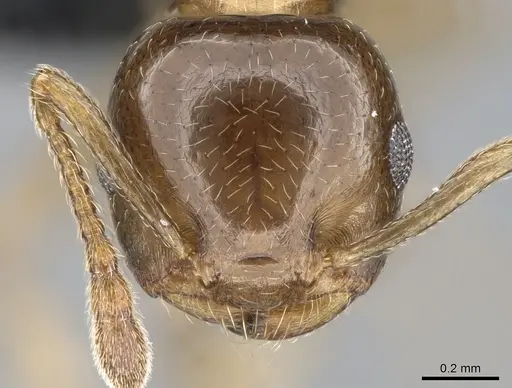
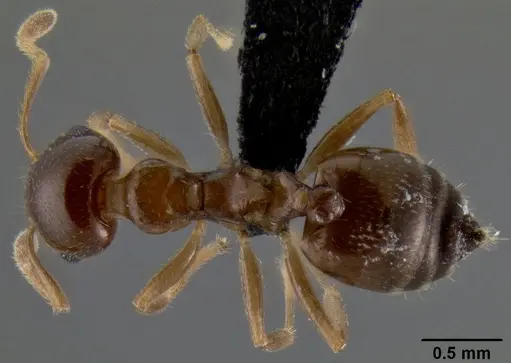
Crematogaster alafara was described in 2013 by Bonnie Blaimer and is part of the Crematogaster degeeri-species-assemblage found only in Madagascar. This is a fairly small ant species, workers have head widths of 0.72-0.88 mm, making them noticeably smaller than many common Crematogaster kept in captivity. They can be identified by their short to medium-sized propodeal spines and the distinct separation between the propodeum and promesonotum when viewed from the side. The pronotum lacks the sharp lateral margins found in similar species like Crematogaster malahelo. Their coloration ranges from yellow-brown to brown. This species has only been collected from a handful of rainforest locations across central, northern, and western Madagascar at elevations between 600-1350 meters. [1][2]
Natural History and Nesting
In the wild, Crematogaster alafara shows interesting elevation-based nesting preferences. At lower elevations, they nest in dead twigs found above ground, while at higher altitudes (up to 1350m), they nest in rotten logs. This suggests they prefer humid, sheltered microhabitats with access to decaying wood. They co-occur with several other Crematogaster species including Crematogaster sewellii, Crematogaster dentata, and Crematogaster mafybe. Unfortunately, virtually nothing else is known about their biology, no males have ever been collected, colony structure has not been documented, and nothing is known about their diet, reproduction timing, or behavior in the wild. This makes them one of the least-studied species available in the antkeeping hobby. [1][2]
Housing and Nest Setup
Based on their natural nesting preferences, provide a setup that mimics rotting wood or dead twigs. A Y-tong (AAC) nest or plaster nest with small chambers works well for these tiny ants. The chambers should be appropriately scaled to their small worker size. Keep the nest substrate consistently moist, they clearly prefer damp conditions given their natural association with rotting wood. Avoid dry environments. A small water reservoir in the outworld can help maintain humidity. Since they are arboreal in nature, include some vertical structures or twigs in the outworld for foragers to explore. Escape prevention is important, while not the smallest ants, they are small enough that standard barrier methods should be used.
Feeding and Diet
The diet of Crematogaster alafara has not been documented in scientific literature. Based on typical Crematogaster behavior, they likely feed on honeydew from aphids and scale insects, plus small insects for protein. In captivity, offer sugar water or honey as a constant carbohydrate source, and provide small protein sources like fruit flies, pinhead crickets, or other tiny arthropods. Given their small size, prey items should be appropriately scaled. Monitor acceptance carefully since there is no direct dietary data for this species.
Temperature and Seasonal Care
Temperature requirements are unconfirmed for this species. As a Madagascar rainforest species, they likely prefer warm, stable conditions in the low-to-mid 20s Celsius (around 22-26°C). Madagascar does not experience true cold winters, so they likely do not require hibernation or diapause. However, they may have reduced activity during cooler periods. Start with room temperature in the 22-26°C range and observe colony behavior, if workers become sluggish, slightly increase temperatures. Avoid temperature extremes in either direction.
Challenges and Considerations
This is an advanced species to keep primarily because almost no captive biological data exists. You will essentially be pioneering husbandry techniques for this ant. Expect a learning curve as you determine optimal conditions through observation and trial-and-error. Availability is extremely limited, this species is not commonly available in the antkeeping hobby and may be difficult to acquire. Wild-caught colonies may carry parasites or diseases that are poorly understood. Additionally, since males have never been documented, captive breeding may prove challenging or impossible without established stock. This species is best suited for experienced antkeepers who enjoy the challenge of working with poorly-studied species and who have the resources to experiment with care protocols. [1]
Frequently Asked Questions
How long does it take for Crematogaster alafara to produce first workers?
The egg-to-worker development time is completely unconfirmed for this species. There is no scientific data on their development timeline.
What do Crematogaster alafara ants eat?
Diet is unconfirmed, but based on typical Crematogaster behavior, they likely accept sugar sources (honey, sugar water) and small protein (tiny insects, fruit flies). Offer a constant carbohydrate source and small prey items appropriate to their tiny size.
Are Crematogaster alafara good for beginners?
No. This species is not recommended for beginners. Almost nothing is known about their biology, temperature requirements, or care in captivity. They are also extremely rare in the hobby. This species is best for experienced antkeepers who want to pioneer care for a poorly-studied Madagascar species.
Do Crematogaster alafara ants sting?
Crematogaster ants have a stinger but it is often too small to penetrate human skin effectively. However, they may bite and will raise their abdomen in a defensive 'acrobat' posture when threatened. Most species are defensive but rarely cause significant discomfort to humans.
What temperature should I keep Crematogaster alafara at?
Temperature is unconfirmed. Start with 22-26°C and observe colony activity. As a Madagascar rainforest species, they likely prefer warm, stable conditions. Adjust based on how the colony responds.
What humidity do Crematogaster alafara need?
Likely 60-80% based on their natural nesting in rotting wood and dead twigs. Keep the nest substrate consistently moist but not waterlogged. They clearly prefer damp conditions, dry environments should be avoided.
Can I keep multiple Crematogaster alafara queens together?
Colony structure is unconfirmed. Most Crematogaster are monogyne (single queen), but polygyny has been documented in some species. Without data on this specific species, combining unrelated queens is not recommended. Start with a single queen colony.
How big do Crematogaster alafara colonies get?
Colony size is completely unknown, no research data exists on maximum colony size for this species.
What type of nest should I use for Crematogaster alafara?
A Y-tong (AAC) or plaster nest with small, appropriately-sized chambers works well. They naturally nest in dead twigs and rotting wood, so provide damp substrate.
Do Crematogaster alafara need hibernation?
Diapause requirements are unknown. Madagascar does not have cold winters, so true hibernation is unlikely. They may have reduced activity during cooler months but probably do not need a dedicated hibernation period.
Is Crematogaster alafara aggressive?
Aggression level is unconfirmed, but most Crematogaster species are defensive and will protect their nest vigorously. They may raise their abdomen in a threatening display when disturbed. Handle with care and use proper escape prevention.
Where can I get Crematogaster alafara ants?
This species is extremely rare in the antkeeping hobby. It was only described in 2013 and has limited distribution in Madagascar. Availability is very limited, you may need to connect with specialized importers or breeders who work with Madagascar species.
Report an Issue
The current care sheet is based fully on literature. See inconsistencies, or something that's incorrect? Please , it will be resolved after review from an admin. Contributing to the blogs tab also helps providing information, to make us be able to further improve the caresheets. Thank you for your support!
References

Cette fiche d'élevage est sous licence CC BY-SA 4.0 .
Blogs de la communauté
Littérature
Chargement de la carte de répartition...Chargement des produits...