
Colobopsis phragmaticola
- Nom sci.
- Colobopsis phragmaticola
- Tribu
- Camponotini
- Sous-famille
- Formicinae
- Auteur
- Donisthorpe, 1943
- Distribution
- Trouvé dans 0 pays
Introduction
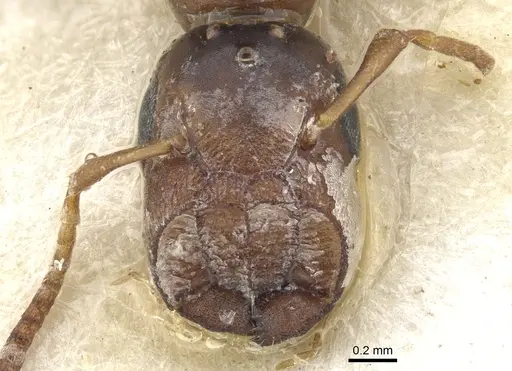
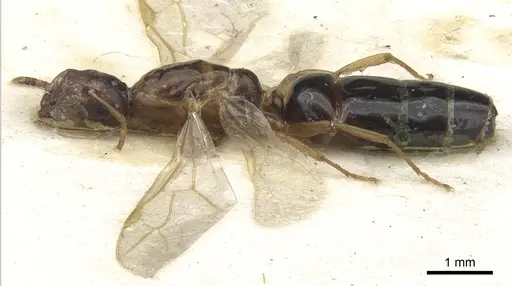
Colobopsis phragmaticola is a rare ant species endemic to India, found specifically in Kerala and West Bengal . The genus Colobopsis is famous for its distinctive 'bottle-head' or 'truncate' head shape in workers, where the front of the head is modified into a plug-like structure. Queens measure 6.8-7mm and have the characteristic cylindrical, obliquely truncate head that gives the genus its name [AntWiki]. The queen has a brownish-red head with a blackish vertex, yellowish-brown thorax and petiole, and a black gaster with narrowly yellow segment tips. This species was originally described in 1943 as Camponotus phragmaticola before being moved to Colobopsis, and remains poorly studied in the scientific literature . The truncate head morphology is an adaptation that allows workers to act as living plugs, sealing nest entrances against intruders - a unique defensive behavior specific to this genus.
Quick Summary
- Difficulty: Medium
- Origin & Habitat: Endemic to the Western Ghats region of India, specifically recorded from Kerala and West Bengal [1]. The original collection was from Travancore (Kerala) at elevations of 500-800 feet [2]. As a tropical Indian species, they inhabit humid forest environments.
- Colony Type: Colony structure is unconfirmed for this species. Based on typical Colobopsis patterns, they likely form single-queen colonies, but this has not been directly documented.
- Size & Growth:
- Queen: 6.8-7mm [2]
- Worker: Unconfirmed, size data unavailable for this species
- Colony: Unknown, likely moderate, similar to related Camponotus species
- Growth: Moderate, inferred from genus patterns
- Development: Unconfirmed, development timeline is not directly studied for this species (Estimates based on typical Formicinae patterns suggest 6-10 weeks at optimal temperature, but this is unconfirmed.)
- Antkeeping:
- Temperature: Keep at 24-28°C, these are tropical ants from India and need warm conditions. A heating cable on one side of the nest creates a gentle gradient
- Humidity: Moderate to high humidity, aim for 60-80%. Keep the nest substrate moist but not waterlogged. Mist occasionally and provide a water tube
- Diapause: Unknown, tropical species may not require formal hibernation, but a slight cool period during winter months may be beneficial
- Nesting: In nature, Colobopsis typically nest in rotting wood, hollow stems, and bamboo. In captivity, a Y-tong (AAC) nest or plaster nest works well. Ensure the nest has tight-fitting chambers as they prefer snug spaces
- Behavior: Colobopsis are generally peaceful and not aggressive. Workers have the unique ability to use their truncate heads as living plugs to seal nest entrances, this is their primary defense mechanism. As Formicinae, they also possess an acidopore and can spray formic acid when threatened, though they rarely bite. They are moderate foragers and likely tend aphids for honeydew in addition to hunting small insects. Escape risk is moderate, they are not particularly small but active workers may explore. Use standard barrier methods.
- Common Issues: tropical species may be sensitive to temperature drops, keep warm and stable, limited distribution data means exact care requirements are uncertain, growth rate is slow compared to many common ant species, patience is required, wild-caught colonies may have parasites or diseases that affect captive survival, escape prevention should be maintained despite moderate size, they are active explorers
Appearance and Identification
Colobopsis phragmaticola is a distinctive ant species thanks to its unique head morphology. Queens measure 6.8-7mm and feature the genus's characteristic cylindrical, obliquely truncate head, meaning the front of the head appears cut off at an angle, like the mouth of a bottle [2]. This truncate area comprises the frontal surface of the mandibles, the central parts of the cheeks, and most of the clypeus. The queen's head is brownish-red, while the thorax and petiole are yellowish-brown. The gaster (abdomen) is black with narrowly yellow tips on each segment. The legs and antennae are reddish-yellow. This species is endemic to India, specifically found in Kerala and West Bengal, making it a rare addition to any ant collection [1]. Workers, while not described for this specific species, would have the exaggerated truncate head that gives Colobopsis its common name 'bottle-head ants'.
Natural History
Colobopsis phragmaticola was described in 1943 by Donisthorpe from specimens collected in Travancore, Kerala at elevations between 500-800 feet [2]. The species remains poorly studied, with limited documentation in scientific literature. It was originally described as Colobopsis phragmaticola before being moved to Colobopsis in 2016 [3]. It is one of several Colobopsis species found in India, though this particular species was excluded from a recent identification key because it was described based solely on queen specimens [4]. The genus Colobopsis is known for its unique defensive behavior where workers use their modified truncate heads as living plugs to seal nest entrances. This is particularly useful in their typical nesting habitats of rotting wood, hollow bamboo, and plant stems where a small entrance can be defended by a single worker. The species is endemic to the Western Ghats region, a biodiversity hotspot in India.
Housing and Nesting
In captivity, Colobopsis phragmaticola should be provided with a nest that mimics their natural habitat in rotting wood and plant stems. A Y-tong (AAC) nest or plaster formicarium works well for this genus. The chambers should be relatively snug, Colobopsis prefer tight-fitting spaces where workers can effectively use their head-plug behavior. The nest material should retain some moisture but not become waterlogged. Provide a water tube for drinking access. For the outworld, a standard foraging area with a secure lid works fine. These ants are moderate climbers but not particularly strong escape artists. Use standard barrier methods like fluon on the rim of the formicarium. The nest should be kept in a warm, humid area of your ant room, away from direct sunlight and drafts. [2]
Feeding and Diet
Like other Formicinae ants, Colobopsis phragmaticola likely has an omnivorous diet. They probably consume honeydew from aphids and scale insects, and hunt small insects for protein. In captivity, offer sugar water or honey water as a constant energy source. For protein, provide small insects like fruit flies, small mealworms, or cricket pieces. Feed protein prey 2-3 times per week, adjusting based on colony size and consumption. Remove uneaten prey after 24-48 hours to prevent mold. Fresh water should always be available. While not directly studied for this species, the diet is likely similar to related Camponotus species which are generalist omnivores. [2]
Temperature and Seasonal Care
As a tropical species from India, Colobopsis phragmaticola requires warm conditions. Keep the nest at 24-28°C for optimal brood development. A heating cable placed on one side of the nest creates a temperature gradient that allows the colony to self-regulate. Avoid temperatures below 20°C for extended periods. Regarding winter care, tropical ants may not need formal hibernation, but a slight reduction in temperature during winter months (down to around 20-22°C) can be beneficial and mimic natural seasonal changes. Do not allow the nest to become cold and damp simultaneously, as this can lead to fungal problems. Monitor colony activity, if workers become sluggish, slightly increase temperature. [2]
Colony Development
The colony development timeline for Colobopsis phragmaticola has not been directly studied. Based on related Camponotus species in the Formicinae subfamily, expect the first workers (nanitics) to emerge around 6-10 weeks after the queen lays her first eggs, assuming optimal temperature around 26°C. Initial colonies grow slowly as the queen alone cares for the first brood. Once workers emerge, growth accelerates but remains moderate compared to faster-growing genera like Solenopsis or Tapinoma. Colonies likely reach several hundred workers over time, though maximum colony size for this specific species is unknown. Be patient with founding colonies, Formicinae species typically take longer to establish than some other genera, but they tend to be longer-lived once established. [2]
Frequently Asked Questions
How long does it take for Colobopsis phragmaticola to produce first workers?
The exact timeline is unconfirmed for this species, but based on related Camponotus species, expect first workers (nanitics) around 6-10 weeks after founding at optimal temperature (around 26°C). Patience is essential, founding colonies grow slowly at first.
What do Colobopsis phragmaticola ants eat?
Like other Formicinae ants, they are omnivores. Offer sugar water or honey water constantly for energy, and protein sources like small insects (fruit flies, mealworms, cricket pieces) 2-3 times per week.
What temperature do Colobopsis phragmaticola ants need?
Keep them warm at 24-28°C. These are tropical ants from India and need consistently warm conditions for healthy brood development.
Are Colobopsis phragmaticola good for beginners?
This species is rated as medium difficulty. While not as challenging as some exotic species, limited care information is available since the species is rarely kept. Experience with Formicinae ants like Camponotus would be helpful.
How big do Colobopsis phragmaticola colonies get?
Maximum colony size is unconfirmed for this species. Based on related species, colonies likely reach several hundred workers over time.
Do Colobopsis phragmaticola need hibernation?
As a tropical species, formal hibernation is not required. However, a slight temperature reduction during winter months (to around 20-22°C) can be beneficial to mimic natural seasonal patterns.
What type of nest is best for Colobopsis phragmaticola?
A Y-tong (AAC) nest or plaster formicarium works well. They prefer snug chambers that mimic their natural nesting in rotting wood and plant stems. The nest material should retain some moisture.
Can I keep multiple Colobopsis phragmaticola queens together?
Colony structure is unconfirmed for this species. Based on typical Colobopsis patterns, single-queen colonies are likely. Combining unrelated queens is not recommended without evidence they accept pleometrosis.
Where is Colobopsis phragmaticola found in the wild?
This species is endemic to India, specifically recorded from Kerala and West Bengal in the Western Ghats region [1].
Report an Issue
The current care sheet is based fully on literature. See inconsistencies, or something that's incorrect? Please , it will be resolved after review from an admin. Contributing to the blogs tab also helps providing information, to make us be able to further improve the caresheets. Thank you for your support!
References

Cette fiche d'élevage est sous licence CC BY-SA 4.0 .
Blogs de la communauté
CASENT0903592
Voir sur AntWeb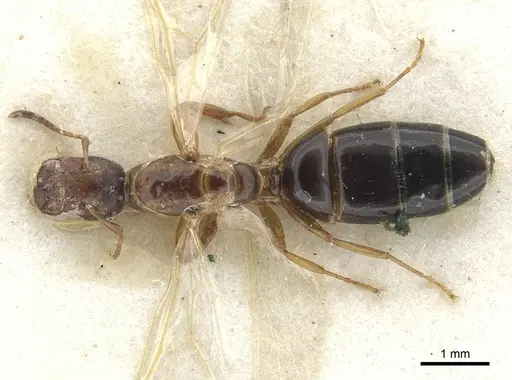
Littérature
Chargement de la carte de répartition...Chargement des produits...