
Chelaner durokoppinensis
- Nom sci.
- Chelaner durokoppinensis
- Tribu
- Solenopsidini
- Sous-famille
- Myrmicinae
- Auteur
- Heterick, 2001
- Distribution
- Trouvé dans 0 pays
Introduction
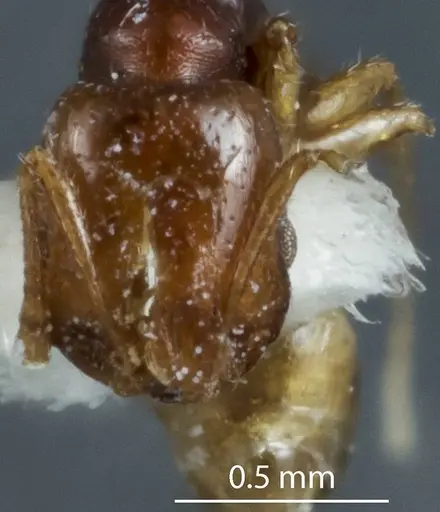
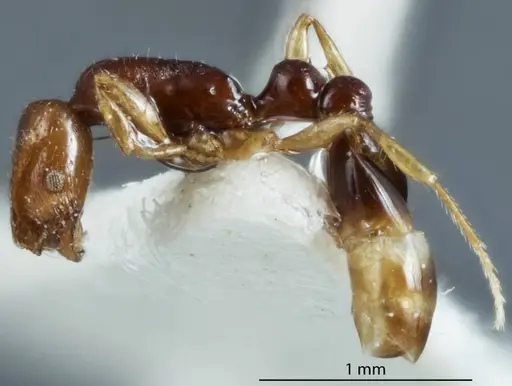
Chelaner durokoppinensis is a tiny ant species native to Western Australia's wheatbelt region. Workers have a head length of approximately 0.64-0.66mm, making them among the smaller ant species in Australia. They display a distinctive color pattern with brick-red alitrunk and petiole nodes, orange head and appendages, and a light brown gaster. This species was originally described as Monomorium durokoppinense but was later moved to the genus Chelaner due to mandatory gender agreement rules when the genus name changed. The species name comes from Durokoppin Reserve, the location where the type specimens were collected . This species belongs to the Monomorium rubriceps group and is known only from a small area north of Kellerberrin in Western Australia. Unfortunately, almost nothing is known about their biology, colony structure, or behavior in the wild. This makes them a challenging species for antkeepers who want detailed care guidance, as no captive husbandry information exists .
Quick Summary
- Difficulty: Unknown
- Origin & Habitat: Western Australia, specifically Durokoppin Reserve,27km north of Kellerberrin in the wheatbelt region. The area experiences a Mediterranean climate with hot dry summers and cool wet winters [2].
- Colony Type: Unconfirmed. The colony structure of this species has not been studied. Related Monomorium species in Australia typically form small colonies with single queens, but this cannot be confirmed for C. durokoppinensis.
- Size & Growth:
- Queen: Unknown, no queen specimens have been described [2]
- Worker: Approximately 0.64-0.66mm head length, total body size data unavailable [2]
- Colony: Unknown, no colony size data exists for this species
- Growth: Unknown
- Development: Unknown, no development data exists for this species (No research has documented the development timeline.)
- Antkeeping:
- Temperature: Unknown for this species. Based on its Western Australian range, it likely tolerates temperatures from 15-30°C and probably prefers moderate warmth around 22-26°C. Start in this range and observe colony behavior.
- Humidity: Unknown. The wheatbelt region of WA is relatively dry, so they likely tolerate lower humidity than tropical species. Provide a moisture gradient and allow the colony to choose their preferred zone.
- Diapause: Unknown. Many Western Australian ants undergo reduced activity during the dry summer months, but specific diapause requirements for this species are unstudied.
- Nesting: Unknown. No data exists on their natural nesting preferences. Related Monomorium species often nest in soil or under stones. A small test tube setup or Y-tong nest with modest humidity would be a reasonable starting point.
- Behavior: Unknown. The behavior of this species has not been documented in scientific literature. As very small ants in the subfamily Myrmicinae, they possess a sting but their venom is likely negligible to humans due to their tiny size. Their small size suggests they may be shy and secretive. However, escape prevention is critical, their tiny size means they can easily slip through standard test tube barriers.
- Common Issues: no biological data exists, keepers have no reference for proper care, colony development timeline unknown makes planning difficult, humidity and temperature preferences unconfirmed, trial and error required, very small size creates escape risk even through fine gaps
Discovery and Taxonomy
Chelaner durokoppinensis was first described by Brian Heterick in 2001 as Chelaner durokoppinensis, based on worker specimens collected from Durokoppin Reserve in Western Australia. The species name refers directly to the collection locality. In 2019,a phylogenetic study by Sparks et al. reclassified this species into the genus Chelaner, which was separated from Monomorium. A subsequent 2025 paper corrected the species name from durokoppinense to durokoppinensis to match the masculine gender of the genus name Chelaner under international nomenclature rules [1][2].
Why This Species Is Rare in Captivity
Chelaner durokoppinensis is extremely rare in the antkeeping hobby, if present at all. The species is known only from a tiny geographic range in Western Australia's wheatbelt, and scientific collections have yielded only two worker specimens. No live colonies have been documented in captivity, and no information exists about their queen, mating behavior, or colony founding. This makes them essentially impossible to keep properly at this time, not because they are difficult, but because we simply do not know anything about their basic biology [2].
Related Species and What We Might Expect
Since nothing is known about C. durokoppinensis specifically, some very rough guesses can be made based on related Australian Monomorium species. Members of the rubriceps group are typically small, ground-nesting ants that probably feed on honeydew and small insects. Most Australian Monomorium form small colonies with single queens and develop relatively quickly. However, these are just informed guesses, this species could have completely different habits. The complete lack of biological data means any care advice would be pure speculation [2].
Current State of Knowledge
It must be emphasized that absolutely no biological research has been conducted on this species. We have only the original morphological description from 2001 and taxonomic updates since then. We do not know: colony size, queen characteristics, nuptial flight timing, founding behavior, diet preferences, temperature/humidity needs, overwintering requirements, or any aspect of their behavior. This is one of the least-known ant species in Australia, and attempting to keep it in captivity would be essentially experimental with no guidance available [2].
Frequently Asked Questions
What do Chelaner durokoppinensis ants eat?
Unknown. No research has documented the diet of this species. Related Australian Monomorium typically feed on honeydew and small insects, but C. durokoppinensis specific preferences are completely unstudied.
How long do Chelaner durokoppinensis take to develop from egg to worker?
Unknown. No development data exists for this species.
Can I keep Chelaner durokoppinensis in a test tube?
Probably, but we don't know. No information exists about their nesting preferences. Given their tiny worker size, a test tube setup would be appropriate for the scale, but whether they accept this is completely unknown.
Do Chelaner durokoppinensis ants sting?
Yes, they have a sting as all ants in the subfamily Myrmicinae possess one. However, due to their extremely small size, any sting would likely be negligible to humans.
Are Chelaner durokoppinensis good for beginners?
No. This species cannot be recommended for any keeper because we know absolutely nothing about their care requirements. Keeping them would be experimental with no baseline to know if you are succeeding or failing.
What temperature should I keep Chelaner durokoppinensis at?
Unknown. Based on their Western Australian range, they likely tolerate 15-30°C, but specific optimal temperatures are unstudied. A moderate range around 22-26°C would be a reasonable starting point for any experimental keeping.
Do Chelaner durokoppinensis need hibernation?
Unknown. Many Western Australian ants reduce activity during dry summer months, but specific overwintering or diapause requirements are completely unstudied for this species.
How big do Chelaner durokoppinensis colonies get?
Unknown. No colony size data exists for this species.
Can I keep multiple Chelaner durokoppinensis queens together?
Unknown. The colony structure of this species has not been studied. We do not know if they are single-queen or multi-queen colonies. Combining unrelated queens is not recommended without any data to base decisions on.
Where can I get Chelaner durokoppinensis?
This species is essentially unavailable in the antkeeping hobby. It is known only from a small area in Western Australia and has never been documented in captive colonies. Even finding wild colonies would be difficult given their limited known range.
Report an Issue
The current care sheet is based fully on literature. See inconsistencies, or something that's incorrect? Please , it will be resolved after review from an admin. Contributing to the blogs tab also helps providing information, to make us be able to further improve the caresheets. Thank you for your support!
References

Cette fiche d'élevage est sous licence CC BY-SA 4.0 .
Blogs de la communauté
JDM32-003548
Voir sur AntWeb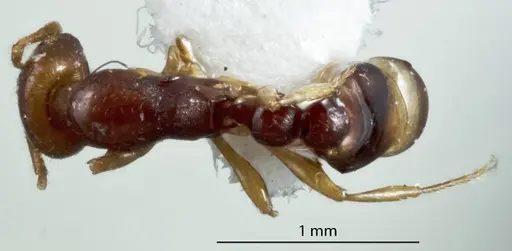
Littérature
Chargement de la carte de répartition...Chargement des produits...