
Cardiocondyla micropila
- Nom sci.
- Cardiocondyla micropila
- Tribu
- Crematogastrini
- Sous-famille
- Myrmicinae
- Auteur
- Seifert, 2023
- Distribution
- Trouvé dans 0 pays
Introduction
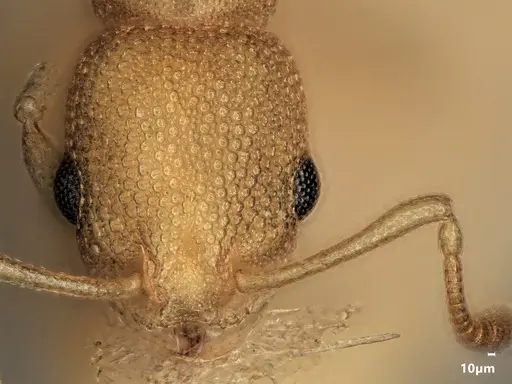
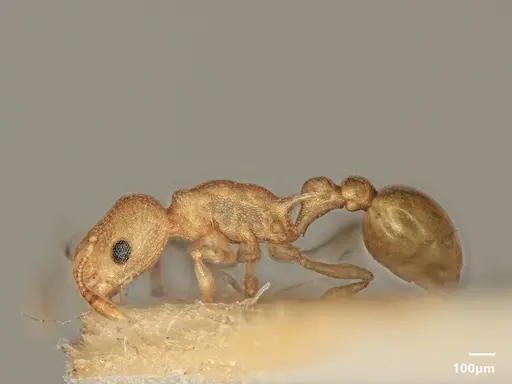
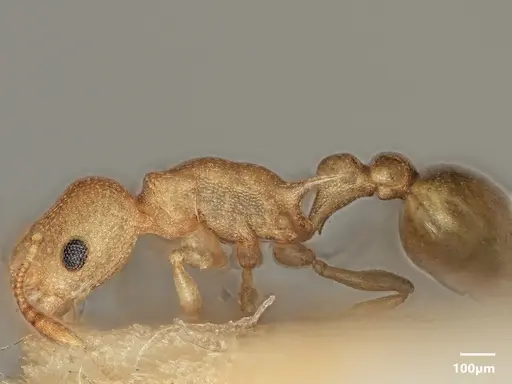
Cardiocondyla micropila is an exceptionally tiny ant species, among the smallest in the genus. Workers have a notably concave occipital margin, very long spines, and concolorous light yellowish to orange pigmentation throughout their body . This species belongs to the Cardiocondyla argentea group and is widely distributed across the Indomalayan region, found in Brunei, Malaysia, the Philippines, Singapore, and Thailand, from sea level up to 1000m elevation . What makes C. micropila particularly interesting is its polygynous colony structure - unlike many ant species that have single queens, these colonies typically contain multiple queens (averaging around 7, with up to 34 documented) . They are closely related to Cardiocondyla latifrons but can be distinguished by their shorter head, more concave occipital margin, and notably shorter pubescence on the first gaster tergite . The species was formally described in 2022, though it had been provisionally referred to as 'Cardiocondyla microseta' in earlier sociobiological papers [AntWiki]. As a member of the Myrmicinae subfamily, they possess a modified, flattened stinger used to smear venom onto enemies rather than piercing flesh.
Quick Summary
- Difficulty: Medium
- Origin & Habitat: Native to the Indomalayan region, found in Brunei, Malaysia (Peninsula, Sabah, Sarawak), Philippines (Leyte, Luzon), Singapore, and Thailand. They inhabit areas from sea level up to 1000m elevation, west of the Wallace Line. Habitat selection and abundance patterns are similar to C. latifrons [1].
- Colony Type: Polygynous (multi-queen) colonies with an average of 6.95 queens per nest, though some nests have been found with up to 34 queens. Queen-queen aggression is present, similar to C. latifrons [1].
- Size & Growth:
- Queen: Size data unavailable, no total length measurements exist for queens. Inferred from Cardiocondyla genus patterns to be proportionally larger than workers.
- Worker: Extremely small, approximately 1mm or less in total length (inferred from genus patterns, the context provides only head measurements, not full body size) [1]
- Colony: Colony size data unavailable, estimates based on related polygynous Cardiocondyla species suggest several hundred workers
- Growth: Moderate, development timeline estimated based on related Cardiocondyla species
- Development: Estimated 5-8 weeks at optimal temperature based on genus patterns for small Myrmicinae (Direct development data unavailable for this species. Estimates based on typical Cardiocondyla development at tropical temperatures (24-28°C))
- Antkeeping:
- Temperature: Keep at 24-28°C, reflecting their tropical Indomalayan distribution from sea level to 1000m [1]. A gentle gradient allows workers to self-regulate.
- Humidity: Moderate to high humidity (60-80%), their natural habitat includes tropical forest areas. Keep substrate consistently moist but not waterlogged.
- Diapause: Unlikely required, being a tropical species from Southeast Asia, they probably do not enter true diapause. However, slight temperature reduction during winter months may slow activity.
- Nesting: Natural nesting occurs under stones in primary forest. In captivity, they do well in test tubes with moist substrate, Y-tong nests, or small formicariums with appropriately scaled chambers. Their tiny size means chambers must be small and enclosed, avoid large, open spaces.
- Behavior: These are peaceful, non-aggressive ants that form polygynous colonies. Workers are extremely small and slow-moving. They do not sting and pose no danger to keepers. Their tiny size makes escape prevention critical, they can squeeze through standard mesh barriers. Foraging is opportunistic, gathering honeydew and small prey. Males have distinctive morphology similar to other Cardiocondyla species [1].
- Common Issues: escape prevention is critical due to their extremely tiny size, standard mesh may be too coarse, polygynous structure means multiple queens may be present, do not attempt to separate queens unless experienced, slow colony growth can frustrate beginners, these are not fast-growing ants, tropical species may struggle if temperatures drop below 20°C, very small size makes them vulnerable to drowning in water reservoirs, use appropriate-sized water setups
Housing and Nest Setup
Cardiocondyla micropila requires careful housing due to their extremely small size. Workers are among the smallest ant species you can keep. Test tubes work well for founding colonies, use a cotton ball to separate the water reservoir from the ants, ensuring the reservoir is appropriately sized for their tiny stature. For established colonies, small Y-tong formicariums with narrow chambers work best. Avoid large, open spaces in the nest as these ants prefer tight, enclosed spaces. The outworld should also be appropriately scaled, a small container with smooth walls helps prevent escapes. Escape prevention is absolutely critical: these ants can squeeze through gaps that seem impossibly small. Use fluon on container rims and consider fine mesh (0.5mm or smaller) on any ventilation holes. [1][2]
Feeding and Diet
Like other Cardiocondyla species, C. micropila is likely omnivorous with a preference for small protein sources and sugar. In captivity, they will accept small live prey such as springtails, fruit flies, and other micro-arthropods that match their tiny size. Sugar water, honey, or diluted syrup can be offered as an energy source. Given their extremely small worker size, prey items must be appropriately sized, even a single fruit fly is a substantial meal for these ants. Feed small amounts of protein every 2-3 days, removing any uneaten prey after 24 hours to prevent mold. Sugar sources should be available continuously but in small quantities. Their diet in the wild likely includes honeydew from aphids and small insects, so replicating this with appropriate-sized prey is key. [1]
Temperature and Humidity
Being a tropical species from Southeast Asia, Cardiocondyla micropila requires warm, stable temperatures. Maintain the nest area at 24-28°C, which matches their natural habitat in Indochina, Malaysia, and the Philippines from sea level to 1000m elevation [1]. A heating cable on one side of the nest can create a gentle gradient, allowing workers to regulate their own temperature. Avoid temperatures below 20°C for extended periods. Humidity should be moderate to high (60-80%), reflecting their tropical forest floor origins. Keep the nest substrate consistently moist but not waterlogged, these ants are not aquatic. A small water reservoir in the test tube or nest setup helps maintain humidity. Avoid both stagnant air (which promotes mold) and excessive airflow (which causes drying).
Colony Structure and Multi-Queen Dynamics
One of the most distinctive features of Cardiocondyla micropila is their polygynous colony structure. Unlike many ant species that have single queens, these colonies typically contain multiple reproductive queens, averaging around 7 per nest, with some colonies having up to 34 queens documented [1]. This is higher queen numbers than the related C. latifrons species. Despite the presence of multiple queens, queen-queen aggression has been observed, similar to C. latifrons [1]. This means multiple queens can coexist in a single nest but may show aggressive interactions. For antkeepers, this means you may receive a colony with several queens, do not attempt to separate them unless you have experience with polygynous species. The presence of multiple egg-layers can contribute to faster colony growth once established.
Growth and Development
Direct development data for C. micropila is not available, but estimates based on related Cardiocondyla species suggest an egg-to-worker timeline of 5-8 weeks at optimal temperatures (24-28°C). Being a tiny species, their first workers (nanitics) will be exceptionally small. Colony growth is typically moderate, these are not fast-growing ants like some larger species. The polygynous colony structure may help accelerate growth once multiple queens begin producing workers. Expect the first generation to emerge after 1-2 months, with gradual colony expansion over the following months. Patience is key with this species, small ant species often develop more slowly than their larger cousins. Monitor colony activity levels as an indicator of health: active, foraging workers suggest good conditions, while lethargy may indicate temperature or humidity issues. [1]
Seasonal Care and Winter Management
As a tropical species from the Indomalayan region, Cardiocondyla micropila does not require true hibernation or diapause. However, they may experience reduced activity during cooler months in their natural range. In captivity, you can maintain them at room temperature (around 22-24°C) year-round without issues. If your room temperature drops significantly in winter, consider using a small heating mat to maintain minimum temperatures above 20°C. Do not attempt to force dormancy on this species, tropical ants that have not evolved diapause mechanisms can be harmed by cold exposure. Simply maintain stable, warm conditions throughout the year. Slight temperature reductions (2-3°C) during winter may slow activity naturally, which is acceptable. [1]
Frequently Asked Questions
How long does it take for Cardiocondyla micropila to produce first workers?
Based on related Cardiocondyla species, expect first workers (nanitics) to emerge in approximately 5-8 weeks after the queen lays eggs, when kept at optimal temperatures of 24-28°C. This is an estimate as specific development data for C. micropila is not available.
Can I keep multiple Cardiocondyla micropila queens together?
Yes, this species is naturally polygynous, meaning colonies typically have multiple queens (averaging 6-7, up to 34 documented). Multiple queens can coexist in a single nest, though some queen-queen aggression may occur. Do not combine unrelated foundress queens unless you have experience, as they may fight initially.
What do Cardiocondyla micropila ants eat?
They are omnivorous. Feed small live prey appropriate to their tiny size, springtails, fruit flies, and other micro-arthropods work well. Sugar water, honey, or diluted syrup should be available continuously. Avoid large prey items that they cannot subdue.
Are Cardiocondyla micropila ants dangerous or do they sting?
No, they are not dangerous and do not pose any threat to keepers. These are extremely small, peaceful ants that do not sting. Their tiny size means they cannot penetrate human skin even if they tried.
How big do Cardiocondyla micropila colonies get?
Colony size estimates are based on related species, but polygynous Cardiocondyla colonies typically reach several hundred workers. The multiple queens contribute to colony growth, but these remain relatively small colonies compared to many Myrmicinae.
What temperature do Cardiocondyla micropila need?
Keep them at 24-28°C, reflecting their tropical Southeast Asian distribution. A gentle gradient allowing self-regulation is ideal. Avoid temperatures below 20°C for extended periods.
Why are my Cardiocondyla micropila escaping?
Their extremely small size makes them expert escape artists. Use excellent escape prevention: apply fluon to container rims, use fine mesh (0.5mm or smaller) on ventilation, and ensure all connections are sealed. Standard ant keeping barriers may not work for these tiny ants.
Do Cardiocondyla micropila need hibernation?
No, being a tropical species from Southeast Asia, they do not require true hibernation or diapause. Maintain warm temperatures (24-28°C) year-round. Slight winter slowdowns are natural but do not force dormancy.
Is Cardiocondyla micropila good for beginners?
They are rated as medium difficulty. While not aggressive or dangerous, their extremely small size requires careful attention to escape prevention and appropriate prey sizing. They are not the best choice for complete beginners, but experienced antkeepers should find them manageable.
When should I move Cardiocondyla micropila to a formicarium?
Start them in a test tube setup. Once the colony reaches 20-30 workers and the test tube humidity begins to decline more rapidly, you can move them to a small Y-tong formicarium with appropriately sized chambers. The transition should be gradual.
Report an Issue
The current care sheet is based fully on literature. See inconsistencies, or something that's incorrect? Please , it will be resolved after review from an admin. Contributing to the blogs tab also helps providing information, to make us be able to further improve the caresheets. Thank you for your support!
References

Cette fiche d'élevage est sous licence CC BY-SA 4.0 .
Blogs de la communauté
ANTWEB1048522
Voir sur AntWeb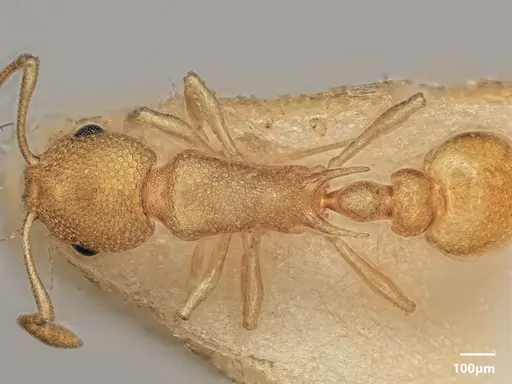
Littérature
Chargement de la carte de répartition...Chargement des produits...