
Camponotus stefanschoedli
- Nom sci.
- Camponotus stefanschoedli
- Tribu
- Camponotini
- Sous-famille
- Formicinae
- Auteur
- Zettel & Zimmermann, 2007
- Distribution
- Trouvé dans 0 pays
Introduction
Camponotus stefanschoedli is a dimorphic ant species from the Philippines, formerly classified as Forelophilus stefanschoedli before being moved to Camponotus in 2016 . Minor workers measure 3.1-3.5mm while major workers are larger at 4.4-5.4mm . The species is almost entirely black with yellowish mandibles, and major workers have distinctive orange or brown clypeus markings . This ant is known from only a handful of samples across three Philippine islands—Luzon, Leyte, and Mindanao—suggesting it may be quite rare in the wild . The minor workers are so similar in appearance to the common dolichoderine species Dolichoderus thoracicus that they are easily overlooked in the field [AntWiki].
Quick Summary
- Difficulty: Unknown, species has never been kept in captivity
- Origin & Habitat: Philippine Islands (Luzon, Leyte, Mindanao), tropical forest habitats, type locality near waterfalls in Surigao del Norte [2]
- Colony Type: Unconfirmed, no direct observations of colony structure exist
- Size & Growth:
- Queen: Undescribed, estimate 7-9mm inferred from Camponotus genus patterns
- Worker: Minor: 3.1-3.5mm, Major: 4.4-5.4mm [2]
- Colony: Unknown, no colony size data exists
- Growth: Unknown
- Development: Unconfirmed, estimate 6-10 weeks based on typical Camponotus development at tropical temperatures (No direct development data exists for this species)
- Antkeeping:
- Temperature: Keep warm, around 24-28°C, this matches their tropical Philippine origin. A gentle gradient allows workers to regulate their temperature.
- Humidity: Moderate to high, aim for 60-80% humidity. Their native habitat near waterfalls suggests they prefer damp conditions.
- Diapause: Unlikely, Philippine ants typically remain active year-round. No diapause data exists for this species.
- Nesting: Y-tong (AAC) nests or plaster nests work well for small Camponotus. Provide damp substrate. Natural setups with soil and rotting wood may also be suitable given their forest habitat.
- Behavior: Behavior is completely unstudied. Based on genus patterns, expect typical Camponotus temperament, generally non-aggressive but capable of defending the nest. Workers are small but not tiny, so standard escape prevention should suffice. Major workers likely serve as soldiers or food processors. As Formicinae, they lack a functional sting but can bite and spray formic acid from their acidopore.
- Common Issues: this species has never been kept in captivity, all care recommendations are estimates based on genus patterns, the complete lack of biological data means keepers must be prepared to experiment and document their observations, wild-caught colonies may be extremely difficult to find due to their rarity and resemblance to other species, slow growth and long development times may test keeper patience
Species Discovery and Taxonomy
Camponotus stefanschoedli was first described in 2007 by Herbert Zettel and Dominique Zimmermann under the name Camponotus stefanschoedli [2]. The species was named in honor of Stefan Schödl (1957-2005), a friend of the researchers who collected part of the type material [3]. In 2016, the genus Forelophilus was synonymized with Camponotus, and this species was reclassified as Camponotus stefanschoedli [1]. This was the first species in the Forelophilus genus where the major worker morph was described, revealing the species is dimorphic with distinct minor and major workers [2].
Identification and Appearance
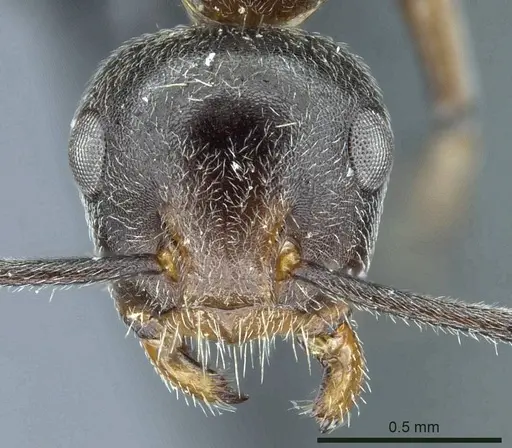
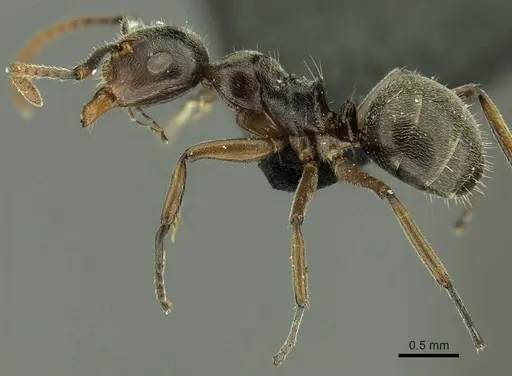
This species is dimorphic, meaning it has two distinct worker castes. Minor workers are tiny at 3.1-3.5mm, while major workers are substantially larger at 4.4-5.4mm [2]. Both castes are predominantly black, but major workers have more prominent whitish margins on their abdominal tergites and distinctive orange or brown clypeus [2]. The clypeus has a pronounced median ridge, and the head vertex has numerous long setae restricted to the medial part [2]. Their tibiae lack erect setae, and their tarsi are relatively elongate and slender [2]. The petiolar node is narrowly rounded when viewed from the side [2]. The major worker scape index is notably lower than in minor workers, indicating the major's antennae are proportionally shorter relative to its larger head [2].
Distribution and Rarity
Camponotus stefanschoedli is known only from the Philippine Islands of Luzon, Leyte, and Mindanao [2]. The type locality is in Mindanao, Surigao del Norte, near the Little Baguio Waterfall in Bacuag [2]. This ant appears to be quite rare, only a handful of specimens have ever been collected. This may reflect genuine rarity in the wild, or it could be because minor workers are nearly identical in the field to the common dolichoderine species Dolichoderus thoracicus, causing them to be overlooked by collectors [3]. If you attempt to find this species in the wild, look carefully at small black ants near water sources in tropical forest areas.
Housing and Nesting
Since nothing is known about this species' nesting preferences in captivity, we must infer from related Camponotus species and their natural habitat. The type locality near waterfalls suggests they prefer humid, shaded conditions. For captive care, a Y-tong (AAC) nest or plaster nest works well for small Camponotus species. Keep the nest substrate consistently moist but not waterlogged. A test tube setup can work for founding colonies. Provide an outworld area for foraging. Because workers are only 3-5mm, standard escape prevention measures should be adequate, but ensure any connections between nest and outworld are secure.
Feeding and Diet
No specific dietary information exists for this species. As a Camponotus ant, they likely have a typical omnivorous diet, accepting sugar sources for energy and protein sources for colony growth. Feed sugar water constantly and offer protein prey 2-3 times per week. Remove uneaten prey within 24-48 hours to prevent mold. Start with small prey items appropriate to their worker size. Document what your colony accepts, this species represents an opportunity for keepers to contribute new knowledge to the scientific community.
Temperature and Seasonal Care
Being from the tropical Philippines, this species likely does not require hibernation or diapause. Maintain temperatures in the warm range, around 24-28°C is a reasonable starting point. A temperature gradient allows workers to choose their preferred warmth. Since no specific thermal tolerance data exists, observe your colony: if workers are consistently clustered near the heated side, increase warmth slightly, if they avoid heated areas, reduce temperature. The Philippines has relatively stable year-round temperatures, so avoid dramatic temperature swings.
Challenges and Expectations
This is perhaps the most challenging ant to keep because absolutely no captive husbandry information exists. Every aspect of their care, from founding to feeding to colony development, will require experimentation and careful observation. Expect slow progress. Colonies may take months to produce their first workers, and you may face setbacks. This species is best suited for experienced antkeepers who enjoy the process of discovery and are willing to document their findings. If you successfully establish a colony, your observations could become the foundation for future care guides. Consider reaching out to the antkeeping community to share your experiences.
Frequently Asked Questions
Is Camponotus stefanschoedli a good beginner ant?
No, this species is not suitable for beginners. It has never been kept in captivity, and absolutely no care information exists. Every aspect of husbandry requires experimentation. This species is best for experienced keepers who enjoy discovering how to keep poorly documented species.
How long does it take for Camponotus stefanschoedli to produce first workers?
Unknown. No development data exists for this species. Based on typical Camponotus patterns, expect 6-10 weeks from egg to worker at optimal tropical temperatures, but this is purely an estimate.
What do Camponotus stefanschoedli ants eat?
No specific feeding data exists. Based on genus patterns, they likely accept sugar water or honey for energy and small insects for protein. Offer both and document what your colony accepts.
Can I keep multiple Camponotus stefanschoedli queens together?
Unknown. No data exists on their colony structure. Most Camponotus are single-queen species, but polygyny cannot be ruled out. Do not attempt combining unrelated queens without observation chambers and careful monitoring.
What temperature should I keep Camponotus stefanschoedli at?
No specific data exists. Based on their Philippine origin, keep them warm, around 24-28°C. A gentle gradient allows workers to self-regulate.
Do Camponotus stefanschoedli need hibernation?
Unlikely. Being from the tropical Philippines, they probably do not require a diapause period. Maintain stable warm temperatures year-round.
How big do Camponotus stefanschoedli colonies get?
Unknown. No colony size data exists. Based on their small worker size and limited distribution, colonies are likely modest, probably a few hundred workers at most.
Where can I find Camponotus stefanschoedli in the wild?
This species is known from only three Philippine islands: Luzon, Leyte, and Mindanao. Look in tropical forest areas near water sources, particularly the type locality near waterfalls in Surigao del Norte, Mindanao. However, minor workers closely resemble Dolichoderus thoracicus, making identification challenging.
When do Camponotus stefanschoedli have nuptial flights?
Unknown. No nuptial flight data exists for this species. Philippine tropical ants may have less predictable flight timing than temperate species. If you maintain a colony, watch for winged reproductives appearing in the outworld.
Is Camponotus stefanschoedli aggressive?
Unknown. No behavioral observations exist. Most Camponotus species are moderately tempered, defensive when threatened but not particularly aggressive toward keepers. Expect typical ant behavior: they will defend their nest if disturbed.
Why is so little known about Camponotus stefanschoedli?
This species is known from only a handful of specimens collected in the Philippines. The minor workers are nearly identical in the field to the common species Dolichoderus thoracicus, causing them to be overlooked. Additionally, the species was only described in 2007, making it relatively new to science.
Report an Issue
The current care sheet is based fully on literature. See inconsistencies, or something that's incorrect? Please , it will be resolved after review from an admin. Contributing to the blogs tab also helps providing information, to make us be able to further improve the caresheets. Thank you for your support!
References

Cette fiche d'élevage est sous licence CC BY-SA 4.0 .
Blogs de la communauté
CASENT0915595
Voir sur AntWeb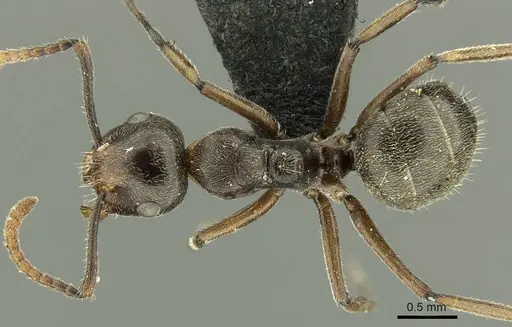
Littérature
Chargement de la carte de répartition...Chargement des produits...