
Camponotus pupillus
- Nom sci.
- Camponotus pupillus
- Sous-genre
- Tanaemyrmex
- Tribu
- Camponotini
- Sous-famille
- Formicinae
- Auteur
- Santschi, 1939
- Distribution
- Trouvé dans 0 pays
Introduction
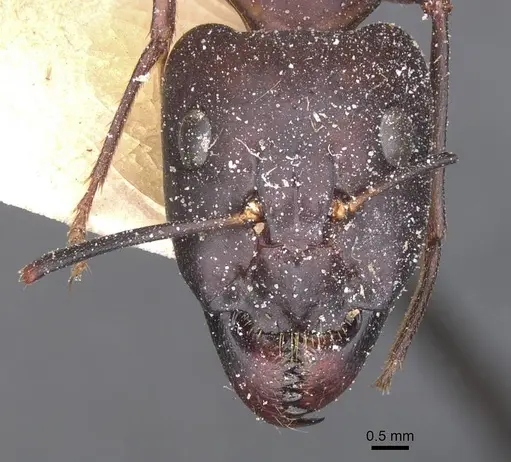
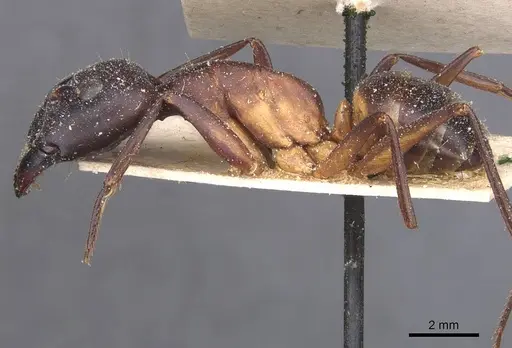
Camponotus pupillus is a carpenter ant species native to Morocco in North Africa . This species belongs to the Formicinae subfamily and lacks a functional sting - instead, it defends by biting and spraying formic acid from its acidopore. Workers display the characteristic Camponotus body plan with a distinct metanotum and smooth gaster. Coloration tends toward darker browns and blacks, typical of many North African carpenter ants. This species nests in natural cavities, typically under stones or in decaying wood in arid to semi-arid habitats.
Quick Summary
- Difficulty: Easy
- Origin & Habitat: Morocco in North Africa, arid to semi-arid Mediterranean climate with hot summers and mild winters [1]. Found in natural habitats ranging from rocky terrain to areas with sparse vegetation.
- Colony Type: Colony structure is unconfirmed. Based on typical Camponotus patterns, single-queen colonies are common in this genus.
- Size & Growth:
- Queen: size data unavailable, inferred from Camponotus genus as approximately 9-12mm
- Worker: 4-8mm polymorphic (majors and minors), inferred from genus patterns
- Colony: up to 2000 workers at maturity, estimated from genus patterns
- Growth: Moderate
- Development: 6-10 weeks at optimal temperature, estimated from genus patterns (Development time varies with temperature, warmer conditions within safe range speeds development)
- Antkeeping:
- Temperature: Keep at 22-27°C. North African origin suggests they tolerate warmer conditions well. A temperature gradient allows ants to choose their preferred zone.
- Humidity: Low to moderate. These are arid-adapted ants, keep nest substrate relatively dry with occasional misting. Provide a water source but avoid damp conditions.
- Diapause: Yes, reduce temperature to 15-18°C for 2-3 months during winter. This mimics their natural seasonal cycle in Morocco.
- Nesting: Y-tong (AAC) nests work well, or plaster nests with moderate humidity chambers. They prefer tight, dark chambers. Avoid overly damp substrates.
- Behavior: Generally calm and non-aggressive for a Camponotus species. Workers are moderate foragers, primarily hunting for sugar sources and small insects. Escape risk is moderate, use standard Camponotus escape prevention (fluon on edges). They are primarily nocturnal or crepuscular foragers.
- Common Issues: colonies can stall if temperatures drop too low, maintain warmth, overwatering is a common mistake with this arid-adapted species, slow initial growth during founding phase can cause keepers to overfeed or disturb the queen, wild-caught colonies may harbor parasites that cause colony decline
Housing and Nest Setup
Camponotus pupillus adapts well to common captive setups. Y-tong (acrylic alloy) nests are ideal because they provide the dark, tight chambers these ants prefer. Plaster nests also work well, just keep the moisture level moderate rather than wet. Test tube setups are suitable for founding colonies. The key is providing chambers scaled to colony size, start small and expand as the colony grows. Avoid overly large, open spaces that can stress the colony. A small outworld for foraging completes the setup [2].
Feeding and Diet
Like other Camponotus species, these ants are omnivorous with a preference for sugar sources. Offer sugar water, honey, or diluted maple syrup as a constant energy source. For protein, provide small insects like fruit flies, small crickets, or mealworms. They typically forage at night, so place food in the outworld in the evening. Remove uneaten protein after 24 hours to prevent mold. A varied diet supports healthy colony growth [2].
Temperature and Seasonal Care
Maintain temperatures between 22-27°C during the active season. This species originates from Morocco and handles warmth well, temperatures into the low 30s°C are tolerated for short periods. During winter, simulate their natural seasonal cycle by reducing temperatures to 15-18°C for 2-3 months. This winter rest period supports colony health and queen longevity. Do not feed during hibernation and minimize disturbance.
Colony Development
Founding behavior is unconfirmed for this specific species, though claustral founding is typical for Camponotus, the queen seals herself in a chamber and does not leave to forage. She relies on stored fat reserves to produce her first workers. This phase typically takes 6-10 weeks under optimal conditions. The first workers are smaller than normal workers but will gradually be replaced by larger majors as the colony grows. Colonies develop moderately fast once the first workers emerge, with growth accelerating through the first year [2].
Frequently Asked Questions
How long does it take for Camponotus pupillus to produce first workers?
Expect 6-10 weeks from egg to first worker at optimal temperature (24-27°C). Based on typical Camponotus patterns, the queen seals herself in during founding and raises the first brood alone.
Can I keep multiple Camponotus pupillus queens together?
Colony structure is unconfirmed for this species. Based on typical Camponotus patterns, single-queen colonies are common. Combining unrelated queens is not recommended as they likely will fight.
What temperature range is best for Camponotus pupillus?
Keep them at 22-27°C during the active season. They tolerate warmer conditions well due to their North African origin. A slight temperature gradient allows the colony to self-regulate.
How big do Camponotus pupillus colonies get?
Mature colonies typically reach up to 2000 workers. This is moderate compared to some larger carpenter ants that can reach higher numbers.
Do Camponotus pupillus need hibernation?
Yes, a 2-3 month winter rest period at 15-18°C is recommended to mimic their natural seasonal cycle in Morocco.
What do Camponotus pupillus eat?
They need sugar sources (honey, sugar water) for energy and protein (small insects like fruit flies or mealworms). Offer sugar constantly and protein 2-3 times per week.
Are Camponotus pupillus good for beginners?
Yes, they are considered an easy-care species. They are forgiving of minor temperature fluctuations and do not require high humidity like tropical species.
When should I move my Camponotus pupillus colony to a formicarium?
Wait until the colony has 20-30 workers before moving from a test tube setup. They need enough workers to maintain multiple chambers and forage in the outworld.
Why is my Camponotus pupillus colony not growing?
Common causes include temperatures too low, overfeeding causing mold, or disturbing the queen during founding. Check that temperatures are in the 22-27°C range and minimize nest disturbances.
Report an Issue
The current care sheet is based fully on literature. See inconsistencies, or something that's incorrect? Please , it will be resolved after review from an admin. Contributing to the blogs tab also helps providing information, to make us be able to further improve the caresheets. Thank you for your support!
References

Cette fiche d'élevage est sous licence CC BY-SA 4.0 .
Blogs de la communauté
CASENT0911928
Voir sur AntWeb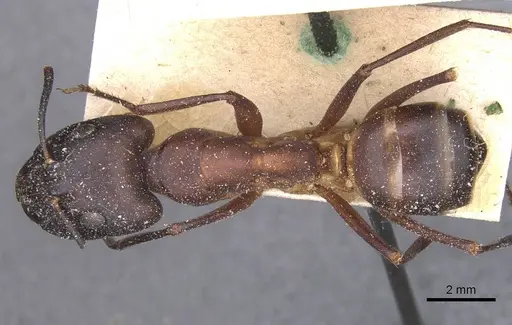
Littérature
Chargement de la carte de répartition...Chargement des produits...