
Camponotus kutteri
- Nom sci.
- Camponotus kutteri
- Sous-genre
- Myrmamblys
- Tribu
- Camponotini
- Sous-famille
- Formicinae
- Auteur
- Forel, 1915
- Distribution
- Trouvé dans 0 pays
Introduction
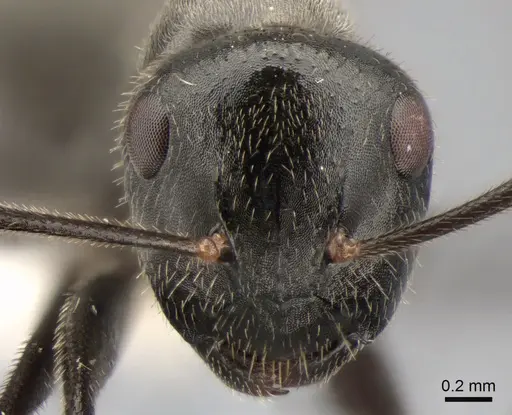
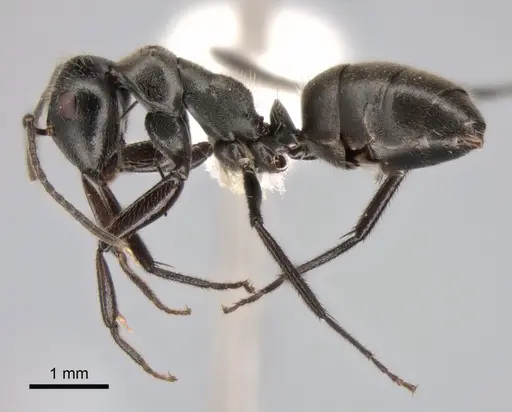
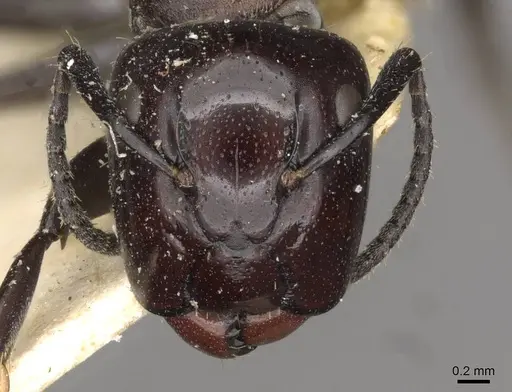
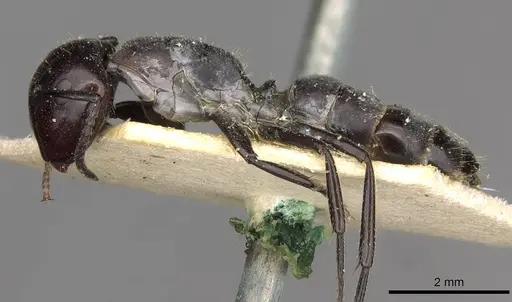
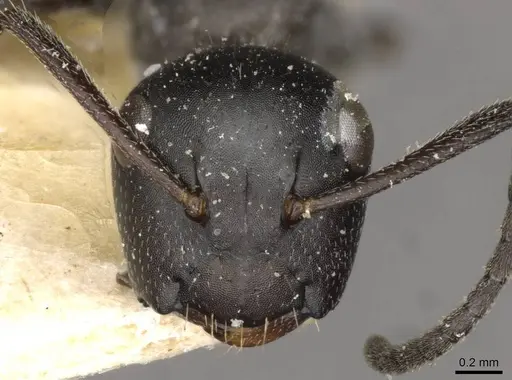
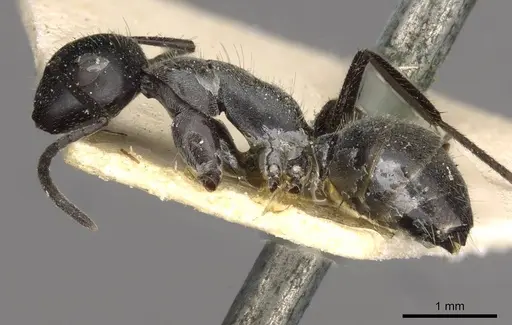
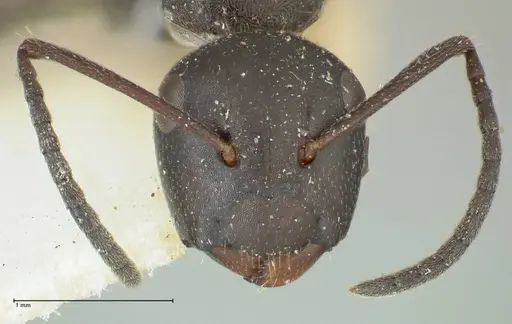
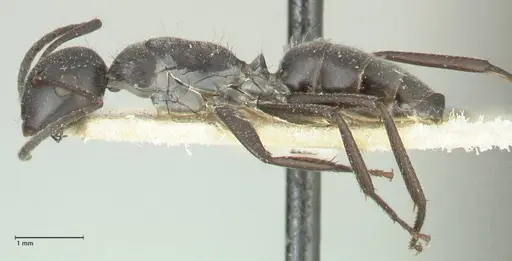
Camponotus kutteri is a species of ant in the subgenus Myrmamblys, part of the inquiline group. Workers are black with orange mandibles and distinct pale yellowish hind margins on the abdominal tergites. Minor workers have a matt to moderately shiny body with a rounded head, while major workers have a squared, strongly shiny head with large punctures. Size data for this species is unavailable from current literature. This species is known only from Simeulue Island off the northwest coast of Sumatra, Indonesia, with the type locality at Sinabang . The habitat is likely lowland tropical forest . The pale abdominal margins are an unusual feature for this species group and aid in identification .
Quick Summary
- Difficulty: Hard
- Origin & Habitat: Simeulue Island, Indonesia, a tropical island off the northwest coast of Sumatra. The type locality is Sinabang [1].
- Colony Type: Based on typical Camponotus patterns, likely single-queen colonies, but colony structure has not been documented [1].
- Size & Growth:
- Queen: size data unavailable
- Worker: size data unavailable
- Colony: Unknown, no colony size data available
- Growth: Unknown
- Development: Unknown, no direct measurements. Based on typical Camponotus development in tropical conditions, estimated 6-10 weeks at warm temperatures. (Estimate based on genus patterns, no species-specific data available.)
- Antkeeping:
- Temperature: Keep warm, around 24-28°C, based on tropical origin [1].
- Humidity: Keep nest substrate moderately moist with some drier areas, as this is a tropical species [1].
- Diapause: No, tropical species from an island with minimal seasonal variation [1].
- Nesting: In nature likely nests in rotting wood, under bark, or in hollow twigs. Captive recommendations: Y-tong nests, plaster nests, or test tube setups [1].
- Behavior: Not documented in captivity. Based on genus patterns, likely relatively docile. Escape prevention should be standard for their size. Defense mechanism: As a Formicinae, they lack a sting and spray formic acid.
- Common Issues: no captive husbandry information exists, this is an essentially unstudied species in the hobby., tropical humidity requirements may be challenging to maintain consistently., no documented diet acceptance, must experiment with standard ant foods., single queen colonies may be difficult to establish from wild catches due to limited distribution., lack of available colonies in the antkeeping hobby makes this species very rare.
Species Identification and Range
Camponotus kutteri is easily recognized by its black body, orange mandibles, and pale yellowish hind margins on the abdominal tergites. Minor workers have a rounded, matt head, while major workers have a squared, shiny head with large punctures. The species is known only from Simeulue Island, Indonesia, with the type locality at Sinabang [1]. This extremely limited distribution makes wild collection difficult and explains why the species remains rare [1].
Natural History
Beyond the type collection, little is known about the natural history of Camponotus kutteri. As a member of the Myrmamblys subgenus, they likely nest in pre-existing cavities in rotting wood, under bark, or in hollow twigs [1]. The tropical island setting suggests warm temperatures year-round with high humidity [1]. Workers likely forage for honeydew and small insects, similar to other Camponotus species [1].
Housing in Captivity
No captive husbandry information exists for this species. Recommendations must be based on related Myrmamblys species. Use Y-tong nests, plaster nests, or test tube setups with access to a foraging area [1]. Maintain warm temperatures (24-28°C) and moderate humidity [1]. Escape prevention should be standard for their size.
Feeding and Diet
No specific feeding observations exist. Based on genus patterns, they likely accept sugar sources (honey water) and protein (dead insects). Offer small protein items and remove uneaten food after 24-48 hours to prevent mold.
Colony Establishment
Establishing a colony would require wild collection from Simeulue Island, which is highly impractical [1]. If a queen is obtained, founding behavior is unconfirmed [1]. The founding chamber should be kept dark, warm, and undisturbed.
Frequently Asked Questions
Is Camponotus kutteri available in the antkeeping hobby?
No. This species is known only from Simeulue Island, Indonesia, and has never been documented in the antkeeping hobby [1].
What does Camponotus kutteri look like?
Workers are black with orange mandibles and pale yellowish hind margins on the abdominal segments. Minor workers have a rounded head, while major workers have a squared, shiny head [1].
Where does Camponotus kutteri live?
This species is known only from Simeulue Island, Indonesia, with the type locality at Sinabang [1].
How do I keep Camponotus kutteri?
No captive husbandry information exists. Based on genus patterns, use a Y-tong or plaster nest, keep warm (24-28°C), maintain moderate humidity, and feed standard ant foods [1].
What do Camponotus kutteri eat?
Not documented, but likely similar to other Camponotus, they probably accept sugar sources and protein.
How long does it take for Camponotus kutteri to develop from egg to worker?
Unknown, no development data exists. Based on typical Camponotus development, estimated 6-10 weeks at warm temperatures.
Do Camponotus kutteri queens need to forage during founding?
Founding behavior is unconfirmed for this species [1].
Is Camponotus kutteri aggressive or dangerous?
Not documented. Based on genus patterns, likely relatively docile. Defense involves spraying formic acid.
Do Camponotus kutteri need hibernation?
No, as a tropical species from an island with minimal seasonal variation, they do not require diapause [1].
Can I keep multiple Camponotus kutteri queens together?
Unknown, colony structure has not been documented. Based on typical Camponotus behavior, single-queen colonies are most likely [1].
Report an Issue
The current care sheet is based fully on literature. See inconsistencies, or something that's incorrect? Please , it will be resolved after review from an admin. Contributing to the blogs tab also helps providing information, to make us be able to further improve the caresheets. Thank you for your support!
References

Cette fiche d'élevage est sous licence CC BY-SA 4.0 .
Blogs de la communauté
CASENT0882028
Voir sur AntWeb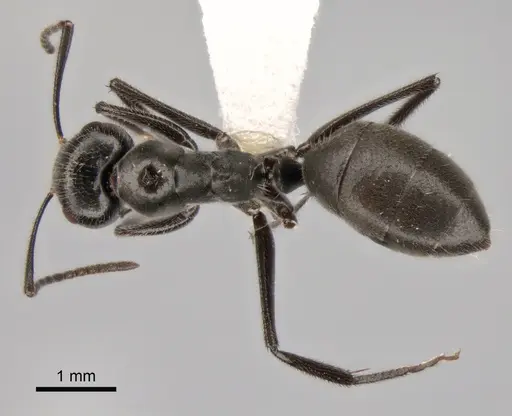
CASENT0910520
Voir sur AntWeb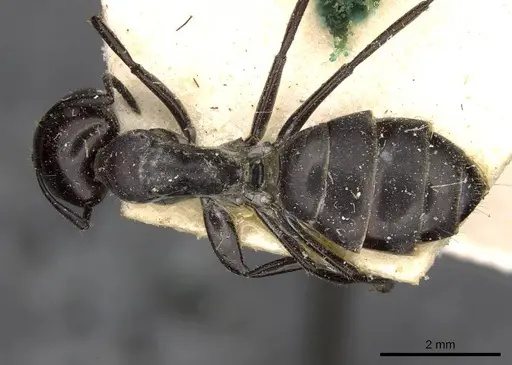
CASENT0910521
Voir sur AntWeb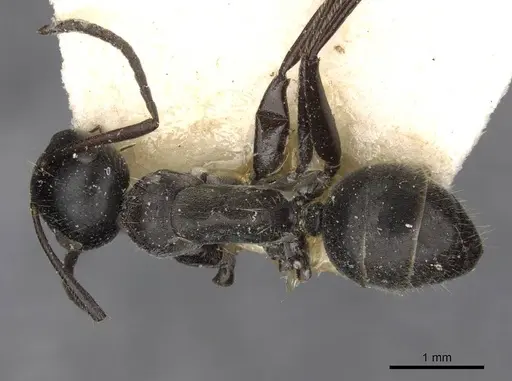
FOCOL2278
Voir sur AntWeb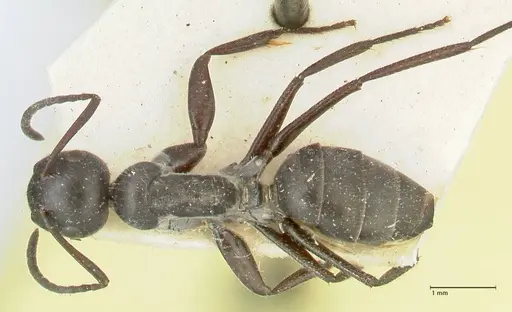
Littérature
Chargement de la carte de répartition...Chargement des produits...