
Camponotus guatemalensis
- Nom sci.
- Camponotus guatemalensis
- Sous-genre
- Tanaemyrmex
- Tribu
- Camponotini
- Sous-famille
- Formicinae
- Auteur
- Forel, 1885
- Distribution
- Trouvé dans 0 pays
Introduction
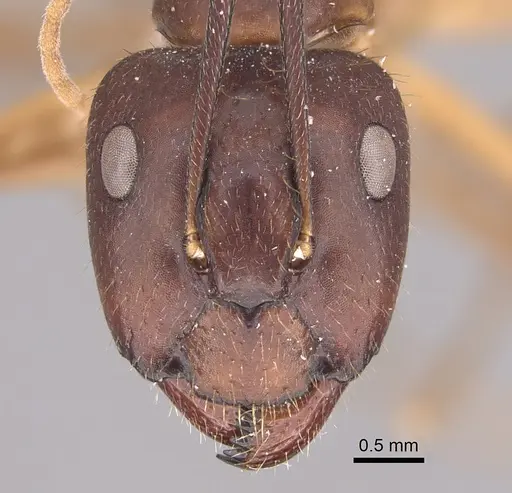
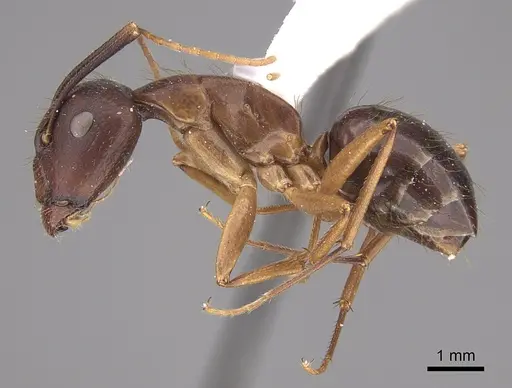
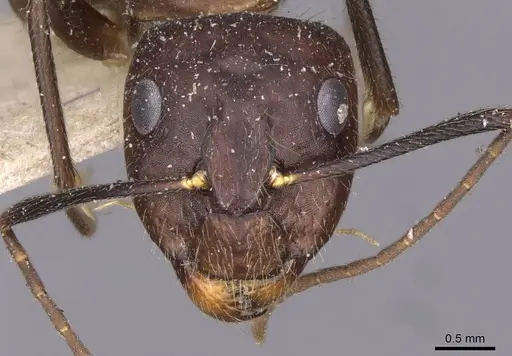
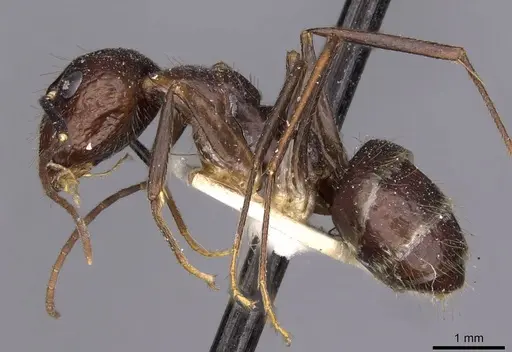
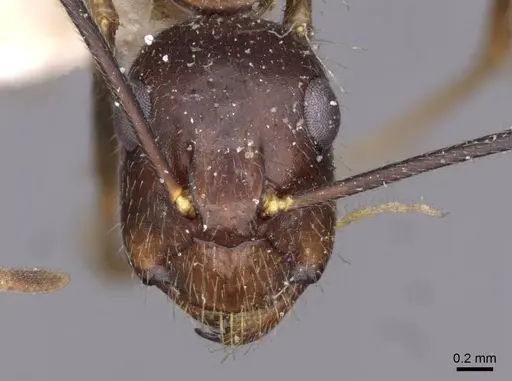
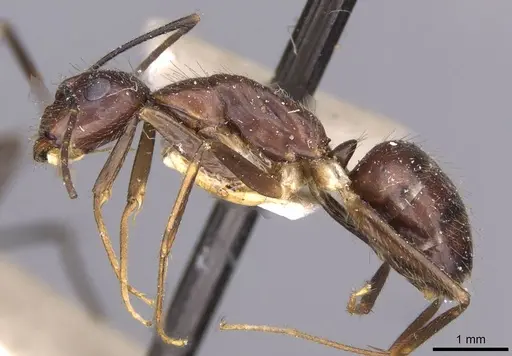
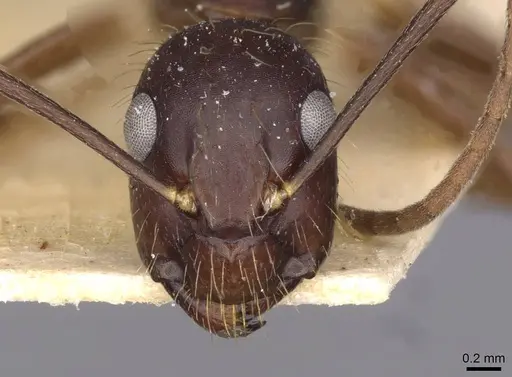
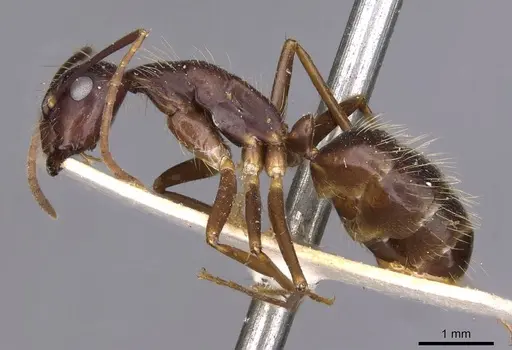
Camponotus guatemalensis is a large carpenter ant species native to Central America and northern South America. Major workers reach about 1 cm in total length and are dark brown, sometimes with a lighter-colored mesosoma. The head has abundant erect hairs, though the scape lacks these hairs except near the tip. This species belongs to the maculatus species complex and can be identified by its glossy body surfaces and the scape extending 1-2 funicular segments beyond the posterior corner of the head. They range from Mexico through Guatemala to Colombia, where they've been documented in Cundinamarca.
Quick Summary
- Difficulty: Medium
- Origin & Habitat: Native to the Neotropical region, ranging from Mexico through Guatemala to Colombia. They inhabit forest environments in mountainous areas (type locality at 7000 ft in Guatemala). As a member of the maculatus species complex, they likely nest in rotting wood or under stones in damp forest habitats.
- Colony Type: Colony structure is unconfirmed. Based on typical Camponotus patterns, likely single-queen colonies with major and minor worker castes.
- Size & Growth:
- Queen: Approximately 12-15mm, estimated from genus patterns
- Worker: Major workers about 1 cm [1], minor workers smaller
- Colony: Likely reaches several thousand workers, inferred from genus patterns
- Growth: Moderate, typical for large carpenter ants
- Development: Estimated 6-8 weeks at optimal temperature based on genus patterns (Large species like this typically develop more slowly than smaller ants. First workers (nanitics) are usually smaller than normal workers.)
- Antkeeping:
- Temperature: Keep at 24-28°C. Being from tropical Central America, they prefer warm conditions. A heating cable on one side of the nest creates a suitable gradient.
- Humidity: Moderate to high humidity (60-80%). They come from damp forest habitats in mountainous Guatemala. Keep the nest substrate moist but not waterlogged.
- Diapause: No, being a tropical species, they do not require hibernation. Keep temperatures stable year-round.
- Nesting: In captivity, they do well in Y-tong (AAC) nests, plaster nests, or naturalistic setups with rotting wood. They prefer tight, dark chambers. Given their large size, use appropriately scaled chambers with narrow passages.
- Behavior: These ants are typically calm and not aggressive toward keepers. As carpenter ants, they are omnivorous and will accept sugar water, honey, and protein sources like insects. Major workers have large mandibles but are not particularly aggressive. They are moderate foragers and will send workers out to collect food. Escape prevention should be good, their larger size makes them less likely to escape than tiny ants, but ensure lids fit tightly.
- Common Issues: tropical species sensitive to temperature drops, keep warm and avoid cold drafts, biology is poorly documented so keepers may need to experiment with conditions, large colony sizes require expanding enclosure space over time, test tube setups work for founding but will need transitioning to larger formicarium as colony grows, wild-caught colonies may carry parasites that can devastate captive colonies
Housing and Nest Setup
For founding colonies, a standard test tube setup works well. Fill the tube with water and plug the end with cotton, providing a dark chamber for the queen. Once the colony reaches 20-30 workers, transition to a formicarium. Y-tong (AAC) nests work excellently for this species, the tight chambers and dark interior mimic their natural nesting preferences. You can also use plaster nests or naturalistic setups with rotting wood pieces. Ensure the nest has a water reservoir to maintain humidity. The outworld should be simple, a plastic container works fine with standard escape prevention like fluon on the rim. [1]
Feeding and Diet
Camponotus ants are omnivorous. Provide a constant source of sugar water or honey in the outworld. For protein, offer insects like mealworms, crickets, or fruit flies. They typically accept most standard ant foods. Feed minor workers small prey items they can manage, while major workers can tackle larger insects. Remove uneaten prey after 24-48 hours to prevent mold. A varied diet helps promote healthy colony growth.
Temperature and Heating
Being from tropical Central America, C. guatemalensis needs warm conditions. Keep the nest area at 24-28°C. A heating cable placed on top of the nest creates a gentle thermal gradient. Room temperature may suffice if your home stays in this range, but monitor with a thermometer. Avoid placing the nest near air conditioning vents or cold windows. Sudden temperature drops can stress colonies and slow or stop brood development. Stable warmth is key to keeping them active and growing.
Humidity and Water
These ants come from damp forest habitats in Guatemala's mountains. Aim for 60-80% humidity in the nest. Keep the substrate consistently moist but never waterlogged, standing water in the nest can drown brood and kill colonies. A test tube water reservoir provides humidity through the cotton. For formicaria, mist occasionally or use a water reservoir. They also need constant access to drinking water, a small water tube or damp cotton ball in the outworld works. Monitor for condensation: too much means too wet, too little means too dry. [1]
Colony Growth and Development
A newly mated queen will seal herself in a chamber and lay eggs after a few weeks. The first workers (nanitics) are typically smaller than normal workers and emerge 6-8 weeks after egg-laying at optimal temperature. After nanitics, the colony enters a growth phase with workers developing faster. Major workers appear as the colony matures, these larger workers have distinct head shapes optimized for different tasks. Large colonies can reach several thousand workers over several years. Growth rate depends heavily on feeding quality and temperature, better conditions mean faster development.
Behavior and Temperament
Camponotus guatemalensis is generally calm and not aggressive toward keepers. Major workers have powerful mandibles but rarely bite unless provoked. They are moderate foragers, workers will emerge to collect food but aren't hyperactive. The presence of major workers is distinctive, they have notably larger heads than minors and are often positioned near the nest entrance or food sources. Workers communicate through chemical trails and will recruit nestmates to good food finds. They are primarily nocturnal or crepuscular foragers in the wild, so you may see increased activity in the evening. [1]
Frequently Asked Questions
How long does it take for Camponotus guatemalensis to have first workers?
Expect first workers (nanitics) to emerge 6-8 weeks after the queen lays eggs, assuming optimal temperature around 26°C. This is typical for large Camponotus species. The timeline varies with temperature, cooler conditions slow development.
What do Camponotus guatemalensis ants eat?
They are omnivorous. Offer sugar water or honey constantly for energy, and protein sources like mealworms, crickets, or fruit flies 2-3 times per week. Remove uneaten prey after a day to prevent mold.
What temperature do Camponotus guatemalensis need?
Keep them warm at 24-28°C. Being from tropical Central America, they need consistent warmth. A heating cable on the nest can help maintain optimal temperature, especially in cooler rooms.
Are Camponotus guatemalensis good for beginners?
They are moderate difficulty, not the easiest but not challenging. Their large size makes them easier to observe than tiny ants. The main challenge is their need for warmth and the fact that their specific biology is not well-documented, so some experimentation may be needed.
How big do Camponotus guatemalensis colonies get?
Mature colonies likely reach several thousand workers over several years. Major workers are about 1 cm, making this a substantial ant species that will need expanding enclosure space.
Do Camponotus guatemalensis need hibernation?
No, being a tropical species from Central America, they do not require hibernation. Keep temperatures stable year-round. They may reduce activity slightly in cooler months but won't enter true diapause.
When should I move Camponotus guatemalensis to a formicarium?
Transition from a test tube to a formicarium once the colony reaches 20-30 workers. Earlier if the test tube is becoming dirty or the water reservoir is running low. Make sure the formicarium has appropriate humidity and dark chambers.
Can I keep multiple Camponotus guatemalensis queens together?
Not recommended. While colony structure is unconfirmed for this species, Camponotus are typically single-queen colonies. Combining unrelated queens usually results in fighting. If you want to try multi-queen setup, do so only during the very early founding stage and monitor closely.
Why is my Camponotus guatemalensis colony dying?
Common causes include: temperature too cold (below 24°C), humidity too low or too high, mold from uneaten food, stress from too much handling, or parasites from wild-caught colonies. Review each parameter and make adjustments gradually. If caught early, moving to fresh setup often helps.
Report an Issue
The current care sheet is based fully on literature. See inconsistencies, or something that's incorrect? Please , it will be resolved after review from an admin. Contributing to the blogs tab also helps providing information, to make us be able to further improve the caresheets. Thank you for your support!
References

Cette fiche d'élevage est sous licence CC BY-SA 4.0 .
Blogs de la communauté
CASENT0217683
Voir sur AntWeb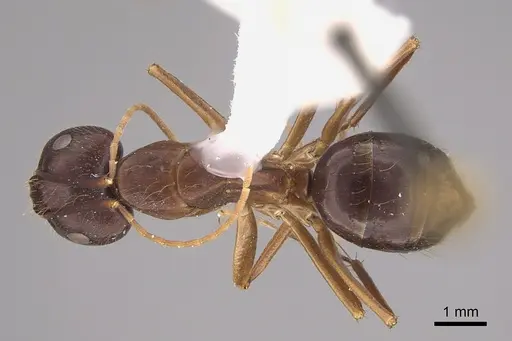
CASENT0910009
Voir sur AntWeb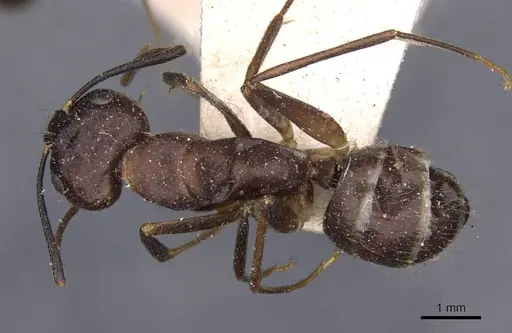
CASENT0910010
Voir sur AntWeb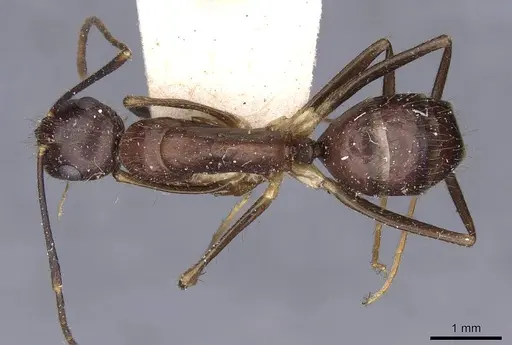
CASENT0910011
Voir sur AntWeb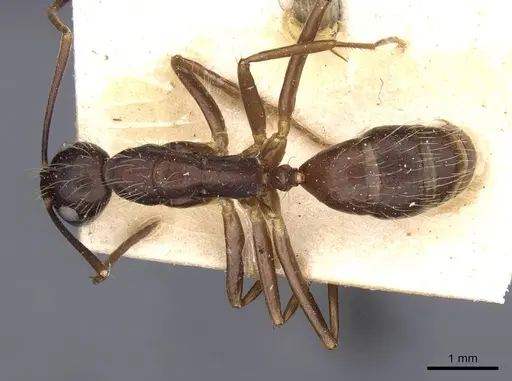
Littérature
Chargement de la carte de répartition...Chargement des produits...