
Camponotus bakhtiariensis
- Nom sci.
- Camponotus bakhtiariensis
- Sous-genre
- Tanaemyrmex
- Tribu
- Camponotini
- Sous-famille
- Formicinae
- Auteur
- Salata <i>et al.</i>, 2020
- Distribution
- Trouvé dans 0 pays
Introduction
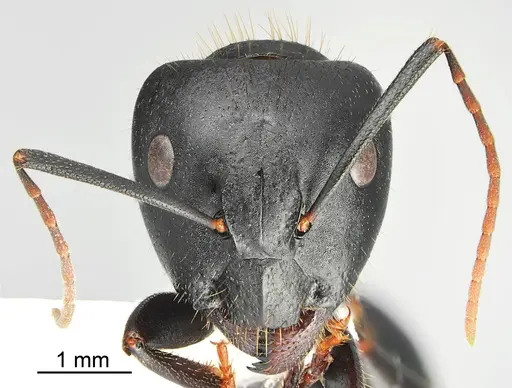
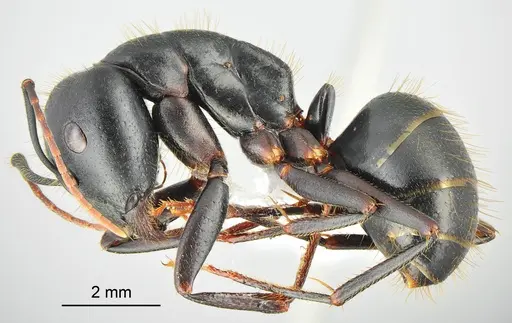
Camponotus bakhtiariensis is a large, jet-black carpenter ant belonging to the Camponotus samius species complex (subgenus Tanaemyrmex). Workers are distinctly polymorphic, with major workers reaching approximately 9-12mm total length while minor workers are considerably smaller - the largest majors are 1.4 times longer than the smallest minors . The entire body is uniformly black to dark brown, with legs dark brown to black in majors and brown in minors. This species was only described in 2020 from southwestern Iran in the Zagros Mountains, making it one of the newest described Camponotus species . The type colony was found nesting under a rock in a grazing area at 2400m elevation on the Dashte laleh plateau, an alpine environment with cold winters . What makes C. bakhtiariensis interesting is its extreme rarity - it was only scientifically described four years ago, and its biology remains completely unstudied. As a high-altitude Zagros Mountain species, it likely has different temperature requirements than typical lowland carpenter ants. The samius complex includes several Turano-Balkan species known for their striking black coloration and polymorphic workers.
Quick Summary
- Difficulty: Unknown, species too newly described for established care parameters
- Origin & Habitat: Southwestern Iran (Chaharmahal va Bakhtiari Province) in the Zagros Mountains at 2400m elevation. Alpine climate, grazing area with rocky substrate [1].
- Colony Type: Unknown, colony structure has not been documented. Based on typical Camponotus patterns, likely single-queen (monogyne) colonies.
- Size & Growth:
- Queen: Size data unavailable, queen measurements have not been recorded [1]
- Worker: Major workers: approximately 9-12mm total length. Minor workers: approximately 6-8mm total length, inferred from Camponotus genus patterns [1]
- Colony: Unknown, no colony size data exists for this species
- Growth: Unknown, development has not been studied
- Development: Unconfirmed, no direct observations exist (No species-specific development data exists.)
- Antkeeping:
- Temperature: Unconfirmed, no thermal studies exist. Based on the high-altitude alpine habitat (2400m) in the Zagros Mountains, this species likely prefers cooler conditions than typical lowland carpenter ants.
- Humidity: Unconfirmed, no humidity data exists. The type locality is an alpine plateau that experiences moderate moisture. Provide a humidity gradient with a moist nest chamber and drier areas available.
- Diapause: Likely required, based on the alpine habitat at 2400m with cold winters, expect a winter dormancy period of 3-4 months [1].
- Nesting: In nature, colonies nest under rocks in soil. The alpine grazing area suggests they prefer compact soil with good drainage. In captivity, a Y-tong (AAC) nest or plaster formicarium with moderate humidity works well. Provide a test tube setup for founding colonies.
- Behavior: Behavior has not been documented. As a Camponotus species, expect typical carpenter ant behaviors: moderate foraging activity, potential for major workers to crack seeds or assist with prey, and relatively non-aggressive temperament. Major workers have powerful mandibles but are not known to be particularly aggressive. Escape risk is moderate, workers are large enough that standard barriers work well.
- Common Issues: this species is extremely rare in the hobby, finding a colony may be impossible, no established care parameters exist, keepers must develop husbandry through experimentation, high-altitude origin means temperature requirements may differ significantly from common carpenter ants, biology remains completely unstudied, no guidance on diet, development, or colony behavior, alpine origin suggests strong diapause requirements that must be met for colony health
Discovery and Taxonomy
Camponotus bakhtiariensis was only described in 2020 by Salata, Khalili-Moghadam, and Borowiec, making it one of the most recently described carpenter ant species [1]. It belongs to the Camponotus samius species complex within the subgenus Tanaemyrmex, a group of Turano-Balkan carpenter ants known for their dark coloration and polymorphic workers. The type specimens were collected from a single nest found under a rock in a grazing area at 2400m elevation in Koohrang County, part of the Chaharmahal va Bakhtiari Province in southwestern Iran [1]. The species name refers to the Bakhtiari region of the Zagros Mountains where it was discovered. This ant is distinctly polymorphic, the largest major workers are 1.4 times longer than the smallest minor workers, a trait shared with other samius complex species [1]. The uniform black coloration without brighter markings on the gaster distinguishes it from related species like Camponotus samius and Camponotus ionius [1].
Natural Habitat and Distribution
This species is known only from the Dashte laleh plateau in Koohrang County, at approximately 2400m elevation in the Zagros Mountains of southwestern Iran [1]. The region has an alpine climate characterized by cold winters and mild summers. The plateau covers 3600 hectares and ranges from 2000-2600m above sea level [1]. In May, the area is dominated by flowering Snake's head (Fritillaria imperialis), along with Milkvetch (Astragalus spp.), Persian shallot (Allium stipitatum), and Daphne mucronata [1]. The type colony was found nesting under a rock in a grazing area, suggesting preference for open habitats with rocky substrate and moderate vegetation cover [1]. The high-altitude origin suggests this species is adapted to cooler temperatures and likely experiences significant seasonal temperature fluctuations.
Appearance and Identification
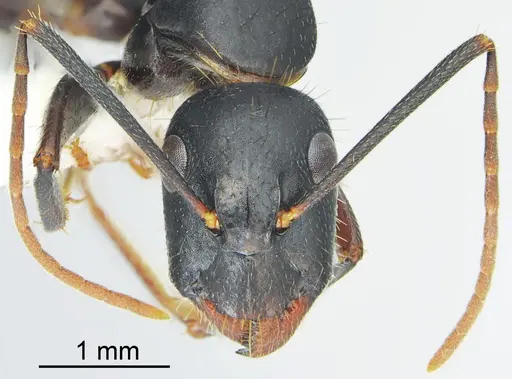
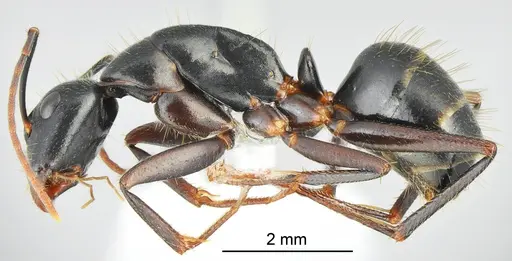
Camponotus bakhtiariensis workers are distinctly polymorphic, falling into major, medium, and minor castes. Major workers have large, trapezoidal heads widest near the upper eye margins [1]. Minor workers are considerably smaller with an elongate, parallel-sided head [1]. The entire body, head, mesosoma, petiole, and gaster, is uniformly black to dark brown, without the brighter basal gaster coloration seen in some related species [1]. Legs are dark brown to black in majors and brown in minors, with slightly paler tarsi [1]. The gena (cheek area) has numerous long erect setae, a distinguishing feature from similar species [1]. The petiolar node is slim with a slightly convex anterior surface in both major and minor workers [1]. All castes have long erect setae on the head and mesosoma, giving them a somewhat bristly appearance.
Housing and Nesting
Since the biology of this species is completely unknown, housing recommendations must be based on inference from related Camponotus species and the natural habitat data. The type locality suggests they nest in soil under rocks in alpine grazing areas, so provide a nest chamber with compact, moderately moist substrate. A Y-tong (AAC) formicarium or plaster nest works well for established colonies, while founding queens do best in test tube setups. Given the high-altitude origin, avoid overheating, room temperature or slightly below is likely appropriate. Provide a gradient so ants can choose their preferred temperature zone. The outworld should include a water source and allow for some foraging space.
Feeding and Diet
Diet has not been documented for this species. As a Camponotus carpenter ant, they likely follow the typical genus diet: honeydew or sugar water as the primary energy source, supplemented with protein from insects or other arthropods. Major workers have powerful mandibles and may be able to handle larger prey items than smaller carpenter ant species. Offer sugar water or honey regularly, and provide protein sources like mealworms, crickets, or other insects.
Temperature and Seasonal Care
Temperature requirements are completely unconfirmed for this species, but the high-altitude alpine origin provides important clues. The Dashte laleh plateau at 2400m elevation experiences cold winters with snow and mild summers. This suggests C. bakhtiariensis likely prefers cooler conditions than typical lowland carpenter ants. Start around 18-22°C and monitor colony behavior. Winter diapause appears necessary given the alpine climate, provide 3-4 months at 5-10°C during winter months. This species likely has a shorter active season than lowland ants due to the harsh alpine winters.
Frequently Asked Questions
How do I keep Camponotus bakhtiariensis?
Care parameters are not established since this species was only described in 2020 and its biology has not been studied. Based on its high-altitude Zagros Mountain origin, start with cooler temperatures (18-22°C), moderate humidity, and provide a winter dormancy period. Use standard Camponotus husbandry as a baseline and adjust based on your colony's response.
What do Camponotus bakhtiariensis eat?
Diet is unconfirmed. Based on typical Camponotus behavior, offer sugar water or honey as a constant energy source, supplemented with protein like mealworms, crickets, or other insects.
How long does it take for Camponotus bakhtiariensis to develop from egg to worker?
Development has not been documented for this species. No species-specific data exists.
Do Camponotus bakhtiariensis ants need hibernation?
Likely yes, based on the alpine habitat at 2400m elevation in the Zagros Mountains, this species almost certainly requires a winter dormancy period. Provide 3-4 months at 5-10°C during winter.
What temperature is best for Camponotus bakhtiariensis?
Unconfirmed, no thermal studies exist. Based on the high-altitude origin, aim for cooler conditions than typical carpenter ants: start around 18-22°C and adjust based on colony activity.
How big do Camponotus bakhtiariensis colonies get?
Colony size is unknown, no colony size data exists for this species.
Are Camponotus bakhtiariensis good for beginners?
No, this species is not recommended for beginners. It was only described in 2020, has completely unstudied biology, and may have unusual requirements due to its high-altitude alpine origin. Established species with known care parameters are much better choices for new antkeepers.
Where can I get Camponotus bakhtiariensis?
This species is extremely rare in the antkeeping hobby. It was only scientifically described in 2020 and is known only from a small area in southwestern Iran. Finding a colony for sale would be very difficult, if not impossible.
What makes Camponotus bakhtiariensis different from other carpenter ants?
This species is distinguished by its recent discovery (described 2020), extremely limited distribution in the Zagros Mountains of Iran at 2400m elevation, and completely unknown biology. The uniform black coloration and membership in the samius species complex are the main identifying characteristics.
Report an Issue
The current care sheet is based fully on literature. See inconsistencies, or something that's incorrect? Please , it will be resolved after review from an admin. Contributing to the blogs tab also helps providing information, to make us be able to further improve the caresheets. Thank you for your support!
References

Cette fiche d'élevage est sous licence CC BY-SA 4.0 .
Blogs de la communauté
CASENT0872760
Voir sur AntWeb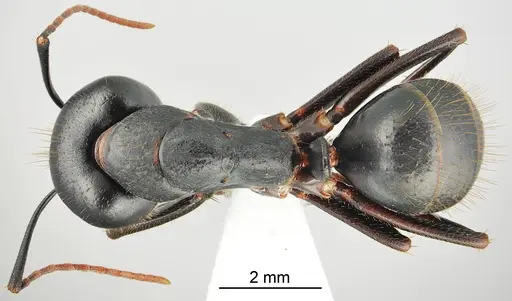
CASENT0872761
Voir sur AntWeb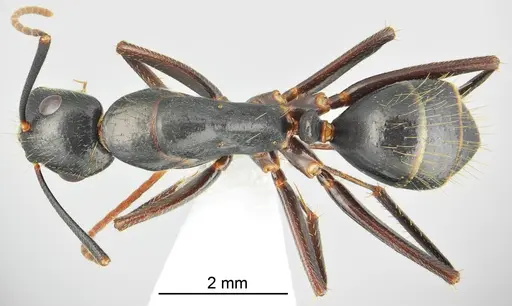
Littérature
Chargement de la carte de répartition...Chargement des produits...