
Apterostigma jubatum
- Nom sci.
- Apterostigma jubatum
- Tribu
- Attini
- Sous-famille
- Myrmicinae
- Auteur
- Wheeler, 1925
- Distribution
- Trouvé dans 0 pays
Introduction
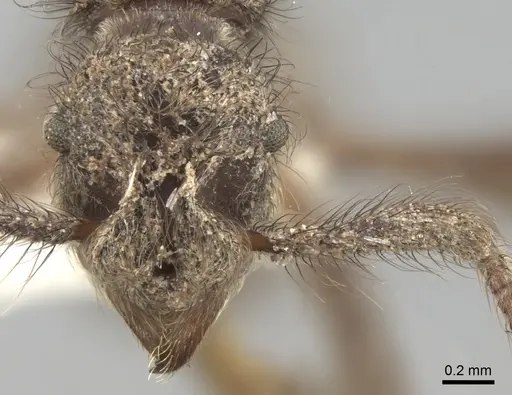
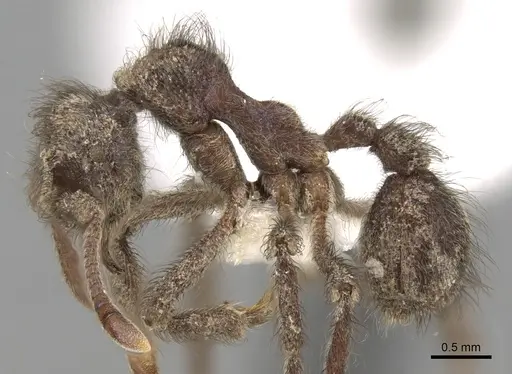
Apterostigma jubatum is a fungus-growing ant from the Amazon-Orinoco basin, found across Bolivia, Brazil, Colombia, Peru, Venezuela, and Guyana . These ants inhabit tropical lowland rainforests, with specimens collected at elevations as low as 35 meters in Colombia's Chocó region . They practice "lower agriculture" (paleoattine), cultivating fungal gardens on insect frass and decaying plant matter rather than fresh leaves . You can identify them by their ovoid frontal lobes, mandibles with 7-8 teeth, and a clypeus that curves inward then outward in profile . Like other Attini ants, they are small ants with a functional stinger typical of Myrmicinae. Their cryptic habits and specialized fungus-growing requirements make them challenging to keep in captivity.
Quick Summary
- Difficulty: Expert
- Origin & Habitat: Amazon-Orinoco basin, tropical lowland rainforest [1][2]
- Colony Type: Likely single-queen colonies based on typical Apterostigma patterns, though unconfirmed in available sources
- Size & Growth:
- Queen: Size data unavailable, no measurements in available research
- Worker: Size data unavailable, no measurements in available research
- Colony: Unknown, likely small to moderate based on genus patterns
- Growth: Slow
- Development: Unknown, likely several months based on fungus-growing ant biology (Fungus-growing ants typically develop slowly, first workers may take several months at tropical temperatures)
- Antkeeping:
- Temperature: 24-28°C (77-82°F), based on tropical lowland origin [1][2]
- Humidity: High humidity, 70-80%+, maintain damp substrate without waterlogging
- Diapause: No, tropical species from equatorial regions [1][2]
- Nesting: Requires fungus garden substrate, naturalistic setup with leaf litter and soil, or specialized fungus-growing formicarium with deep substrate chambers
- Behavior: Peaceful, slow-moving, and cryptic, primarily active in dark, humid conditions, not aggressive, small size requires excellent escape prevention with fine mesh barriers. Possesses a functional stinger typical of Myrmicinae, though rarely used against humans.
- Common Issues: fungus garden failure from contamination, incorrect humidity, or mold, difficulty obtaining founding queens with the required fungal inoculum, slow growth rate requires long-term commitment and patience, maintaining sterile conditions to prevent competing fungi in humid environment
Fungus Cultivation and Diet
Apterostigma jubatum belongs to the paleoattine group, practicing "lower agriculture" by cultivating fungal gardens on organic debris rather than fresh vegetation [5]. In captivity, you must provide suitable substrate for their fungus garden: insect frass, dead leaves, oatmeal, rice, or other organic matter. The ants consume the fungus, not the substrate itself. You will also need to provide protein sources such as small insects or fish flakes for the ants' direct consumption. The fungus garden is delicate, avoid overfeeding as excess organic matter can mold and contaminate the garden. Remove any uneaten protein within 24 hours to prevent bacterial growth.
Nest Setup and Humidity Management
Based on collections from tropical lowland rainforest at 35 meters elevation [1], these ants require warm, humid conditions with excellent ventilation to prevent mold. Use a naturalistic setup with sterile soil and leaf litter, or a deep substrate formicarium that allows for fungus garden construction. Maintain humidity at 70-80% by keeping the substrate damp but not waterlogged. The nest should have a moisture gradient, one side slightly drier than the other, so the ants can regulate their fungus garden's moisture by moving it or adjusting their tending behavior. Avoid stagnant air, which promotes harmful mold growth.
Temperature Requirements
As an Amazon-Orinoco basin species [1][2], Apterostigma jubatum requires stable tropical temperatures. Keep the nest area at 24-28°C year-round. You can create a gentle heat gradient using a heating cable on one side of the nest, placed on top to avoid drying out the water reservoir. Do not allow temperatures to drop below 20°C, as this can stress the colony and damage the fungus garden. Because they are tropical, they do not require hibernation and should be kept at consistent temperatures throughout the year.
Colony Founding
Founding behavior is unconfirmed in available research for this species. Based on typical patterns in the Attini tribe, queens likely found colonies claustrally, sealing themselves in a chamber with a pellet of fungus carried from their natal nest. The queen survives on stored body fat while tending the initial fungus garden until the first workers hatch. This makes captive founding extremely difficult, as you must obtain a queen already carrying the specific fungal symbiont, or provide the correct fungal species from an established colony. Most keepers acquire established colonies rather than attempting to found new ones.
Behavior and Temperament
These ants are peaceful, slow-moving, and cryptic. They possess a stinger typical of Myrmicinae ants but are not aggressive defenders of their territory. They spend most of their time tending the fungus garden in dark, humid chambers. Because of their small size, you must use excellent escape prevention: fine mesh screens under 1mm, tight-fitting lids, and barriers like Fluon or talcum powder on vertical surfaces. They are primarily active in dim light or darkness.
Frequently Asked Questions
Can I keep Apterostigma jubatum in a test tube?
No. Unlike many ant species, fungus-growing ants require substrate to cultivate their fungal gardens. A test tube setup cannot support the fungus garden they need to survive and grow.
What do Apterostigma jubatum eat?
They eat fungus that they cultivate themselves. You must feed the fungus with organic material like insect frass, dead leaves, oatmeal, or rice. The ants then consume the fungal growth. They also need protein sources like small insects or fish flakes.
How long until first workers for Apterostigma jubatum?
The egg-to-worker timeline is unconfirmed. Based on other fungus-growing ants, expect several months for the first workers to emerge at tropical temperatures.
Do Apterostigma jubatum need hibernation?
No. They are a tropical species from the Amazon-Orinoco basin [1][2] and do not require hibernation or diapause. Keep them at stable warm temperatures year-round.
Are Apterostigma jubatum good for beginners?
No. They are expert-level ants due to their specialized fungus-growing requirements, slow growth, difficulty in founding colonies, and the need for sterile, high-humidity conditions.
What temperature do Apterostigma jubatum need?
Keep them at 24-28°C (77-82°F) based on their tropical rainforest origin in the Amazon-Orinoco basin [1][2].
How big do Apterostigma jubatum colonies get?
Maximum colony size is unconfirmed in available research. Based on related paleoattine species, they likely remain relatively small, possibly reaching a few hundred workers over several years.
Can I keep multiple Apterostigma jubatum queens together?
Not recommended. They are likely monogyne (single-queen colonies), and combining unrelated queens has not been documented for this species.
Why is my fungus garden dying?
Common causes include incorrect humidity (too wet causes mold, too dry kills fungus), contamination by competing fungi or bacteria, feeding inappropriate materials, or temperature fluctuations. The garden must be kept sterile and damp but not waterlogged.
Report an Issue
The current care sheet is based fully on literature. See inconsistencies, or something that's incorrect? Please , it will be resolved after review from an admin. Contributing to the blogs tab also helps providing information, to make us be able to further improve the caresheets. Thank you for your support!
References

Cette fiche d'élevage est sous licence CC BY-SA 4.0 .
Blogs de la communauté
CASENT0281773
Voir sur AntWeb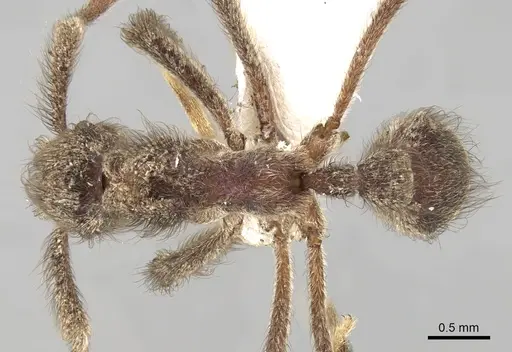
Littérature
Chargement de la carte de répartition...Chargement des produits...