
Aphaenogaster pachei
- Nom sci.
- Aphaenogaster pachei
- Tribu
- Stenammini
- Sous-famille
- Myrmicinae
- Auteur
- Forel, 1906
- Distribution
- Trouvé dans 0 pays
Introduction
Aphaenogaster pachei is a high-altitude ant native to the Himalayas in Nepal and India. They inhabit extreme elevations ranging from 1690 m in the Likhu-Khola valley up to 4800 m in the Mingbo Valley near Taboche . Most records come from the 3600-4400 m zone, including the type locality at Tseram, Nepal (3600 m) and Thorung Pedi (4400 m) . These ants live in montane forest environments near the tree line, nesting under stones and in rock crevices. Size data is unavailable for this species.
Quick Summary
- Difficulty: Expert
- Origin & Habitat: Himalayan mountain regions of Nepal and India, found at elevations between 1690-4800 m in montane forests and rocky alpine zones [1].
- Colony Type: Unconfirmed. No specific data on colony structure for this species.
- Size & Growth:
- Queen: Size data unavailable, no measurements in available literature [1].
- Worker: Size data unavailable, no measurements in available literature [1].
- Colony: Unknown, no colony size data exists for this species.
- Growth: Likely slow based on high-altitude habitat and cool conditions.
- Development: Unknown for this species. (Development likely slows significantly at cooler temperatures typical of their native range.)
- Antkeeping:
- Temperature: Keep cool at 15-18°C during the activity season. Hibernation at 5-10°C for 3-4 months is required. Based on collection elevations of 3600-4800 m [1], they cannot tolerate standard room temperature (22°C+).
- Humidity: Moderate humidity. Keep nest substrate lightly moist but not waterlogged, mimicking Himalayan forest floor conditions.
- Diapause: Yes, required. As a high-altitude Himalayan species, they need a winter rest period of 3-4 months at 5-10°C.
- Nesting: Naturalistic setups with flat stones over soil and rock mixes, or Y-tong nests with narrow chambers. They nest under stones and in rock crevices in nature.
- Behavior: Behavior is unstudied for this species. Likely ground-foraging with moderate activity. Escape risk is moderate for small ants.
- Common Issues: heat stress from keeping at standard room temperature (22-25°C), they need cool mountain conditions., failure to hibernate properly leads to colony decline or death., overhydration causing mold growth in cool conditions., slow growth leading to overfeeding and waste buildup.
Distribution and High-Altitude Habitat
Aphaenogaster pachei lives in one of the most extreme altitude ranges of any ant species. Records show them from 1690 m in the Likhu-Khola valley (Ramechhap district) up to 4800 m in the Mingbo Valley near Taboche (Solukhumbu district) [1]. Key populations include Tseram in Taplejung district (3600 m), Thorung Pedi (4400 m), Pangboche (3950 m), and Yaral and Taboche in the Mingbo Valley (3900-4800 m) [1]. At these elevations, temperatures remain cool even in summer and drop below freezing in winter. This habitat consists of montane forests, rocky alpine meadows, and scree slopes. The ants nest under flat stones and in soil pockets where they can find stable microclimates.
Temperature and Seasonal Care
Temperature management is the most critical aspect of keeping Aphaenogaster pachei. Unlike tropical ants that need heating, these mountain ants need cooling. Standard room temperature (22-25°C) will likely stress or kill them. Keep them at 15-18°C during their active season (spring through autumn). They absolutely require a hibernation period of 3-4 months at 5-10°C to simulate Himalayan winter conditions. Without this cold rest, the colony will fail. You can achieve these temperatures using a wine cooler, basement, or dedicated cooling setup. Monitor for condensation in cool conditions, as this can cause mold. [1]
Nest Preferences
In nature, Aphaenogaster pachei nests under flat stones and in rock crevices where the stone provides thermal mass and moisture retention. For captive housing, use a naturalistic setup with flat stones over a soil/sand mix, or a Y-tong nest with narrow chambers. The nest should offer tight spaces that mimic rock crevices. Provide a humidity gradient with one side slightly moister than the other. Because they live at high altitude with intense UV exposure, they likely prefer dim conditions, keep their nest shaded or covered.
Feeding and Diet
While specific diet studies are lacking for this species, Aphaenogaster species are generally omnivorous scavengers. They likely collect seeds, small dead insects, and honeydew from aphids in their mountain habitat. In captivity, offer a mix of seeds (chia, canary seed, dandelion seeds), small protein sources (fruit flies, pinhead crickets, boiled egg), and sugar water or honey water. Feed small amounts frequently rather than large dumps, as cool temperatures slow decomposition and mold growth.
Colony Founding
Founding behavior has not been directly observed in Aphaenogaster pachei. No data exists on whether queens found colonies alone (claustral) or require any type of provisioning. House new queens in small, dark test tubes or founding chambers with minimal disturbance. Do not attempt to combine multiple queens as colony structure is unconfirmed.
Frequently Asked Questions
Can I keep Aphaenogaster pachei at room temperature?
No. Room temperature (22-25°C) is too warm for this high-altitude species. They need cool conditions around 15-18°C during the active season.
Do Aphaenogaster pachei need hibernation?
Yes. As a Himalayan species living at 3600-4800 m elevation, they require a winter rest period of 3-4 months at 5-10°C.
How long until Aphaenogaster pachei gets their first workers?
Unknown. No development data exists for this species.
Can I keep multiple Aphaenogaster pachei queens together?
Not recommended. Colony structure is unconfirmed for this species, and combining unrelated queens usually leads to fighting.
What do Aphaenogaster pachei eat?
Likely omnivorous, offer seeds, small insects, and sugar water. They probably scavenge dead insects and collect seeds in their mountain habitat.
Are Aphaenogaster pachei good for beginners?
No. They are expert-level ants due to their need for cool temperatures and hibernation. Most beginners lack the cooling equipment needed.
Where are Aphaenogaster pachei found in the wild?
They are found in Nepal and India at extreme elevations up to 4800 m, including areas like Tseram, Thorung Pedi, Pangboche, and the Mingbo Valley.
How big do Aphaenogaster pachei colonies get?
Unknown. No colony size data exists for this species.
Report an Issue
The current care sheet is based fully on literature. See inconsistencies, or something that's incorrect? Please , it will be resolved after review from an admin. Contributing to the blogs tab also helps providing information, to make us be able to further improve the caresheets. Thank you for your support!
References

Cette fiche d'élevage est sous licence CC BY-SA 4.0 .
Blogs de la communauté
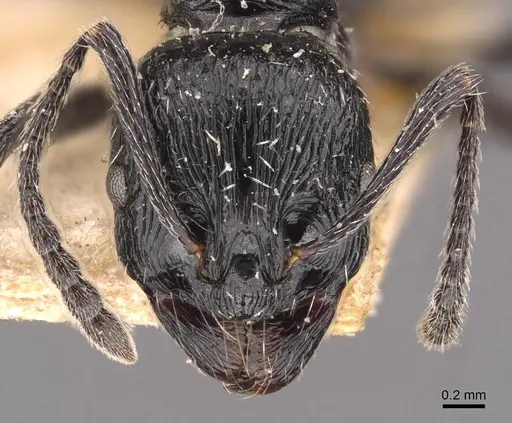
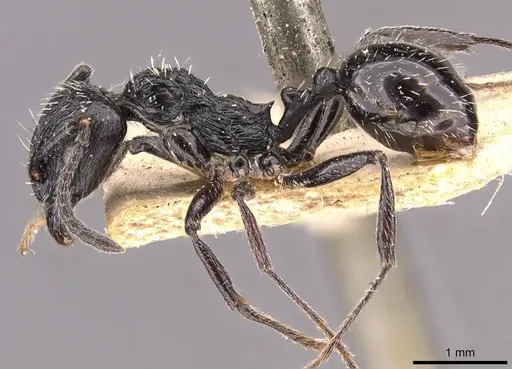
CASENT0907694
Voir sur AntWeb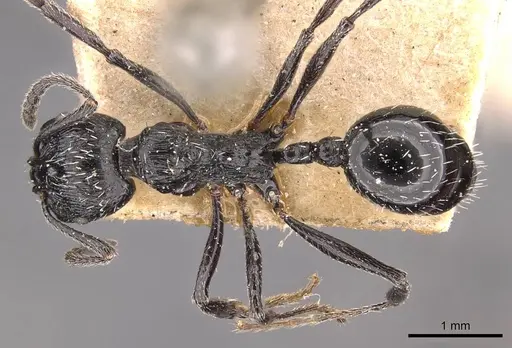
Littérature
Chargement de la carte de répartition...Chargement des produits...