
Aenictus wayani
- Nom sci.
- Aenictus wayani
- Sous-famille
- Dorylinae
- Auteur
- Jaitrong & Yamane, 2011
- Distribution
- Trouvé dans 0 pays
Introduction
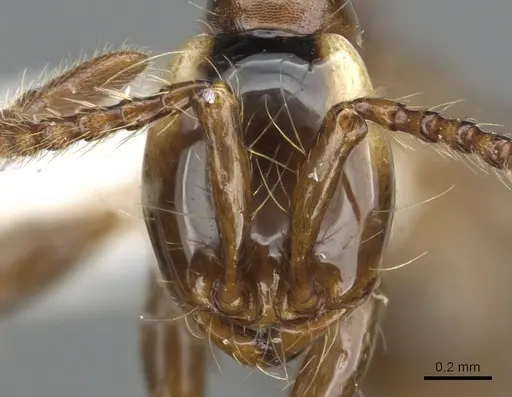
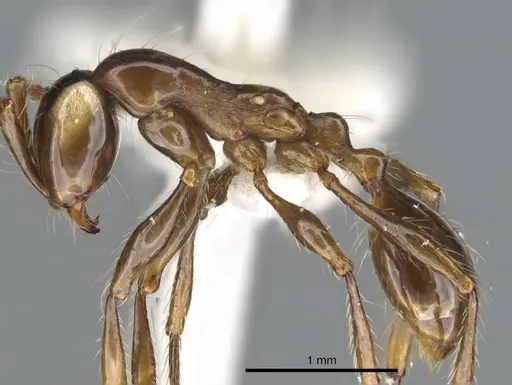
Aenictus wayani is a small army ant species with workers measuring about 4 mm in total length . Workers are slender and reddish-brown with a distinctive dark spot (typhlatta spot) on the back of the head . This species is known only from the worker caste - no queens or males have ever been collected . Aenictus wayani inhabits primary forests in Sulawesi, Indonesia and Mindanao, Philippines, living in leaf litter from lowland areas around 150 meters elevation up to highland regions near 800 meters . These are army ants, meaning they live in large colonies that are constantly on the move rather than building permanent nests .
Quick Summary
- Difficulty: Expert
- Origin & Habitat: Primary forests in Sulawesi, Indonesia and Mindanao, Philippines, collected from leaf litter in lowland and highland primary forest at 150-800 meters elevation [1][3]
- Colony Type: Army ant with nomadic lifestyle, colonies contain multiple queens and are constantly on the move, raiding for prey rather than establishing permanent nests [2]
- Size & Growth:
- Queen: Unknown, queens have never been collected for this species [2]
- Worker: About 4 mm total length [1]
- Colony: Unknown for this species, army ant colonies typically contain thousands to millions of workers
- Growth: Unknown for this species
- Development: Unknown for this species (Army ants typically have rapid development, but specific timelines are unconfirmed for Aenictus wayani)
- Antkeeping:
- Temperature: Keep warm and stable, roughly 24-28°C, based on tropical forest habitat
- Humidity: High humidity, maintain damp conditions similar to forest leaf litter, substrate should feel moist but not waterlogged
- Diapause: No. This tropical species does not require winter rest
- Nesting: Nomadic species with no permanent nest. Requires massive enclosures with constant movement space, incompatible with standard formicaria
- Behavior: Highly active predators that hunt in groups. Workers are small and slender, allowing escape through tiny gaps [1]. They will bite if threatened but are too small to harm humans. Workers are nocturnal, with the type series collected at night [1].
- Common Issues: only workers are known to science, making captive colony founding impossible without capturing an entire wild colony, colonies likely contain thousands to millions of workers, requiring enormous enclosures impossible in home settings, nomadic behavior means they do not stay in one place, they will abandon any nest site within days, specialized diet of live termites or ant brood is extremely difficult to provide in captivity, small size combined with slender bodies allows easy escape through standard mesh or lid gaps
Army Ant Biology and Captive Feasibility
Aenictus wayani belongs to the army ants, a group characterized by large colony sizes, nomadic lifestyles, and group predation [2]. Unlike typical ants that establish permanent nests, army ants are constantly on the move, carrying their brood and queen to new locations every few days. This biology makes them essentially impossible to keep in standard ant farms or formicaria. Additionally, only worker specimens have ever been collected for this species, queens remain unknown to science, meaning you cannot purchase or collect a founding queen [2]. Captive keeping would require capturing an entire wild colony with its queen, which presents enormous ethical, legal, and practical challenges.
Housing Requirements
Standard ant keeping equipment like test tubes, Y-tong nests, or acrylic formicaria will not work for Aenictus wayani. These ants require massive enclosures to accommodate their nomadic behavior and large colony sizes. In nature they inhabit leaf litter in primary forests, constantly moving through the substrate [1][3]. Any captive setup would need to replicate hectares of forest floor and allow for regular relocation of the entire colony. Escape prevention is critical, at about 4 mm long with slender bodies, workers can squeeze through the tiniest gaps in mesh or lids [1].
Diet and Feeding
As army ants, Aenictus wayani are specialized group predators. Related species raid termite colonies and other ant nests, overwhelming prey with numbers. They do not typically accept standard ant foods like sugar water, honey, or dead insects. Providing live termite colonies or ant brood on a daily basis in sufficient quantities to feed thousands of workers is practically impossible for hobbyists. This dietary specialization is a primary reason these ants cannot be maintained in captivity. [2]
Temperature and Environment
Based on their collection from tropical primary forests in Sulawesi and the Philippines, keep temperatures warm and stable around 24-28°C [1][3]. They inhabit areas from 150 meters to 800 meters elevation, suggesting they tolerate some temperature variation but always within tropical ranges [1]. Maintain high humidity similar to damp forest leaf litter, the substrate should feel moist to the touch. Do not allow the enclosure to dry out. As a tropical species, they do not require hibernation or winter rest.
Behavior and Activity
Workers are collected at night, suggesting nocturnal foraging behavior [1]. They are active, aggressive predators that hunt in coordinated groups. While harmless to humans due to their small size, they will bite if threatened. Their long antennae likely help them navigate and communicate during raids [1]. The colony maintains a high level of activity constantly, with no dormant periods, reflecting their tropical origins and army ant lifestyle.
Frequently Asked Questions
Can I keep Aenictus wayani in a test tube?
No. Army ants are nomadic and require massive spaces to move constantly. They cannot be confined to test tubes or standard formicaria. Additionally, no queens are known for this species, so you cannot start a colony from a single queen [2].
How do I found an Aenictus wayani colony?
You cannot found a colony from a single queen because queens have never been collected for this species. Army ants reproduce by colony fission (splitting), which requires capturing an entire mature wild colony with its queen, something that is practically impossible, ethically questionable, and likely illegal without permits [2].
What do Aenictus wayani eat?
They are specialized predators that likely hunt termites and other ants in group raids. They will not accept sugar water or dead insects. Providing their natural diet requires live termite colonies, making captive keeping extremely difficult.
How big do Aenictus wayani colonies get?
The exact size is unknown, but army ants typically maintain colonies containing thousands to millions of workers. This large size makes them impossible to house in standard ant keeping setups.
Do Aenictus wayani need hibernation?
No. They come from tropical regions (Sulawesi and Philippines) and remain active year-round. They do not require winter rest or diapause.
Are Aenictus wayani dangerous?
No. Workers are only about 4 mm long and harmless to humans, though they can bite if threatened [1].
Can I keep multiple Aenictus wayani queens together?
Army ants naturally live with multiple queens (polygyne), but you cannot purchase or collect these queens separately. Combining unrelated queens is not documented and would likely result in fighting. Captive colonies would need to be captured as complete units from the wild.
Are Aenictus wayani good for beginners?
No. They are effectively impossible for hobbyists to keep due to their nomadic lifestyle, large colony size, specialized diet, and the fact that no queens are available. They are suitable only for specialized research facilities with massive resources [2].
Report an Issue
The current care sheet is based fully on literature. See inconsistencies, or something that's incorrect? Please , it will be resolved after review from an admin. Contributing to the blogs tab also helps providing information, to make us be able to further improve the caresheets. Thank you for your support!
References

Cette fiche d'élevage est sous licence CC BY-SA 4.0 .
Blogs de la communauté
CASENT0903690
Voir sur AntWeb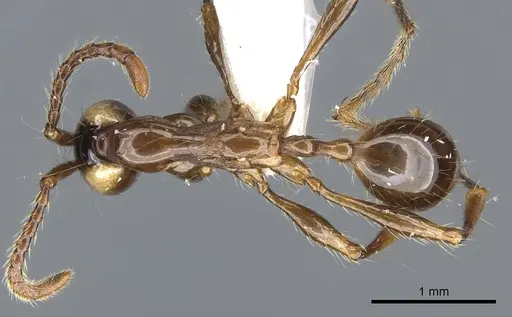
Littérature
Chargement de la carte de répartition...Chargement des produits...