
Aenictus sagei
- Nom sci.
- Aenictus sagei
- Sous-famille
- Dorylinae
- Auteur
- Forel, 1901
- Distribution
- Trouvé dans 0 pays
Introduction
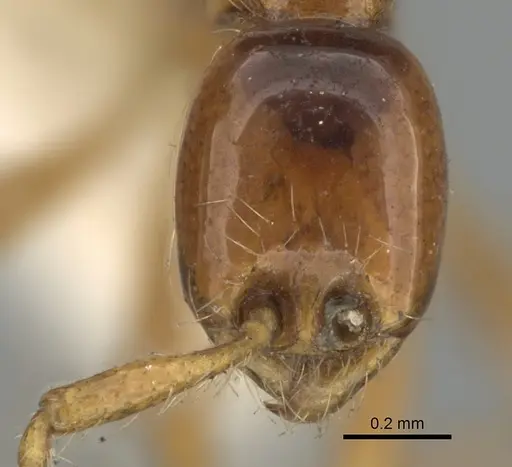
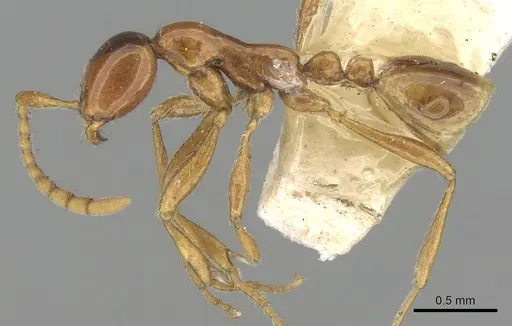
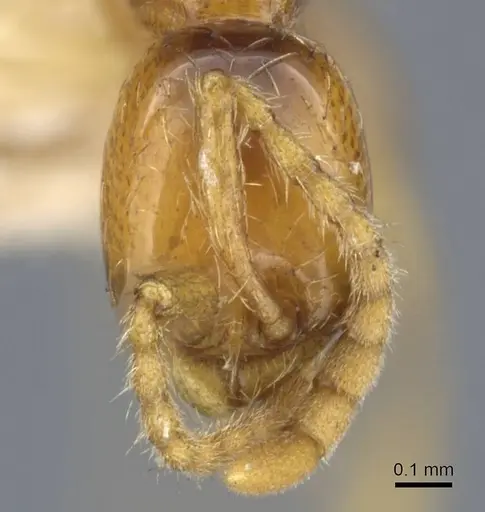
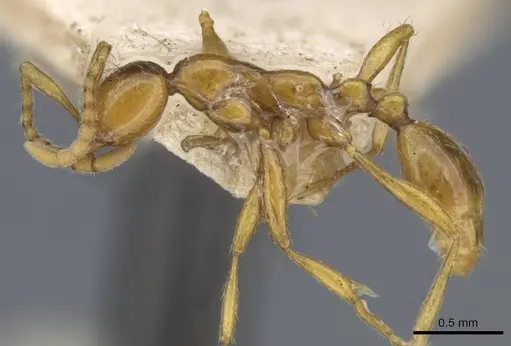
Aenictus sagei is a small army ant species native to the Himalayan region of South Asia, found in India, Nepal, Pakistan, and Afghanistan at altitudes up to 1500 meters . Workers measure 3.1-3.2mm in total length with a distinctive hairy body and short antennae that do not extend beyond the head . Their coloration ranges from deep yellow to pale brown, with notably long pronotal hairs (0.20-0.25mm) that distinguish them from close relatives like Aenictus wroughtonii . As an army ant, this species is a specialized predator that hunts other small ants in raiding columns, making them fascinating but challenging to keep.
Quick Summary
- Difficulty: Expert
- Origin & Habitat: North-central India, Nepal, Pakistan, and Afghanistan at altitudes up to 1500m. Workers have been observed preying on Paratrechina and Plagiolepis ants at 1380-1400m elevation in the Himalayan foothills [2][1].
- Colony Type: Colony structure is not documented in scientific literature. As an army ant, they likely form single-queen colonies, though detailed studies on their colony structure are lacking.
- Size & Growth:
- Queen: Size data unavailable, queen caste has not been described in scientific literature
- Worker: 3.1-3.2mm [2]
- Colony: Unknown, colony size data is not available
- Growth: Unknown, development timeline has not been studied
- Development: Unknown, no direct studies on development time exist for this species. (Development time is unconfirmed. Army ants typically have faster development than many ant genera due to their nomadic lifestyle and need for rapid worker production.)
- Antkeeping:
- Temperature: Keep at 24-28°C based on their Himalayan origin, they tolerate cooler conditions than tropical army ants but need warmth for active hunting [1]. Room temperature (22-25°C) is likely suitable, with a slight gradient if possible.
- Humidity: Maintain moderate humidity (50-70%). Their natural habitat in the Himalayan foothills experiences seasonal monsoon rains but also dry periods. Keep the outworld slightly moist but allow drying between waterings.
- Diapause: Likely required. Based on their distribution in the Himalayan region (up to 1500m altitude), they probably experience a winter rest period. Provide a cool period (10-15°C) for 2-3 months during winter.
- Nesting: Use a naturalistic setup with multiple connected chambers or a Y-tong/plaster nest with chambers that allow for their nomadic behavior. Army ants need to move their brood between chambers periodically. Provide a spacious outworld for raiding activities.
- Behavior: Aenictus sagei is an active predator that raids in columns, hunting other small ant species like Paratrechina and Plagiolepis [2][4]. They are aggressive hunters but pose no danger to humans, they are too small to sting effectively. Their small size (3mm) means escape prevention is important, use fine mesh and tight-fitting barriers. They are highly active and will constantly forage, requiring more space than typical static-nesting ants.
- Common Issues: specialized diet makes them difficult to feed, they need live ant prey, not standard insect feeders, colonies may fail if not given enough space to raid and move brood, humidity control is critical, too wet causes mold, too dry causes desiccation, winter diapause is likely required but timing and duration are unclear, queen and colony structure are poorly documented, making captive breeding challenging
Understanding Army Ant Biology
Aenictus sagei belongs to the Dorylinae subfamily, commonly known as army ants. Unlike most ant species that establish permanent nests, army ants are nomadic, they periodically relocate their entire colony to follow prey populations and maintain optimal conditions [4]. This nomadic behavior is driven by their predatory lifestyle: they raid columns of other ant species (particularly Paratrechina and Plagiolepis in this species' case) and consume entire colonies [2]. Workers are all the same size (no major/minor worker polymorphism) and work together in coordinated raiding parties. This biology makes them fascinating but challenging to keep, they need more space and more specialized care than typical ants.
Housing and Nest Setup
Aenictus sagei requires a setup that accommodates their nomadic nature. A naturalistic setup with multiple connected chambers or a Y-tong/plaster nest with expandable sections works best. The nest should have multiple chambers connected by tunnels so the colony can move their brood between areas. The outworld must be spacious enough for raiding columns to form and hunt. Use a test tube setup for founding colonies, but be prepared to move them to a larger setup quickly once workers emerge. Escape prevention is critical despite their small size, use tight-fitting lids and fine mesh barriers (0.5mm or smaller) as they can squeeze through surprisingly small gaps. [2]
Feeding and Diet
This species is an obligate predator on other ants, they will not accept standard feeder insects or sugar water as primary food [4]. You must provide live ant colonies as prey, specifically small ants like Paratrechina, Plagiolepis, or similar tiny ants. This makes them one of the most difficult ant species to keep in captivity. Some keepers have success offering small live insects (fruit flies, pinhead crickets) as supplementary prey, but the primary diet must be ant colonies. You may need to maintain separate feeder ant colonies to provide consistent prey. Feeding frequency depends on colony size, observe raiding activity and adjust accordingly.
Temperature and Seasonal Care
Based on their Himalayan distribution at 1380-1500m altitude, Aenictus sagei prefers cooler temperatures than many tropical army ants [1]. Keep the nest at 24-28°C with a slight gradient, allowing workers to choose their preferred temperature. Room temperature in most homes (22-25°C) is likely suitable. They probably require a winter diapause period given their mountain habitat, provide cool conditions (10-15°C) for 2-3 months during winter. This rest period is likely important for colony health and may trigger reproductive behavior. Monitor colony activity to determine the best timing and duration for your specific colony.
Behavior and Colony Dynamics
Aenictus sagei workers are highly active and organized, forming raiding columns to hunt prey colonies [4]. They are not aggressive toward humans and cannot sting effectively due to their small size. The colony will establish bivouacs (temporary nests) in suitable cavities and move periodically. Unlike many ants, they do not store food, they rely on constant hunting. Colony size is unknown but likely reaches several hundred workers based on related species. They show characteristic army ant behavior with workers moving in coordinated groups. Understanding this nomadic, predatory lifestyle is essential for successful keeping.
Frequently Asked Questions
What do Aenictus sagei ants eat?
Aenictus sagei is an obligate predator that feeds almost exclusively on other ant species. In the wild, they prey on Paratrechina and Plagiolepis ants [4]. In captivity, you must provide live ant colonies as primary food, standard feeder insects are generally not accepted. This makes them one of the most challenging ant species to keep.
How long does it take for Aenictus sagei to develop from egg to worker?
The development timeline has not been scientifically documented for this species. Development time is unconfirmed.
Are Aenictus sagei ants dangerous?
No, Aenictus sagei poses no danger to humans. Workers are only 3mm and their sting is ineffective against human skin. They are aggressive hunters of other ants but completely harmless to keepers.
Can I keep Aenictus sagei in a test tube setup?
A test tube can work for a founding colony, but you will need to move them to a larger setup quickly. Army ants need space to form raiding columns and move their brood. A naturalistic setup with multiple connected chambers or an expandable formicarium is recommended.
Do Aenictus sagei ants need hibernation?
Based on their Himalayan distribution at altitudes up to 1500m, they likely require a winter diapause period [1]. Provide cool conditions (10-15°C) for 2-3 months during winter. This is likely important for colony health.
How big do Aenictus sagei colonies get?
Colony size is not well documented in scientific literature. Based on related Aenictus species, colonies likely reach several hundred to a few thousand workers. The exact maximum size for this species is unknown.
What temperature do Aenictus sagei ants need?
Keep the nest at 24-28°C based on their Himalayan origin. They can tolerate cooler conditions than tropical army ants. Room temperature (22-25°C) is likely suitable. Provide a slight temperature gradient so workers can choose their preferred area.
Why are my Aenictus sagei dying?
The most common causes are: lack of live ant prey (they will starve rather than eat standard insects), improper humidity (too wet causes mold, too dry causes desiccation), lack of space for raiding, and stress from too-frequent nest disturbances. Army ants are sensitive to disruption of their nomadic cycle.
Can I keep multiple queens together?
Colony structure (monogyne vs polygyne) has not been documented for this species. Army ants typically have single-queen colonies, but combining unrelated queens has not been studied. This is not recommended without documented evidence of success.
Are Aenictus sagei good for beginners?
No, this species is not recommended for beginners. Their specialized diet (requiring live ant colonies as prey), nomadic behavior, and unclear colony requirements make them one of the most challenging ant species to keep. They are best suited for experienced antkeepers who can provide consistent live prey.
Report an Issue
The current care sheet is based fully on literature. See inconsistencies, or something that's incorrect? Please , it will be resolved after review from an admin. Contributing to the blogs tab also helps providing information, to make us be able to further improve the caresheets. Thank you for your support!
References

Cette fiche d'élevage est sous licence CC BY-SA 4.0 .
Blogs de la communauté
CASENT0281958
Voir sur AntWeb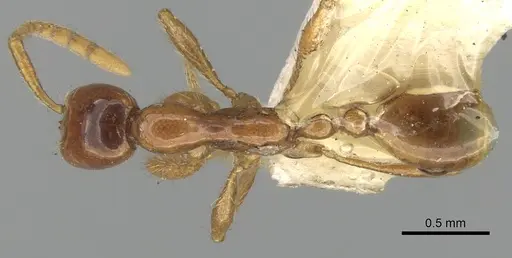
CASENT0907023
Voir sur AntWeb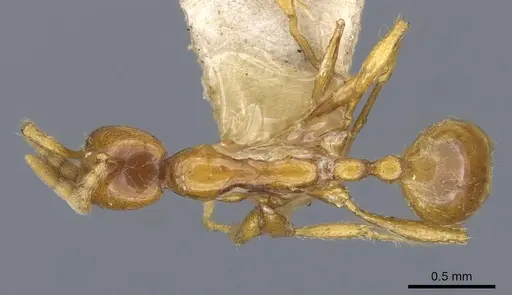
Littérature
Chargement de la carte de répartition...Chargement des produits...