
Acropyga donisthorpei
- Nom sci.
- Acropyga donisthorpei
- Tribu
- Plagiolepidini
- Sous-famille
- Formicinae
- Auteur
- Weber, 1944
- Distribution
- Trouvé dans 1 pays
Introduction
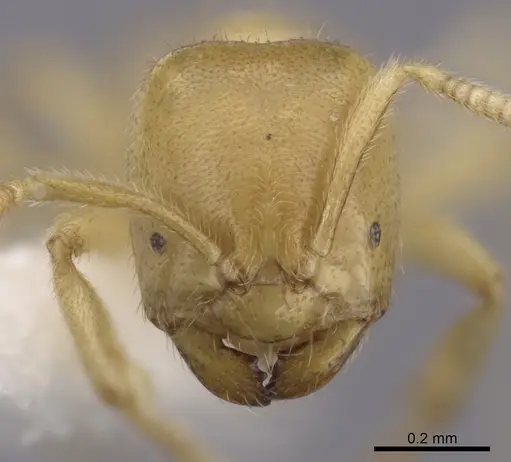
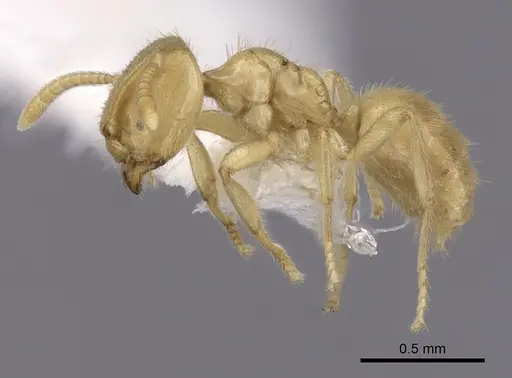
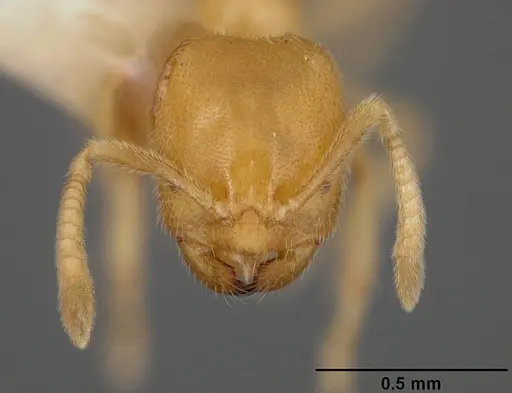
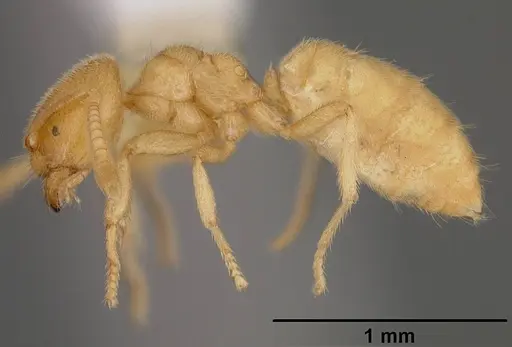
Acropyga donisthorpei is a tiny neotropical ant measuring 1.86-2.23mm for workers and 3.89mm for queens, with a distinctive yellowish-brown coloration . These ants belong to the Formicinae subfamily and are recognized by their 11-segmented antennae and 5-toothed mandibles, with the third tooth being significantly smaller than the others . The species has a wide distribution across tropical South America, ranging from Bolivia northwest to Peru and east to Guyana, with recent records extending into Brazil's Pará state . What makes this ant unique is its obligate relationship with mealybugs - they are specialized mealybug-tenders that farm Neochavesia mealybugs for honeydew, making them obligate mealybug farmers .
Quick Summary
- Difficulty: Hard
- Origin & Habitat: Rainforests of tropical South America (Bolivia, Ecuador, Guyana, Peru, and recently Brazil's Pará state). In the wild, they nest in leaf litter and rotten wood [1].
- Colony Type: Colony structure is unconfirmed.
- Size & Growth:
- Queen: 3.89mm [1]
- Worker: 1.86-2.23mm [1]
- Colony: Unknown, no colony size data available
- Growth: Unknown, no development data available
- Development: Unknown, no specific development data exists for this species (As a tropical Formicinae, development likely takes several weeks at warm temperatures, but exact timing is unconfirmed.)
- Antkeeping:
- Temperature: Keep warm, maintain temperatures in the low-to-mid 20s°C range. As a tropical rainforest species from the Amazon basin, they need consistently warm conditions.
- Humidity: High humidity required, keep the nest substrate consistently moist but not waterlogged. These ants live in leaf litter and rotting wood in humid rainforests.
- Diapause: No, as a tropical species, they do not require hibernation. Maintain warm temperatures year-round.
- Nesting: Naturalistic setup works best. They nest in leaf litter and rotten wood in the wild, so a naturalistic terrarium with moist substrate, decaying wood pieces, and leaf litter provides ideal conditions.
- Behavior: These ants are very small and relatively docile. They are not aggressive and lack a functional stinger. Their primary activity is tending mealybugs, they farm Neochavesia mealybugs for honeydew, which forms their main food source [3]. Workers are slow-moving and spend much of their time in the leaf litter layer. Escape prevention is critical due to their tiny 2mm size, they can squeeze through standard mesh barriers easily. Use fine mesh and tight-fitting lids.
- Common Issues: tiny size makes escape likely without fine mesh barriers, mealybug farming means they require live mealybug cultures to survive, honeydew is essential, high humidity requirements can lead to mold problems if ventilation is poor, lack of available colony data makes captive breeding challenging, tropical species requires consistent warmth year-round
Mealybug Farming - Their Special Relationship
Acropyga donisthorpei is one of the few ant species that practices obligate mealybug farming. In the wild, they tend mealybugs belonging to the genus Neochavesia, which are their primary food source [3]. The ants protect the mealybugs from predators and potentially move them to better feeding sites, while the mealybugs produce honeydew, a sugary secretion that the ants consume. This mutualistic relationship is so specialized that the ants cannot survive without access to honeydew-producing insects. In captivity, you will need to culture mealybugs or scale insects to feed your colony. Without a steady source of honeydew, these ants will likely starve even if other foods are available. Some keepers have had success offering sugar water or honey as a substitute, but this should only be a supplement to live mealybug cultures.
Housing and Nest Setup
These tiny ants require a naturalistic setup that mimics their natural habitat in the rainforest leaf litter. A small terrarium or container with a layer of moist substrate (coconut fiber or soil), pieces of decaying wood, and leaf litter works well. The setup should maintain high humidity while allowing for some ventilation to prevent mold. Because they are so small (workers are only about 2mm), escape prevention is critical. Standard test tube setups may work for founding colonies, but ensure the cotton plug is packed tightly and consider using fine mesh on any openings. A naturalistic approach with a shallow water reservoir or misting system helps maintain humidity. Avoid deep, dark nests, these ants prefer to stay near the surface in the leaf litter layer where they can access their farmed mealybugs. [1]
Feeding and Diet
The primary food source for Acropyga donisthorpei is honeydew produced by mealybugs in the genus Neochavesia [3]. In captivity, you must establish a culture of mealybugs or scale insects to provide this essential food source. Place the mealybug culture in the outworld or foraging area where the ants can access them. Some keepers report success offering sugar water or diluted honey as a supplemental food source, but these should not replace the honeydew relationship. Protein foods are likely accepted but not required if mealybugs are available. The ants will tend the mealybug colony much like they would in the wild, so establishing a sustainable mealybug culture is key to long-term success.
Temperature and Humidity
As a tropical species from the Amazon basin, Acropyga donisthorpei requires warm and humid conditions. Keep temperatures in the range of 24-28°C year-round, they do not tolerate cool temperatures well. A heating mat on one side of the enclosure can help maintain warmth, but ensure there are cooler areas so the ants can regulate their temperature. Humidity should be kept high. Use a moisture-retaining substrate and consider misting the enclosure regularly. However, balance humidity with adequate ventilation to prevent mold growth, which can quickly kill a small colony. A small water reservoir in the setup also helps maintain humidity through evaporation. [1]
Behavior and Temperament
These are docile, slow-moving ants that show no aggression toward keepers. Workers spend most of their time in the leaf litter layer, tending their mealybug colonies. They are not defensive and do not possess a functional stinger capable of penetrating human skin. Their small size (around 2mm) makes them vulnerable in captivity, they can easily be crushed during transfers or nest inspections. The main behavioral concern is their tendency to stay hidden in the substrate, making them less visible than larger ant species. They are not escape artists in the traditional sense, but their tiny size means they can slip through gaps that larger ants cannot, so fine mesh and tight seals are essential. [1]
Frequently Asked Questions
Can I keep Acropyga donisthorpei in a test tube?
Yes, test tubes can work for founding colonies, but you must use excellent escape prevention. Pack the cotton plug very tightly and cover any openings with fine mesh. These ants are only about 2mm tall and can squeeze through tiny gaps. Consider transitioning to a naturalistic setup once the colony grows, as they prefer the leaf litter environment where they can access mealybugs.
What do Acropyga donisthorpei eat?
Their primary food is honeydew from mealybugs in the genus Neochavesia. You must culture mealybugs or scale insects to feed your colony, this is essential for their survival. Some keepers offer sugar water or honey as a supplement, but these cannot replace the honeydew relationship. Protein foods may be accepted but are not required if mealybugs are available.
How long until first workers in Acropyga donisthorpei?
The development timeline is unconfirmed, no specific data exists for this species. As a tropical ant, development likely takes several weeks at optimal warm temperatures, but exact timing is unknown.
Are Acropyga donisthorpei good for beginners?
No, this species is not recommended for beginners. They have very specific dietary requirements (obligate mealybug farming), need high humidity, and require warm tropical conditions. The lack of available colony data and captive breeding information makes them challenging even for experienced antkeepers. Consider starting with more documented species like Lasius or Camponotus.
Do Acropyga donisthorpei need hibernation?
No, they do not require hibernation. As a tropical species from the Amazon basin, they need warm temperatures year-round. Maintain temperatures in the low-to-mid 20s°C throughout the year. Cool temperatures can stress and potentially kill these ants.
When should I move Acropyga donisthorpei to a formicarium?
Consider keeping them in a naturalistic setup rather than a traditional formicarium. A small terrarium with moist substrate, decaying wood, and leaf litter better mimics their natural habitat. If using a formicarium, choose one with high humidity retention and small chambers scaled to their tiny 2mm size.
Why are my Acropyga donisthorpei dying?
Common causes include: lack of mealybug culture (they need honeydew to survive), low humidity (they need consistently moist substrate), cool temperatures (they need warmth), or escape through tiny gaps. These ants have very specific requirements and do not adapt well to typical ant-keeping setups. Ensure you have an established mealybug culture before acquiring this species.
Can I keep multiple queens of Acropyga donisthorpei together?
This has not been studied. The colony structure (monogyne vs polygyne) is unconfirmed for this species. Without data on their natural colony structure, combining unrelated queens is not recommended.
How big do Acropyga donisthorpei colonies get?
Colony size data is not available. Based on related Acropyga species and their small worker size, colonies likely remain relatively small. Their mealybug-farming lifestyle may limit colony size as it depends on the mealybug population.
Report an Issue
The current care sheet is based fully on literature. See inconsistencies, or something that's incorrect? Please , it will be resolved after review from an admin. Contributing to the blogs tab also helps providing information, to make us be able to further improve the caresheets. Thank you for your support!
References

Cette fiche d'élevage est sous licence CC BY-SA 4.0 .
Blogs de la communauté
CASENT0249916
Voir sur AntWeb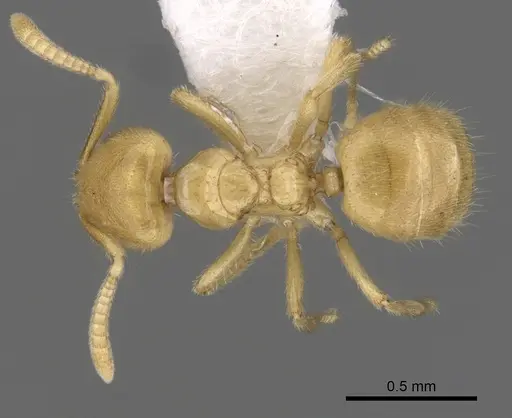
USNMENT00442237
Voir sur AntWeb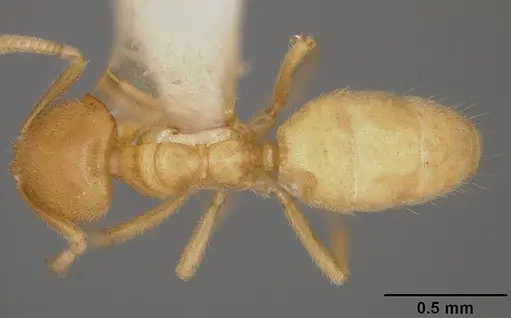
Littérature
Chargement de la carte de répartition...Chargement des produits...