
Vombisidris lochme
- Nom. cient.
- Vombisidris lochme
- Tribu
- Crematogastrini
- Subfamilia
- Myrmicinae
- Autor
- Bolton, 1991
- Distribución
- Encontrado en 0 países
Introducción
Vombisidris lochme is a small, uniformly yellow ant species known only from the island of Sulawesi in Indonesia. Workers measure 3.5 mm in total length and were first described by Bolton in 1991 from specimens collected by pyrethrum fogging of a forest tree at 400 m elevation in Dumoga Bone National Park . This arboreal collection suggests they live in the tropical rainforest canopy, a microhabitat that is rarely sampled and explains why wild colonies are so poorly documented. The species belongs to the *dryas* group within the genus *Vombisidris*, distinguished by fine body sculpture and short, blunt body hairs . Almost nothing is known about the biology of *V. lochme* in the wild or in captivity, no queen, colony structure, or dietary data have been published. What little we know comes from a few museum specimens and morphological comparisons. The tropical forest environment of Sulawesi implies they need warm, humid conditions with access to vertical space. Their small size and cryptic coloration suggest they occupy hidden spaces in the canopy.
Quick Summary
- Difficulty: Unknown
- Origin & Habitat: Sulawesi, Indonesia, tropical rainforest at 400 m elevation, collected from forest canopy via pyrethrum fogging [1][2]
- Colony Type: Unknown, colony structure has not been documented. Based on typical Myrmicinae patterns, likely single-queen colonies.
- Size & Growth:
- Queen: Undocumented, no queen specimens have been described
- Worker: ~3.5 mm [1]
- Colony: Unknown, no data available
- Growth: Unknown
- Development: Unknown, no data exists for this species. Based on similar small tropical Myrmicinae, estimated 4-8 weeks at optimal temperature. (Development timeline is unconfirmed. Estimate based on genus-level patterns of small tropical ants.)
- Antkeeping:
- Temperature: Tropical species, aim for 24-28°C. Sulawesi maintains year-round warmth, so no hibernation needed. Provide a gentle gradient so workers can self-regulate [1].
- Humidity: High humidity preferred, think damp tropical forest floor/canopy. Keep substrate consistently moist but not waterlogged. Mist occasionally and provide a water tube [1].
- Diapause: No, being a tropical species from near-equatorial Sulawesi, they do not require a winter rest period [1].
- Nesting: No specific data exists. Based on their forest canopy collection, they likely prefer enclosed spaces with good humidity retention. Test tubes or small Ytong (AAC) nests with tightly sealed chambers work well as starting points.
- Behavior: Behavior is undocumented in captivity. Based on related Myrmicinae and their tiny size, they are likely shy and non-aggressive. They probably forage individually or in small groups rather than forming large trails. Their escape risk is moderate due to small size, standard barrier methods should suffice, but ensure no gaps exist. Defense mechanism: As a member of tribe Crematogastrini, they have a modified, flattened stinger used to smear venom rather than sting, this is typical of the subfamily.
- Common Issues: no documented captive care means every aspect is experimental, expect colony loss when pioneering husbandry., humidity control is critical, too dry causes desiccation, too wet leads to mold and fungal outbreaks., tropical species cannot tolerate cool temperatures, maintain above 24°C year-round or colony will weaken., lack of dietary data means you may need to experiment with various protein and sugar sources, risking starvation if they refuse offered food., small colony size and unknown founding method make them vulnerable to stress, avoid disturbing the nest.
Origin and Natural Habitat
Vombisidris lochme is endemic to the island of Sulawesi in Indonesia, specifically the northern region around Dumoga Bone National Park where the type specimen was collected at 400 m elevation [1]. The type specimen was collected using pyrethrum fogging of a forest tree, indicating this species is arboreal or at least frequently forages in the canopy layer [1]. Sulawesi's tropical rainforest environment is characterized by high year-round temperatures (25-30°C), high humidity (70-90%), and consistent rainfall throughout the year. The species belongs to the dryas species group within Vombisidris, which is distinguished by fine body sculpture and relatively short, blunt pilosity [2]. This is a rarely encountered species in both wild sampling and captivity, reflecting either low colony densities or their preference for hard-to-sample microhabitats in the forest canopy.
Identification and Morphology
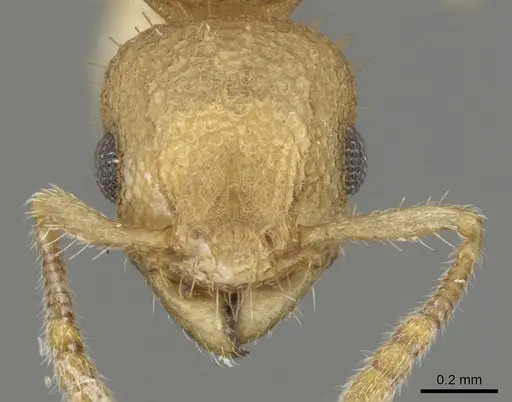
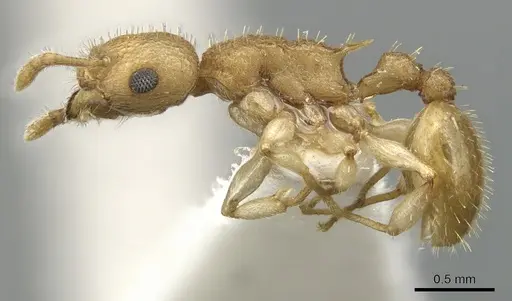
Workers of Vombisidris lochme are tiny at just 3.5 mm total length. The species is uniformly yellow in color throughout the entire body, which is unusual and helps distinguish it from related species [1]. In dorsal view, the metanotal groove is broad and markedly impressed in profile, creating a distinct notch between the mesonotum and propodeum [1]. The propodeal spines are approximately as long as the propodeal dorsum. The eyes are relatively large (maximum diameter 0.19 mm, about 0.27× head width) with 9-10 ommatidia in the longest row, suggesting some visual capability [1]. The first gastral tergite has fine superficial reticulation across its entire surface. The sides of the head diverge behind the eyes in full-face view. All dorsal surfaces bear relatively short, blunt pilosity (body hairs) [1]. These morphological features are consistent with other Vombisidris species and suggest a small, cryptic ant that forages in concealed microhabitats.
Temperature and Care
As a tropical species from Sulawesi near the equator, Vombisidris lochme requires warm conditions year-round. Aim for a temperature range of 24-28°C in the nest area, with a slight gradient allowing workers to self-regulate if they choose warmer or cooler spots. Unlike temperate species, they do not require hibernation or a diapause period, maintaining consistent tropical temperatures is essential [1]. A heating cable or mat on one side of the nest can help maintain warmth, but ensure it does not dry out the substrate excessively. Room temperature may suffice if your home stays in the mid-20s Celsius, but monitor colony activity, if workers become sluggish or cluster tightly together, the temperature may be too low. The key is consistency rather than exact precision, as wild colonies experience relatively stable tropical conditions.
Humidity Requirements
This species originates from tropical rainforest, so high humidity is essential. Keep the nest substrate consistently moist but not waterlogged, the substrate should feel damp to the touch but no standing water should be present. A water tube attached to the test tube or formicarium provides a constant moisture source. Mist the nest occasionally, especially if you notice workers avoiding the nest or clustering near moisture sources. However, balance is important: excessive moisture leads to mold growth, which can be fatal to small colonies. Good ventilation helps prevent stagnation while maintaining humidity. The arboreal collection method (fogging forest trees) suggests they may prefer some vertical space and may benefit from setups that allow climbing, but they also need secure enclosed spaces for the colony center [1].
Feeding and Diet
No specific dietary information exists for Vombisidris lochme in scientific literature. Based on their small size and typical Myrmicinae diet, they are likely omnivorous with a preference for small protein sources. Offer small live prey such as fruit flies, pinhead crickets, or small mealworms. They probably also accept sugar sources like honey water or sugar water, though acceptance may need to be tested individually. Given their canopy collection, they may have some association with honeydew-producing insects, so offering a light sugar water solution is worthwhile. Feed small amounts every 2-3 days and remove uneaten prey to prevent mold. Start with protein offerings and observe whether they accept them, then gradually introduce sugar sources. Their small size means even tiny prey items are suitable, consider springtails or similar micro-arthropods as potential food sources [1].
Nesting and Housing
No documented captive housing exists for this species, so recommendations are based on inference from habitat and related species. Test tubes with a water reservoir work well as a starting point for founding colonies, the enclosed space maintains humidity while allowing you to monitor the queen and brood easily. For established colonies, small Ytong (AAC) nests or plaster nests with tight chambers scaled to their tiny size are appropriate. The key is providing small, enclosed spaces that retain moisture well. Avoid large open spaces that dry out quickly. Given their collection from forest canopy, they may appreciate some vertical climbing space, but this is optional. Escape prevention is important but not extreme, they are small but not as tiny as some Myrmicinae, so standard barrier methods should suffice. [1]
Frequently Asked Questions
How long does it take for Vombisidris lochme to produce first workers?
The egg-to-worker timeline is unconfirmed for this species as no captive breeding data exists. Based on similar small tropical Myrmicinae, estimate approximately 4-8 weeks from egg to first worker at optimal temperature (24-28°C). The actual timeline may vary depending on conditions and food availability.
What do Vombisidris lochme ants eat?
No specific dietary data exists for this species. Based on related Myrmicinae, they likely accept small live prey (fruit flies, small mealworms) and sugar sources (honey water). Start with protein offerings and observe acceptance, then add sugar sources. Their small size means tiny prey items are appropriate.
Can I keep Vombisidris lochme in a test tube?
Yes, test tubes work well for this species, especially for founding colonies. The enclosed space helps maintain the humidity they need. Ensure the water reservoir is appropriately sized and provide a dark covering to reduce stress. Once the colony grows, consider moving to a small Ytong (AAC) or plaster nest with chambers scaled to their tiny size.
Do Vombisidris lochme ants need hibernation?
No, being a tropical species from near-equatorial Sulawesi, they do not require hibernation. Maintain warm temperatures (24-28°C) year-round. Cool temperatures can stress or kill this species.
Are Vombisidris lochme good for beginners?
This species is not recommended for beginners due to the complete lack of documented captive care information. This is an experimental species where you will be essentially pioneering husbandry techniques. If you are experienced with difficult tropical species and enjoy experimentation, it could be rewarding, but expect a steep learning curve.
How big do Vombisidris lochme colonies get?
Colony size is unknown, no scientific data exists on maximum colony sizes. Based on their small worker size (3.5 mm) and typical Myrmicinae patterns, colonies likely remain relatively small. Growth will probably be slow.
Do Vombisidris lochme ants sting?
As a member of subfamily Myrmicinae and tribe Crematogastrini, they have a modified, flattened stinger used to smear venom rather than pierce. Given their tiny size, any sting would be negligible and they are not dangerous to humans.
What temperature should I keep Vombisidris lochme at?
Keep them at 24-28°C consistently. This is a tropical species from Sulawesi where year-round temperatures are warm. A slight temperature gradient allowing self-regulation is ideal. Avoid temperatures below 24°C.
Why is my Vombisidris lochme colony dying?
Common causes include: temperature too low (below 24°C), humidity too low (drying out), or mold from excessive moisture. Also ensure they are accepting offered food, they may need specific prey types. Without documented care info, troubleshooting requires careful observation and experimentation.
When will Vombisidris lochme alates (reproductives) appear?
Nuptial flight timing is undocumented for this species. There is no scientific data on when or how reproductives are produced. Captive observation would be pioneering work.
Report an Issue
The current care sheet is based fully on literature. See inconsistencies, or something that's incorrect? Please , it will be resolved after review from an admin. Contributing to the blogs tab also helps providing information, to make us be able to further improve the caresheets. Thank you for your support!
References

Esta ficha de cuidados está bajo licencia CC BY-SA 4.0 .
Blogs de la comunidad
CASENT0901987
Ver en AntWeb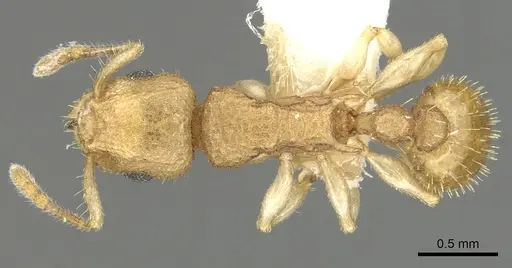
Literatura
Cargando mapa de distribución...Cargando productos...